Wooden Card RFID Technology Types
AES-Secured HF Wooden RFID Cards
AES-secured lightweight HF wooden RFID cards add 128-bit AES authentication and integrity options to a lightweight 13.56 MHz credential route. They suit secure limited-use tickets, event access, hospitality, controlled membership, and loyalty programs where the integrator needs stronger protection than a basic Type 2 Tag while keeping fast reader transactions.
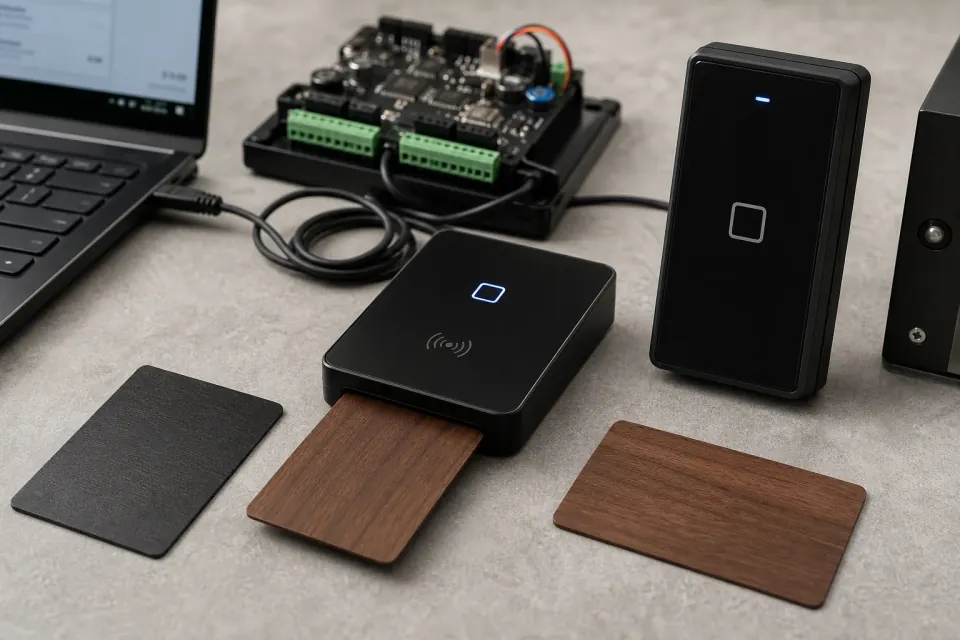
(01) — Route brief
Match the chip, data, and approval path before choosing the finish.
This is the production brief for AES-secured HF: what it is for, how it behaves, what needs encoding, and what must pass before the batch starts.
(02) — Visual references
Compare the details that change the finished card.
Use this board to read the essentials at a glance: wood finish, marking contrast, edge quality, reader fit, and presentation style.
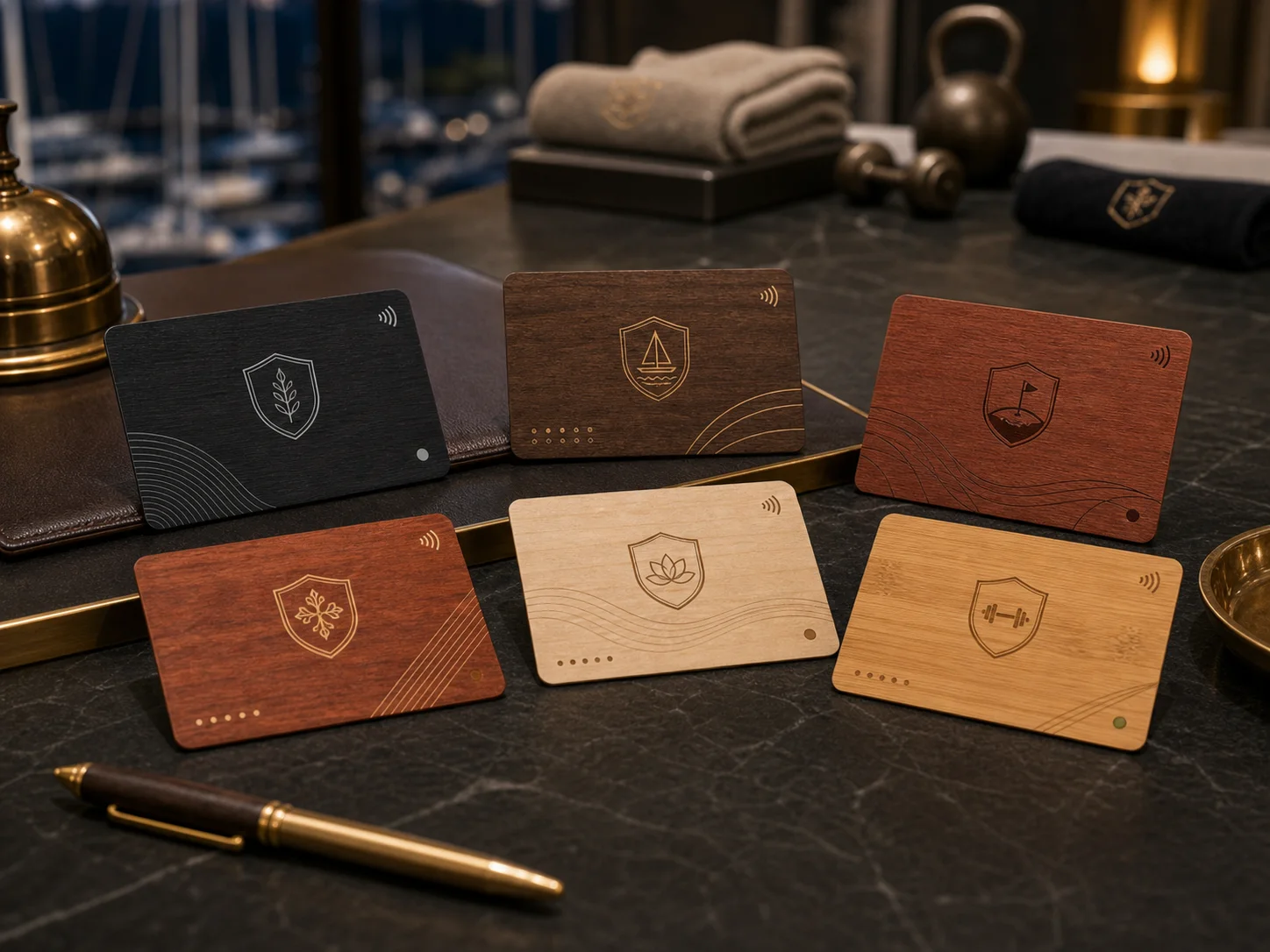
AES authentication suits controlled membership, event, hotel, and loyalty programs that need more than an open public tag.
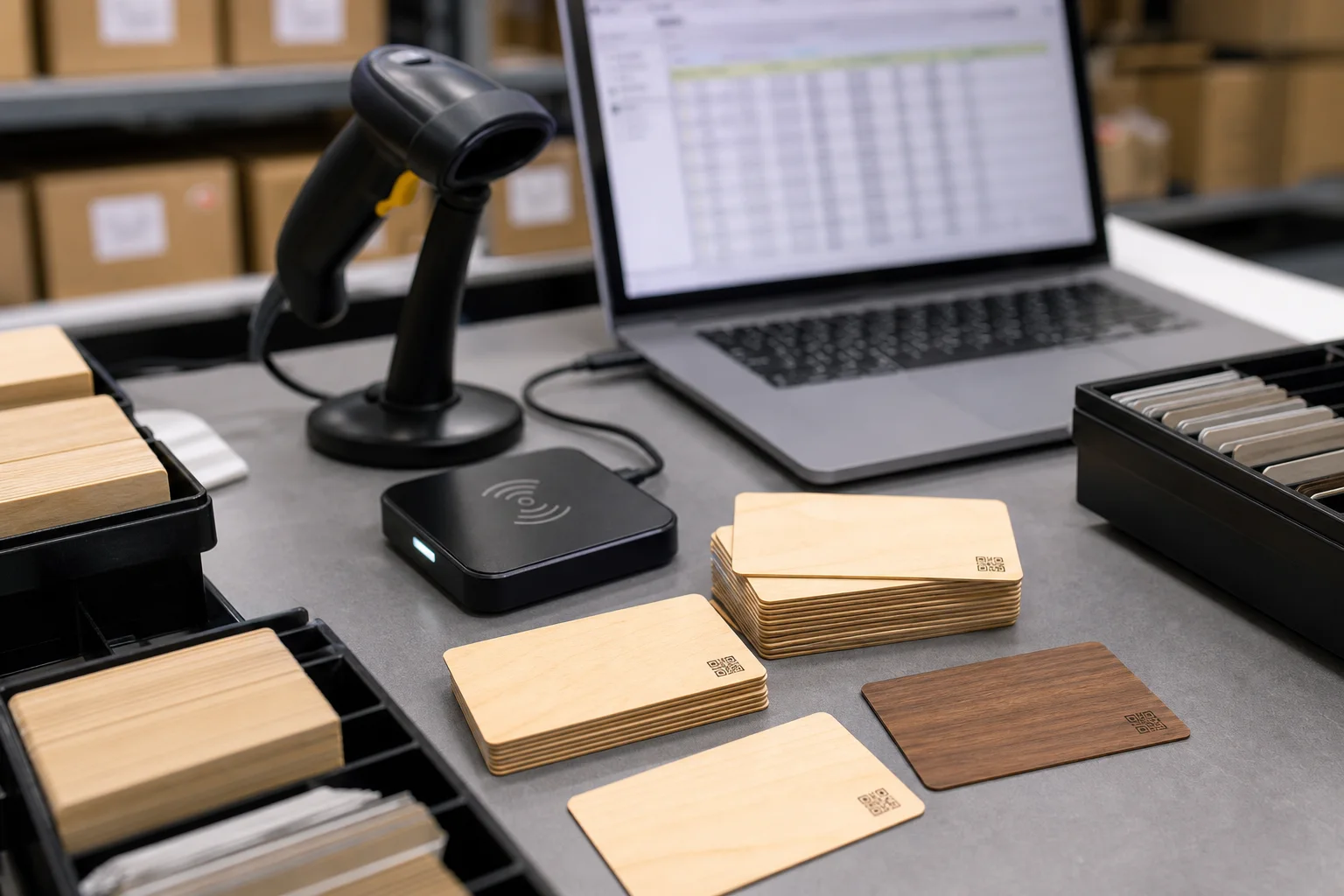
Key ownership, authenticated pages, counters, access rights, app payload, and who personalizes each card are defined before production.
AES-secured lightweight HF is secure by design, not a generic URL tag.
The chip is selected when the reader or app expects AES-authenticated data. Public tap-to-URL behavior is possible only when the full NDEF and application design supports it; it is not the default buying route.
Define key ownership before personalization.
The integrator should specify who creates, injects, stores, and rotates AES keys, which data pages require authentication, and who is responsible for secure personalization and reissues.
Map counters, access rights, and payloads together.
Authenticated pages, one-way counters, UID mapping, access rights, optional NDEF data, and app-specific payloads must follow one approved data model rather than separate production notes.
Validate the whole reader or app flow on a sample.
A working wooden sample should pass authentication, data read or write, counter behavior, and normal transaction timing on the target reader or app before artwork approval.
(07) — Applications
Best uses for AES-secured HF.
The practical route is selected from the system, audience, and handling context before the final wood finish and mark treatment are approved.
Best for
- Secure limited-use and event tickets
- Controlled membership and loyalty
- Hospitality guest access
- Programs requiring authenticated lightweight data
Quote details
- Target reader, lock, phone, scanner, or platform
- Wood species, finish, quantity, and packaging need
- Artwork files, data file, and encoding requirements
- Sample approval and delivery deadline
(08) — Specification
Production details to confirm before sample or batch.
Wood card production should confirm body construction, finish, chip route, data handling, marking layers, and approval samples in one brief.
(FAQ) — Common questions
Questions buyers ask about AES-secured HF.
01When should a project use AES-secured lightweight HF?
When a limited-use ticket, event, hospitality, membership, or loyalty program needs 128-bit AES authentication and stronger data protection than a basic open Type 2 Tag.
02Can AES-secured lightweight HF open a public URL on a phone?
It can support an NDEF configuration, but it is not a generic tap-to-URL choice by default. Phone behavior depends on the app, NDEF setup, access rights, and AES authentication design.
03Who manages the AES keys?
The integrator must define who creates, injects, stores, and rotates the keys, which pages require authentication, and who handles personalization and replacements before production starts.
(11) — Quote AES-secured HF
Send quantity, chip, material, print and encoding requirements.
No PVC card coreNo PET laminateReal veneer or solid wood bodyEmbedded RFID/NFC electronicsUID, NDEF, and access encodingLaser, UV print, QR, and serialization