125 kHz access
LF Wooden RFID Cards
LF wooden RFID cards run at 125 kHz and are chosen when an existing reader, lock, or access controller already depends on low-frequency credentials. Confirm the reader type, the chip (fixed-ID 125 kHz, fixed-ID 125 kHz, or a programmable 125 kHz writable credential), any emulation or cloning requirement, and the final wood body thickness before production, because these decide whether the finished card reads reliably at the door.
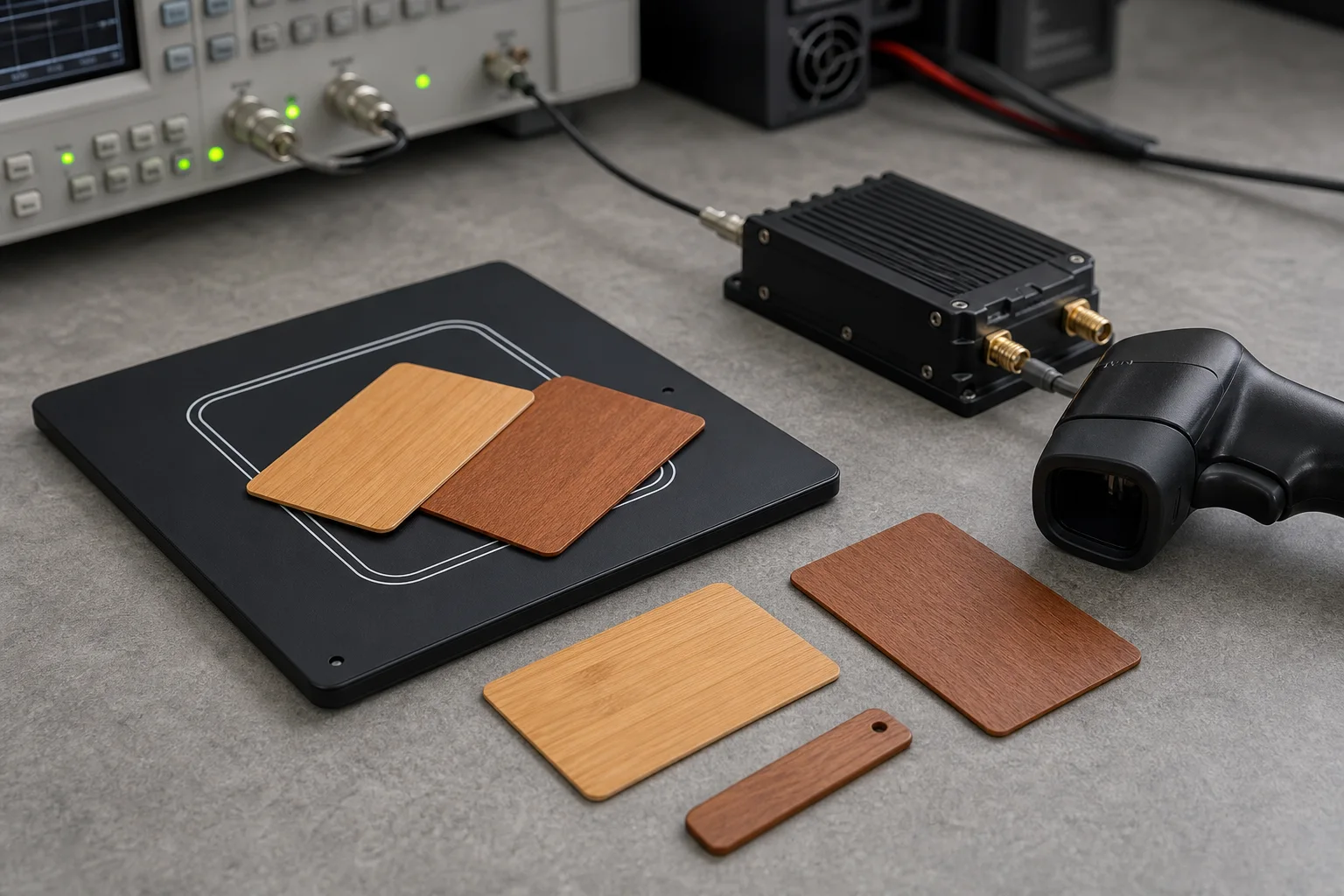
LF RFID route brief
| Frequency | 125 kHz |
|---|---|
| Best use | Legacy access control, selected hotel locks, staff ID, and replacement credentials where the existing reader requires LF. |
| Chip route | programmable 125 kHz, EM-compatible, or system-specific LF chip selected by reader requirement. |
| Phone behavior | Not phone-readable for normal smartphone NFC use. |
| Encoding | Facility code, card number, clone or emulation route, or blank supply depending on the access provider. |
| Approval check | Test on the exact door reader, enrollment reader, or lock before production. |
Visual references
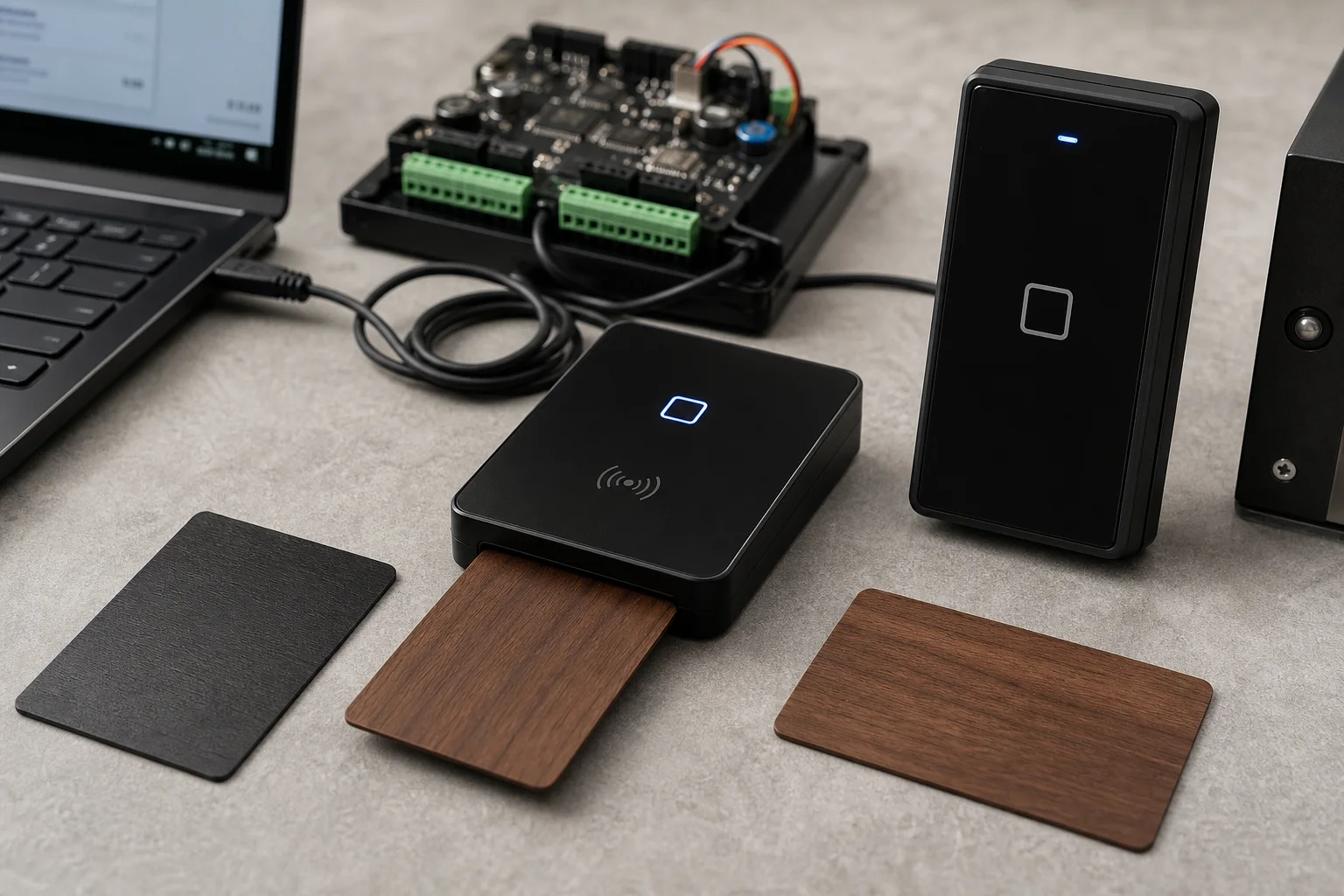
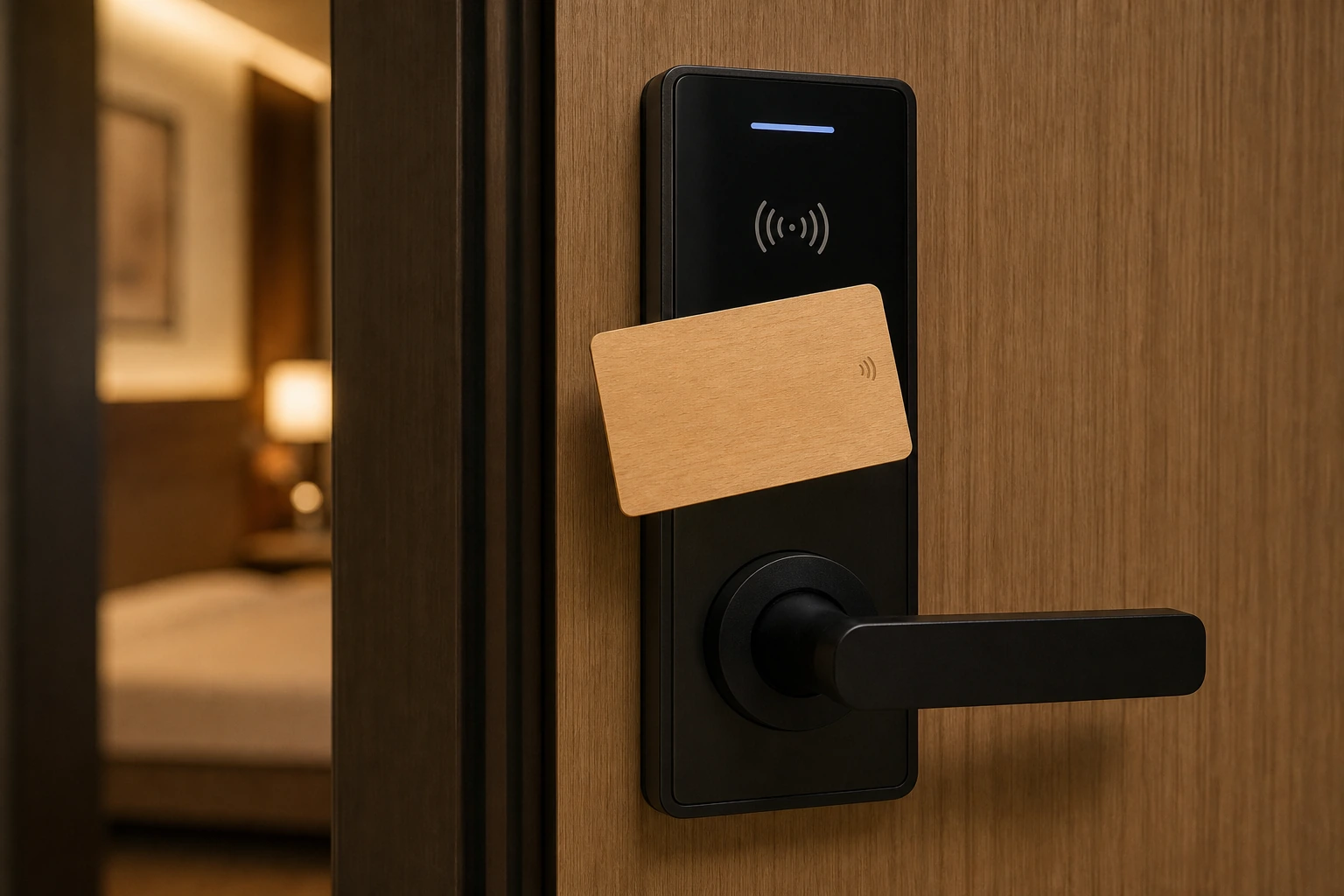
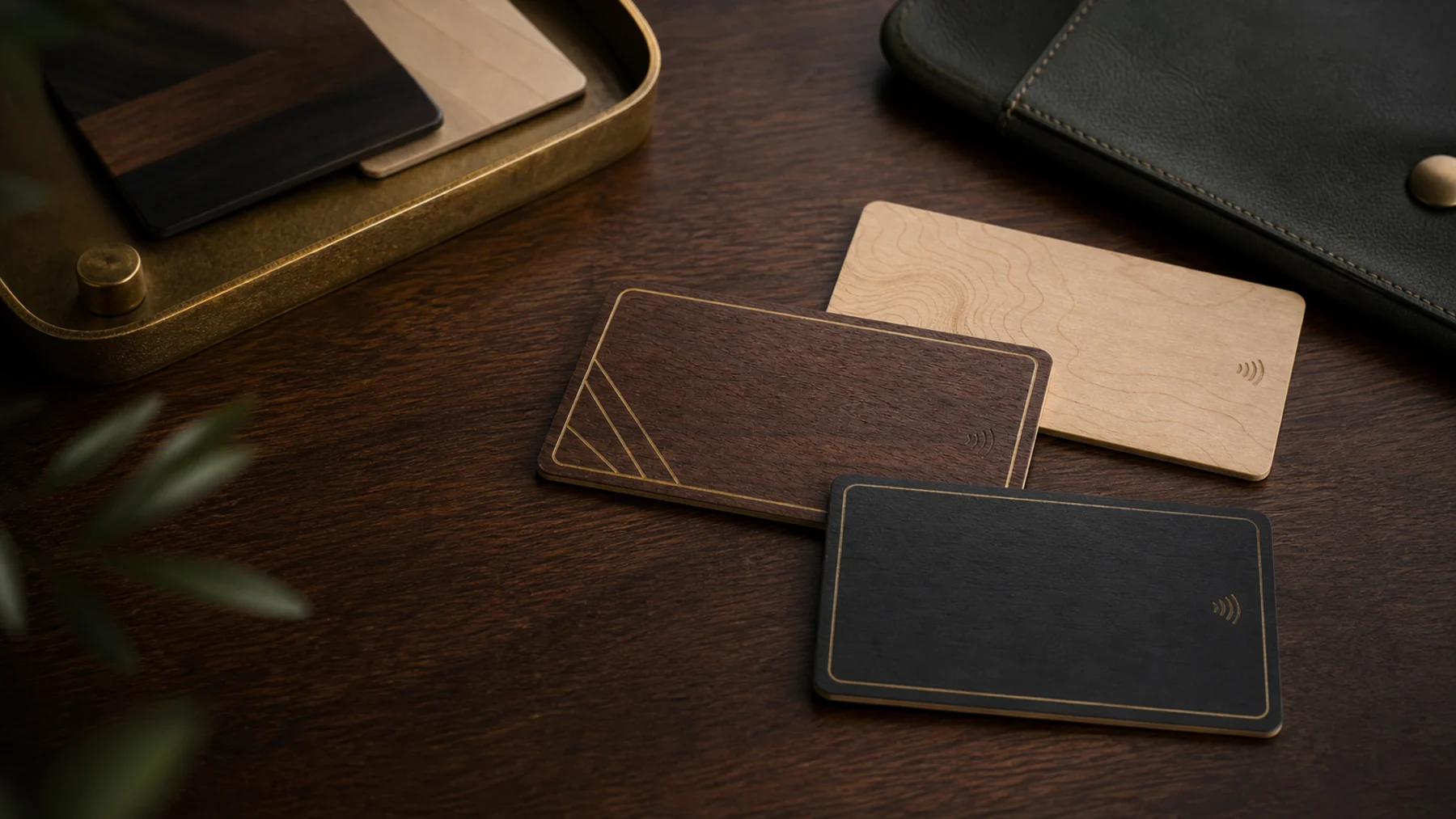
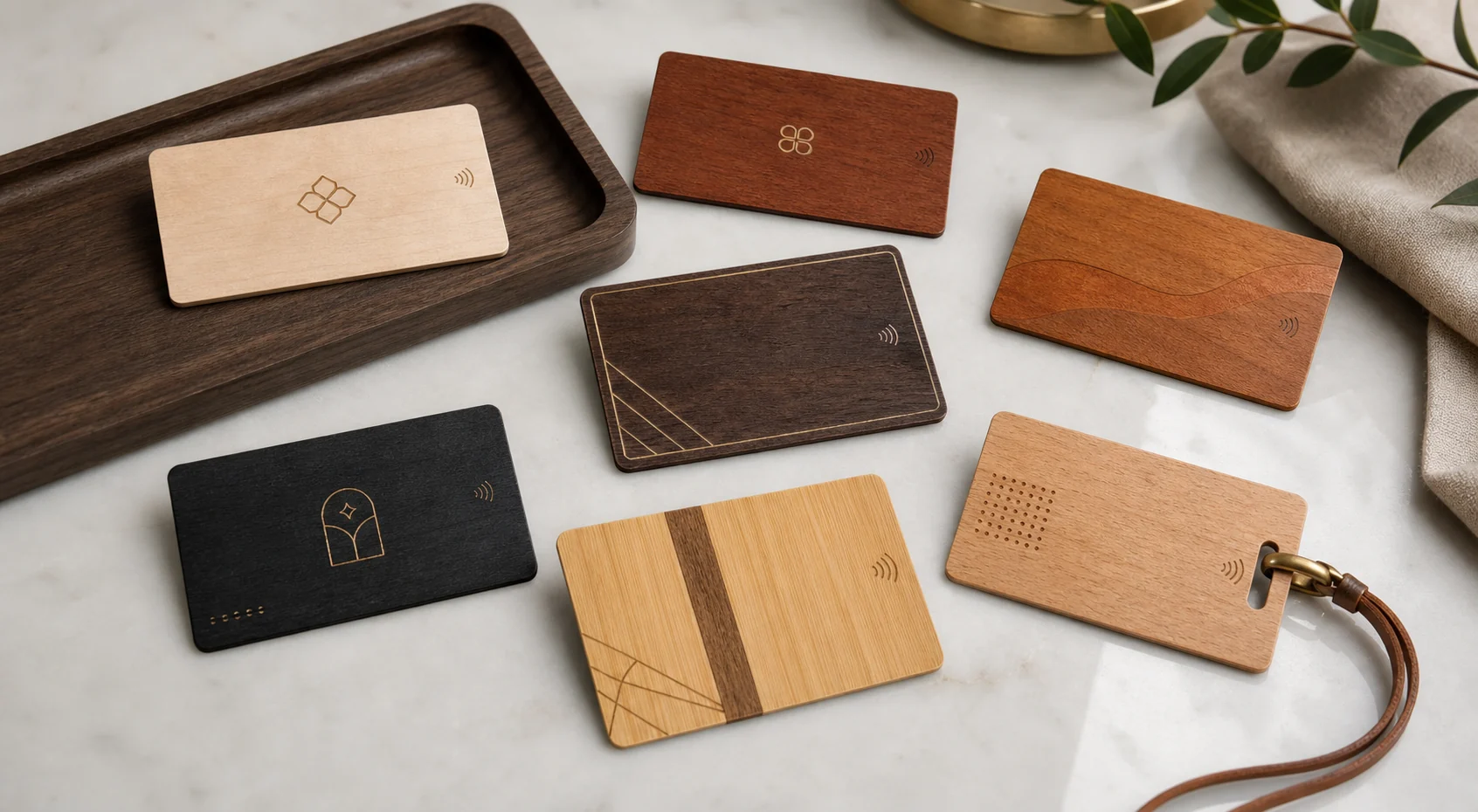
LF is chosen for system compatibility.
LF cards are usually specified because an existing reader, lock, or access controller requires 125 kHz credentials. Do not choose LF only because it sounds generic; the chip and encoding mode matter.
Wood thickness must still be tested.
The final read behavior depends on chip selection, antenna geometry, card body, finish stack, and reader sensitivity. A working sample should be approved with the real reader.
Match the LF chip to the existing credential.
Low-frequency systems are not all the same. A read-only fixed-ID 125 kHz or fixed-ID 125 kHz ID behaves differently from a writable programmable 125 kHz credential, and some sites need a specific facility code or bit format. Ask the access provider for the exact chip and data format before a wooden LF card is quoted or sampled.
Wood suits reissued and premium LF programs.
LF estates are often legacy, so wooden RFID cards are a natural upgrade for hotels, offices, and clubs replacing worn plastic fobs and cards without changing the reader hardware. The 125 kHz antenna is tuned inside the wood body so the card keeps the same tap behavior staff and guests already expect.
Best uses
- Legacy access control systems
- Selected hotel lock platforms
- Staff ID and membership access
- Programs replacing plastic LF cards
Frequently asked questions
When should a wooden card use LF 125 kHz?
When an existing reader, lock, or access controller already requires low-frequency credentials. LF is a compatibility choice, not a default.
Which LF chips are available in wood cards?
Read-only IDs like fixed-ID 125 kHz and fixed-ID 125 kHz, and writable programmable 125 kHz credentials. The access provider's exact chip and data format requirement decides.
Do wooden LF cards read like plastic ones?
Yes, once the 125 kHz antenna is tuned inside the wood body and the sample passes on the real reader — the tap behavior staff and guests expect stays the same.
Specification
| Card size | CR80 and custom dimensions by drawing |
|---|---|
| Card body | Plastic-free, FSC-certified wood body options |
| Thickness | 0.80 mm to 2.0 mm by wood species and chip |
| Minimum order | None — single samples to production runs |
| Production time | About one week after artwork and sample approval |
| RF planning | Chip, antenna, thickness, and finish approved together |
| Approval route | Material sample, working RF sample, production proof |
| Frequency | 125 kHz |
| Chip route | programmable 125 kHz, EM-compatible, or system-specific LF chip selected by reader requirement. |
| Encoding | Facility code, card number, clone or emulation route, or blank supply depending on the access provider. |
| Approval check | Test on the exact door reader, enrollment reader, or lock before production. |
| Typical formats | EM-compatible ID, programmable 125 kHz writable credential, or system-specific LF route |
Related wood RFID card pages
- RFID UID Converter & Wiegand 26-bit Calculator
- HF and NFC Wooden Cards
- NFC Tag Wood NFC Cards
- Entry-Level HF Wooden RFID Cards
- AES-Secured HF Wooden RFID Cards
- Standard HF Access Wooden RFID Cards
- High-Security AES Wooden RFID Cards
- UHF Wooden RFID Cards
- Programmable 125 kHz Wooden RFID Cards
- Wooden RFID Card Encoding