Foil should be a highlight, not the whole design.
Small metallic areas feel more expensive and are easier to control. Border lines, icons, and monograms usually look better than large foil blocks on wood.
Foil wood RFID cards turn a wood card into a premium presentation object when the metallic is used as a controlled accent — border lines, monograms, tier marks, serial plates, and small logo details in gold, silver, copper, or brass.
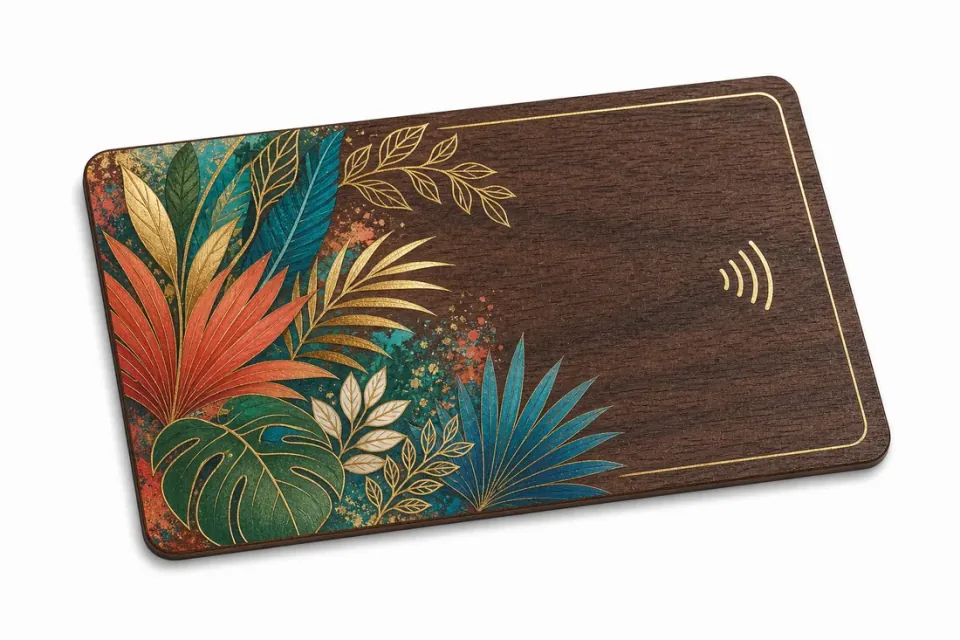
Foil works best as a precise highlight. These references show warm gold lines, dark-wood metallic edges, pale-wood silver, and premium brass-style presentation options.
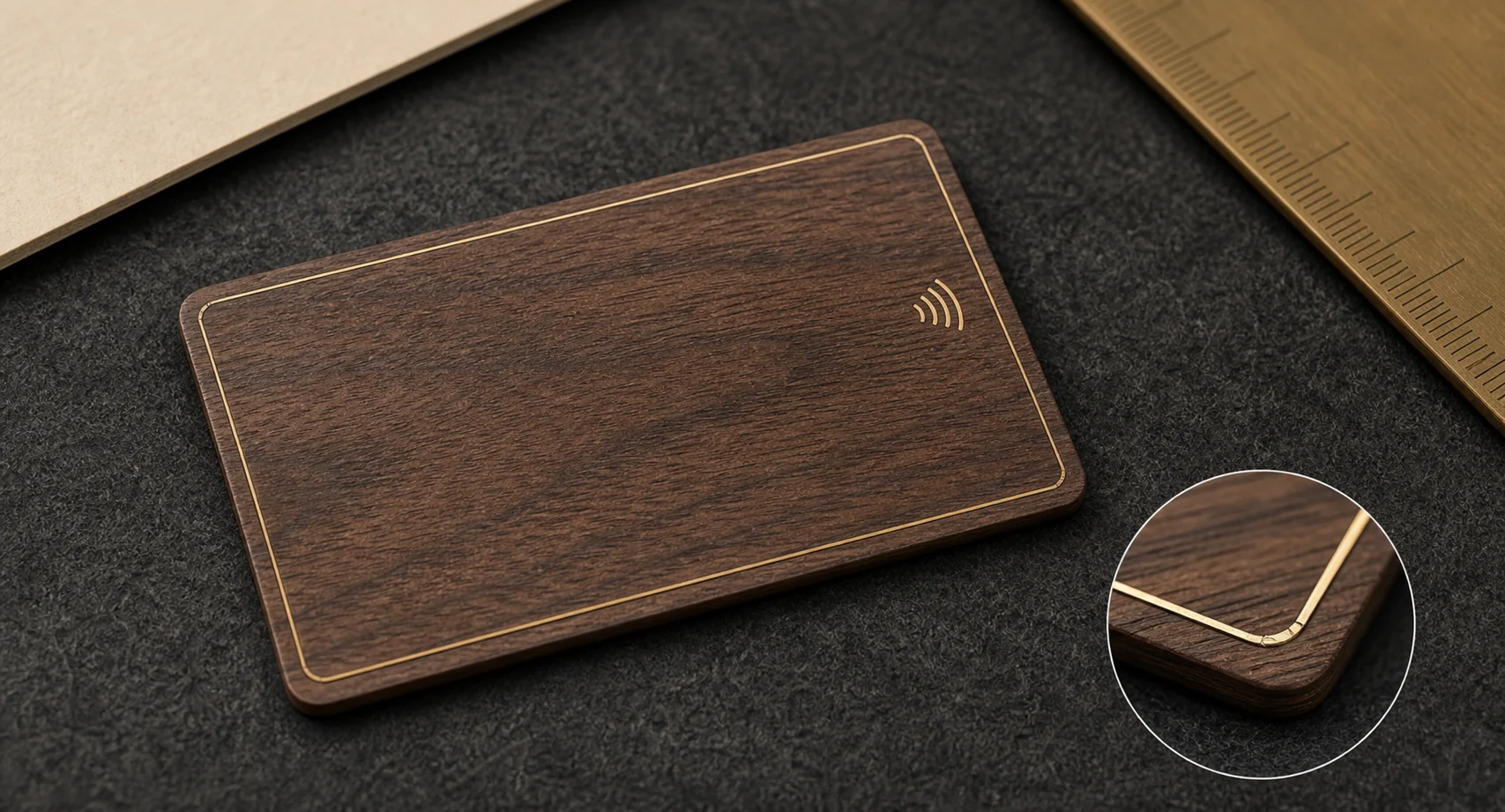
A controlled gold line adds shine without covering the walnut surface.
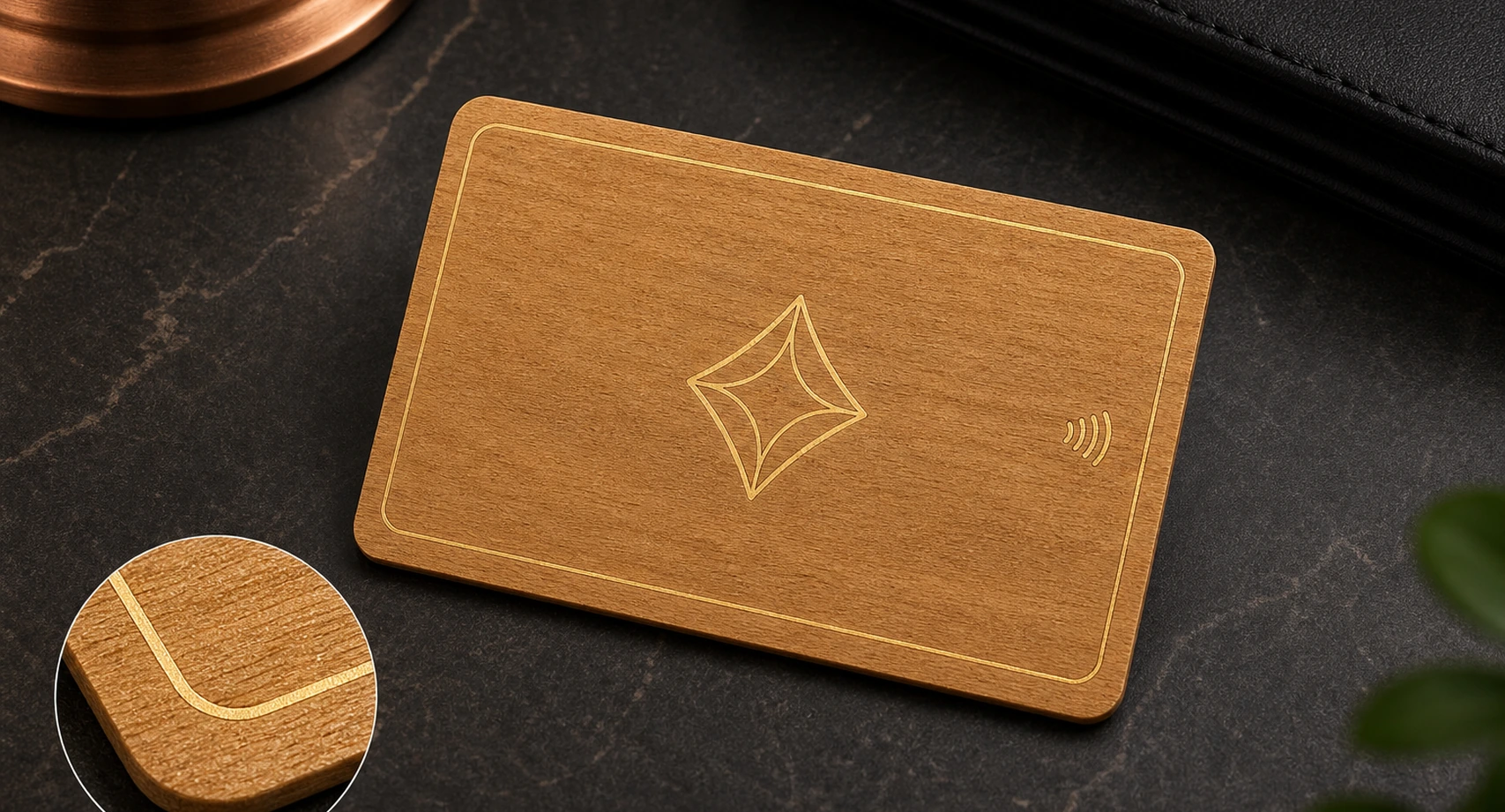
Warm cherry and gold accents create a refined membership or gift-card finish.
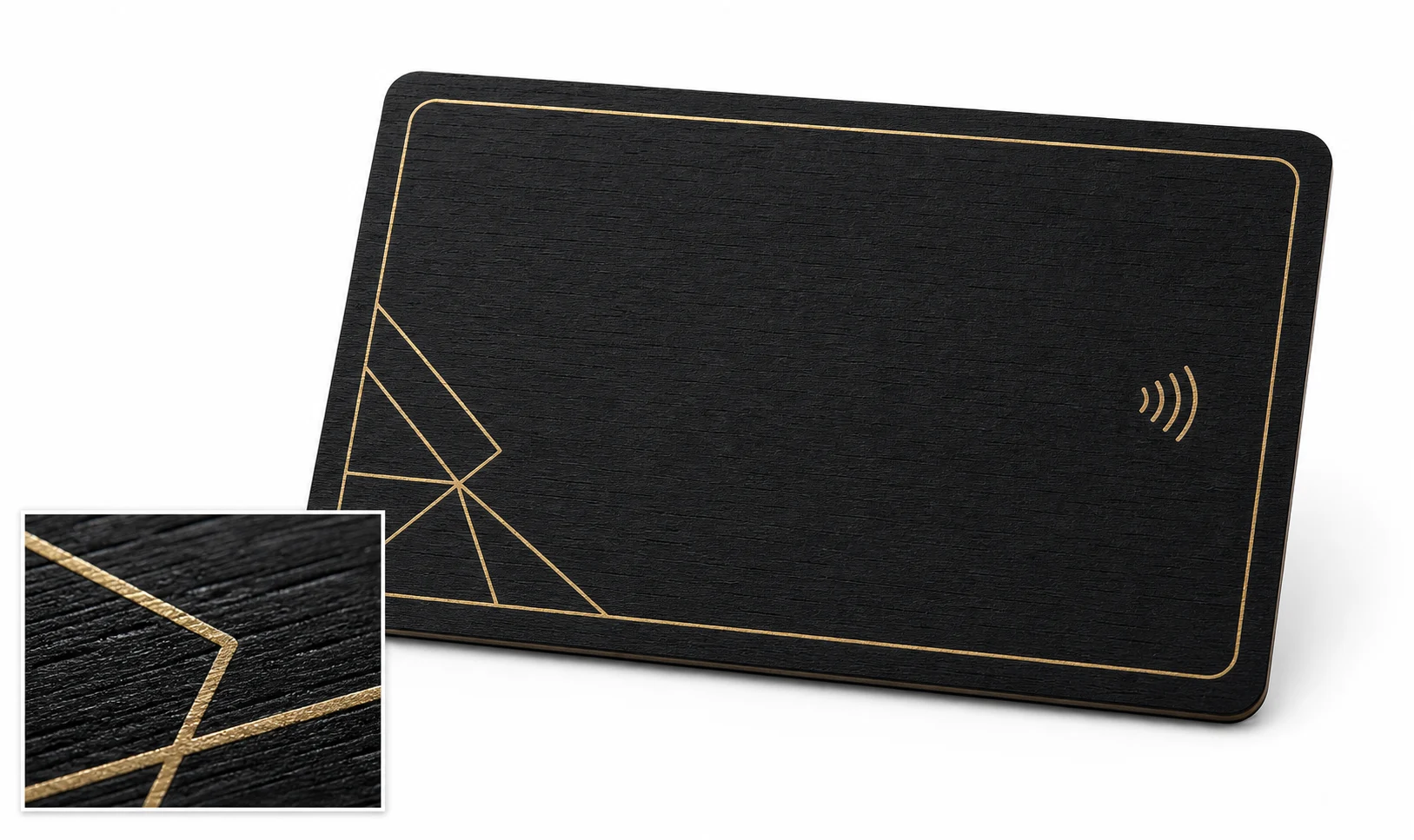
Black wood makes gold linework feel sharper and more formal.
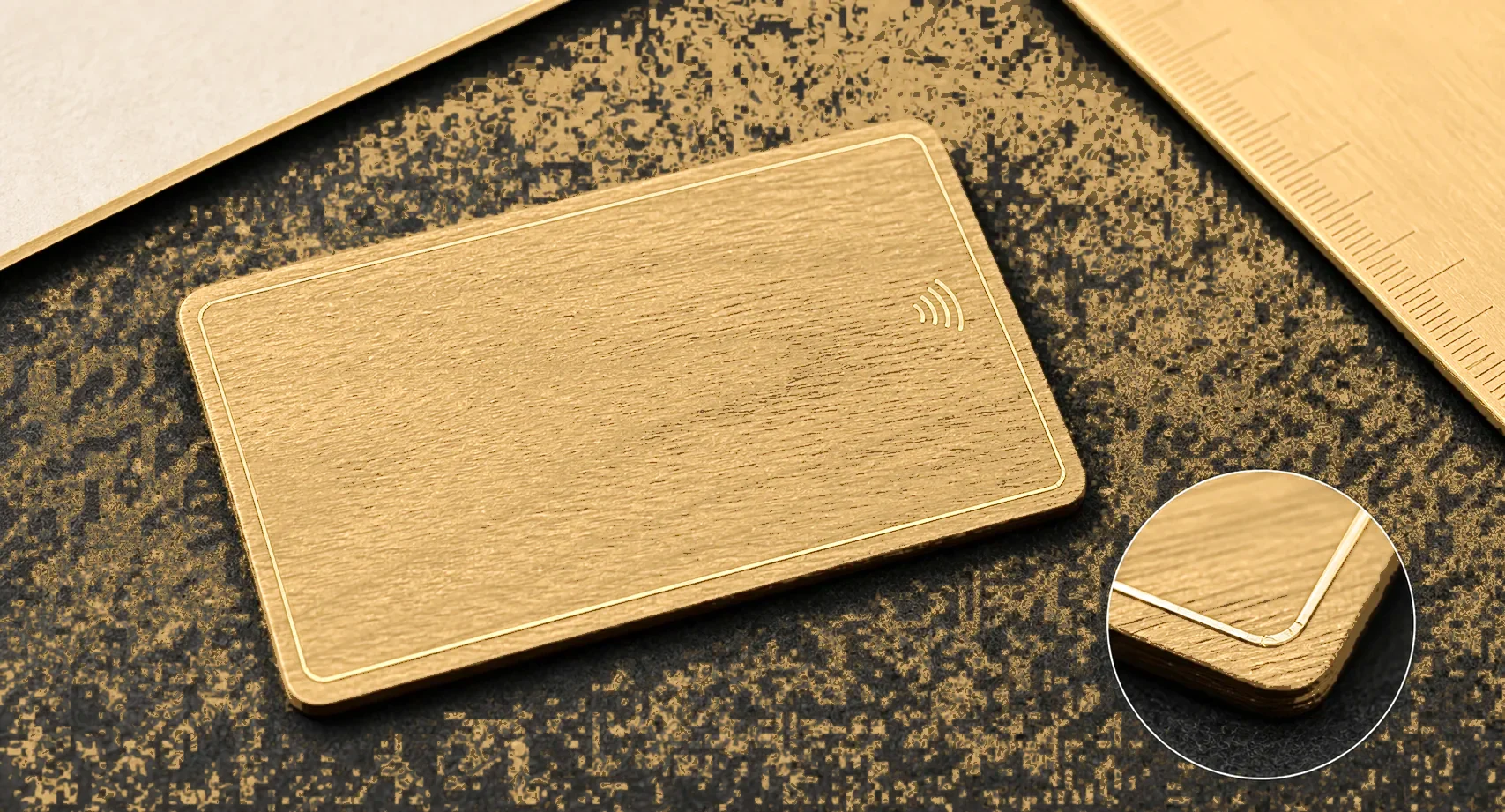
Light bamboo keeps gold accents bright while preserving an eco-card feel.
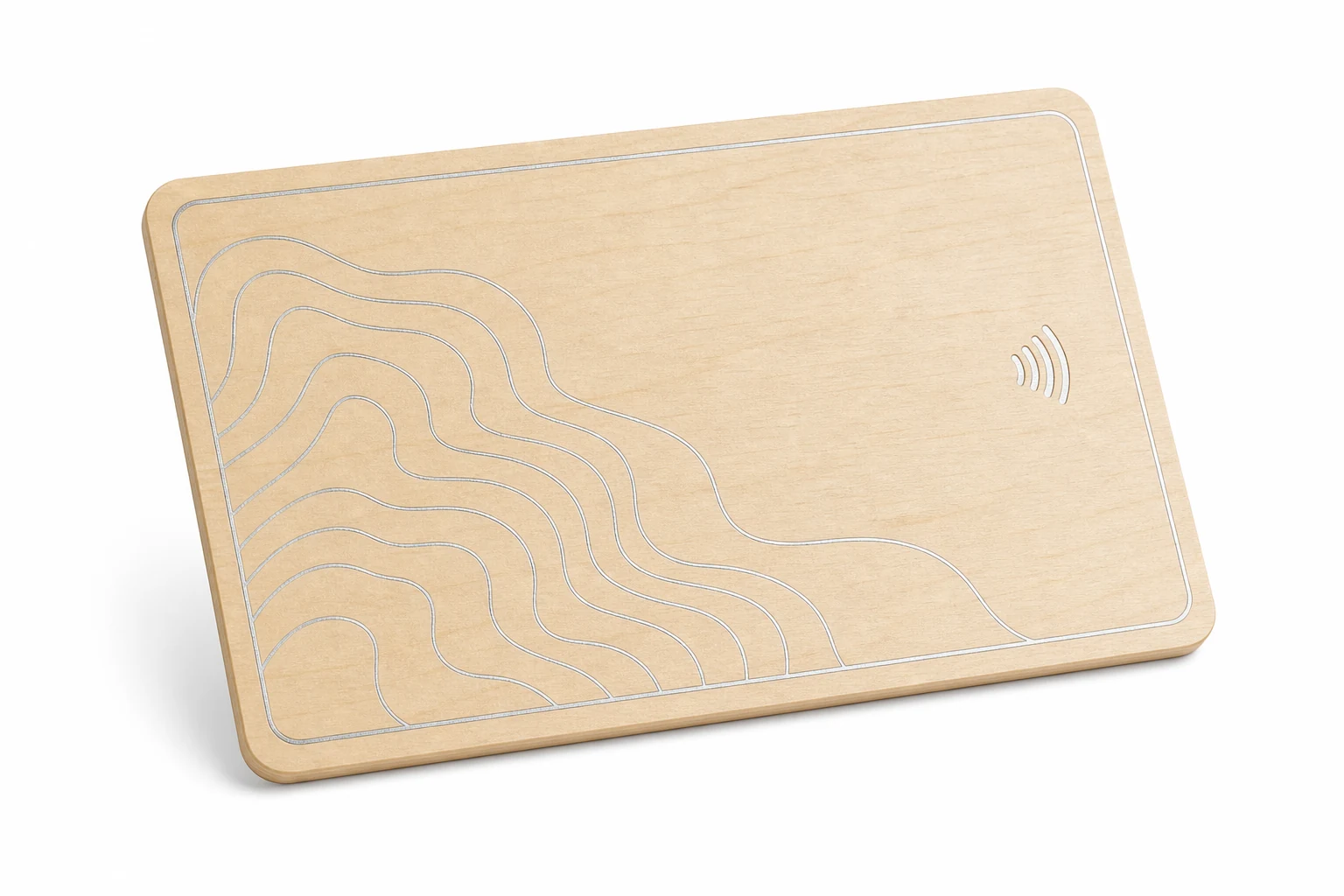
Cool metallic linework gives pale wood a cleaner alternative to warm gold.
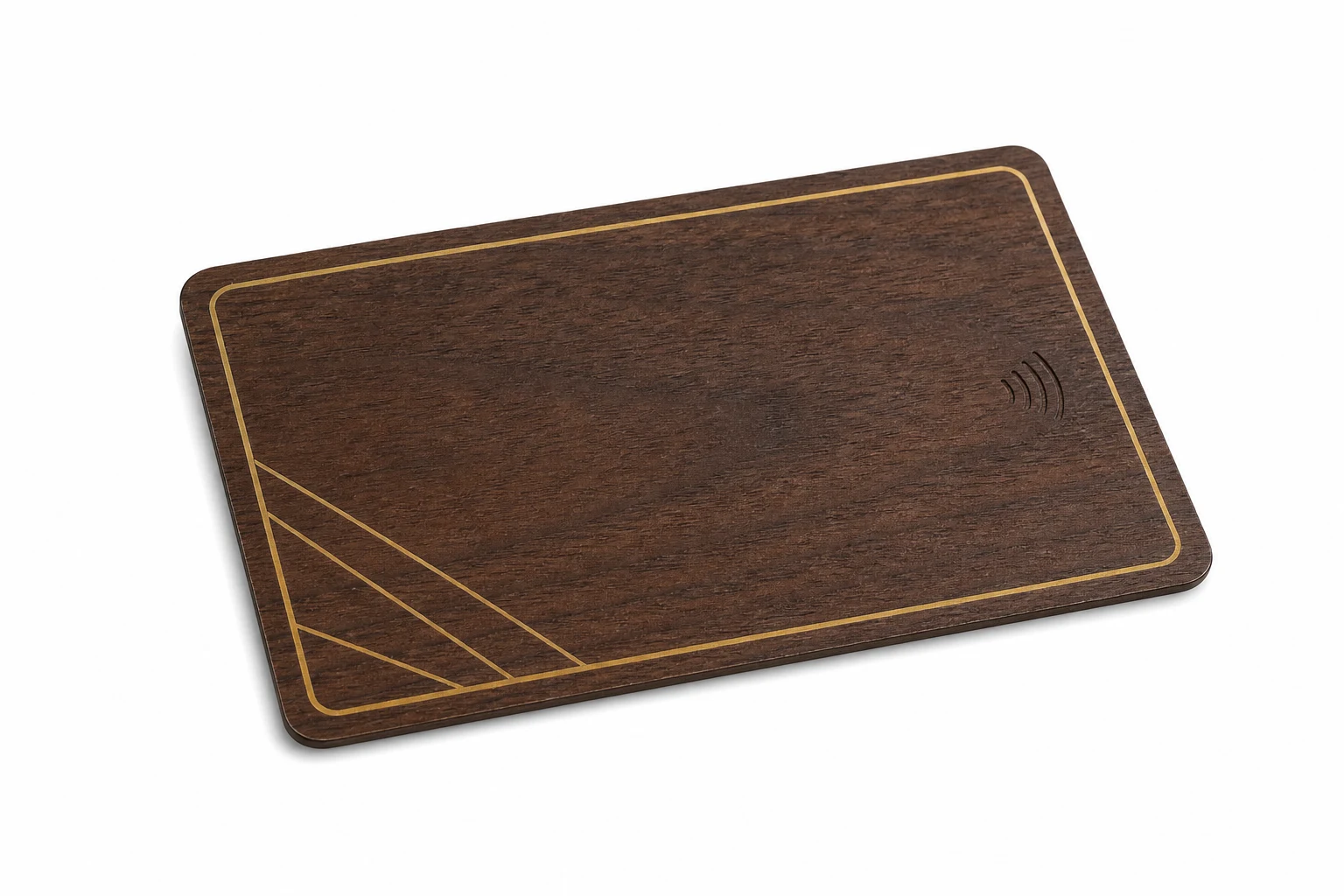
Metallic detailing can be matched to packaging, VIP tiers, and sample-kit approvals.
Small metallic areas feel more expensive and are easier to control. Border lines, icons, and monograms usually look better than large foil blocks on wood.
Gold and brass work well with walnut, cherry, and black wood. Silver feels cleaner on birch, beech, and light bamboo. Copper can suit warm red and sapele tones.
A single foil line, monogram, or serial plate can separate VIP, founder, or membership tiers without adding busy artwork. This keeps the wood forward while giving each tier an unmistakable premium cue that is cheap to repeat across a program.
Foil behaves differently on open-grain oak than on smooth beech, and it should sit clear of heavy scanning or wallet-friction zones. A physical sample confirms adhesion, reflectivity, and placement on the selected wood before the production run.
The practical route is selected from the system, audience, and handling context before the final wood finish and mark treatment are approved.
Wood card production should confirm body construction, finish, chip route, data handling, marking layers, and approval samples in one brief.
Gold, silver, copper, and brass-style metallics. Gold and brass suit walnut, cherry, and black wood; silver reads cleaner on birch, beech, and bamboo.
Yes — a single foil line, monogram, or serial plate separates VIP, founder, or member tiers without busy artwork, and repeats cheaply across a program.
With a physical sample confirming adhesion, reflectivity, and placement on the selected wood — foil behaves differently on open-grain and smooth surfaces.