Tap-to-profile cards
Wood NFC Business Cards
Wood NFC business cards make the material the message: one memorable tap card with precise logo placement, a clean tap area, and NDEF data linked to your profile, vCard, portfolio, or campaign page.
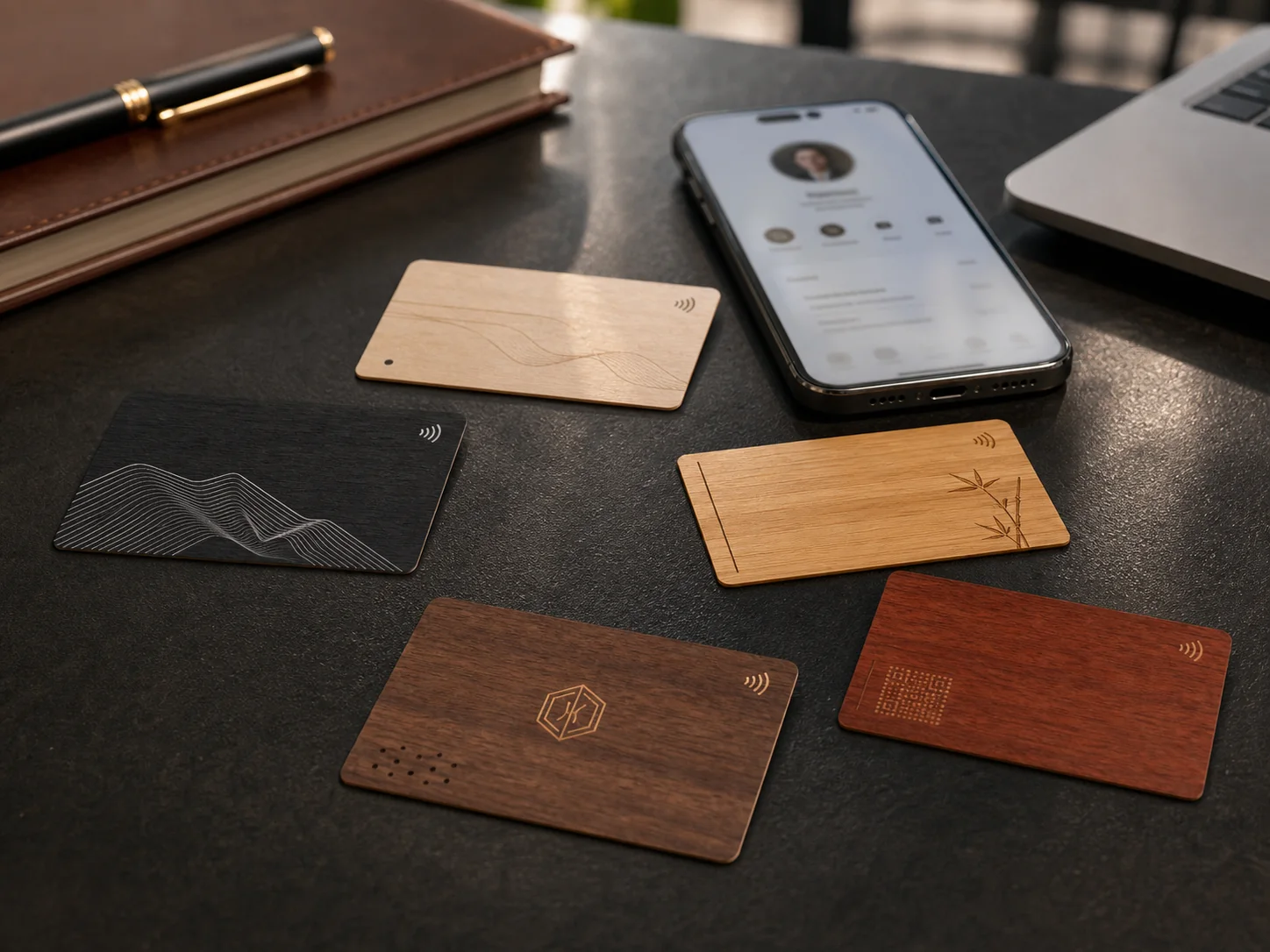
NFC business card styles
Compare thin tap cards across real business moments.
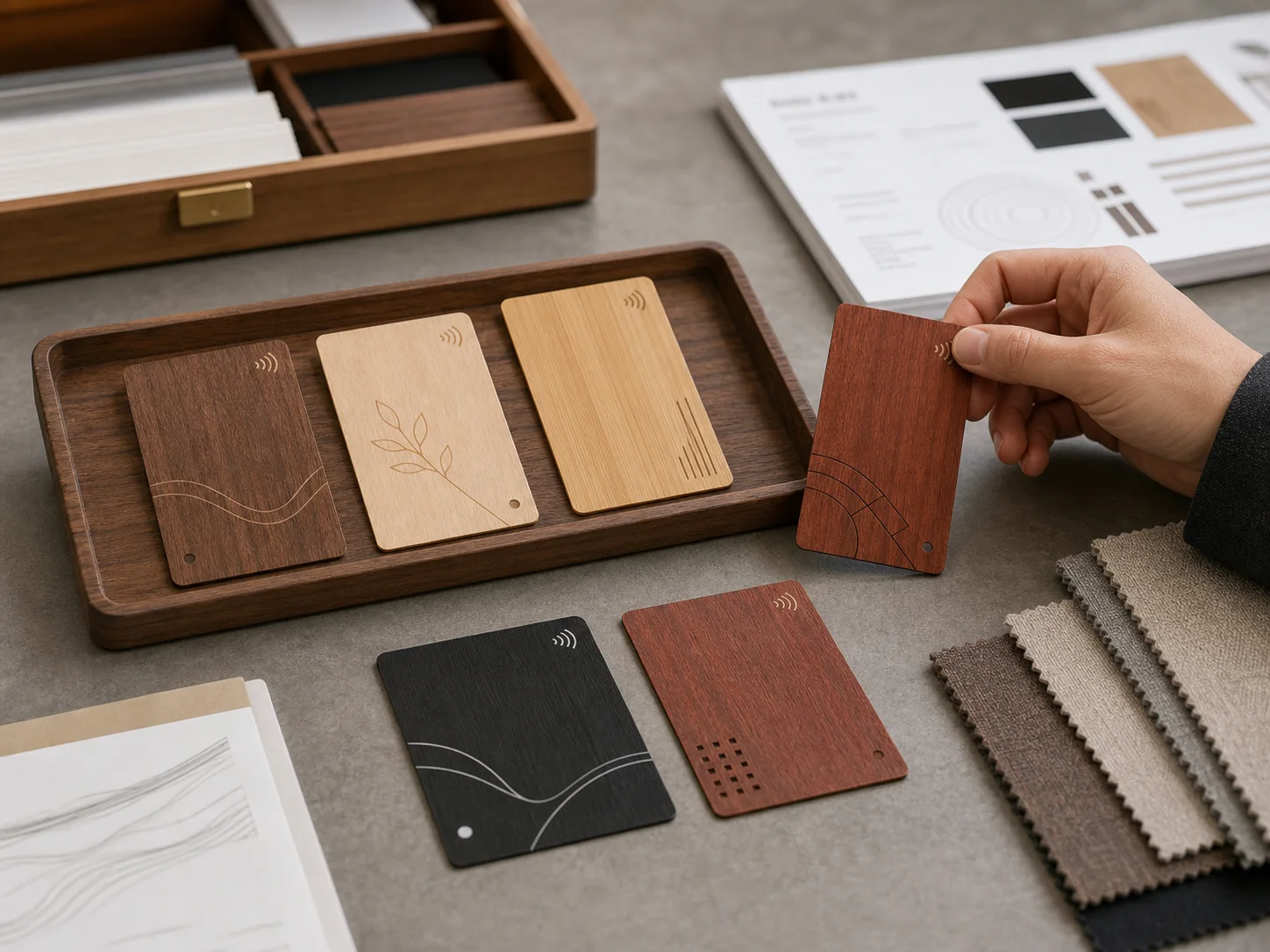
Review how thin wooden NFC cards behave in phone taps, networking, sales, founder, and executive sample workflows before adding final names, contact details, and QR artwork.
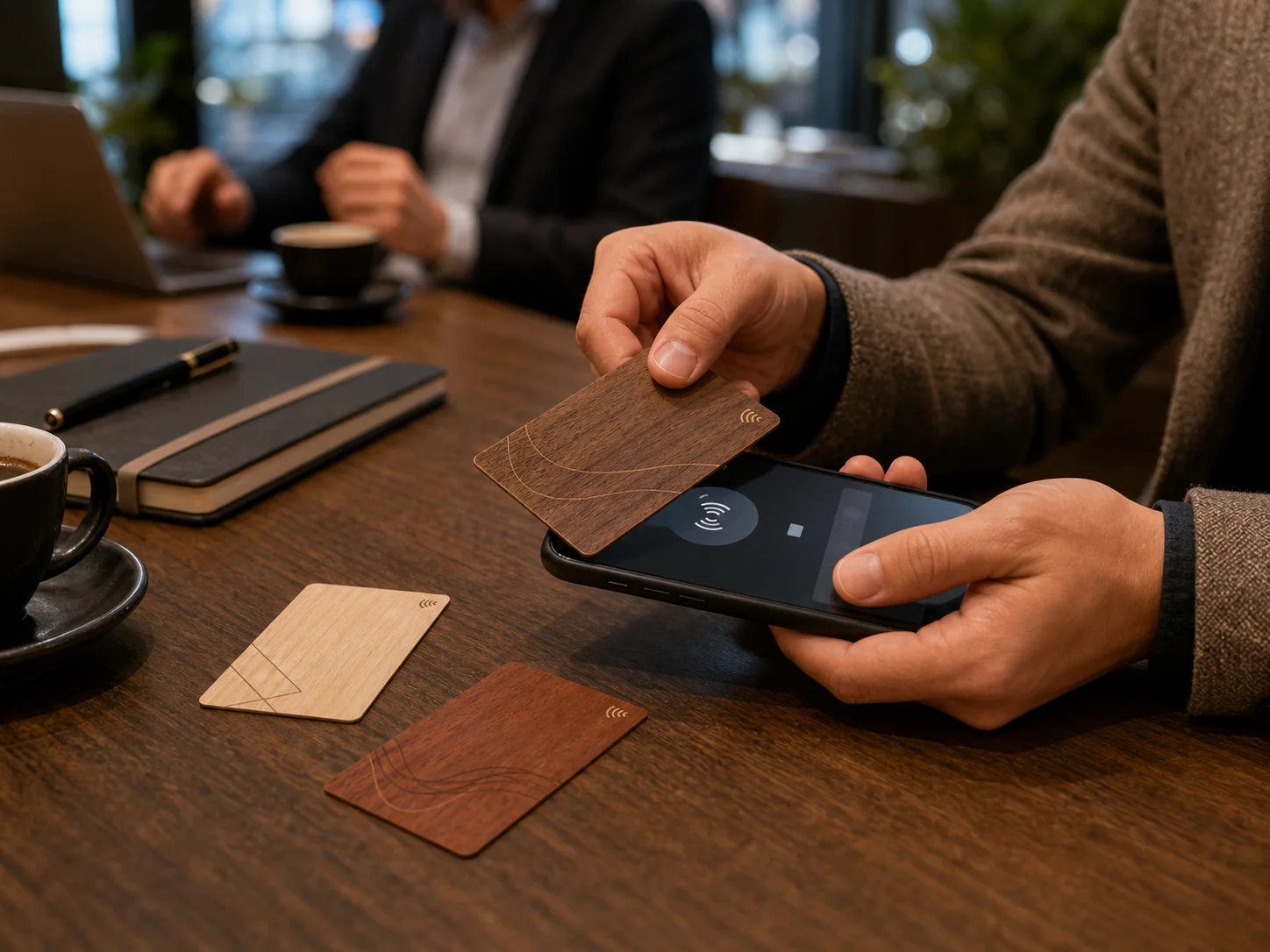
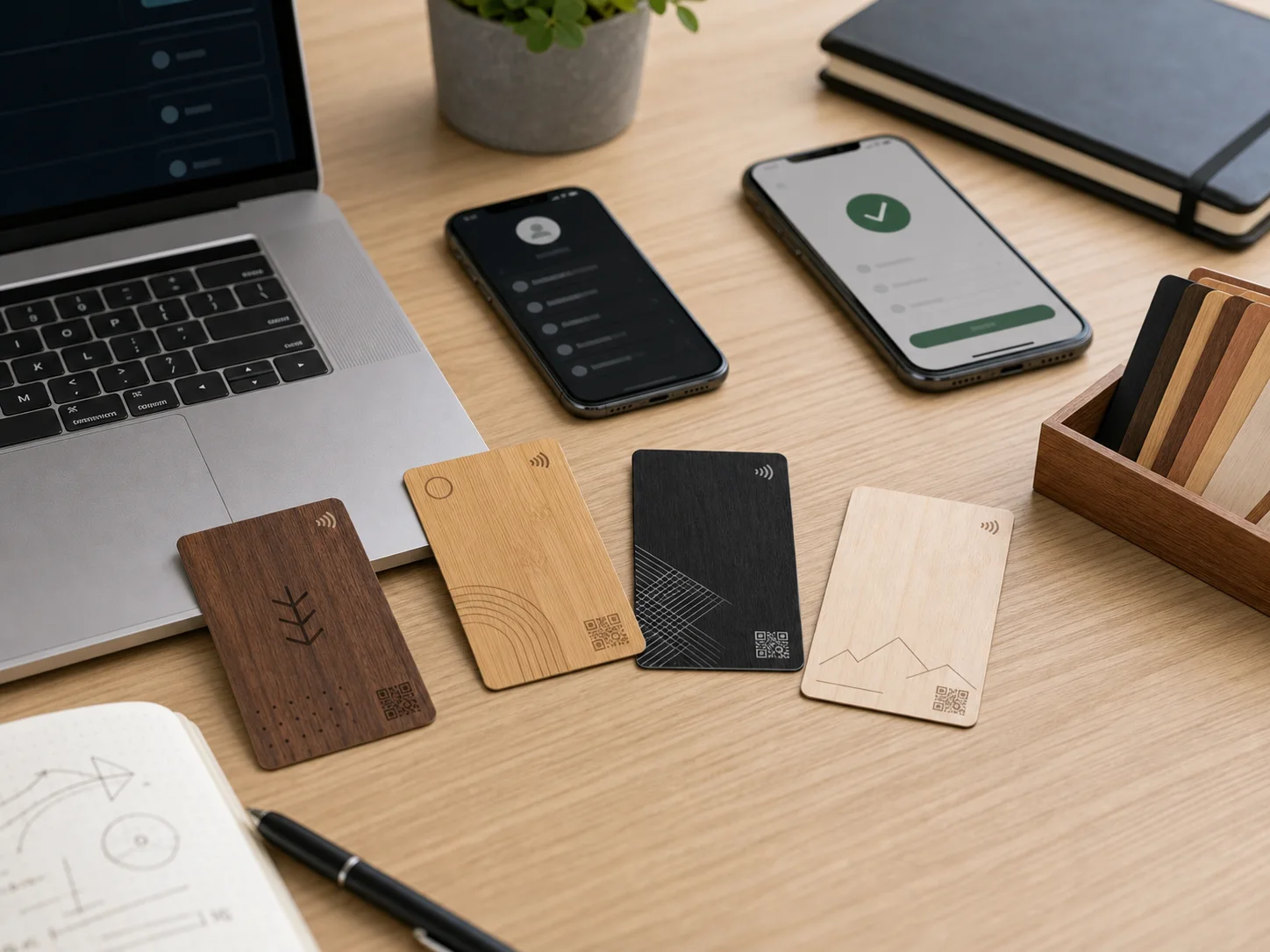
Encode the digital experience, not just the chip.
A wood NFC business card should define the landing URL, fallback QR, data-update process, and who owns the destination page before encoding. That keeps the card useful long after the meeting and lets you update the profile without reprinting.
Let the material carry the value.
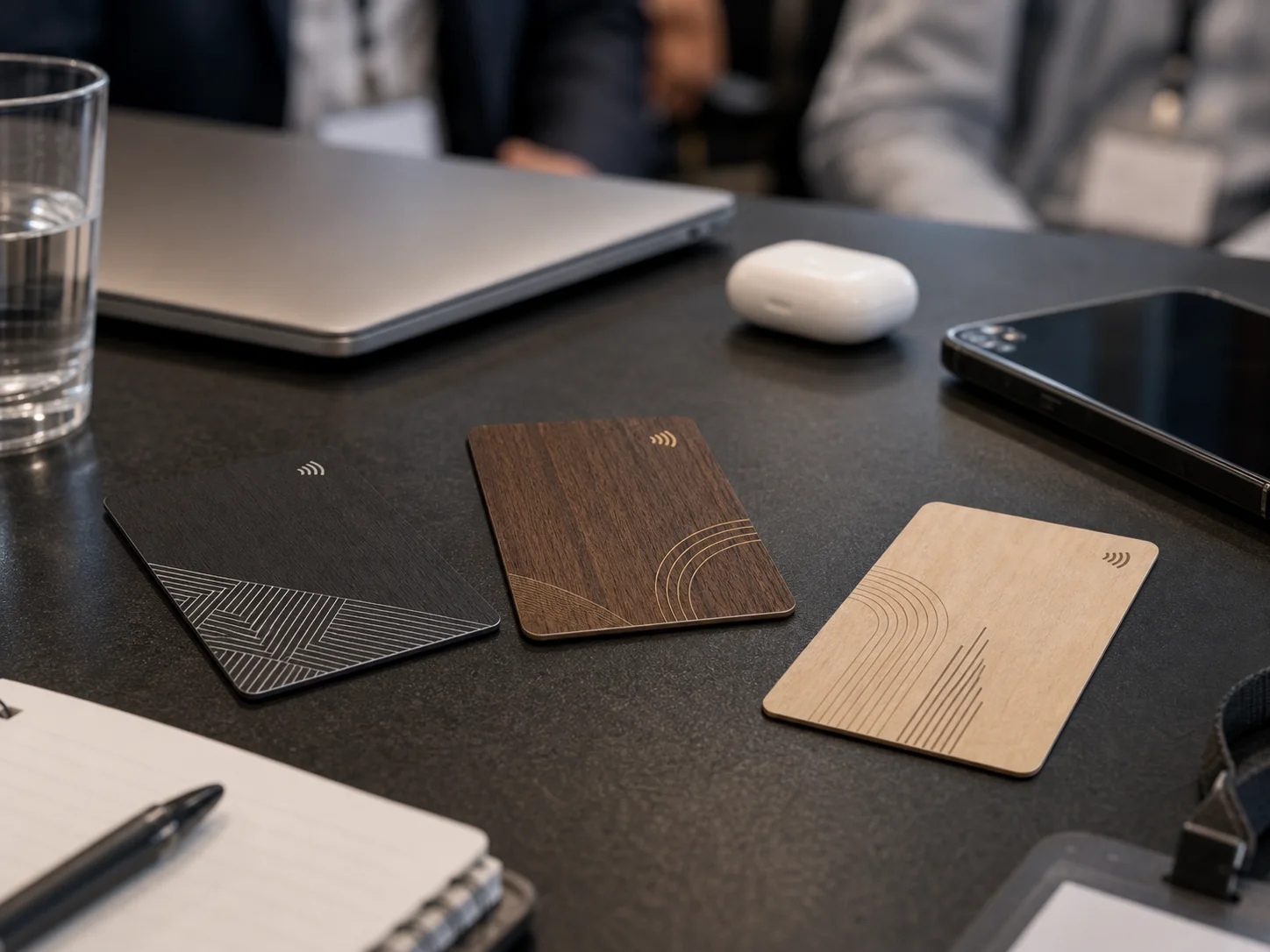
Dense graphics reduce the premium feel. Dark woods like walnut and black wood are strongest with white ink or laser; lighter birch and bamboo can hold QR, color print, and fine serials without fighting the grain.
Pick the NFC chip for how the card is used.
144-byte NFC tag, 504-byte NFC tag, and 888-byte NFC tag cover most tap-to-profile and vCard needs, with larger memory for richer records. Data can stay editable for changing details or be locked to a fixed brand link.
Best uses
- Executive networking cards
- Founder and investor meeting cards
- Sales team lead capture
- Club and luxury brand contact cards
Frequently asked questions
How does a wood NFC business card work?
A tap on a phone opens your profile, vCard, portfolio, or campaign page from the NDEF record encoded in the card. A printed QR can back up the tap for older phones.
Can I update the link after the cards are made?
Yes, two ways: keep the NFC record editable for future re-encoding, or encode a fixed short URL whose destination you control and update server-side. Locked records suit fixed brand links.
Which NFC chip should a business card use?
144-byte NFC tag covers a simple URL, 504-byte NFC tag richer vCards, and 888-byte NFC tag the largest records. Pick the smallest chip that comfortably fits your encoded data.
Specification
| Card size | CR80 and custom dimensions by drawing |
|---|---|
| Card body | Plastic-free, FSC-certified wood body options |
| Thickness | 0.80 mm to 2.0 mm by wood species and chip |
| Minimum order | None — single samples to production runs |
| Production time | About one week after artwork and sample approval |
| RF planning | Chip, antenna, thickness, and finish approved together |
| Approval route | Material sample, working RF sample, production proof |
| Common chips | 144-byte NFC tag, 504-byte NFC tag, 888-byte NFC tag, selected secure NFC chips |
| Encoding | URL, vCard, profile link, campaign URL, locked or editable records |
| Best woods | Walnut, birch, bamboo, black wood, sapele |
Related wood RFID card pages
- Wooden Hotel Key Cards
- Wooden Membership Cards
- Wood Event Passes
- Wood Loyalty Cards
- Wood ID Cards
- Wooden Gift Cards
- Custom Wood RFID Cards