Phone tap NFC
NFC Tag Wood NFC Cards
NFC tag wood NFC cards are the practical choice when the card's main job is to open a URL, profile, menu, membership page, event page, or product-verification flow from a smartphone. 144-byte NFC tag, 504-byte NFC tag, and 888-byte NFC tag differ mainly in memory, so the chip is chosen from the size and type of NDEF record you need to store.
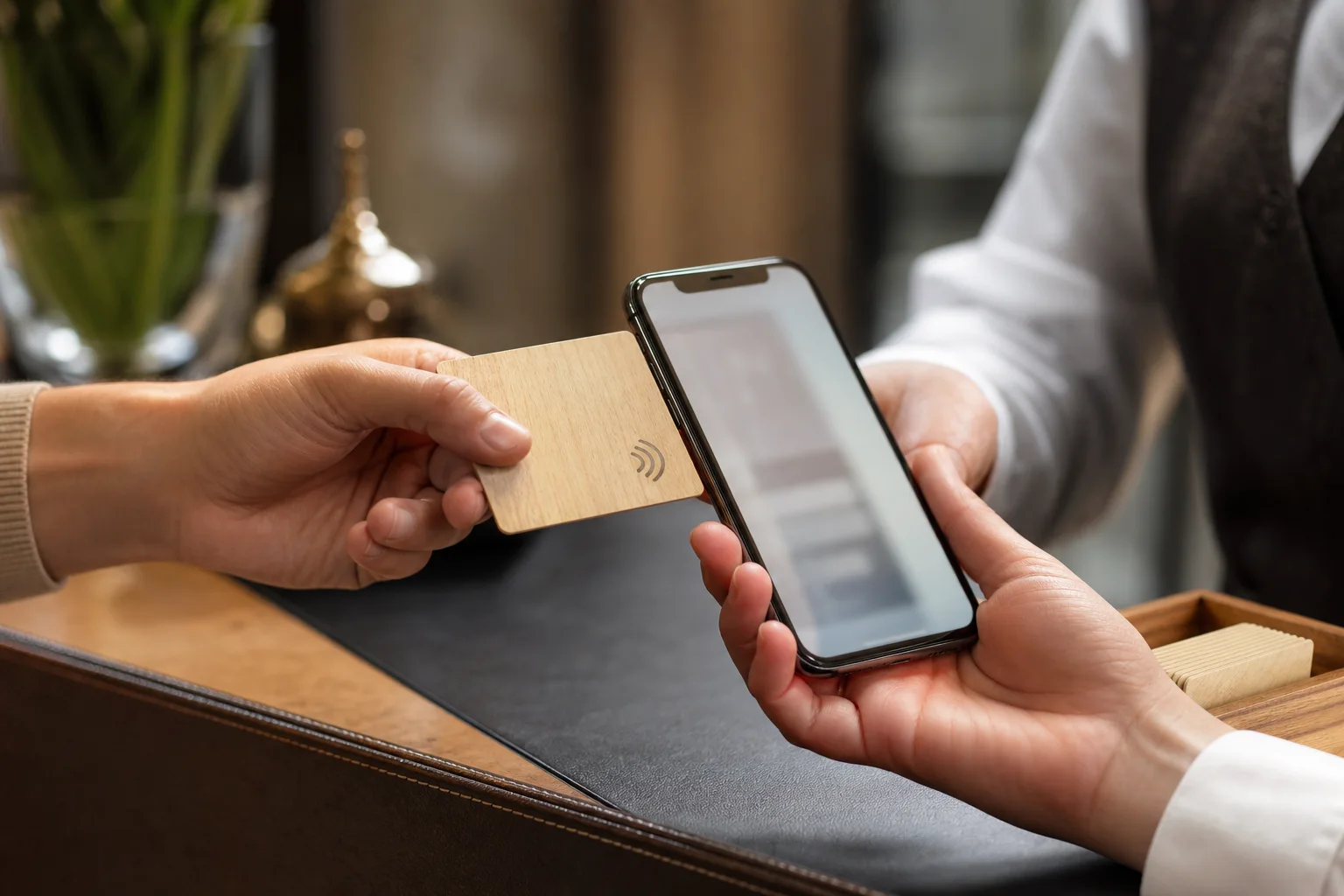
NFC Tag route brief
| Frequency | 13.56 MHz NFC |
|---|---|
| Best use | Public phone tap experiences: business cards, menus, profiles, landing pages, loyalty, product authentication, and event pages. |
| Chip route | 144-byte NFC tag, 504-byte NFC tag, or 888-byte NFC tag selected by memory need and data plan. |
| Phone behavior | The clearest route for broad smartphone tap behavior when the card opens a public URL or record. |
| Encoding | NDEF URL, short URL, profile, vCard, campaign URL, optional QR fallback, and a write-lock decision. |
| Approval check | Confirm tap position, record length, redirect behavior, analytics URL, and QR fallback before artwork approval. |
Visual references
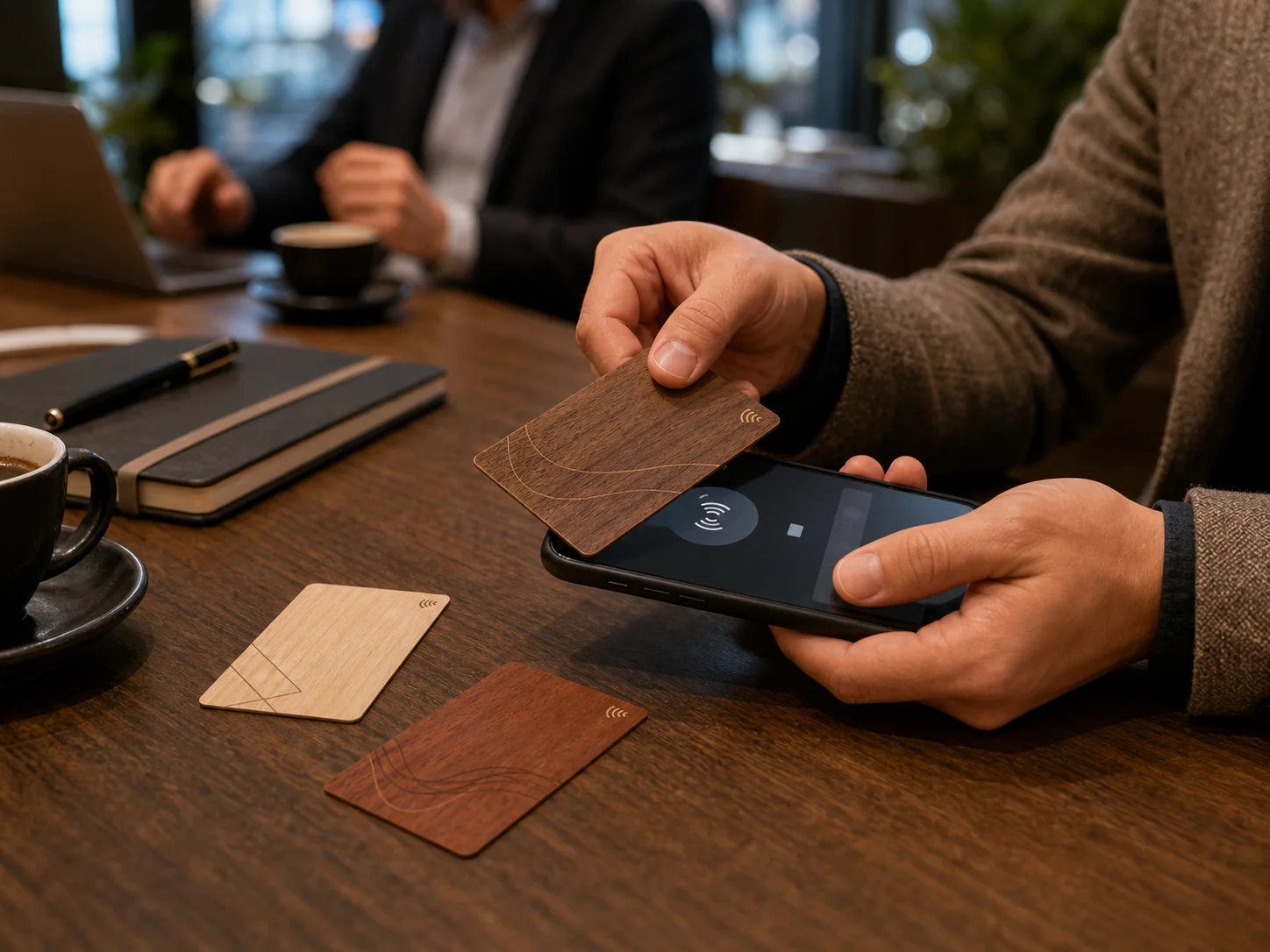
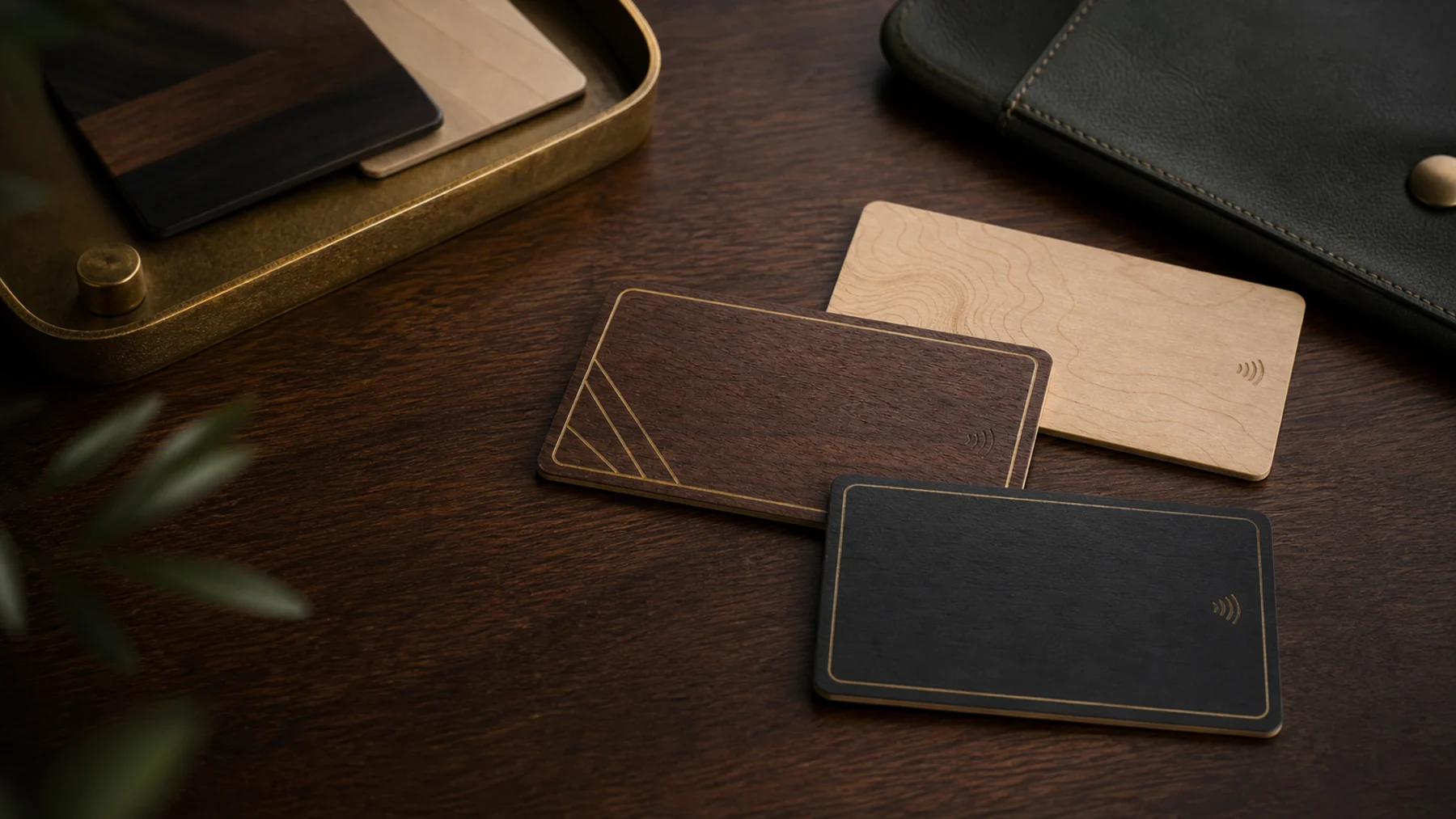
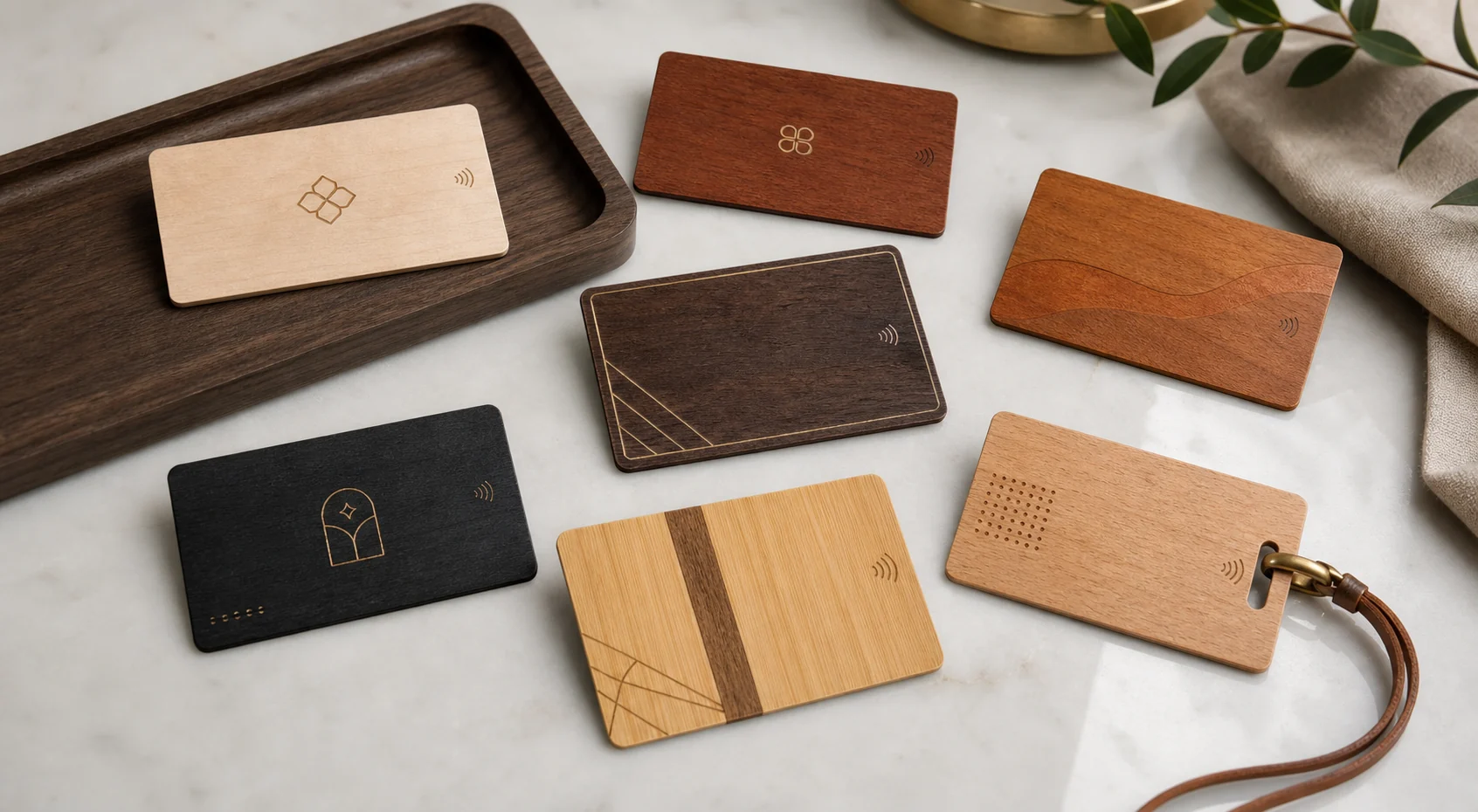
Choose memory based on the encoded record.
A simple URL usually needs less memory than richer NDEF records. Decide whether the data is a short URL, vCard, campaign URL, verification link, or multi-record setup before selecting NFC tag capacity.
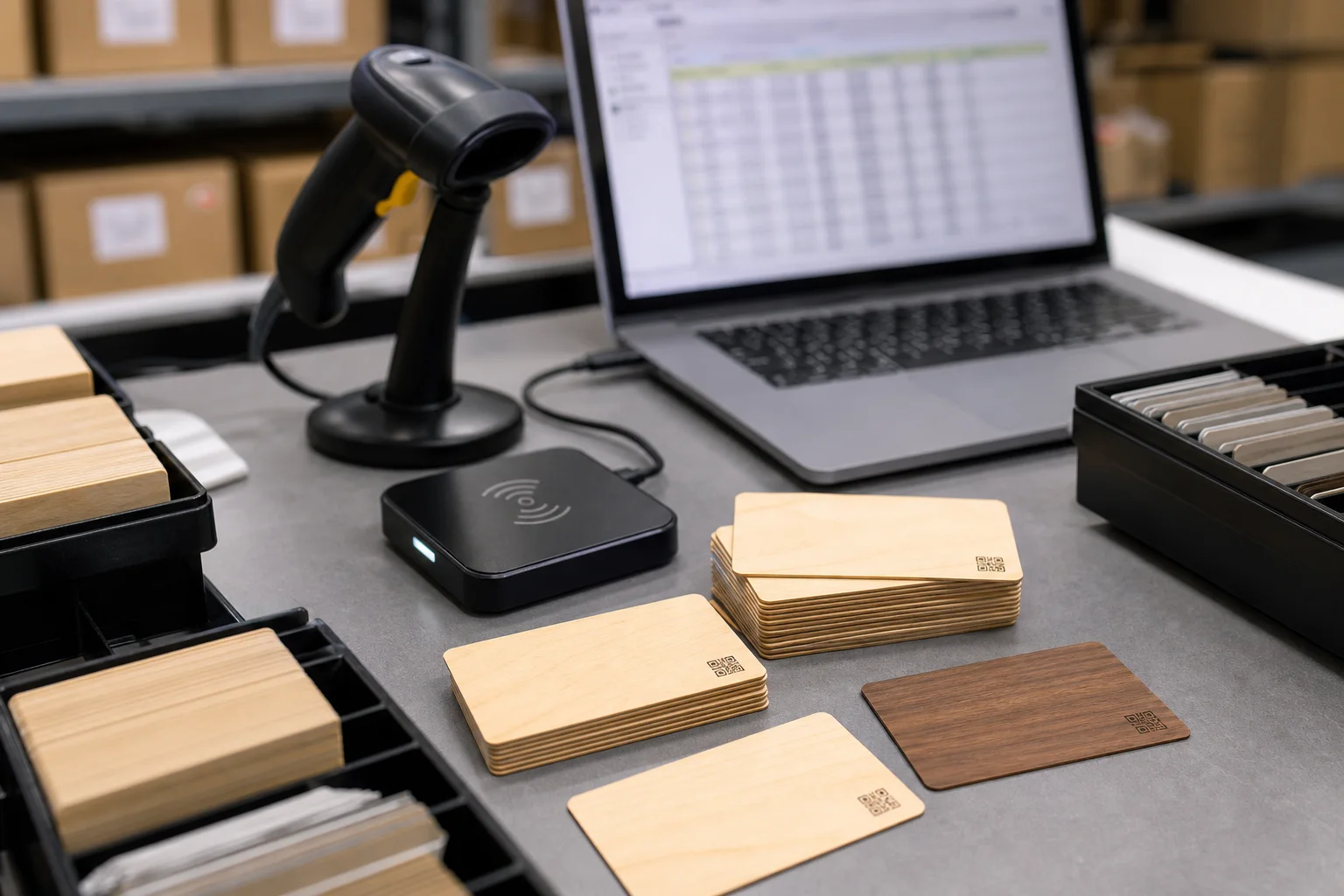
Add QR when the card has a public interaction.
QR backup is useful for events, retail, menus, and guest cards because not every phone user knows where to tap or has NFC enabled in the same way.
144-byte NFC tag vs 215 vs 216, by memory.
144-byte NFC tag (about 144 bytes of usable memory) is enough for a single URL or short vCard and is the most cost-effective for large runs. 504-byte NFC tag (about 504 bytes) suits richer vCards and app launches. 888-byte NFC tag (about 888 bytes) holds the largest records or several data blocks. Pick the smallest chip that comfortably fits the encoded record.
Lock records when the brand link must not change.
For a fixed brand or product link, the NDEF record can be locked after encoding so it cannot be overwritten in the field. For evolving campaigns or reusable sample cards, records can stay editable. Decide this before production, because it changes how cards are tested, approved, and reissued.
Best uses
- NFC business cards
- Tap-to-menu and tap-to-profile cards
- Loyalty and event landing pages
- Product authentication cards
Frequently asked questions
Which NFC tag chip should I choose?
144-byte NFC tag (~144 bytes) for a single URL or short vCard, 504-byte NFC tag (~504 bytes) for richer records, 888-byte NFC tag (~888 bytes) for the largest payloads. Choose the smallest that fits.
Can NFC tag records be locked?
Yes. Records can be locked after encoding so the link can never be overwritten, or left editable for evolving campaigns — decided before production because it changes testing and reissue.
Do NFC tag wood cards work with all phones?
Modern NFC phones read NFC tag cards natively. A printed QR backup covers users who have NFC disabled or don't know where to tap.
Specification
| Card size | CR80 and custom dimensions by drawing |
|---|---|
| Card body | Plastic-free, FSC-certified wood body options |
| Thickness | 0.80 mm to 2.0 mm by wood species and chip |
| Minimum order | None — single samples to production runs |
| Production time | About one week after artwork and sample approval |
| RF planning | Chip, antenna, thickness, and finish approved together |
| Approval route | Material sample, working RF sample, production proof |
| Frequency | 13.56 MHz NFC |
| Chip route | 144-byte NFC tag, 504-byte NFC tag, or 888-byte NFC tag selected by memory need and data plan. |
| Encoding | NDEF URL, short URL, profile, vCard, campaign URL, optional QR fallback, and a write-lock decision. |
| Approval check | Confirm tap position, record length, redirect behavior, analytics URL, and QR fallback before artwork approval. |
| Typical chips | 144-byte NFC tag, 504-byte NFC tag, or 888-byte NFC tag selected by payload size |
Related wood RFID card pages
- RFID UID Converter & Wiegand 26-bit Calculator
- LF Wooden RFID Cards
- HF and NFC Wooden Cards
- Entry-Level HF Wooden RFID Cards
- AES-Secured HF Wooden RFID Cards
- Standard HF Access Wooden RFID Cards
- High-Security AES Wooden RFID Cards
- UHF Wooden RFID Cards
- Programmable 125 kHz Wooden RFID Cards
- Wooden RFID Card Encoding