Wood material guide
Wooden RFID Card Materials
Wooden RFID card materials each behave differently, so choose the wood body once the program route is clear. Walnut, birch, beech, cherry, bamboo, sapele, cork, and black wood each respond differently to laser engraving, white ink, foil, QR codes, edge finishing, and RFID sample approval.
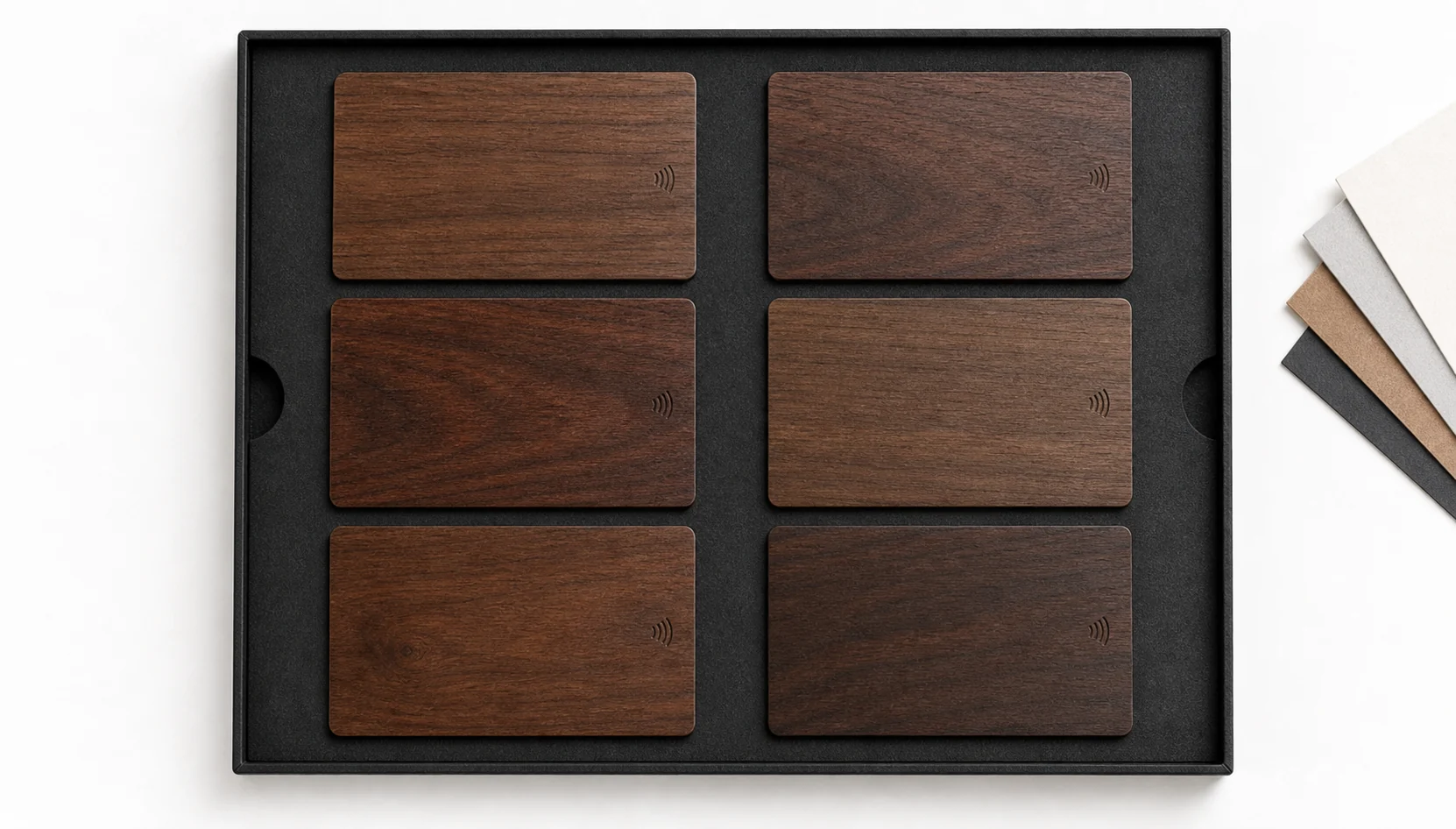
Wooden RFID Card Materials pages
- Walnut RFID Cards
Walnut RFID cards are the most serious wood direction in the range — dark, warm, and quiet, easy to make premium without looking artificial. These walnut wood NFC cards are strongest for private memberships, executive access, boutique hotel keys, sample boxes, and short luxury batches, where the buyer will judge grain, edge, and finish closely.
- Birch RFID Cards
Birch RFID cards are the clearest light-wood direction in the range — pale, clean, and readable, ideal when artwork clarity matters. These birch wood NFC cards are strongest for hotel key cards, event credentials, NFC business cards, QR or serial-heavy programs, and full-color print, where the buyer still wants a natural wood card.
- Beech RFID Cards
Beech RFID cards are the balanced light-wood direction in the range — warm, clean, and natural, easier to read than darker species. These beech wood NFC cards are strongest for boutique hotel keys, wellness memberships, cultural venues, NFC business cards, guest credentials, and approval samples, where the buyer wants a premium natural card without losing print contrast.
- Cherry Wood RFID Cards
Cherry wood RFID cards are the warm, crafted direction in the range — honey-brown, personal, and polished, premium without becoming as dark or formal as walnut. These cherry NFC cards are strongest for boutique hotel keys, wellness memberships, lifestyle clubs, gift cards, invitations, and tap cards, where the buyer wants visible natural warmth and a refined finish.
- Bamboo RFID Cards
Bamboo RFID cards are the clearest sustainability signal in the wood card range — light, fast-growing, and clean, easy to position for hospitality without looking synthetic. These bamboo NFC cards are strongest for eco hotels, resorts, events, coworking access, NFC business cards, and approval samples, where the buyer wants a natural material story with clear scan and print behavior.
- Sapele RFID Cards
Sapele RFID cards are the richer honey-copper direction in the range — expressive and premium, yet refined enough for serious access and membership programs. These sapele wood NFC cards are strongest for limited-edition memberships, boutique hotel keys, invitation sets, NFC business cards, and sample boxes, where the buyer wants more natural movement than a quiet dark-wood card.
- Cork RFID Cards
Cork RFID cards are the most tactile direction in the wood card range — light, natural, and soft in the hand. These cork NFC cards suit retreats, wellness brands, eco hospitality, lifestyle memberships, and tap campaigns, where the surface feel is part of the experience.
- Black Wood RFID Cards
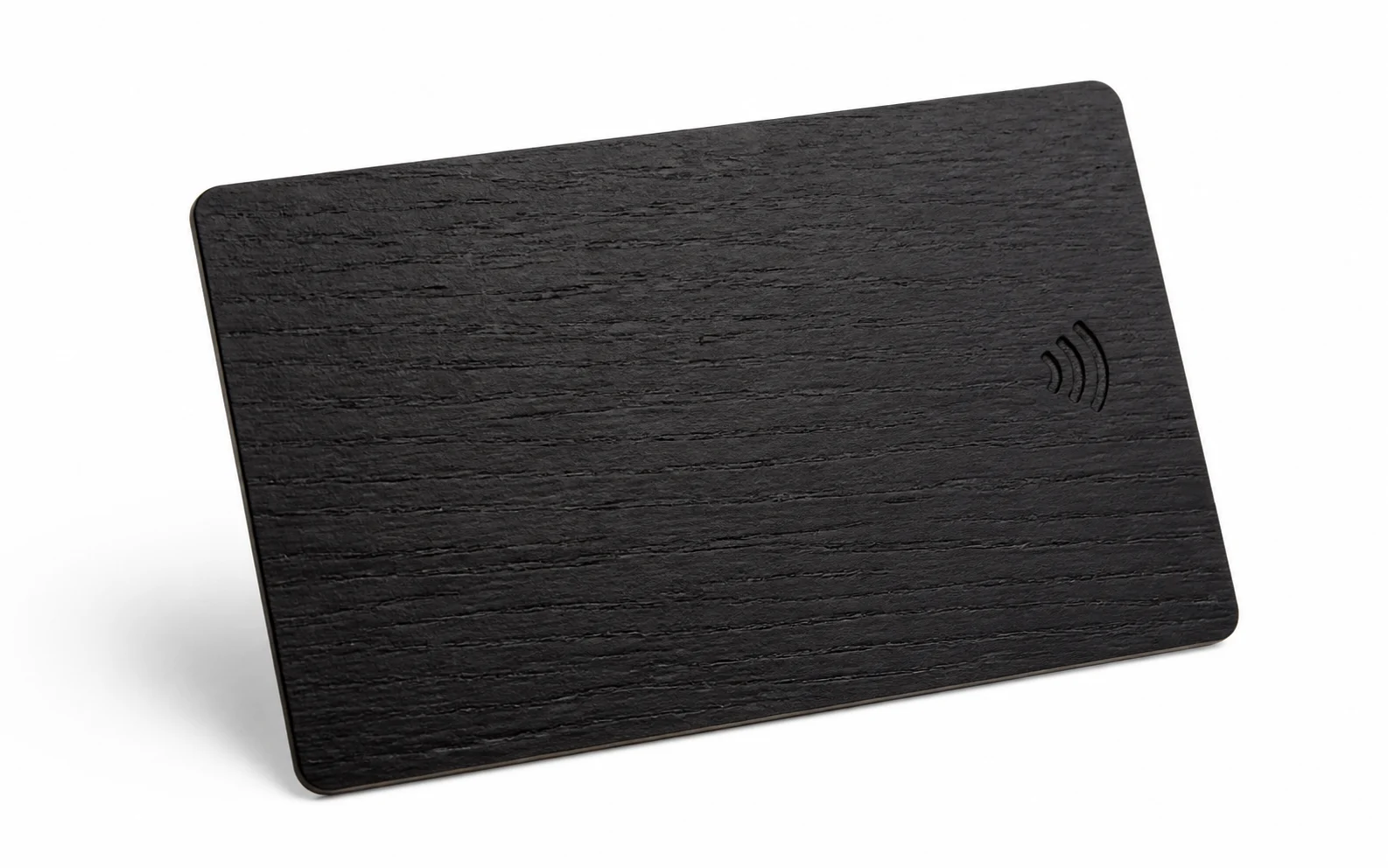
Black wood RFID cards are the most formal wood direction in the range — dark, quiet, and architectural, easy to make premium without looking decorative. These black wood NFC cards are strongest for private memberships, executive access, boutique hotel keys, VIP invitations, and short luxury batches, where the buyer will judge contrast, edge, and finish closely.
Visual references
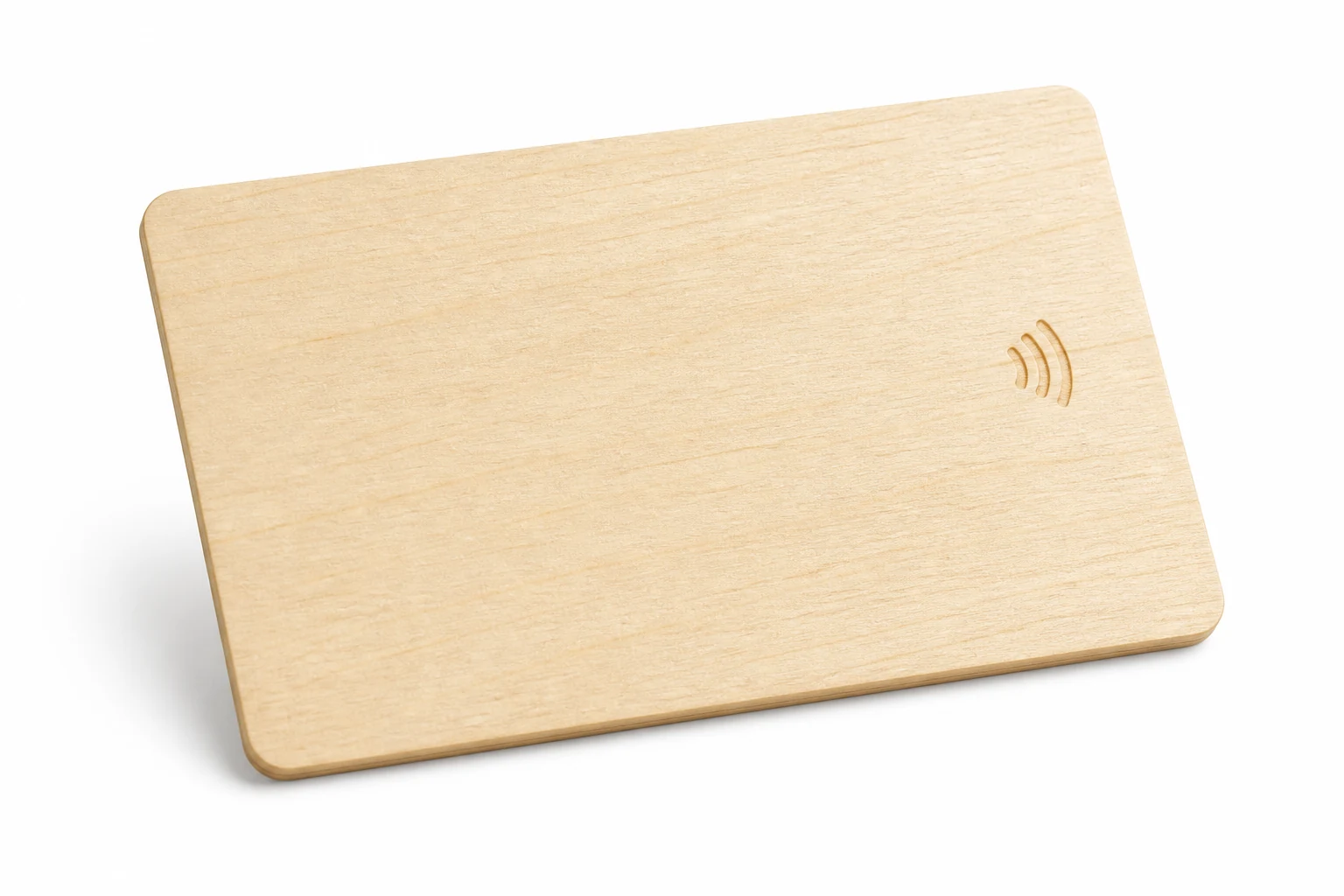
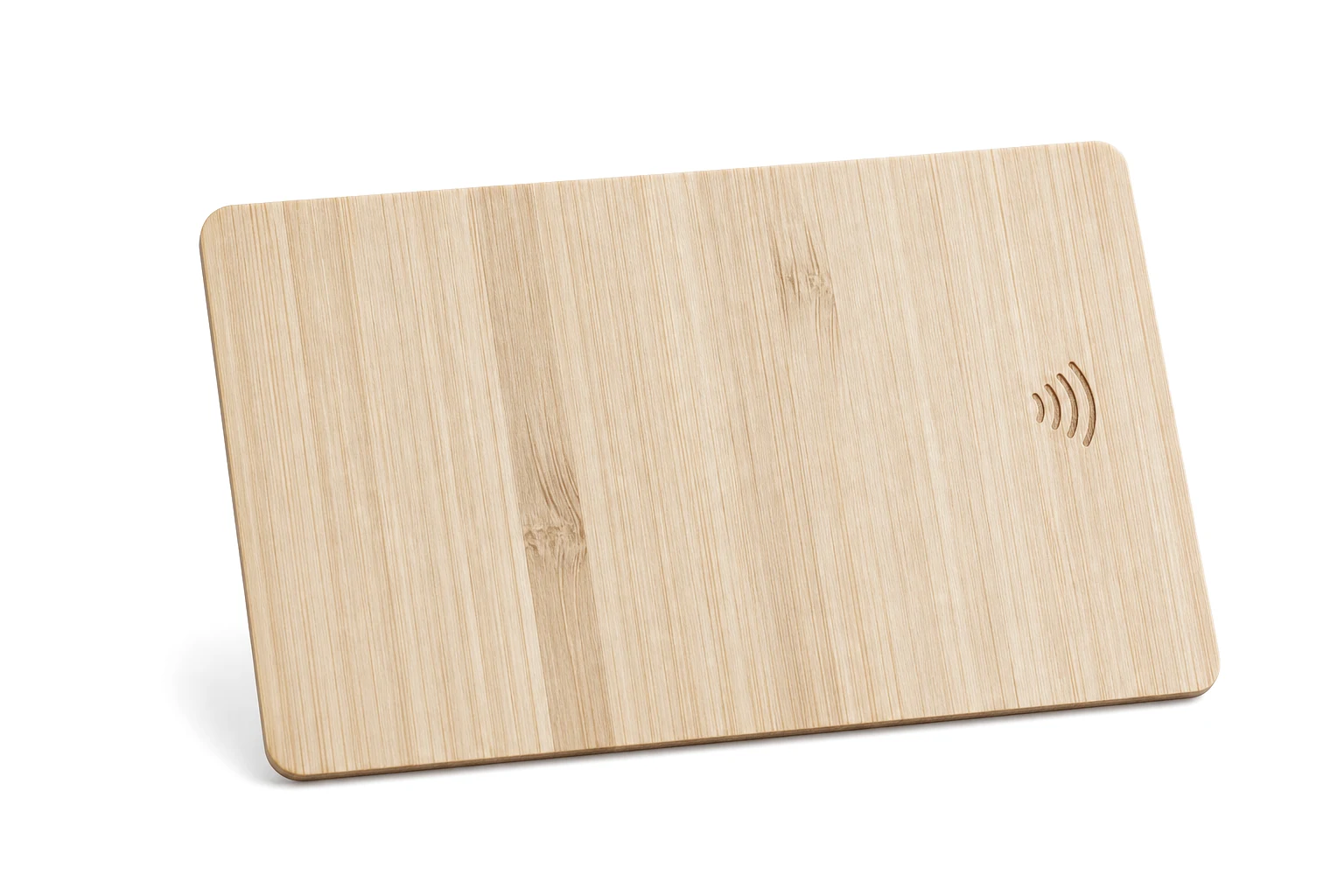
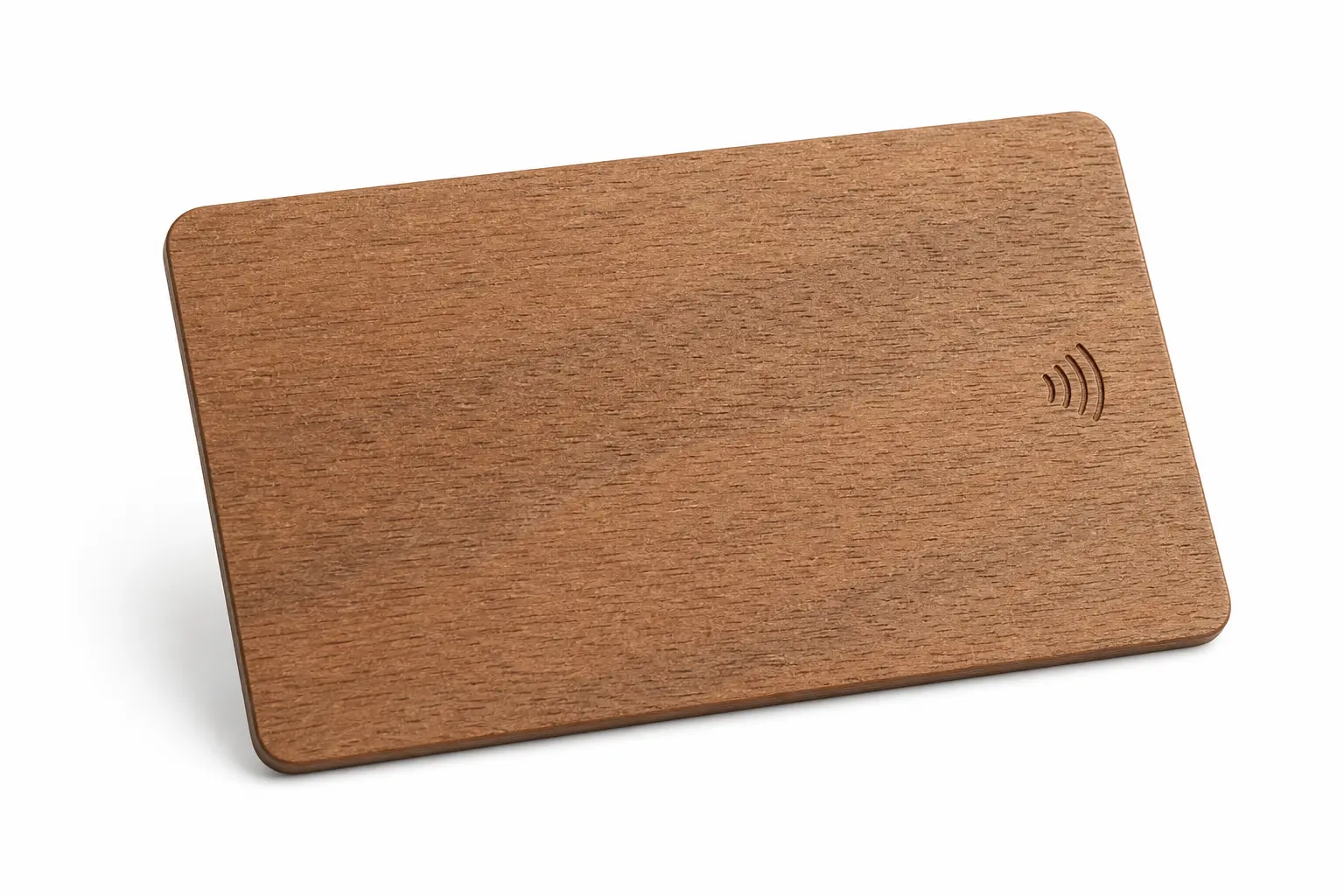
Material choice changes the whole approval path.
Wood species affects grain tolerance, print contrast, laser tone, edge feel, color shift, packaging impression, and how the final RFID card is presented to buyers or members.
Every wood type has a separate page because comparison matters.
A buyer choosing beech for a hotel key card has different needs than a buyer choosing walnut for an executive NFC card. Each material page explains the use cases, finish routes, RFID notes, and approval details.
Frequently asked questions
Which wood is best for an RFID card?
It depends on the program: walnut and black wood suit private clubs and executive cards, birch and beech suit hotel keys and print-heavy artwork, bamboo carries the clearest sustainability signal, and cherry and sapele sit between warmth and formality. All woods are available as FSC-certified stock. Each material page explains the trade-offs.
Do different woods change how the card prints?
Yes. Pale woods hold full-color UV, QR codes, and fine data cleanly, while darker woods reward laser engraving, opaque white ink, and foil accents. Print behavior is a core part of the material choice.
Does the wood species affect RFID performance?
The chip and antenna matter more than the species, but body thickness (0.80 mm to 2.0 mm across the range) and finish stack do influence reading. Every material is approved with a working RFID sample in the final construction.
Specification
| Wood pages | Walnut, birch, beech, cherry, bamboo, sapele, cork, black wood |
|---|---|
| Finish comparison | Laser, UV print, white ink, foil, spot gloss, QR, serials |
| RF approval | Chip, antenna, body thickness, and finish tested together |
| Best first step | Choose use case, wood tone, print contrast, and quantity |