Wooden Card RFID Technology Types
Entry-Level HF Wooden RFID Cards
entry-level HF wooden RFID cards are a lean 13.56 MHz route for event tickets, simple guest credentials, limited-use access, transit-style programs, and lightweight loyalty. The exact generation matters: The counter-enabled generation supports password protection, counters, and NFC Forum Type 2 Tag behavior, while legacy the 3DES variant should only be retained where an installed platform specifically requires its 3DES authentication route.
(01) — Route brief
Match the chip, data, and approval path before choosing the finish.
This is the production brief for Entry-level HF: what it is for, how it behaves, what needs encoding, and what must pass before the batch starts.
(02) — Visual references
Compare the details that change the finished card.
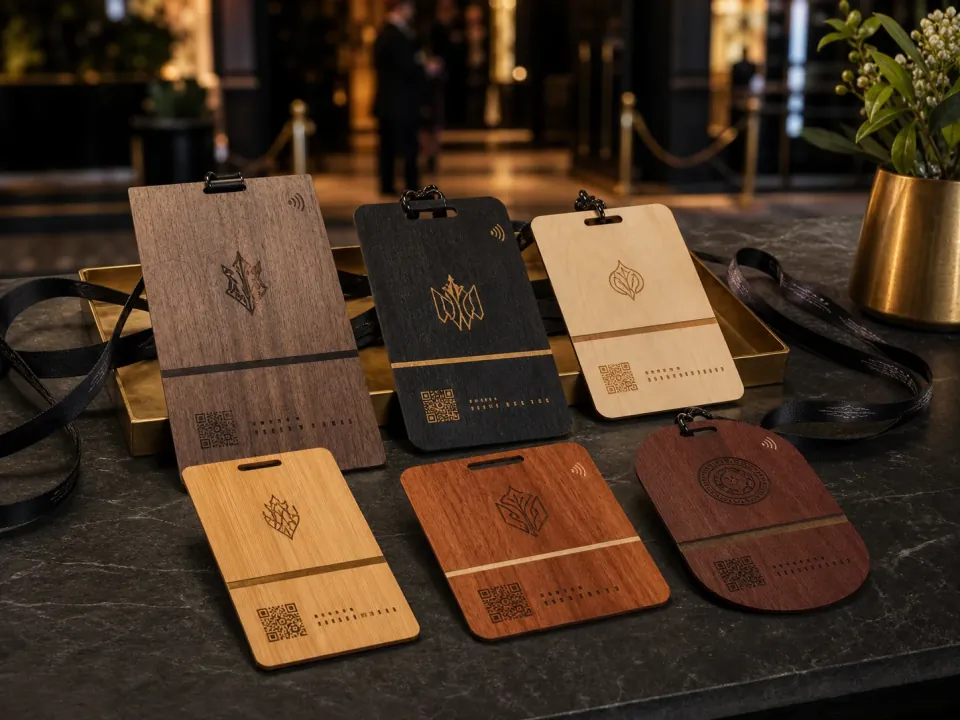
Use this board to read the essentials at a glance: wood finish, marking contrast, edge quality, reader fit, and presentation style.
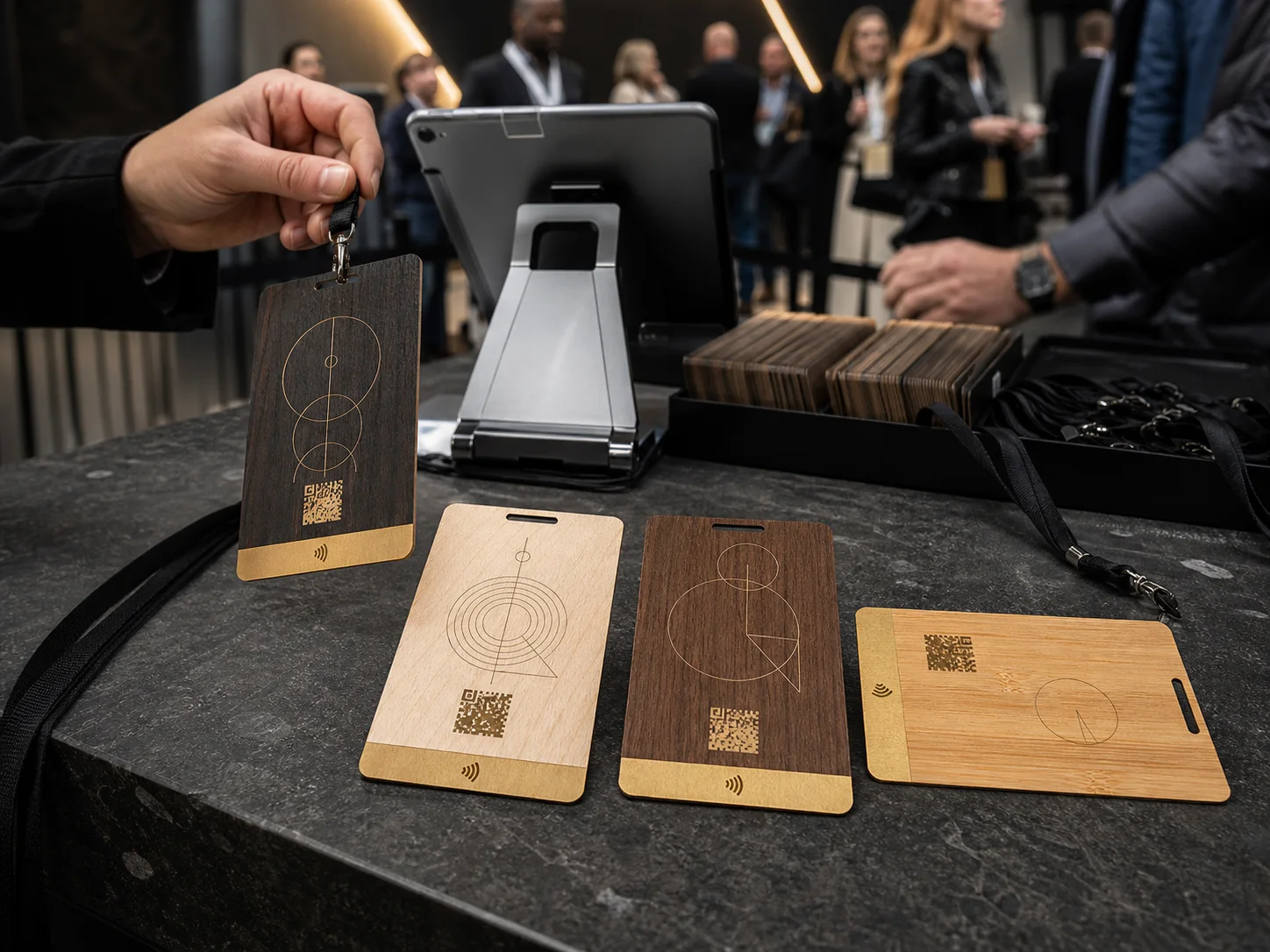
Event, guest, day-pass, and loyalty workflows are defined around the platform's exact chip generation and ticket data.
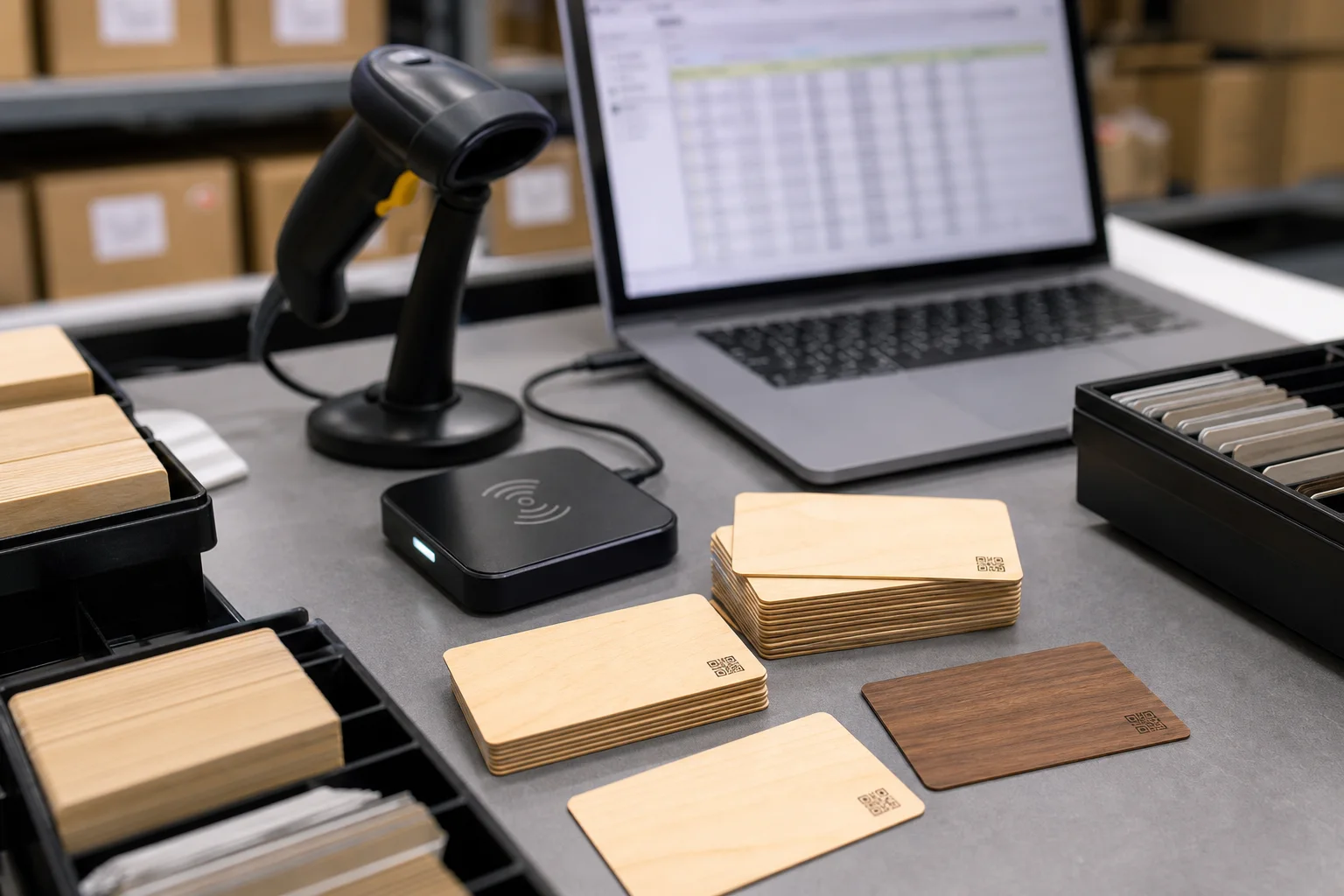
NDEF, UID reference, counters, password or legacy 3DES data, and lock bytes are approved before the card run.
Choose entry-level HF from the platform specification.
Entry-level HF is usually selected because an event, ticketing, loyalty, or guest platform already expects its memory structure and commands. Confirm the exact product generation rather than ordering against the family name alone.
The counter-enabled generation is the practical current route for lean programs.
The counter-enabled generation supports limited-use tickets, configurable counters, lock bits, and password-protected memory. It can also support NFC Forum Type 2 Tag behavior when the phone or app workflow needs it.
Treat the 3DES variant as a compatibility requirement.
The 3DES variant uses 3DES authentication and is retained for installed systems that specifically require it. For a new AES-authenticated program, the dedicated AES-secured lightweight HF route should be assessed instead.
Approve the ticket logic in the final wood body.
Confirm memory size, counters, one-time data, authentication, lock bytes, app behavior, and reader response on a working wooden sample before artwork and production are released.
(07) — Applications
Best uses for Entry-level HF.
The practical route is selected from the system, audience, and handling context before the final wood finish and mark treatment are approved.
Best for
- Event tickets and day passes
- Simple guest and visitor credentials
- Lightweight loyalty programs
- Transit-style and limited-use ticket routes
Quote details
- Target reader, lock, phone, scanner, or platform
- Wood species, finish, quantity, and packaging need
- Artwork files, data file, and encoding requirements
- Sample approval and delivery deadline
(08) — Specification
Production details to confirm before sample or batch.
Wood card production should confirm body construction, finish, chip route, data handling, marking layers, and approval samples in one brief.
(FAQ) — Common questions
Questions buyers ask about Entry-level HF.
01What are entry-level HF wooden cards used for?
Limited-use event tickets, day passes, simple guest credentials, lightweight loyalty, and reader-led ticketing programs that need a lean 13.56 MHz credential.
02Which entry-level HF generation should I choose?
Use the exact platform specification. The counter-enabled generation is the practical current route for password protection, counters, lock bits, and optional NFC Forum Type 2 Tag behavior. The 3DES variant is retained only where an installed system requires its legacy 3DES route.
03Can phones read entry-level HF cards?
They can when the chip, NDEF layout, and app flow are configured for NFC Forum Type 2 Tag behavior. Most projects still choose entry-level HF from a ticketing platform or reader requirement rather than public phone tap alone.
(11) — Quote Entry-level HF
Send quantity, chip, material, print and encoding requirements.
No PVC card coreNo PET laminateReal veneer or solid wood bodyEmbedded RFID/NFC electronicsUID, NDEF, and access encodingLaser, UV print, QR, and serialization