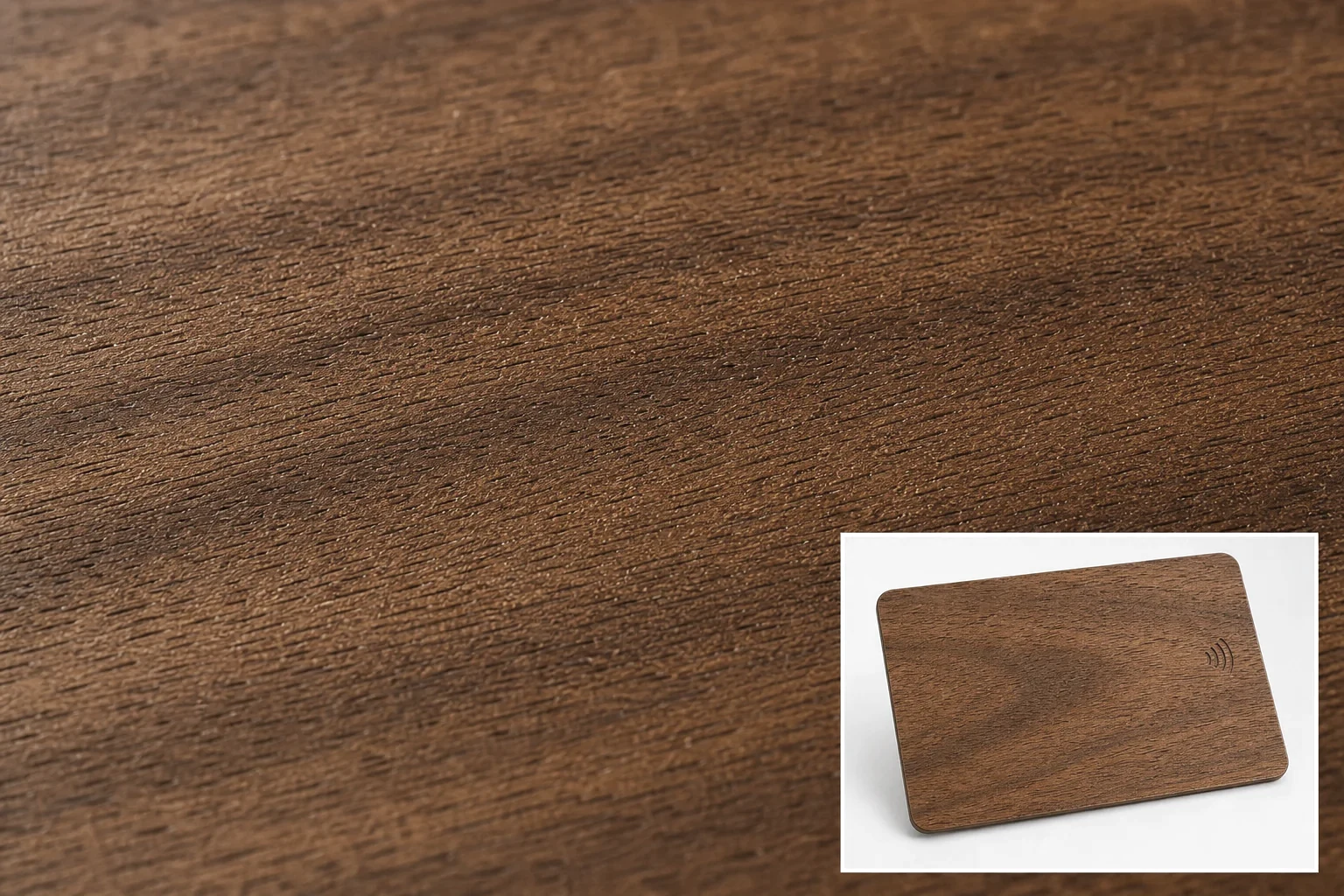
Natural copper grain
Sapele RFID Cards
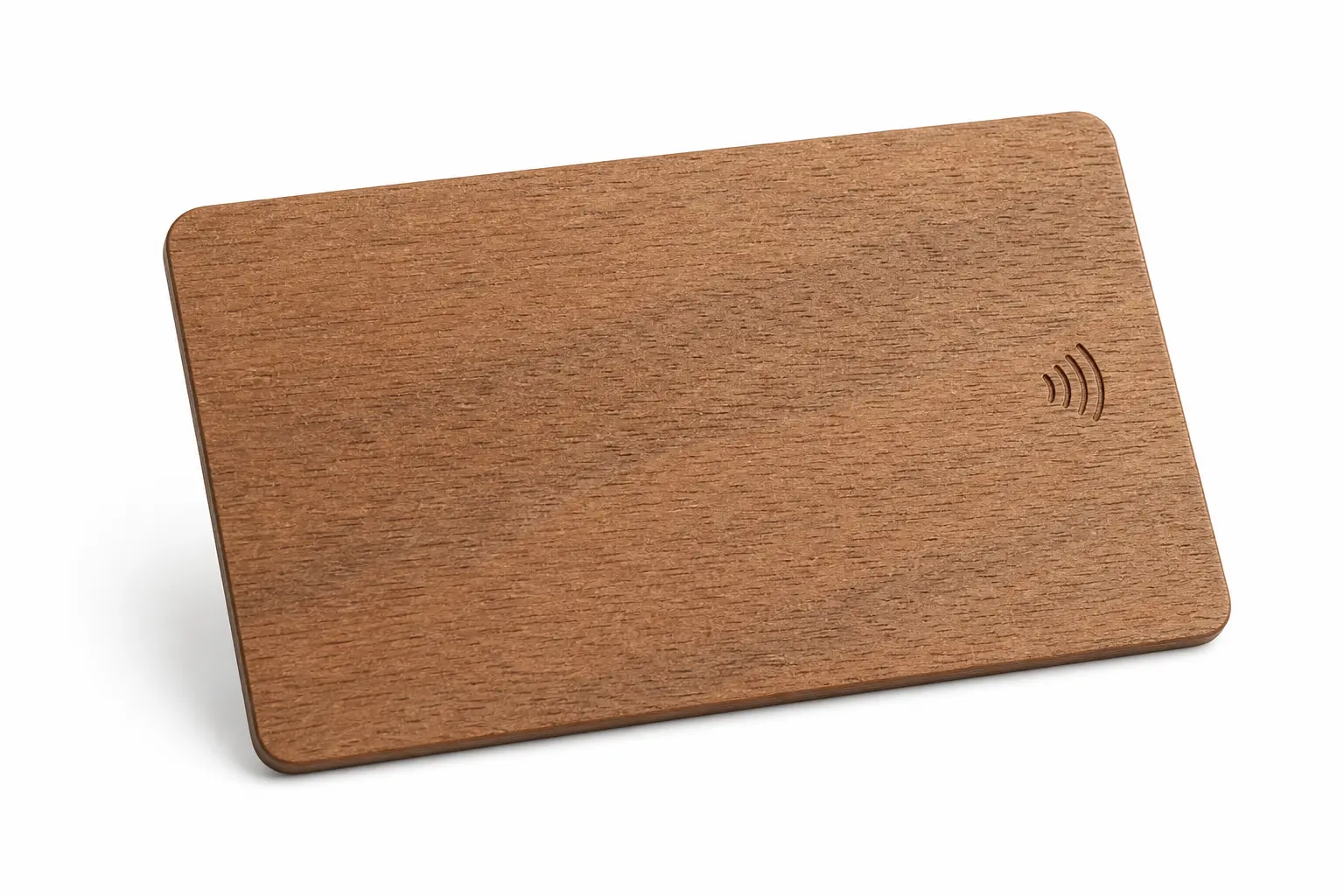
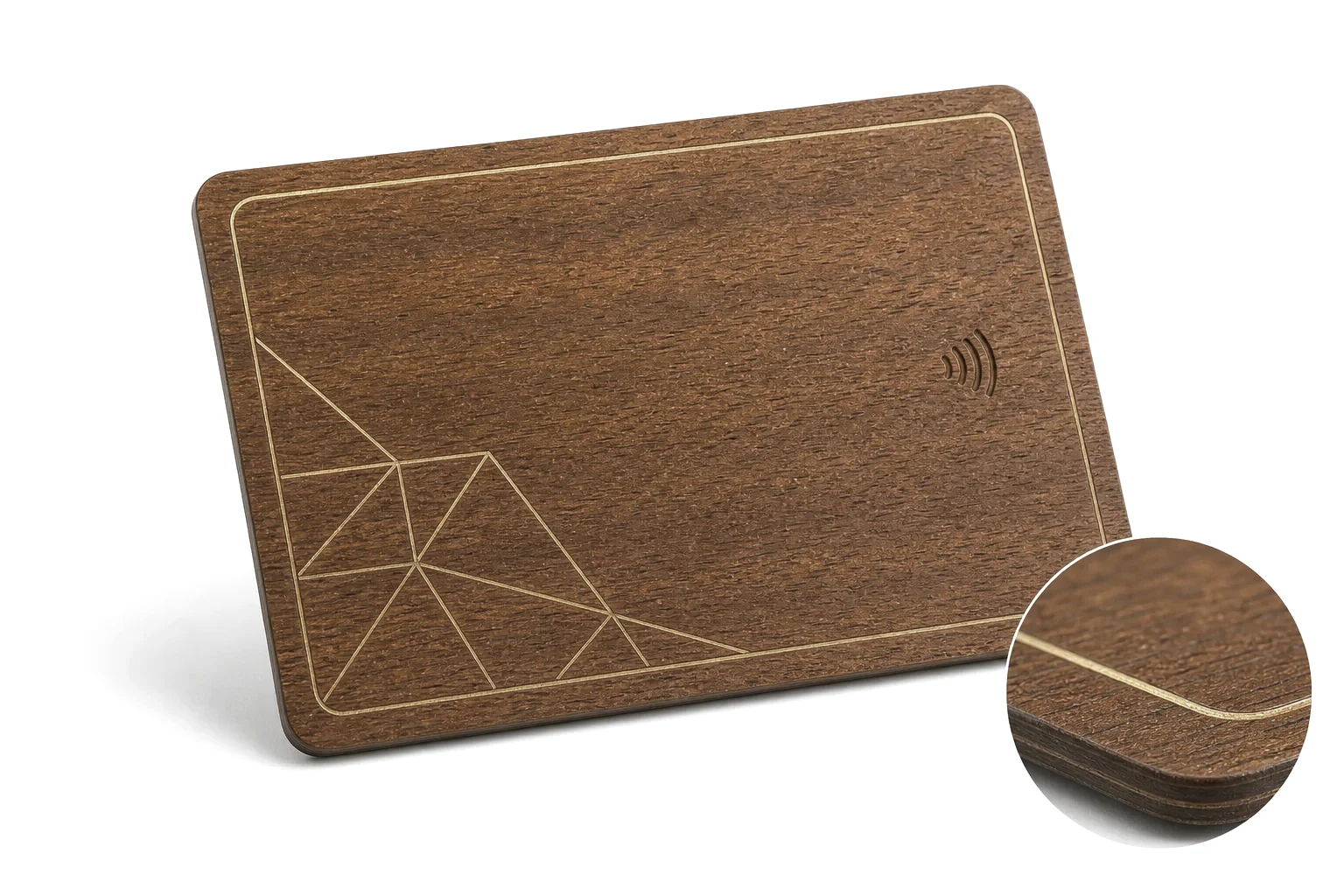
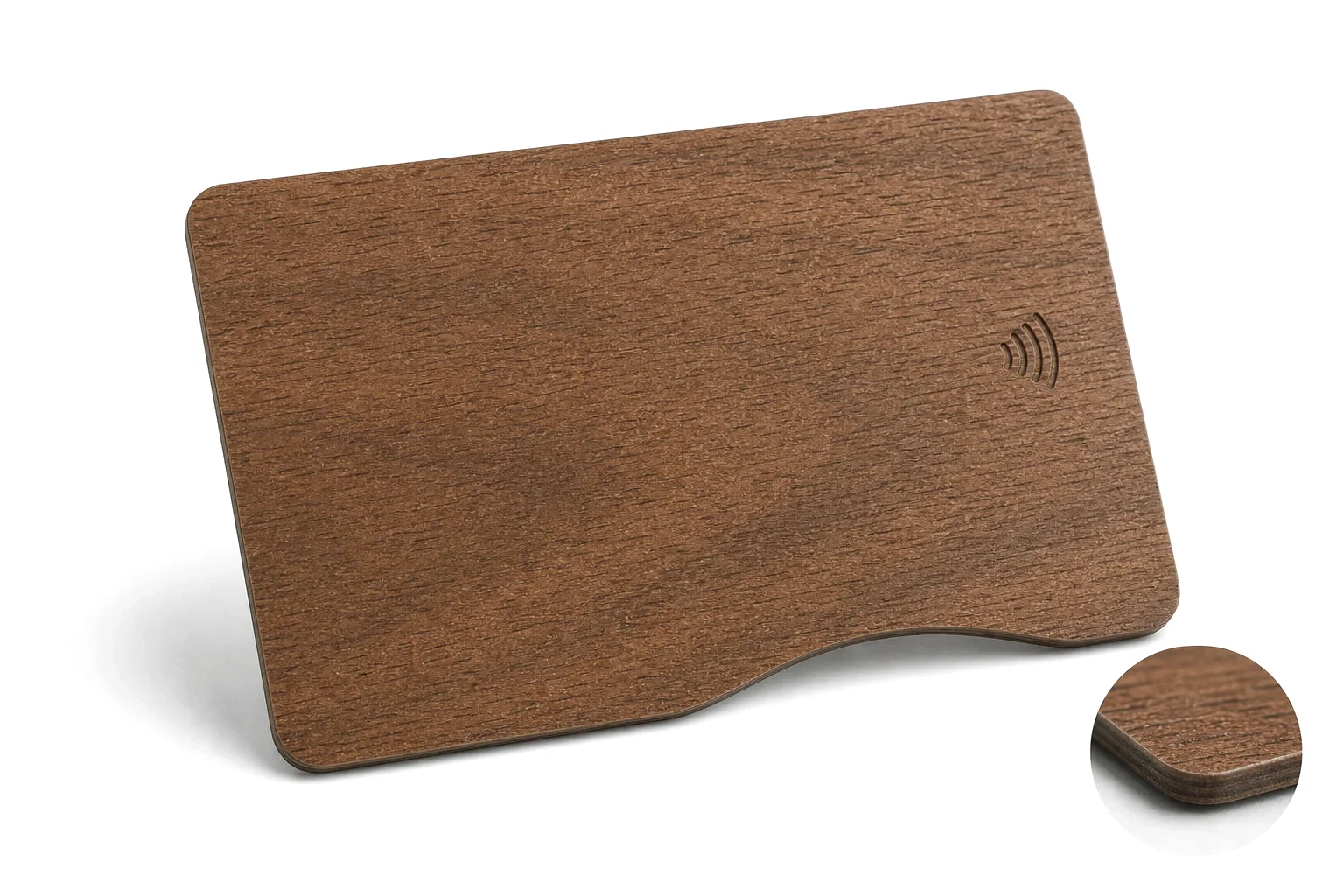
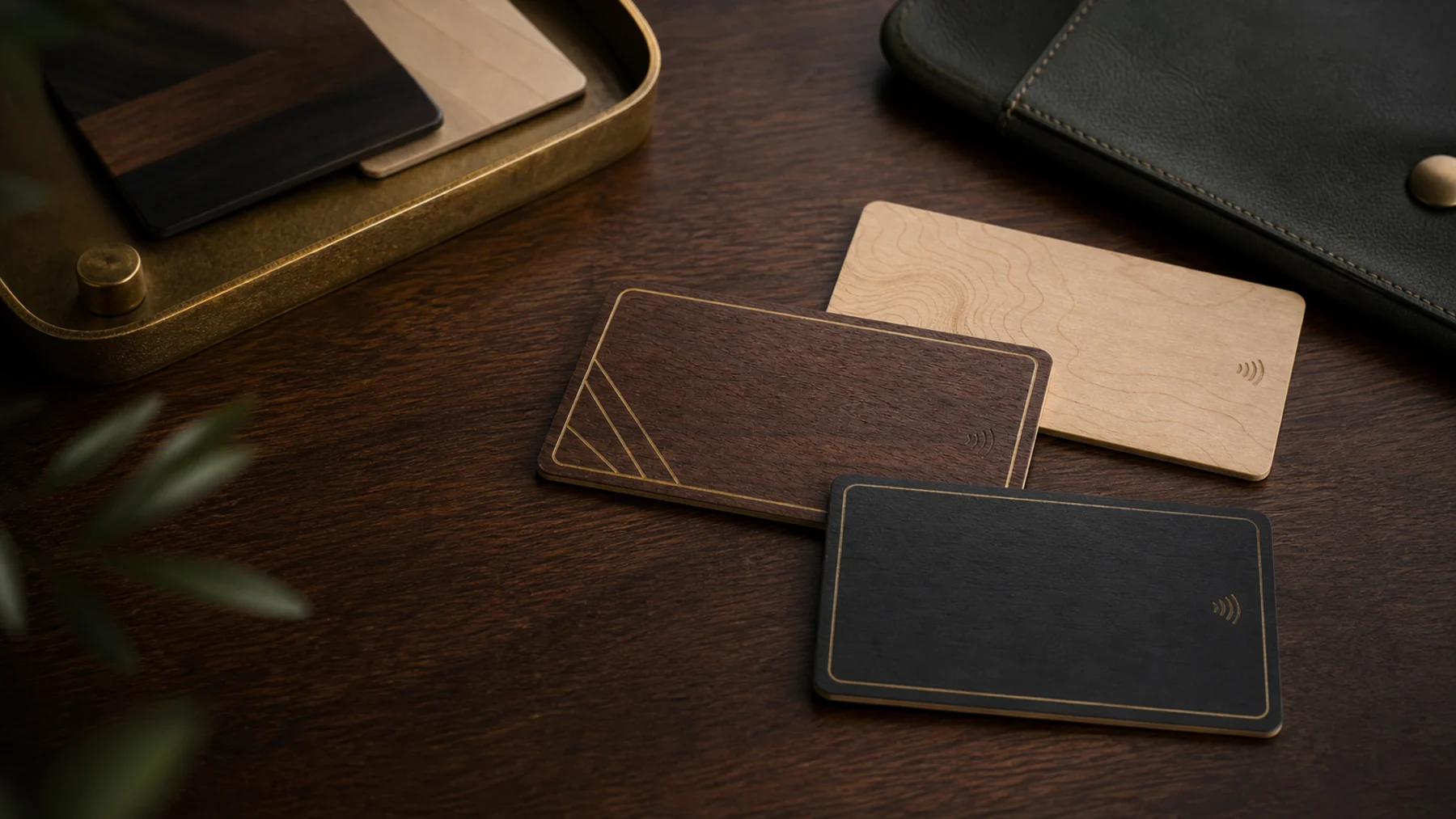
Sapele RFID cards are the richer honey-copper direction in the range — expressive and premium, yet refined enough for serious access and membership programs. These sapele wood NFC cards are strongest for limited-edition memberships, boutique hotel keys, invitation sets, NFC business cards, and sample boxes, where the buyer wants more natural movement than a quiet dark-wood card.
Sapele wood image set
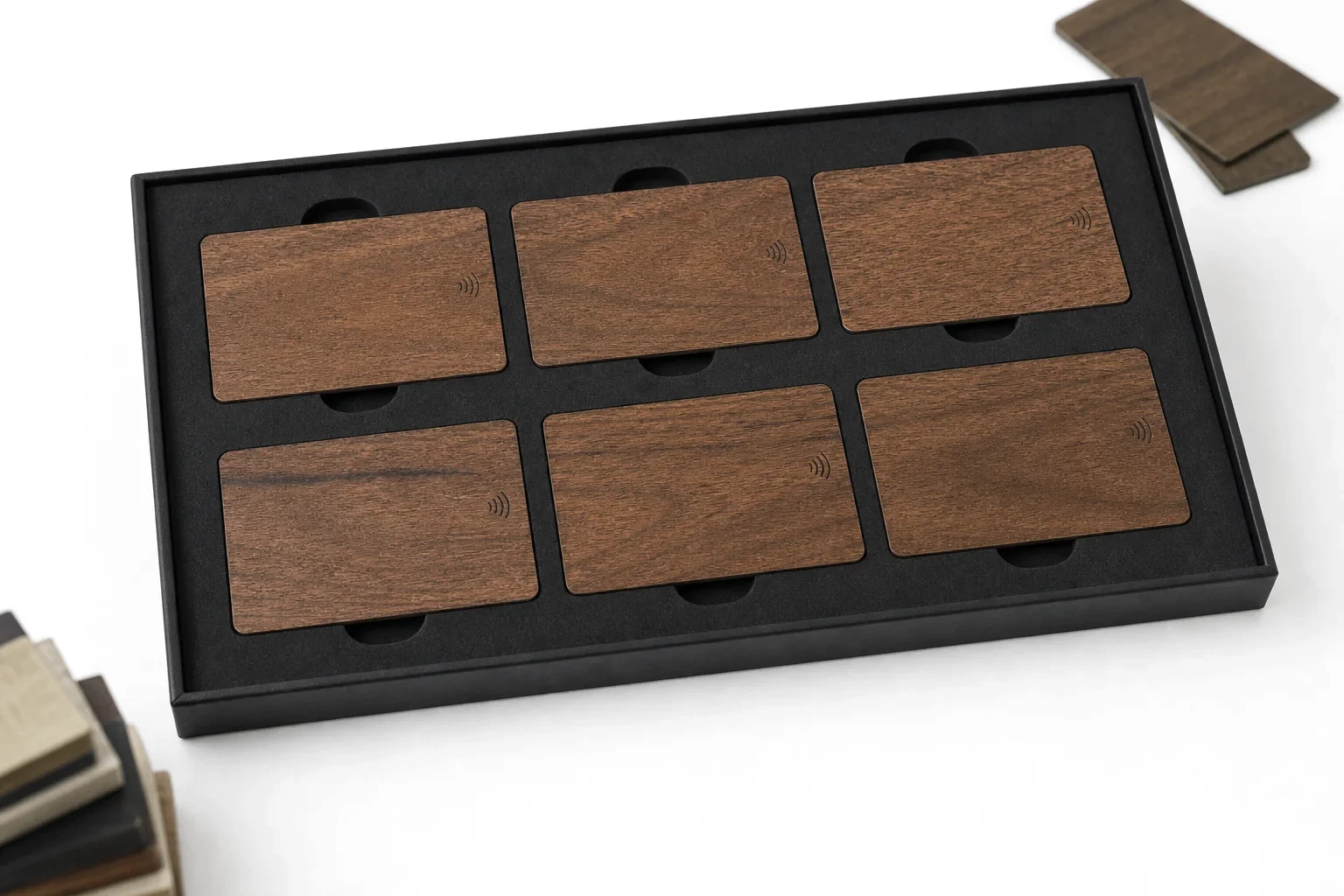
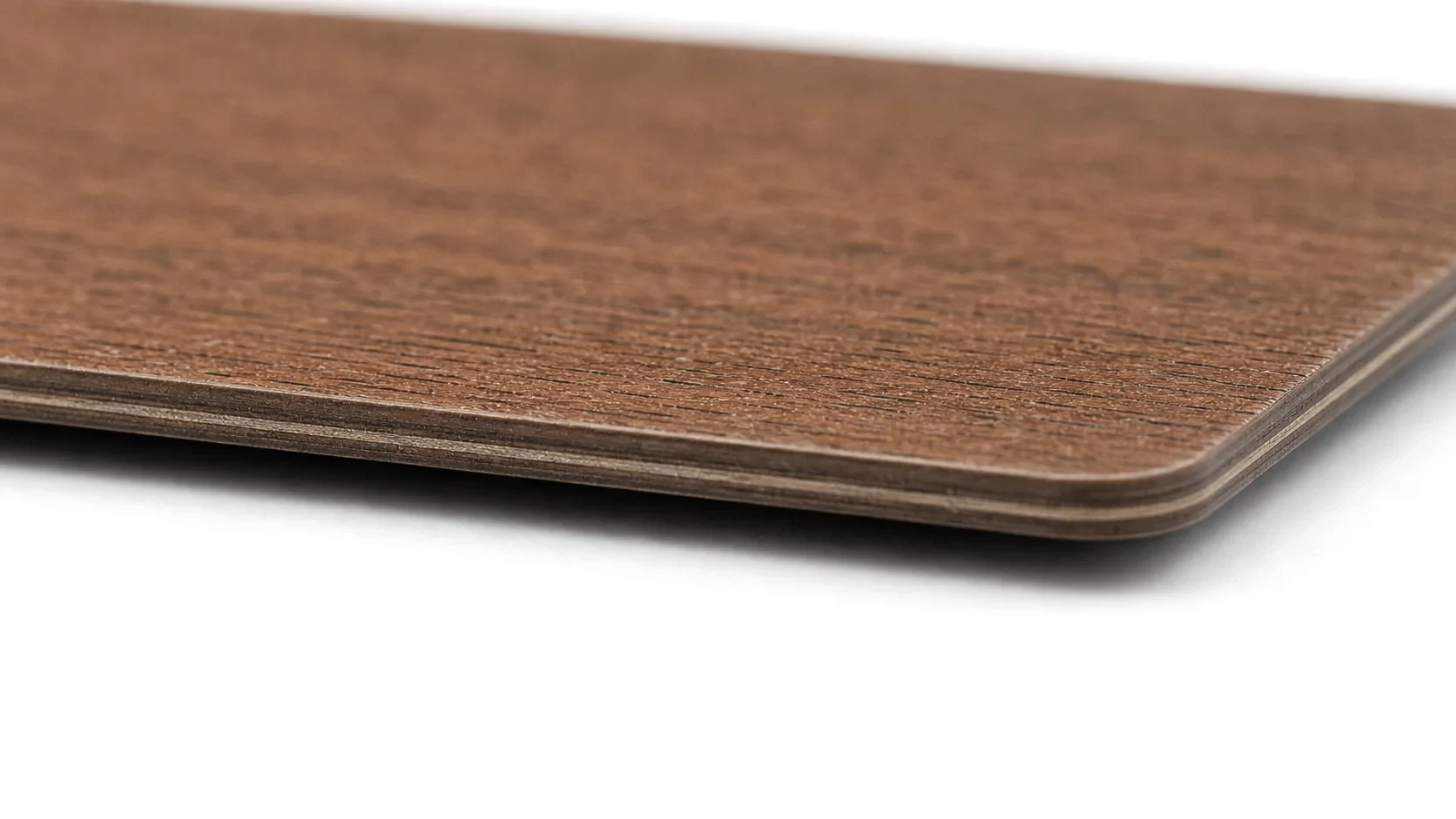
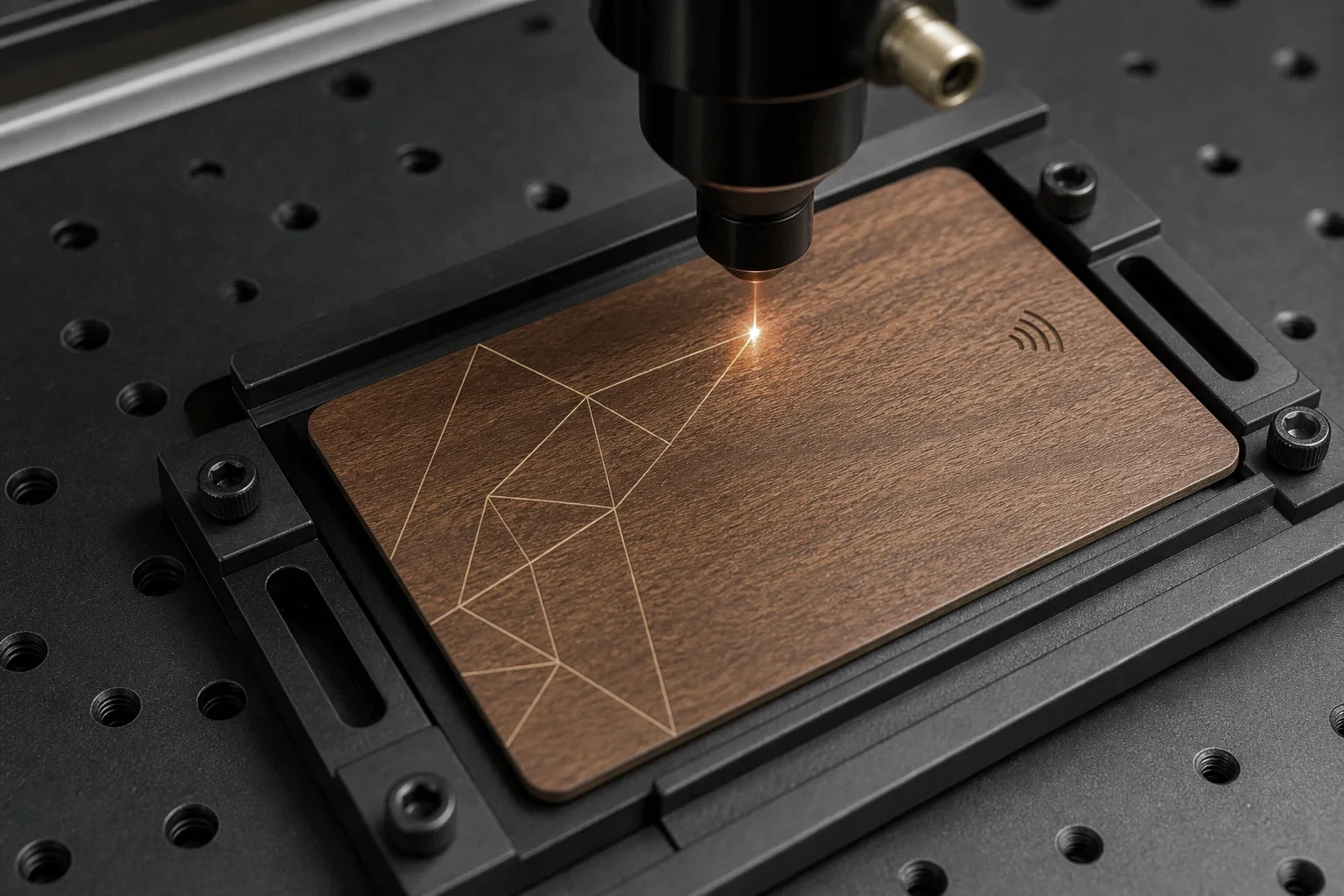
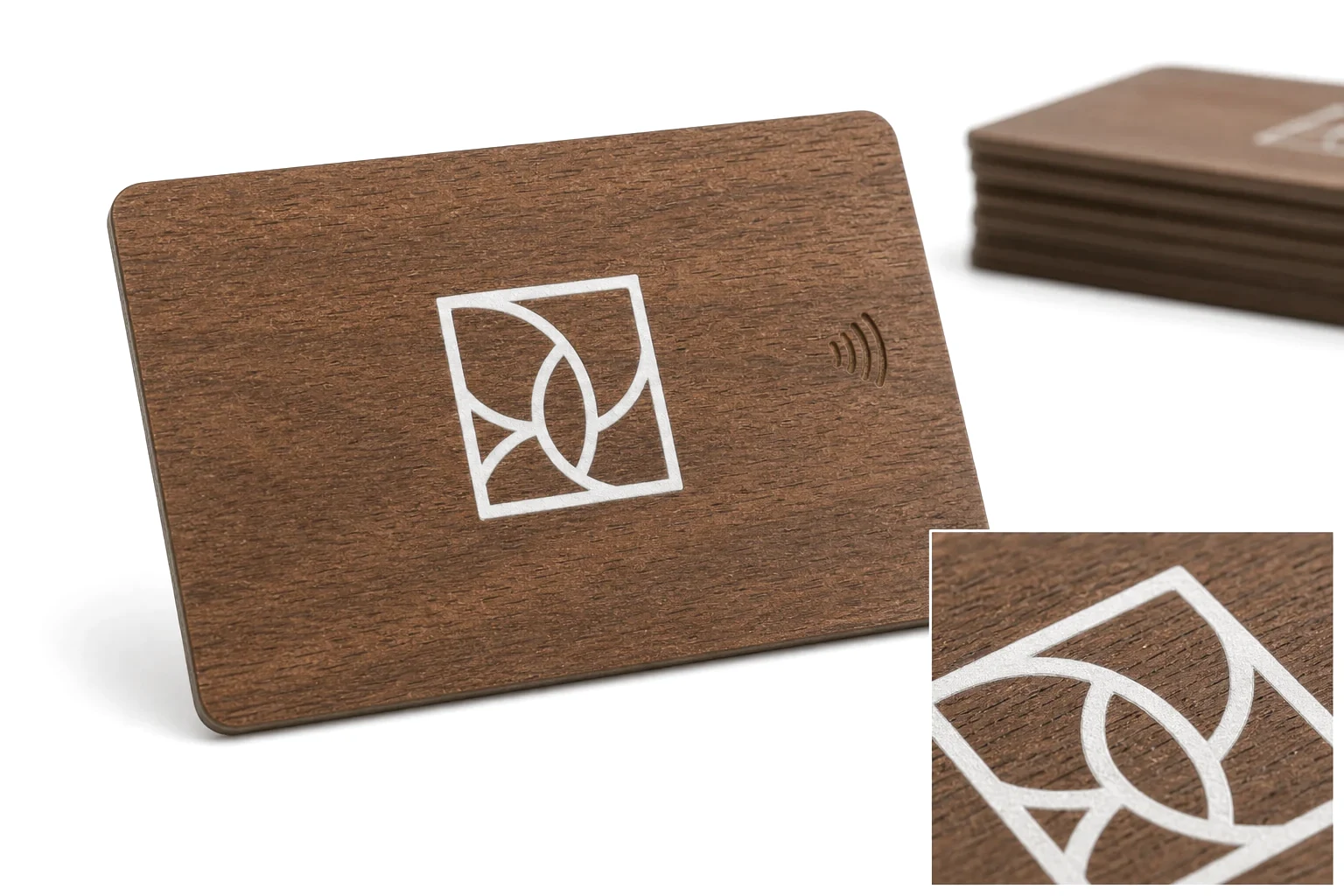
Best uses
- Limited-edition membership and VIP access cards
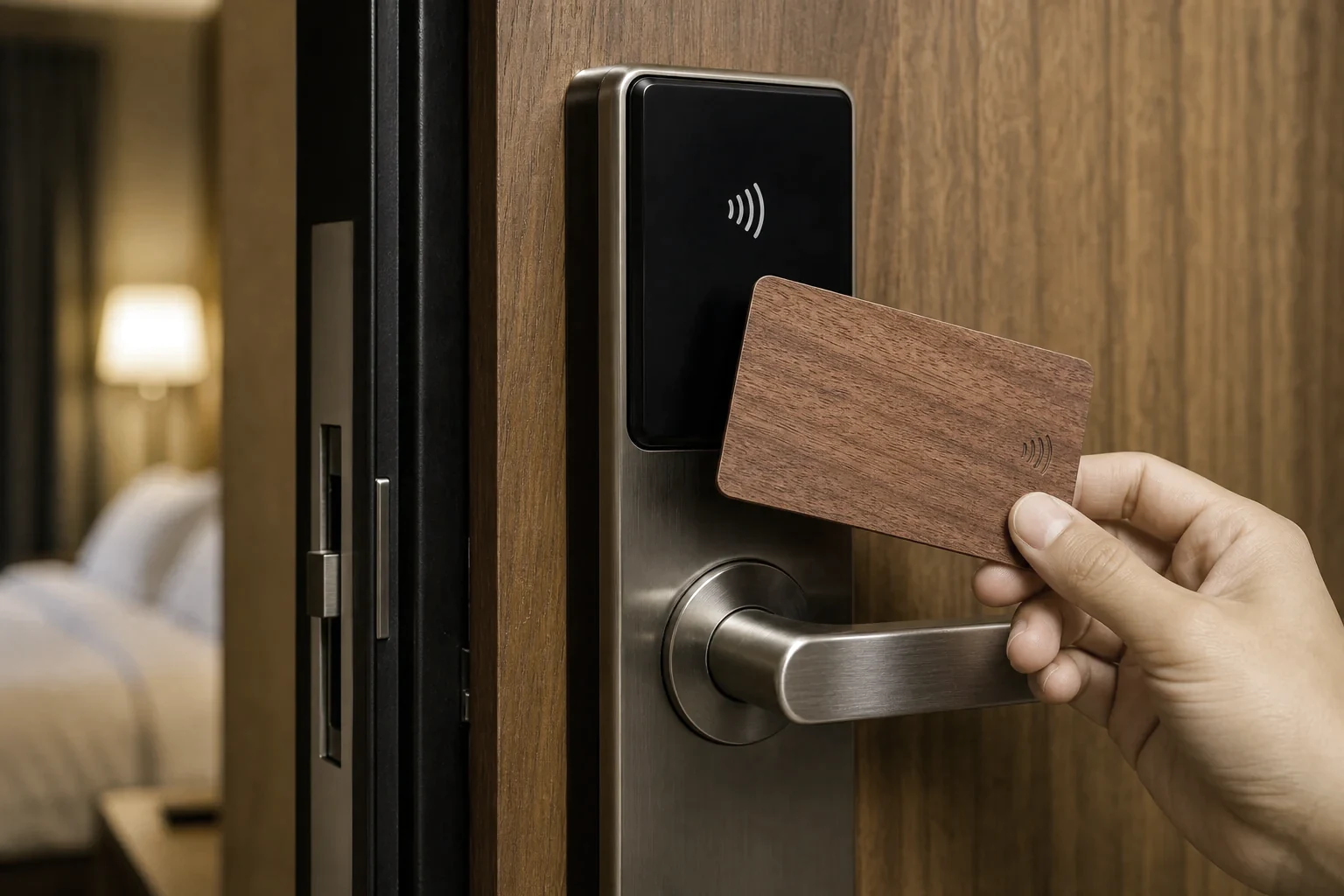
- Boutique hotel and resort key cards
- Premium NFC business cards in small batches
- Invitation, gift, loyalty, and event credentials
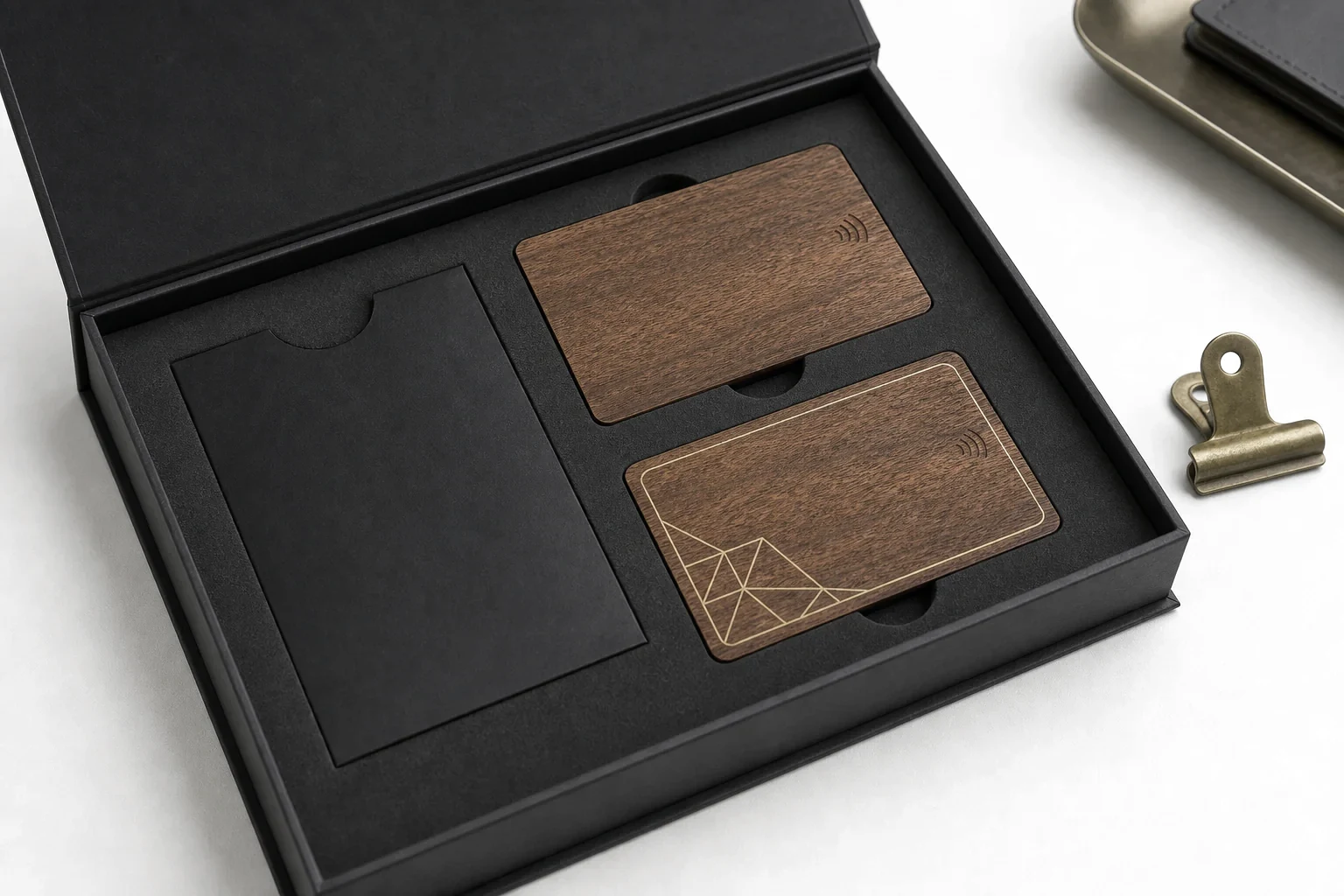
- Executive sample kits and approval boxes
Finish options
- Natural matte seal with engraved NFC mark
- Laser engraving and fine corner linework
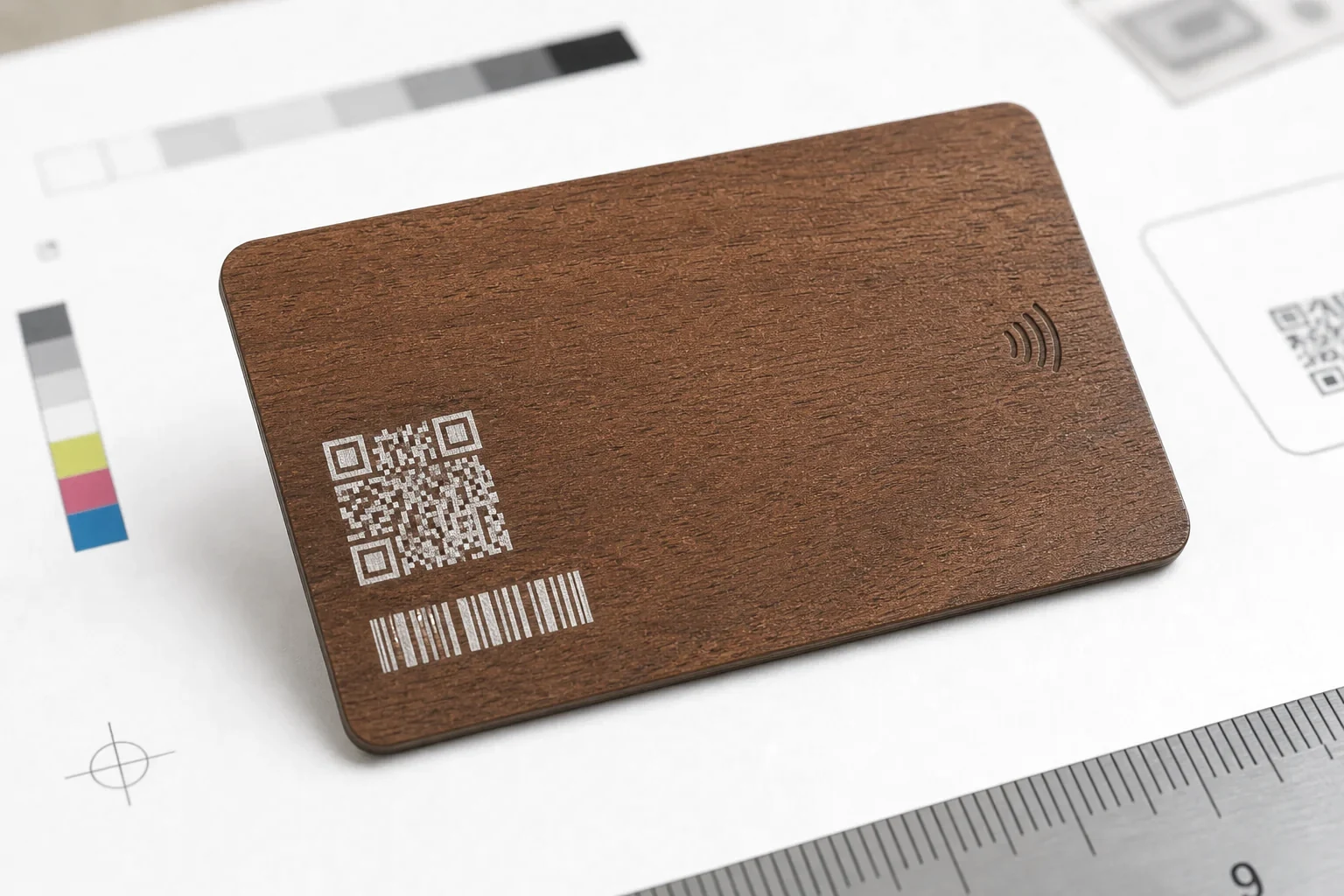
- Opaque white ink for logos, QR, and serial zones
- Copper, brass, or gold foil border and icon details
- Custom edge profiles after RF layout approval
RFID construction
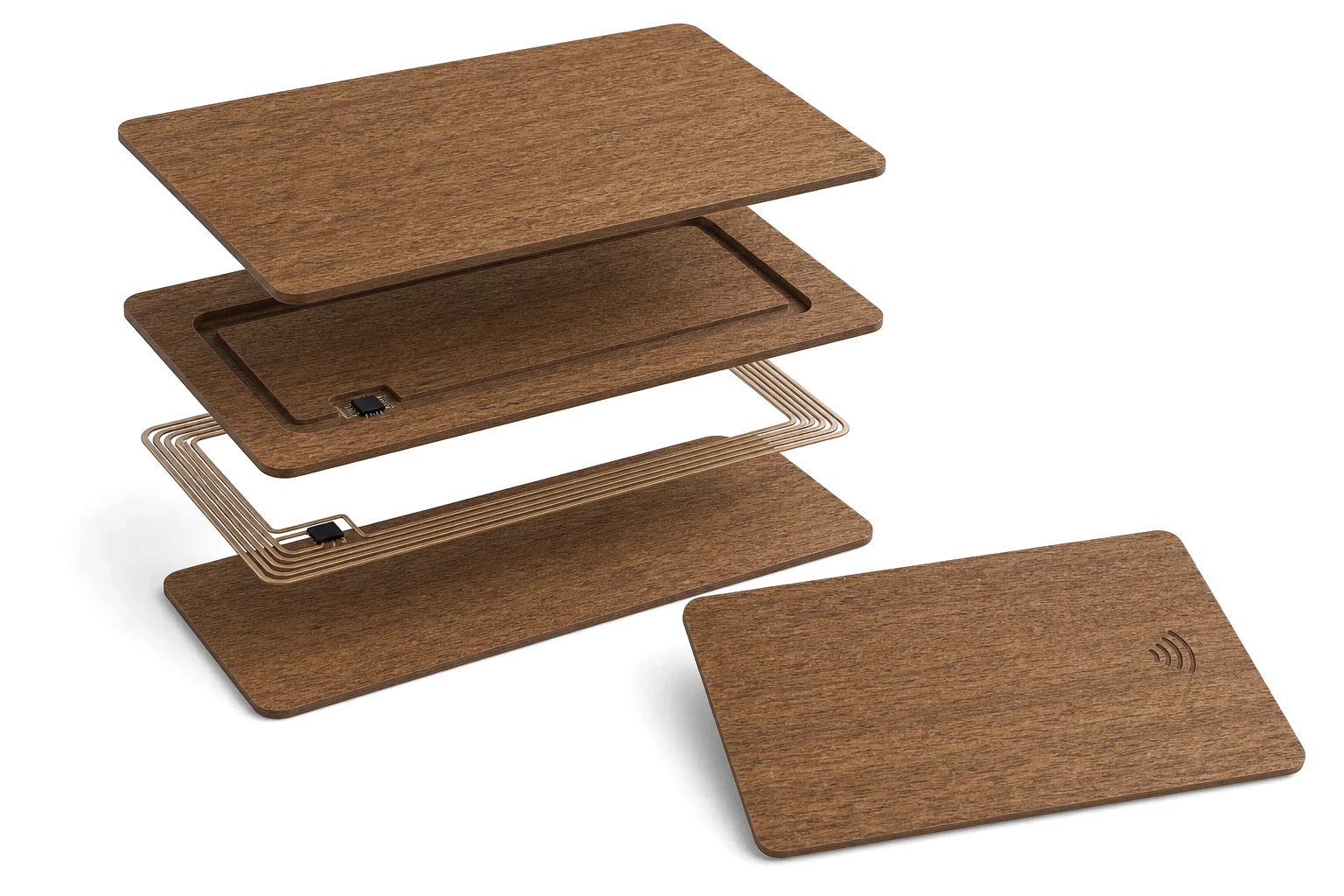
Sapele's interlocked grain varies noticeably between veneer batches, so sapele RFID programs are quoted sample-first: a matched veneer batch is reserved, the antenna is tuned in that batch's body, and the encoded sample is approved before the limited run is produced. The RF menu is the full range — LF, HF/NFC, standard HF, high-security AES HF — but the batch-matching workflow is what keeps a sapele limited edition consistent from first card to last.
Print and marking
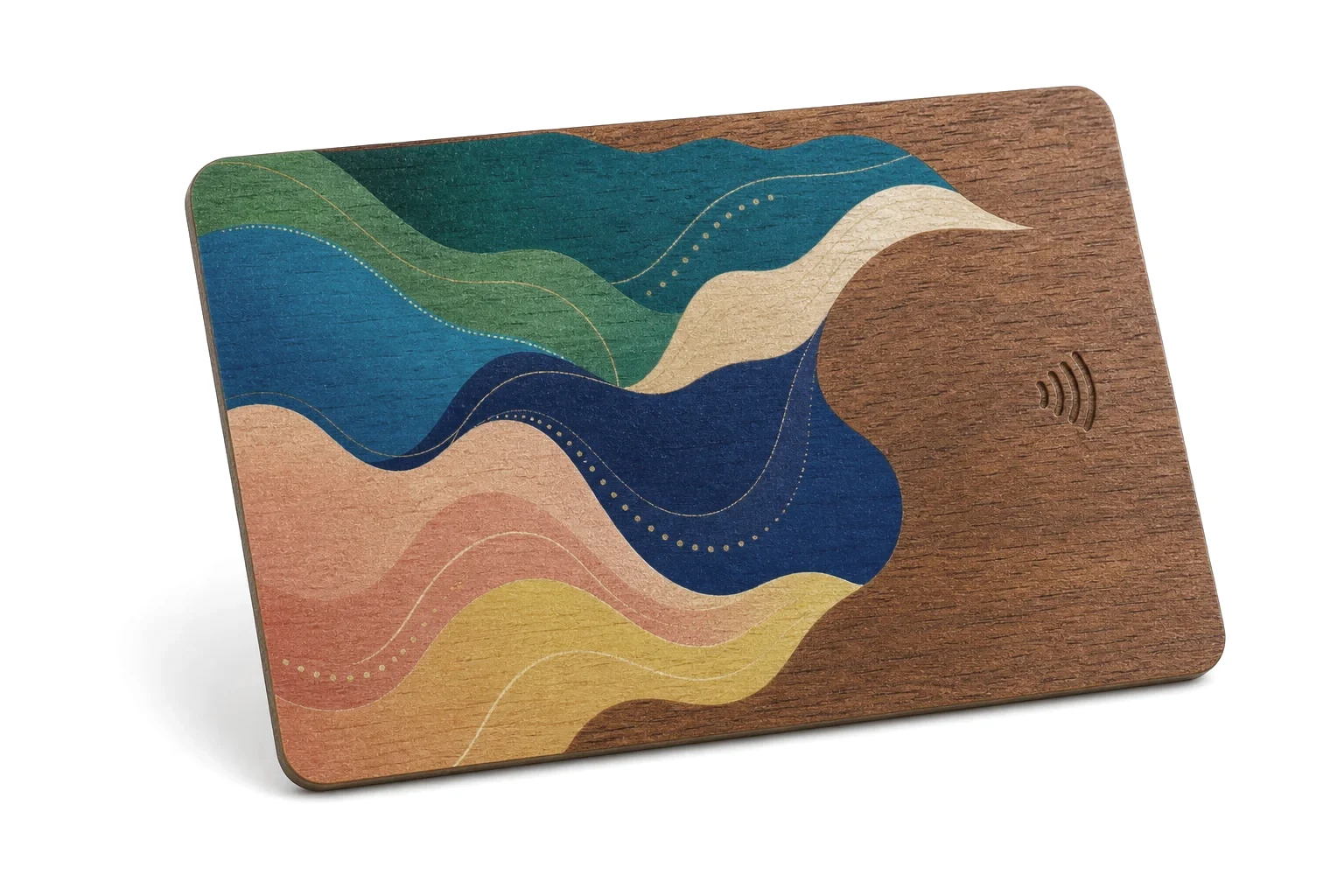
Sapele's shifting copper tones mean marks must hold against both the light and dark bands of the interlocked grain. The most reliable premium finishes are laser engraving, opaque white ink, copper/brass/gold foil, small NFC marks, QR/serial zones with enough contrast, and simple geometric linework. Full-color artwork can work, but it should use a white base and be approved on sealed sapele because the natural grain will shift the final color.
Frequently asked questions
What is sapele and why use it for cards?
Sapele is a rich honey-copper hardwood with expressive grain movement — a premium direction for limited editions, boutique hotel keys, invitation sets, and sample boxes.
How does sapele differ from walnut?
Walnut is darker and quieter; sapele is warmer with more visible movement. Choose sapele when the card should feel distinctive rather than formal.
What finishes work on sapele?
Laser engraving, white ink, foil edge lines, and QR or serial zones — approved on the actual veneer because sapele's grain varies batch to batch.
Specification
| Card size | CR80-style 85.6 x 54 mm, custom shapes by RF review |
|---|---|
| Visual character | Honey-copper sapele grain with natural ribbon variation |
| Surface feel | Matte sealed wood, warm tone, visible grain movement |
| Best contrast | White ink, laser engraving, copper, brass, or gold foil |
| Logo behavior | Works best with restrained marks, linework, and icons |
| QR / serial | Use high-contrast white zones and approve scan distance |
| RF route | LF, HF/NFC, standard and high-security HF routes, selected UHF by test |
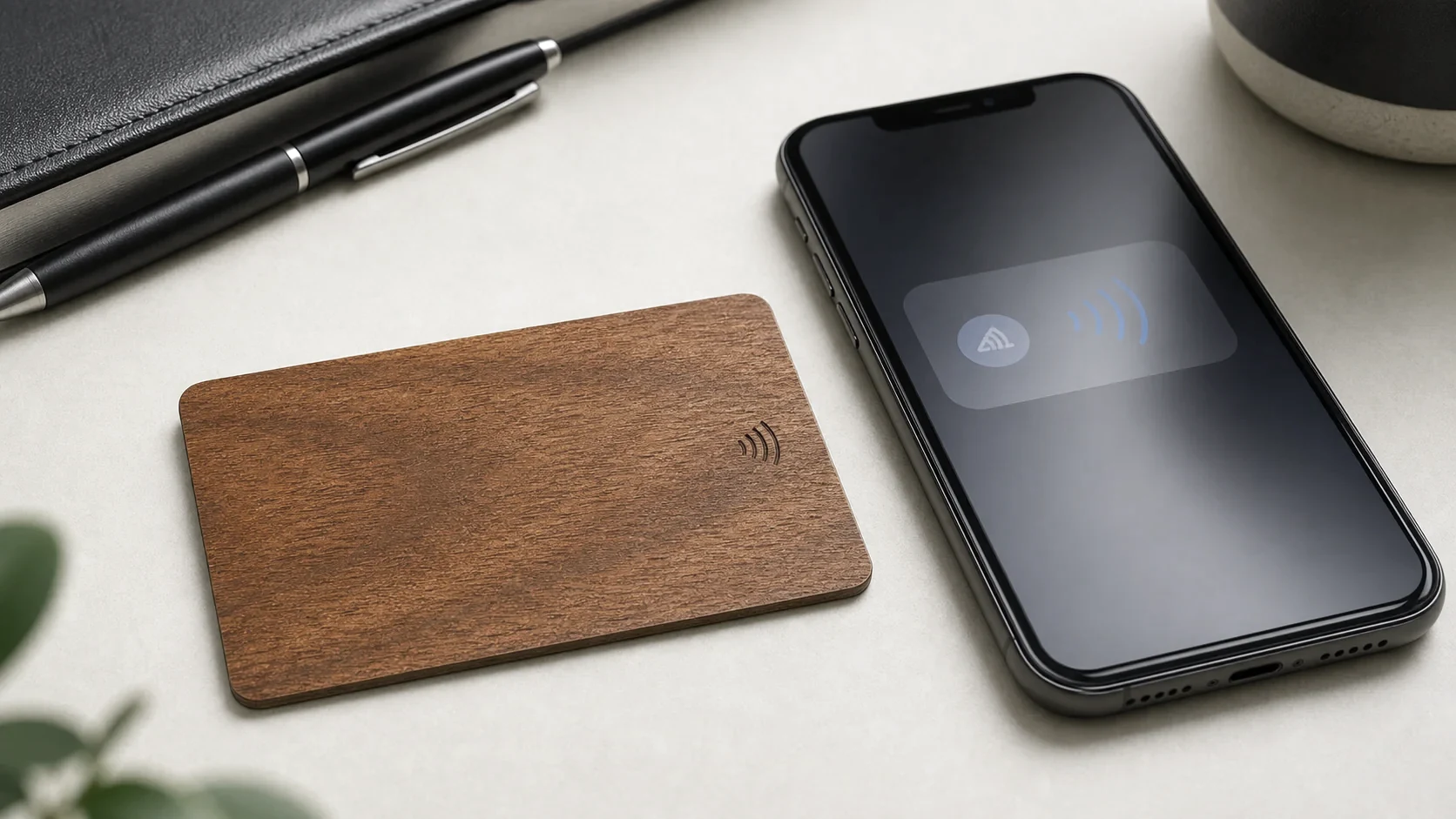
| Reader approval | Test against the real lock, phone, reader, or scanner |
| Edge options | Rounded CR80 edge, bevel control, subtle custom profiles |
| Batch fit | No minimum order — single samples through larger runs |
| Packaging | Pairs well with sample boxes, envelopes, and member kits |
| Approval note | Approve grain tolerance, contrast, edge, and encoded sample |