Access card route
Standard HF Access Wooden RFID Cards
Standard HF wooden RFID cards are specified when an access system or membership platform already requires the standard HF at 13.56 MHz. The exact chip generation — Classic, entry-level HF, or a specific memory and sector layout — must be confirmed with the access provider before samples, because these variants are not interchangeable.
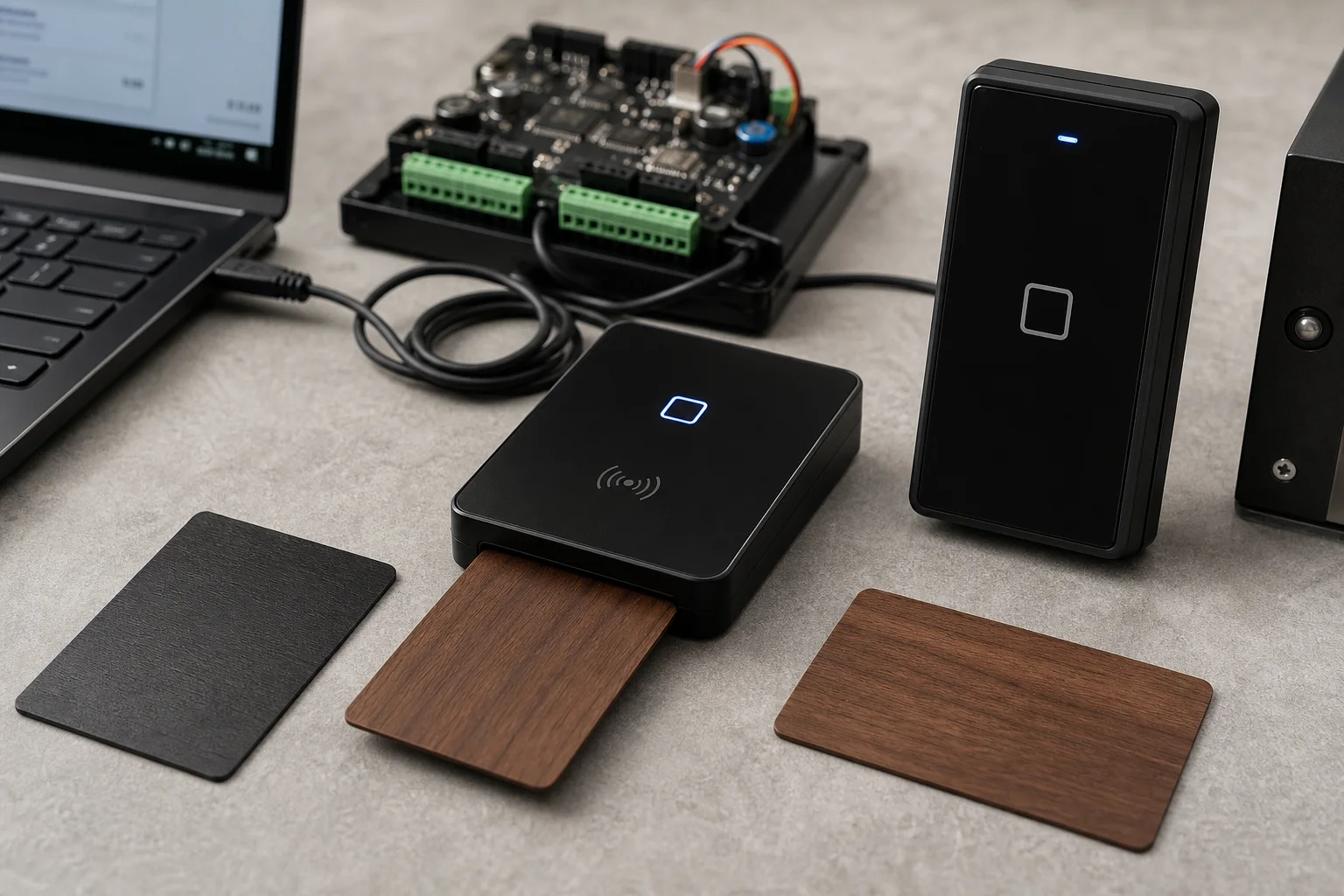
Standard HF route brief
| Frequency | 13.56 MHz |
|---|---|
| Best use | Membership access, gym and club entry, campus, workplace, hospitality, venue, and compatible access systems. |
| Chip route | The exact standard HF chip must match the system. The family name alone is not enough. |
| Phone behavior | Usually selected for readers, not public phone tap. Phone behavior depends on the chip and data model. |
| Encoding | UID, memory sectors, access keys, card number, member record, or integrator-defined data. |
| Approval check | Confirm chip generation, memory, key handling, and test on the real access reader. |
Visual references
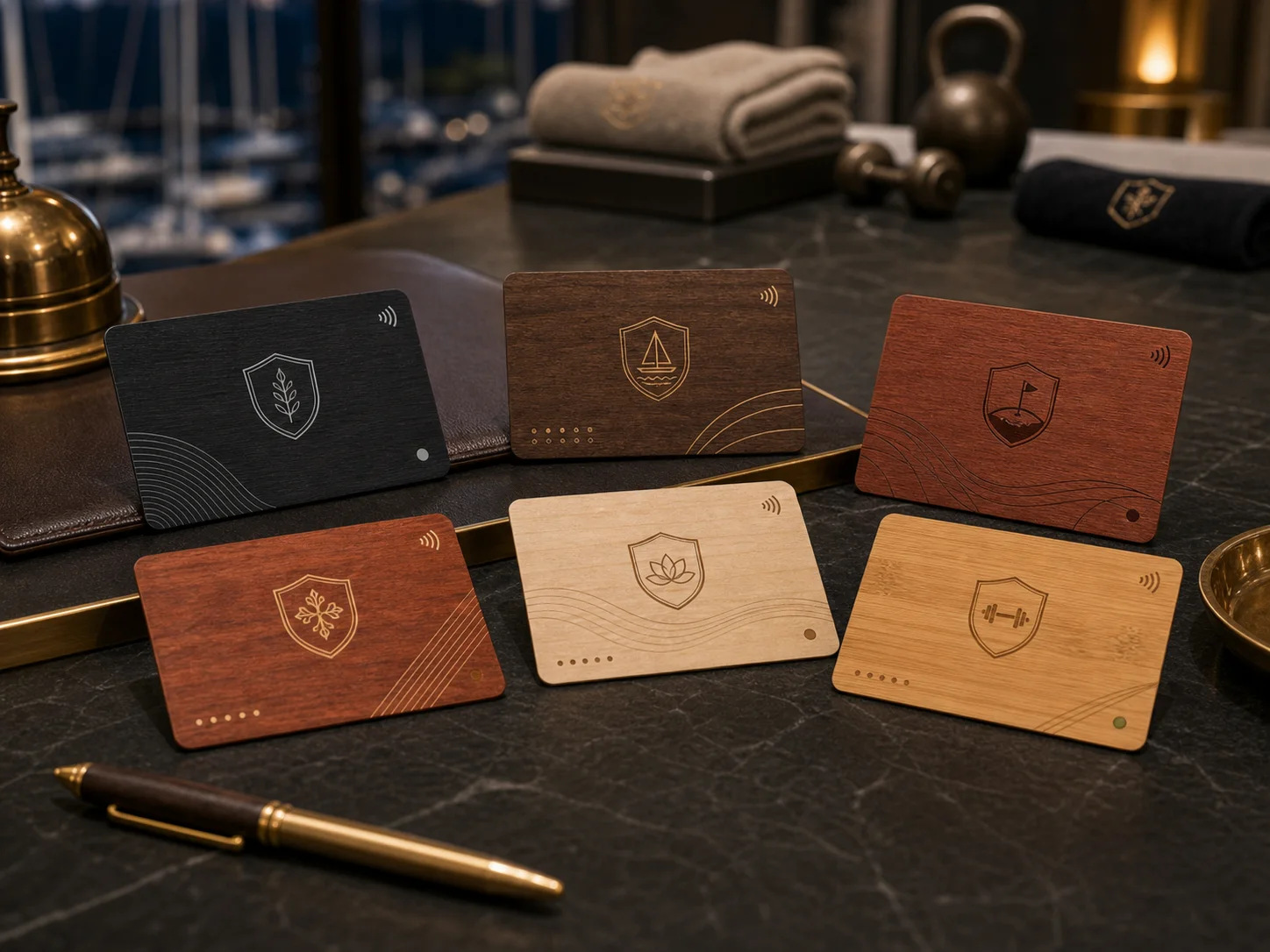
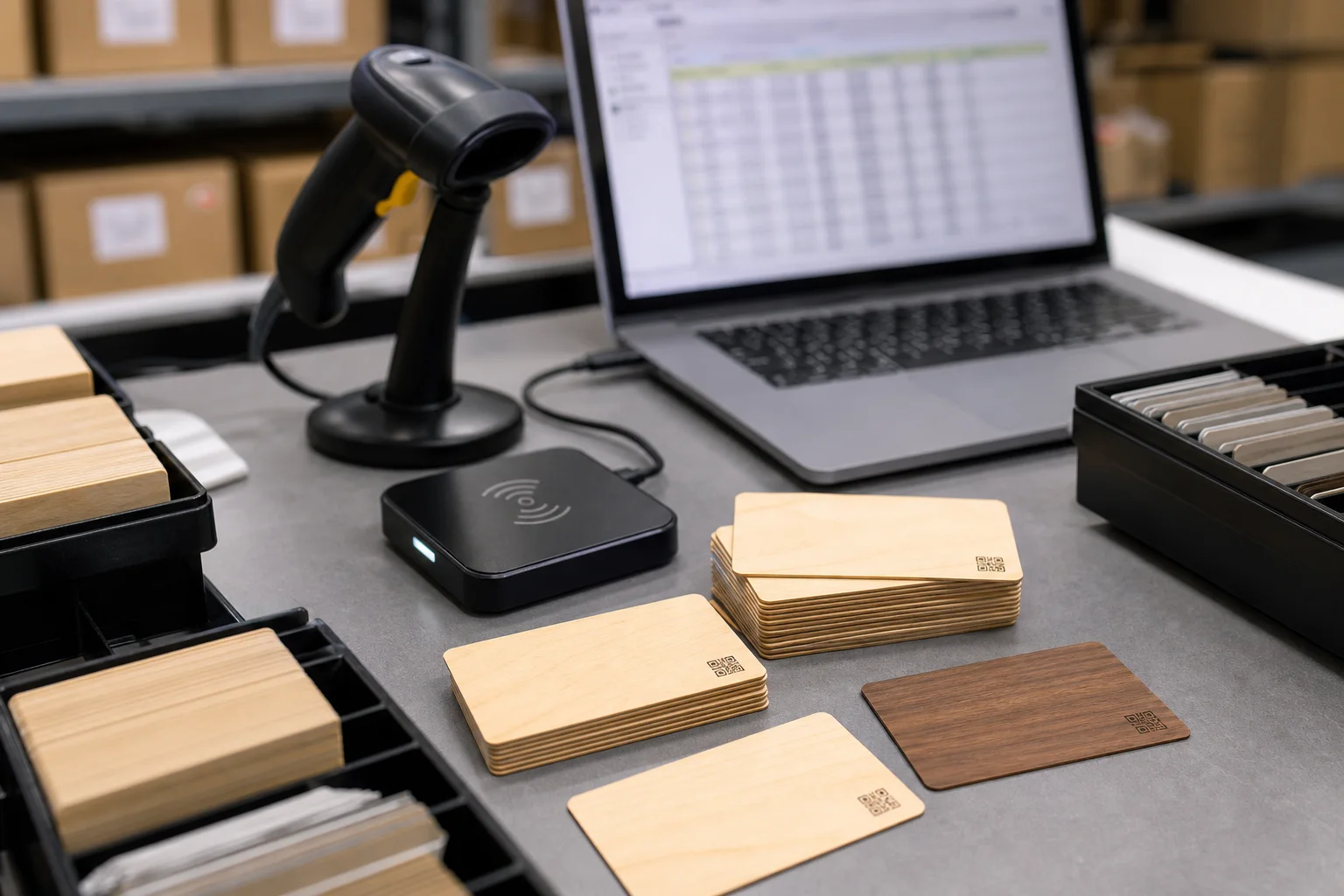
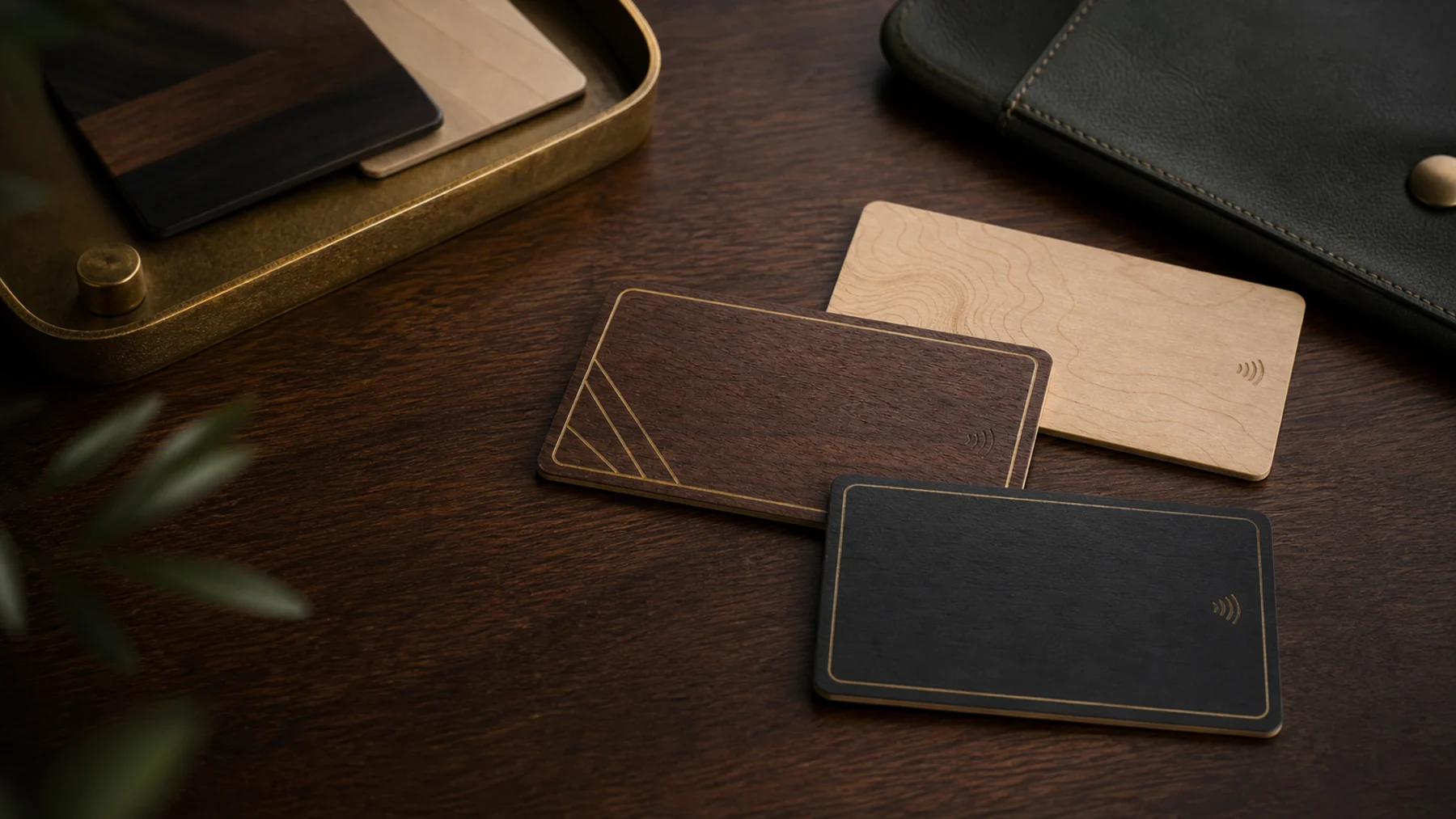
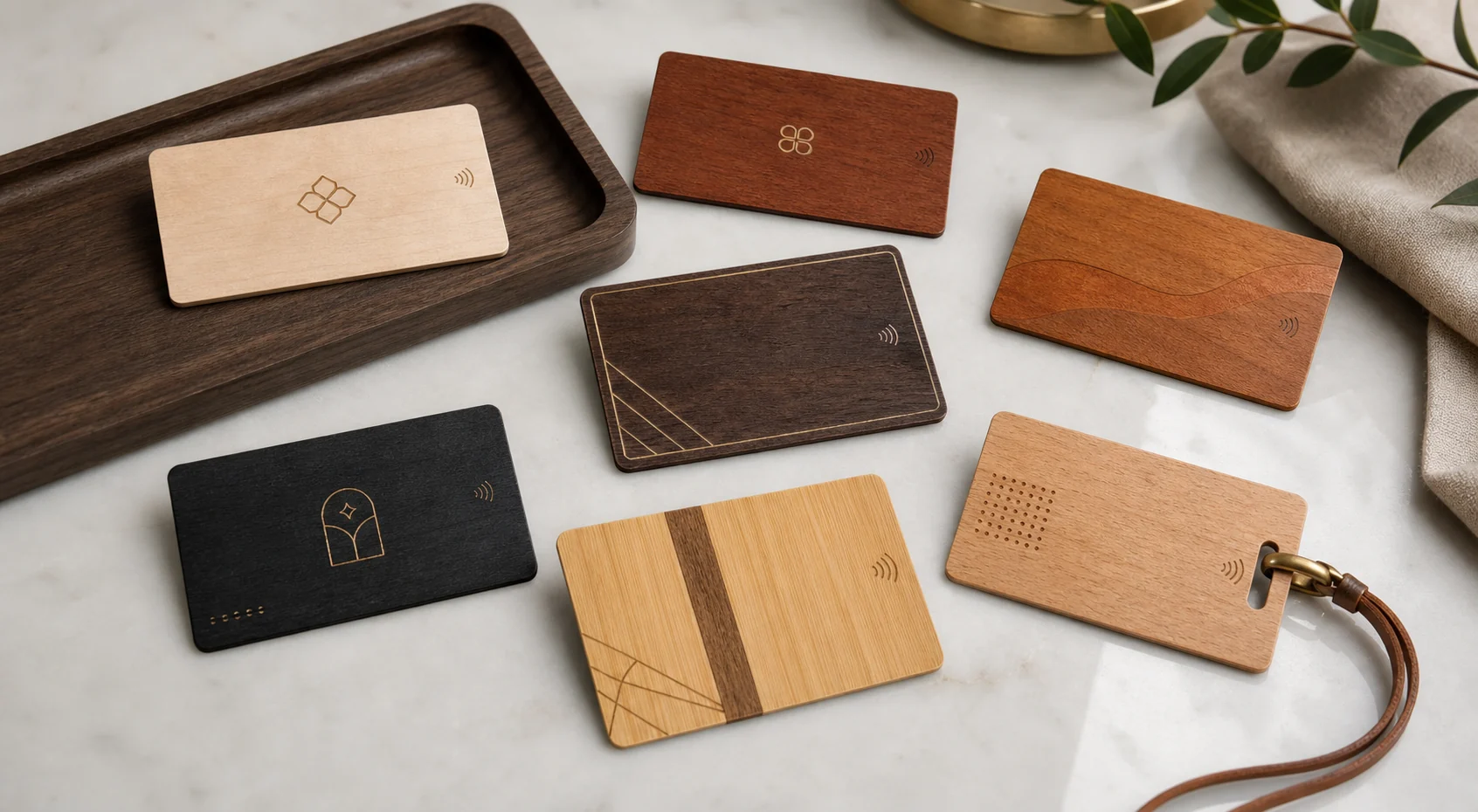
Confirm exact chip family, not just the word standard HF.
Different standard HF chips are not interchangeable across systems. Request the exact chip, memory, sector, key, or encoding requirement from the access provider before production.
Use a working sample for approval.
Wood body thickness and finish can change how a reader feels at the door or desk. A real sample should be tested on the target reader, not only on a generic desktop reader.
Legacy standard HF, entry-level HF, and high-security AES HF are not the same.
"standard HF" covers several chips with different memory, security, and sector structures. A door built for a sector-based 1K chip will not accept an entry-level HF card, and secure sites may actually need high-security AES HF. Always request the exact product name, memory size, and any sector or key requirement in writing.
Sector, key, and facility data belong to the integrator.
On encoded standard HF access, the card body and the secured sector or key data are two separate responsibilities. We build and test the wooden card; the site's integrator usually provides or programs the protected data. Agreeing who encodes what up front avoids blank cards that a reader rejects.
Best uses
- Club and gym access
- Hotel and venue cards
- Campus and workplace access
- Membership systems requiring standard HF
Frequently asked questions
Are all standard HF chips interchangeable?
No. Sector-based, entry-level, and AES-authenticated HF chips have different memory, security, and sector structures — a door built for one will not accept another. Request the exact product name and requirement in writing.
Who programs the secured standard HF data?
Usually the site's access integrator. We build and test the wooden card; agreeing who encodes the protected sectors up front avoids blank cards a reader rejects.
How is a standard HF wood card approved?
With a working sample tested on the target reader — not just a generic desktop reader — because wood body thickness and finish influence how the read feels at the door.
Specification
| Card size | CR80 and custom dimensions by drawing |
|---|---|
| Card body | Plastic-free, FSC-certified wood body options |
| Thickness | 0.80 mm to 2.0 mm by wood species and chip |
| Minimum order | None — single samples to production runs |
| Production time | About one week after artwork and sample approval |
| RF planning | Chip, antenna, thickness, and finish approved together |
| Approval route | Material sample, working RF sample, production proof |
| Frequency | 13.56 MHz |
| Chip route | The exact standard HF chip must match the system. The family name alone is not enough. |
| Encoding | UID, memory sectors, access keys, card number, member record, or integrator-defined data. |
| Approval check | Confirm chip generation, memory, key handling, and test on the real access reader. |
| Typical systems | Access, membership, hospitality, workplace, venue, and campus |
Related wood RFID card pages
- RFID UID Converter & Wiegand 26-bit Calculator
- LF Wooden RFID Cards
- HF and NFC Wooden Cards
- NFC Tag Wood NFC Cards
- Entry-Level HF Wooden RFID Cards
- AES-Secured HF Wooden RFID Cards
- High-Security AES Wooden RFID Cards
- UHF Wooden RFID Cards
- Programmable 125 kHz Wooden RFID Cards
- Wooden RFID Card Encoding