Secure HF access
High-Security AES Wooden RFID Cards
High-security AES HF wooden RFID cards give buyers a more secure 13.56 MHz credential while still presenting a premium natural material. Because modern AES generations use applications, keys, and encrypted data, these projects need tighter coordination with the access integrator than a simple tap card.
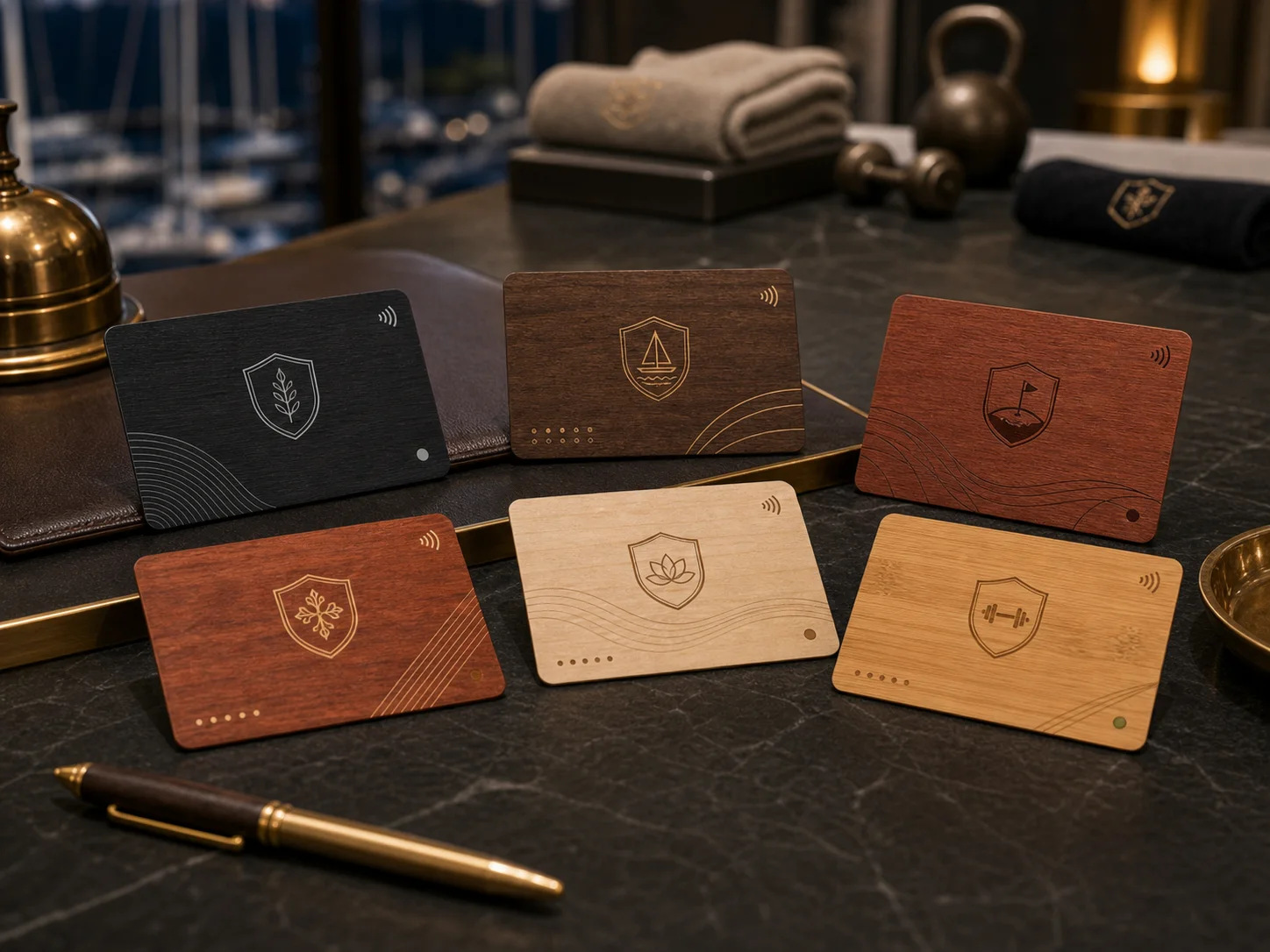
High-security AES route brief
| Frequency | 13.56 MHz secure HF |
|---|---|
| Best use | Secure enterprise, campus, premium hotel, club, and multi-application credential programs. |
| Chip route | high-security AES HF family selected by integrator requirement, including memory and application structure. |
| Phone behavior | Not chosen for public NFC marketing. It is usually a secure reader credential route. |
| Encoding | Application IDs, files, keys, secure personalization, UID exports, cardholder mapping, and box labels. |
| Approval check | The integrator must define chip, keys, encoding responsibility, sample validation, and data handoff. |
Visual references
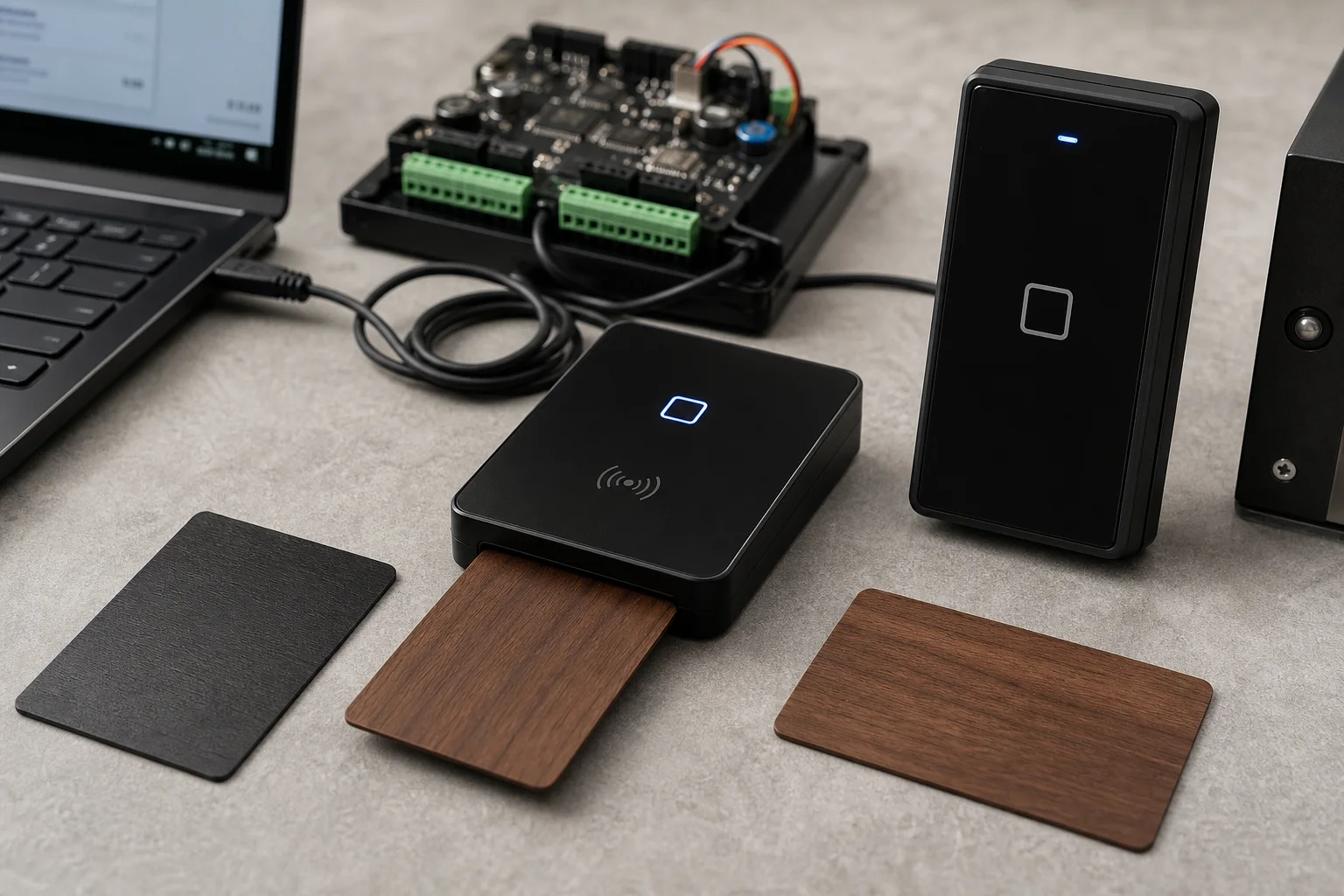
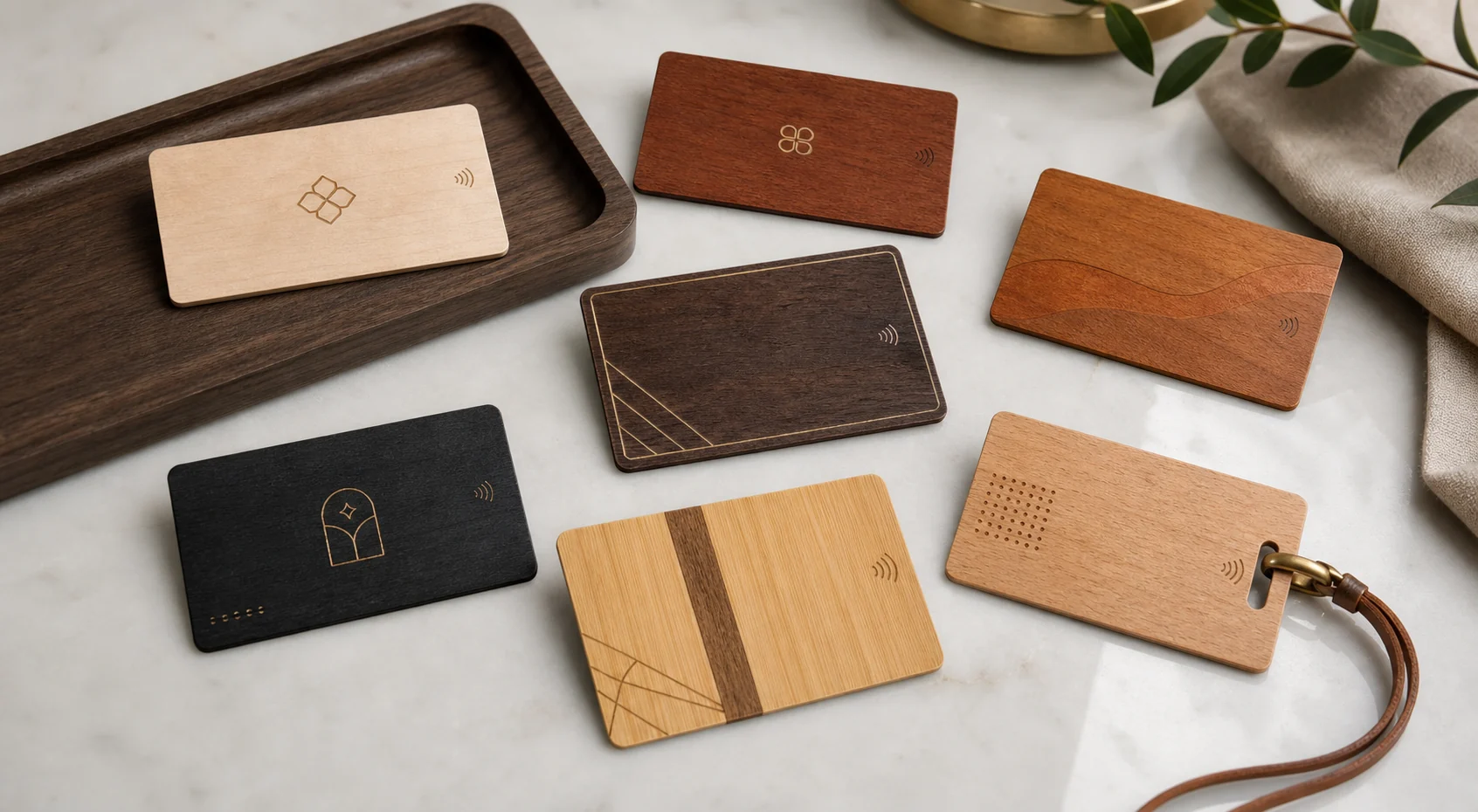
Secure cards need the integrator involved early.
High-security AES HF projects should define chip generation, memory, application structure, key handling, encoding responsibility, and test-card approval before visual production starts.
Keep personalization traceable.
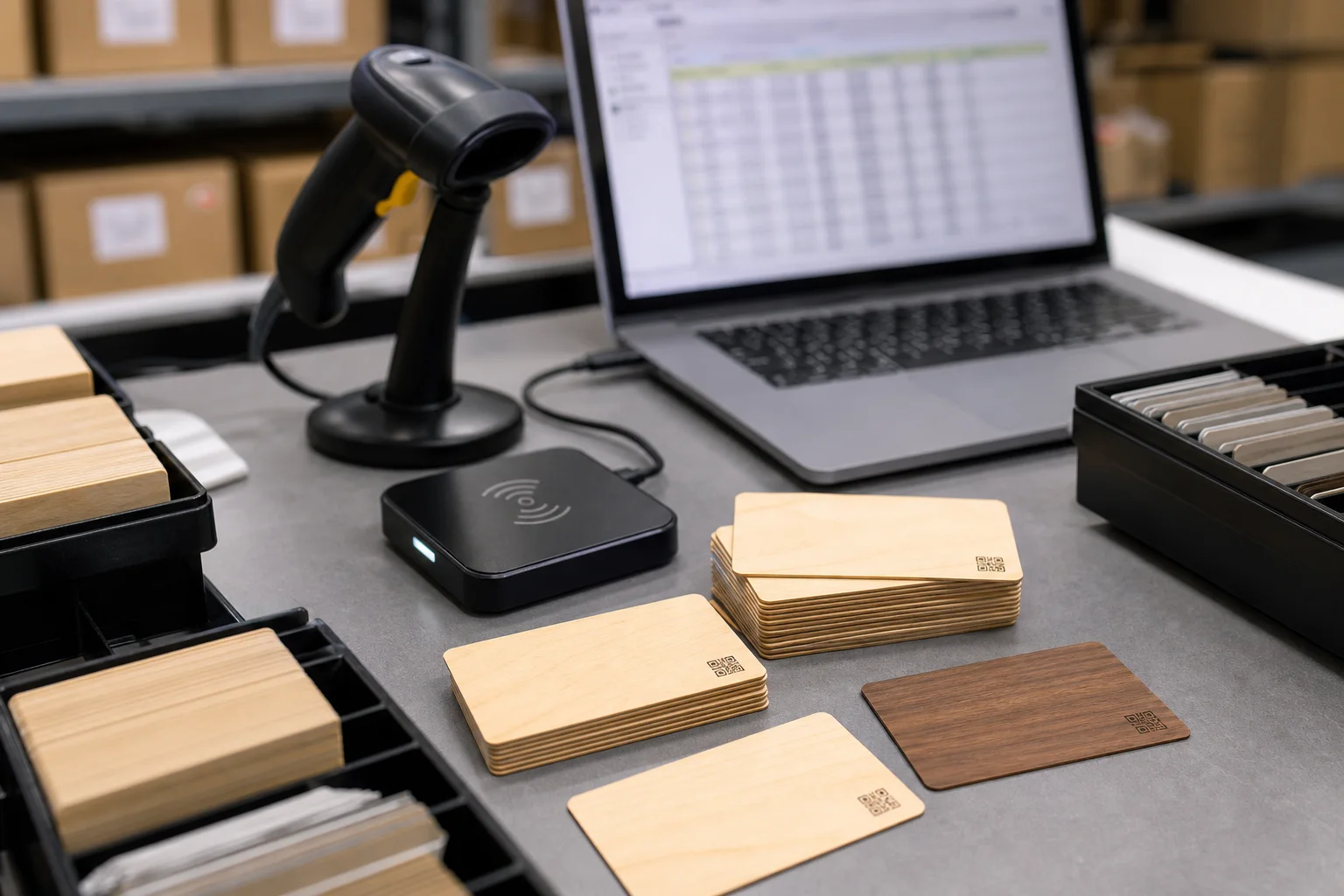
Serials, UID lists, box labels, and cardholder records should be matched in one controlled file. This is especially important for secure access and enterprise replacement workflows.
Define the application and key model first.
A high-security AES HF card can hold multiple applications — access, cashless, transit, or membership — each protected by its own keys. The application structure, memory allocation, and key-management responsibility should be agreed with the integrator before the wooden card is sampled.
A wood body does not reduce high-security AES HF security.
The security lives in the chip, not the surface, so a wooden high-security AES HF card is exactly as secure as its plastic equivalent and reads on the same secure-HF readers. What still needs testing is antenna behavior in the final wood thickness, confirmed with a working sample on the real reader.
Best uses
- Enterprise access programs
- Premium hotel and club credentials
- Campus and multi-application IDs
- Programs requiring integrator-defined data
Frequently asked questions
Is a wooden high-security AES HF card as secure as plastic?
Yes. The security lives in the chip, not the surface — a wooden high-security AES HF card is exactly as secure and reads on the same secure-HF readers.
What needs defining before a high-security AES HF project?
Chip generation, memory, application structure, key handling, and encoding responsibility — agreed with the access integrator before visual production starts.
Can one high-security AES HF card hold several applications?
Yes — access, cashless, transit, or membership, each protected by its own keys. The application map is agreed before the wood card is sampled.
Specification
| Card size | CR80 and custom dimensions by drawing |
|---|---|
| Card body | Plastic-free, FSC-certified wood body options |
| Thickness | 0.80 mm to 2.0 mm by wood species and chip |
| Minimum order | None — single samples to production runs |
| Production time | About one week after artwork and sample approval |
| RF planning | Chip, antenna, thickness, and finish approved together |
| Approval route | Material sample, working RF sample, production proof |
| Frequency | 13.56 MHz secure HF |
| Chip route | high-security AES HF family selected by integrator requirement, including memory and application structure. |
| Encoding | Application IDs, files, keys, secure personalization, UID exports, cardholder mapping, and box labels. |
| Approval check | The integrator must define chip, keys, encoding responsibility, sample validation, and data handoff. |
| Typical route | high-security AES HF family, memory, and application model by integrator requirement |
Related wood RFID card pages
- RFID UID Converter & Wiegand 26-bit Calculator
- LF Wooden RFID Cards
- HF and NFC Wooden Cards
- NFC Tag Wood NFC Cards
- Entry-Level HF Wooden RFID Cards
- AES-Secured HF Wooden RFID Cards
- Standard HF Access Wooden RFID Cards
- UHF Wooden RFID Cards
- Programmable 125 kHz Wooden RFID Cards
- Wooden RFID Card Encoding