Design the shape around the antenna.
Slots, holes, cord loops, and custom outlines are planned before RF approval. Decorative cuts cannot interrupt the antenna route or weaken the pass at stress points where lanyards pull.
Wood event passes suit premium guest lists where the credential needs to feel deliberate: thin wood bodies, lanyard slots, NFC tap logic, QR backup, tier marks, and a finish guests keep after the event.
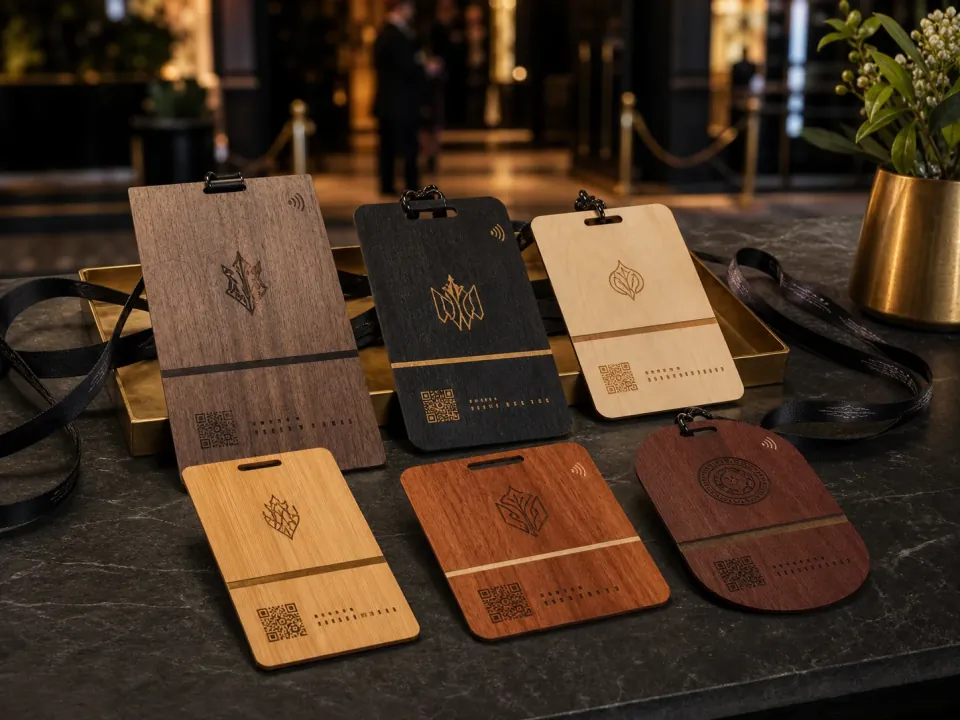
Review conference check-in, backstage/VIP, brand launch, and retreat workflows before selecting pass size, lanyard slot, NFC route, QR fallback, and finish.
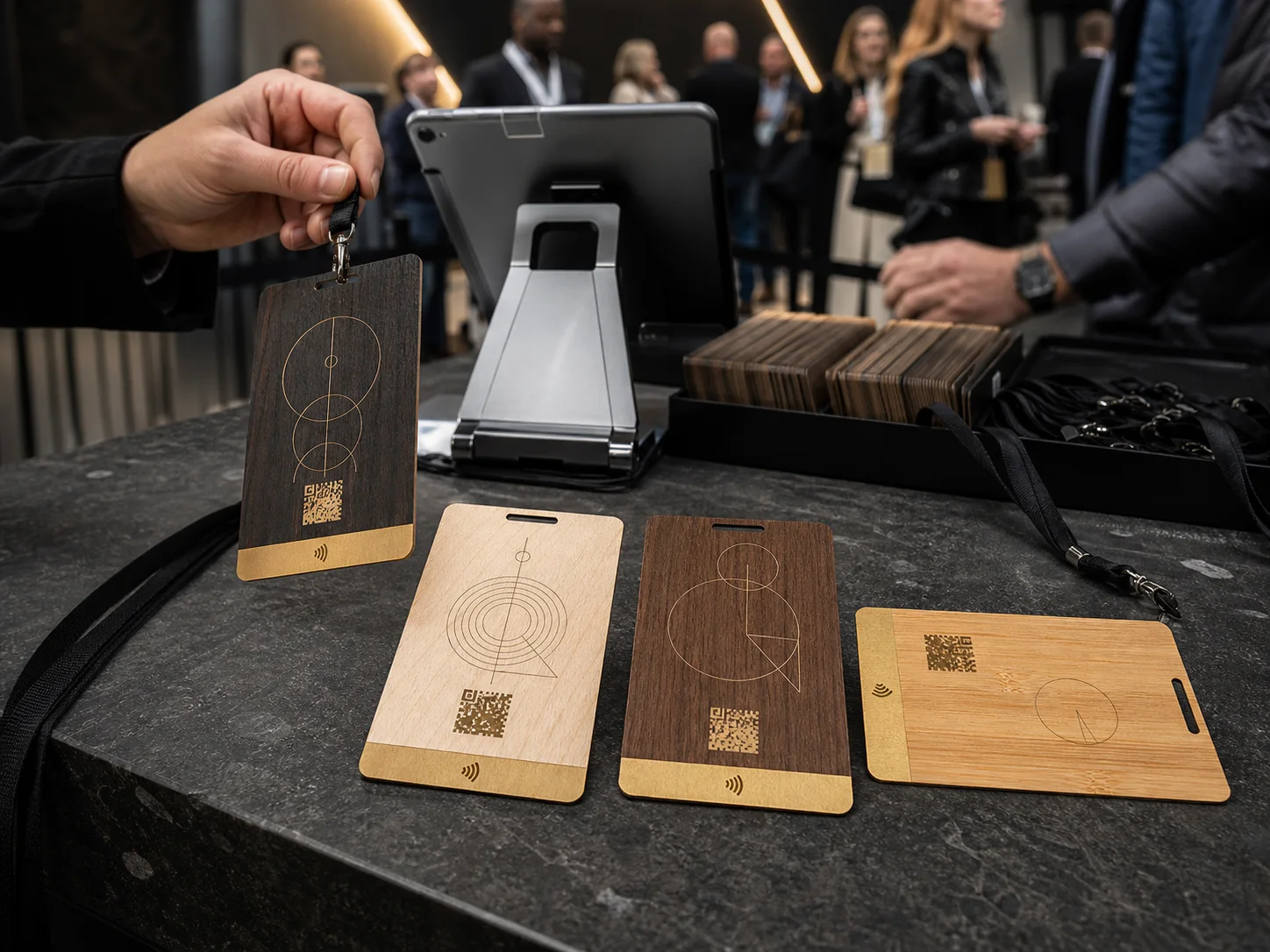
Speaker, VIP, sponsor, and attendee passes can share one event system while using wood tone, tier marks, NFC, and QR backup to separate access.
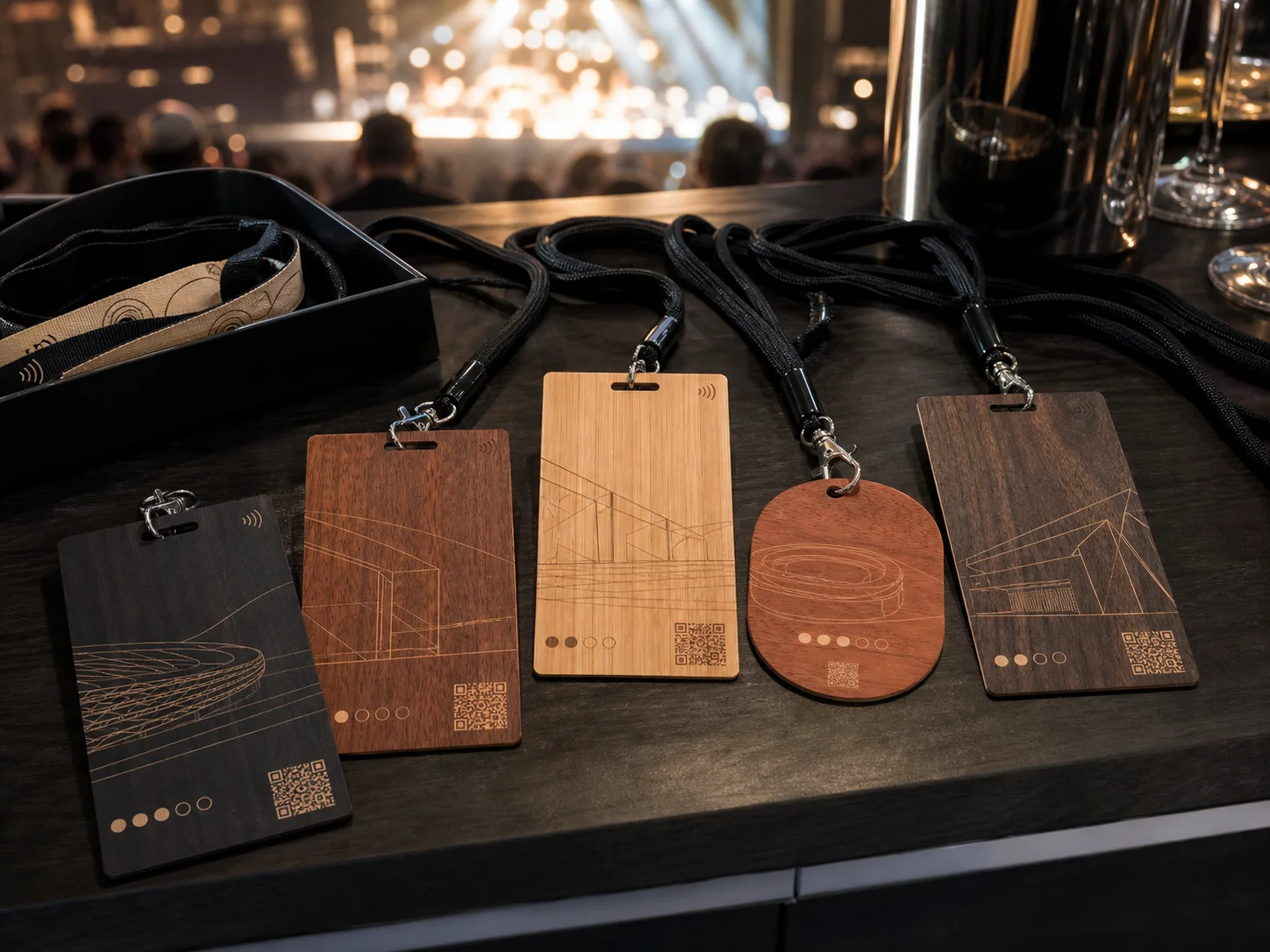
Backstage credentials need clean lanyard slots, visible tier cues, and durable edges because they move between entrance, lounge, and production areas.
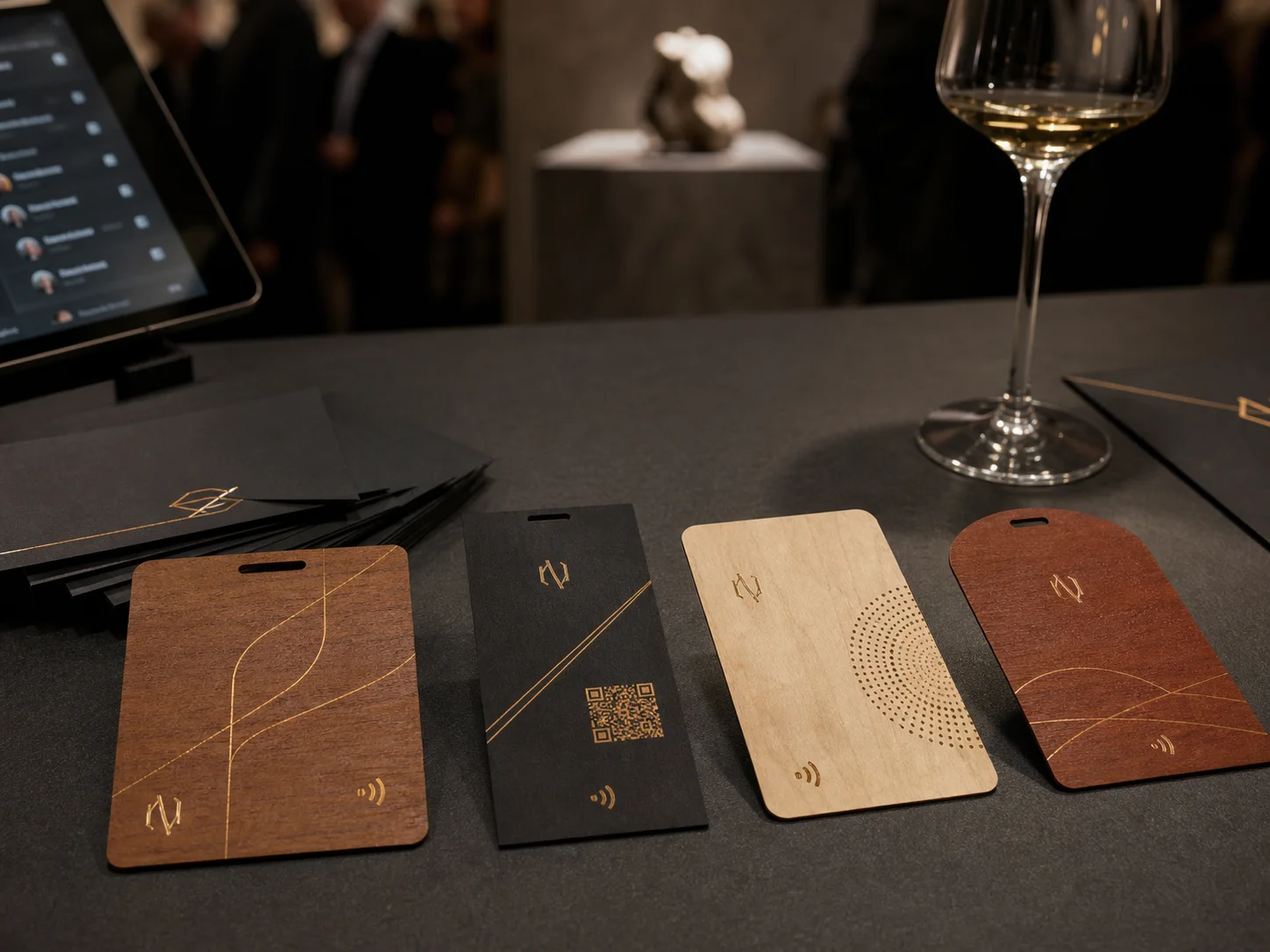
Thin walnut, black wood, birch, and sapele passes can turn a guest-list credential into a keepsake without looking like a disposable badge.
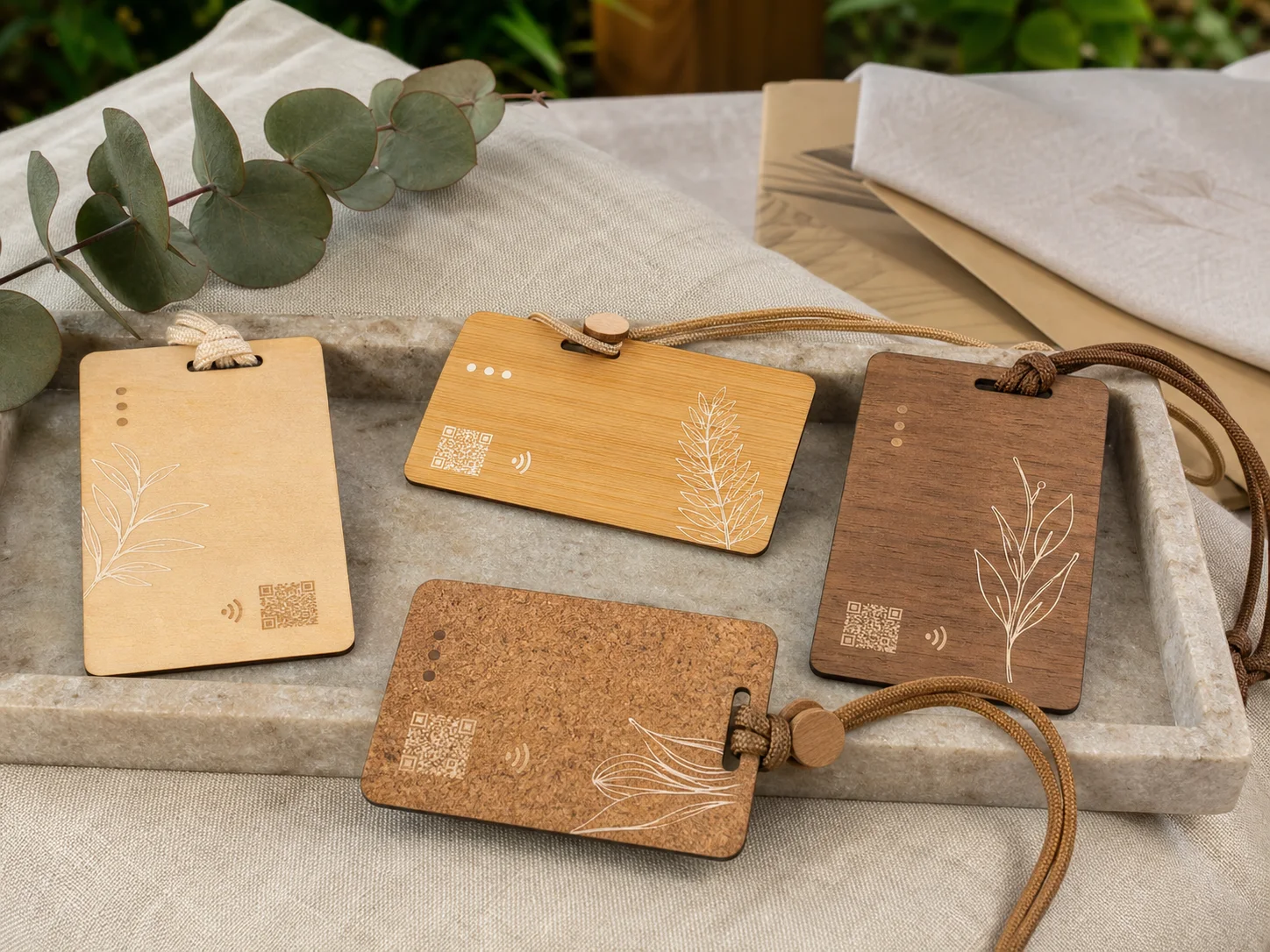
Pale wood, linen, and woven lanyards fit retreats where the pass must handle check-in, session access, and package identification quietly.
Slots, holes, cord loops, and custom outlines are planned before RF approval. Decorative cuts cannot interrupt the antenna route or weaken the pass at stress points where lanyards pull.
A premium wood event pass can still carry a printed QR or serial zone for backup scanning, staff lookup, and reconciliation when phones, readers, or guest-list systems vary by entrance.
Black wood, walnut, and sapele feel right for VIP, backstage, launch, and gala credentials. Bamboo, birch, and beech work better for wellness, retreat, sustainability, and daylight event programs.
Event passes have a hard deadline, so guest count, spare percentage, tier split, and delivery date are confirmed before design starts. A small buffer of unencoded spares covers late registrations and replacements without a second production run.
The practical route is selected from the system, audience, and handling context before the final wood finish and mark treatment are approved.
Wood card production should confirm body construction, finish, chip route, data handling, marking layers, and approval samples in one brief.
Yes. Slots, holes, and custom outlines are standard — they are planned around the antenna route and stress points before the die line is approved.
NFC tap, QR scan, or both. A printed QR or serial zone gives staff a backup scanning route when phones, readers, or guest-list systems vary by entrance.
Before design starts: guest count, spare percentage, tier split, and delivery date. Production takes about one week after approval, and a buffer of unencoded spares covers late registrations without a second run.