Custom shape builds
Custom Wood RFID Cards
Custom wood RFID cards work best when the die line, cutouts, veneer mix, thickness, antenna route, chip position, QR or serial fallback, and print finish are approved together. The result is a distinctive card that still reads reliably and can be repeated in production.
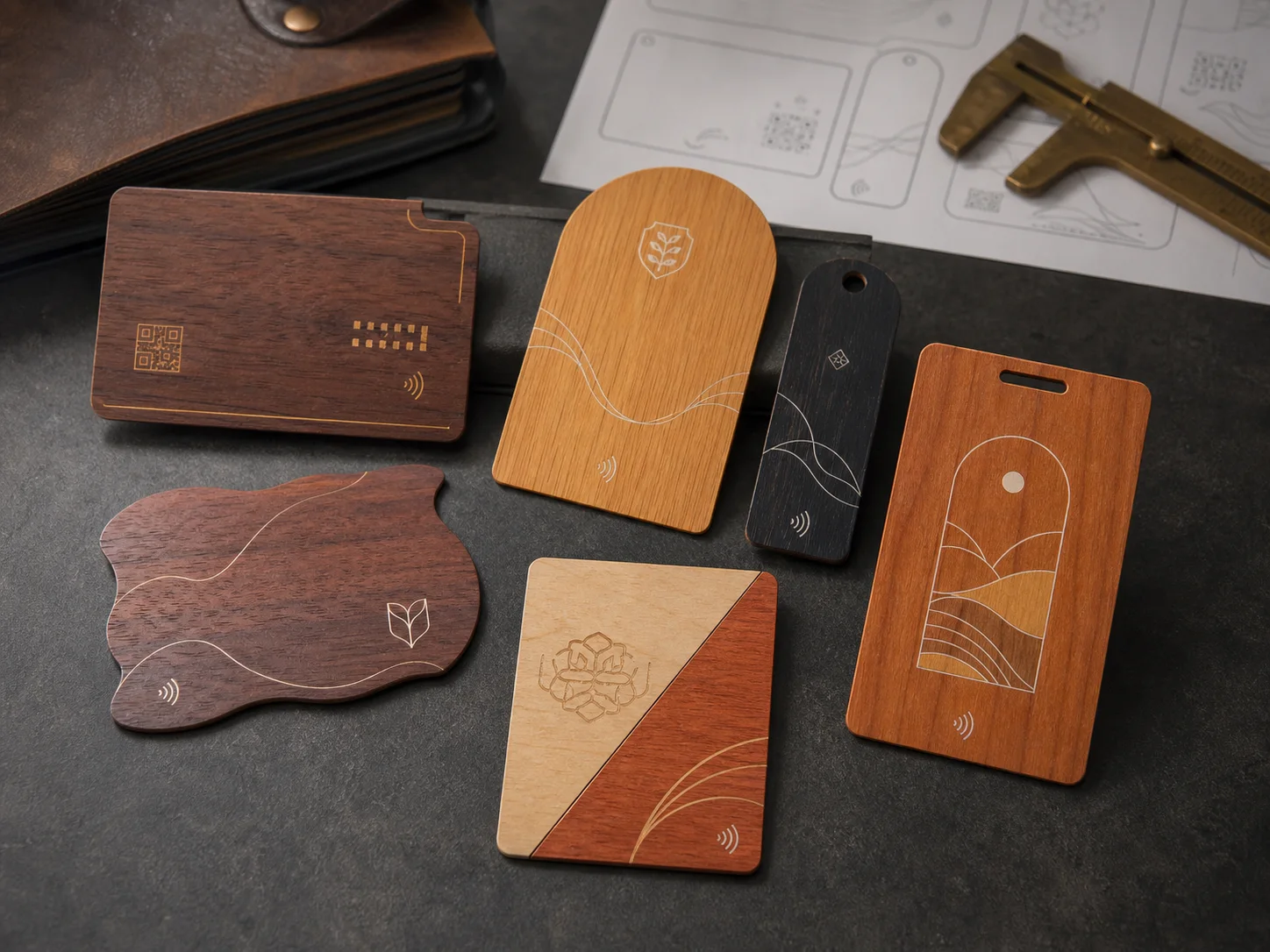
Custom shape cards
Compare shaped wood RFID cards with premium print features.
Review custom outlines, lanyard slots, key-tag holes, mixed veneers, white ink, laser linework, foil-style accents, gloss effects, QR-style backup areas, and reader-safe antenna zones before production.
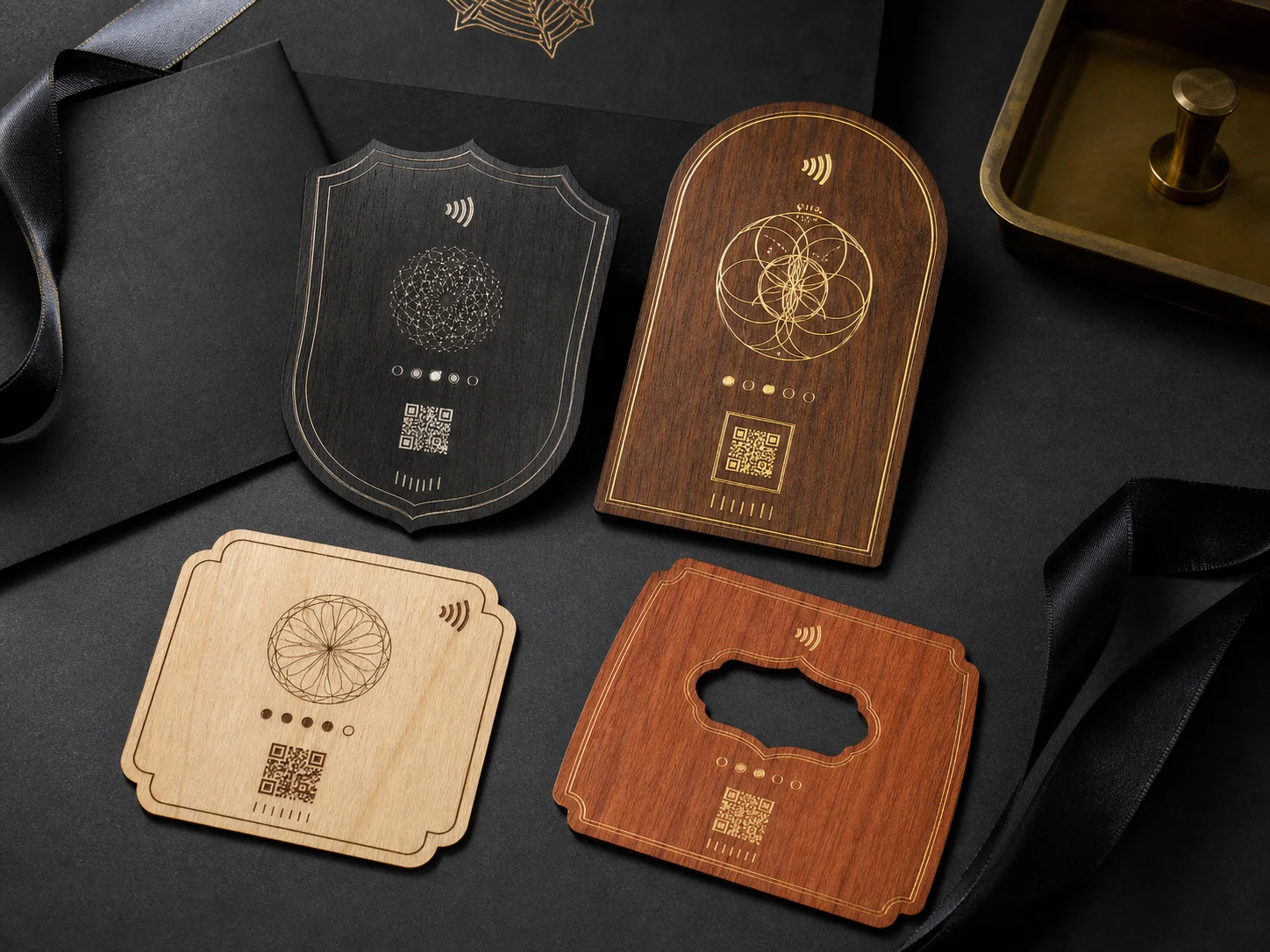
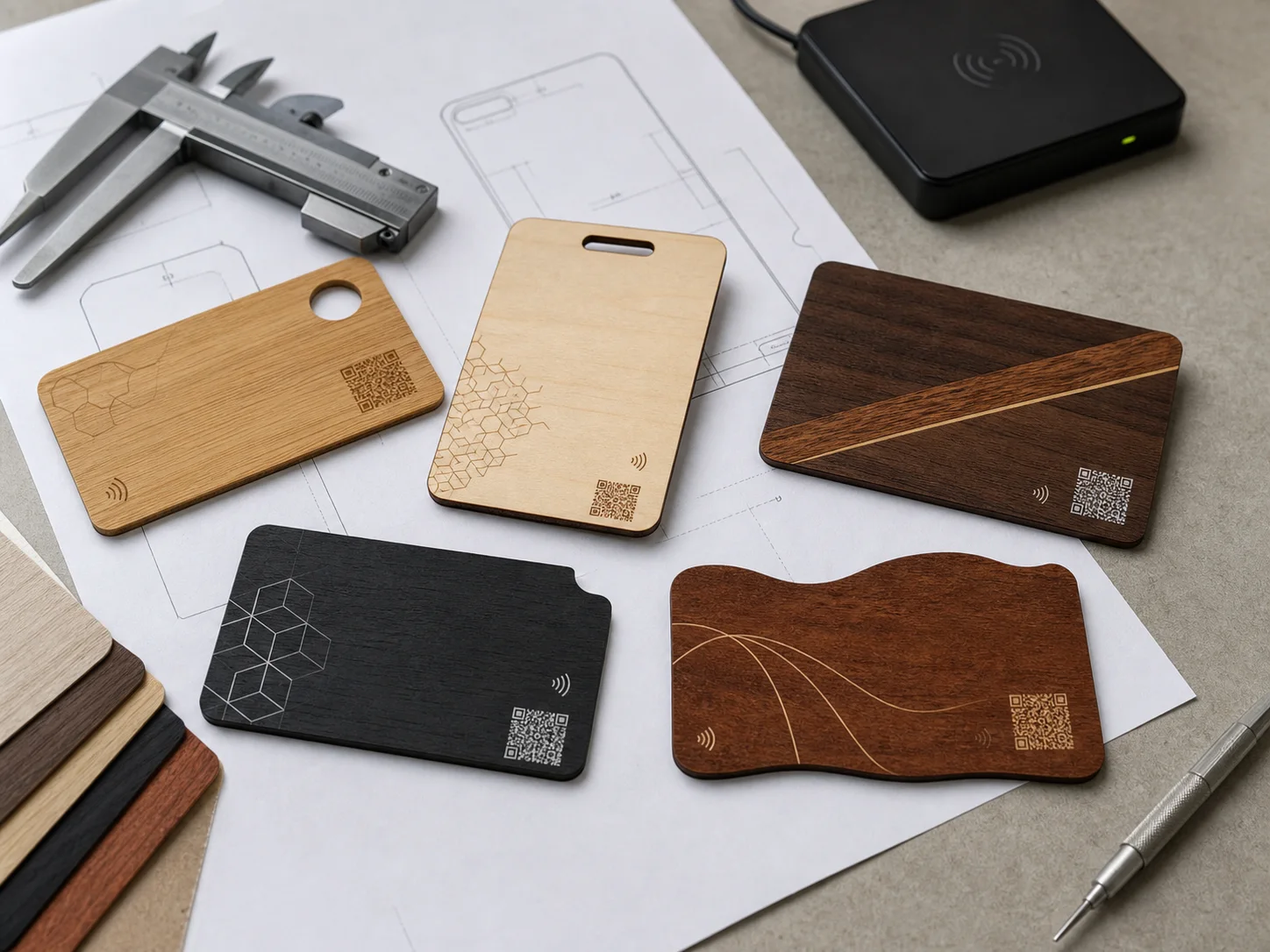
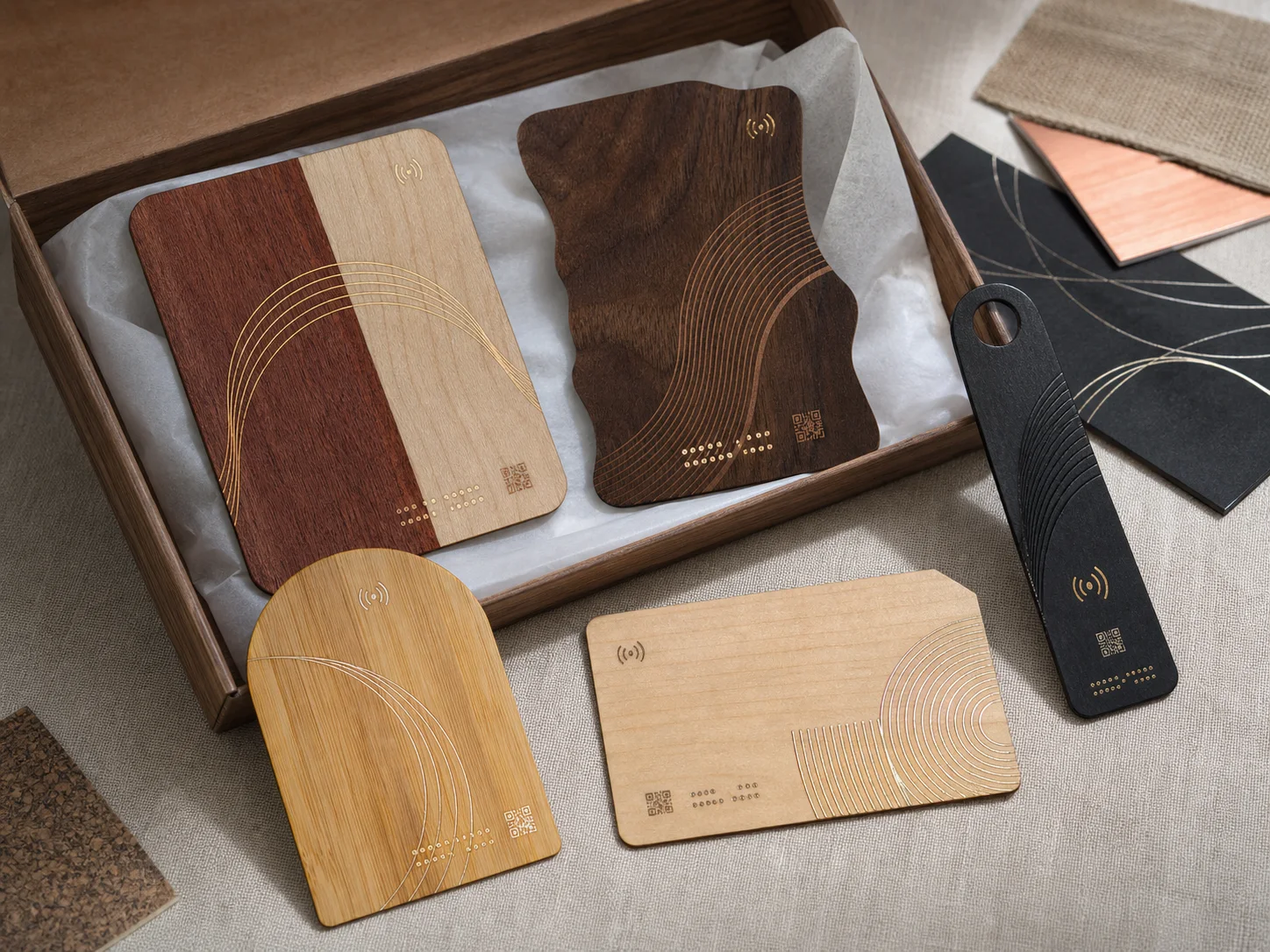
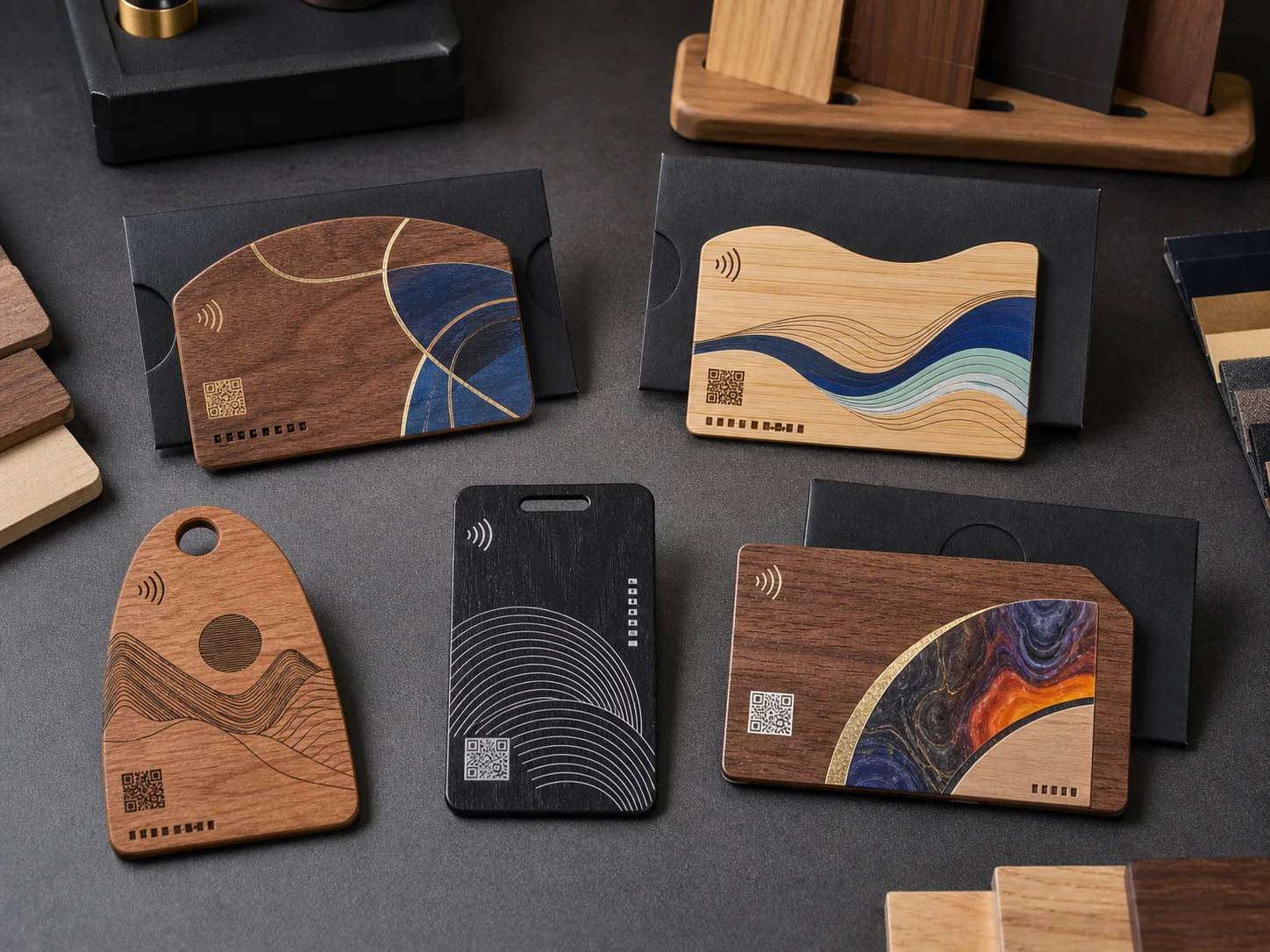
Start with the dieline and RF-safe area.
Custom outlines, slots, holes, notches, and layered veneers are reviewed as technical drawings before sampling. Small geometry changes can shift antenna routing, chip placement, edge strength, and finishing, so the card is engineered from the drawing outward.
Choose a controlled feature stack.
The strongest custom wood cards use a deliberate set of features: shaped edge, two-tone veneer, lanyard slot, key-tag hole, white ink, laser linework, foil-style accent, gloss detail, QR fallback, or serial area. Too many effects make the card harder to approve and repeat.
Prototype the real build before scale.
Custom builds start with a working sample that proves the chip reads in the final body, the slot or cutout survives handling, and the print finish stays legible on the selected wood. Once approved, the same spec can repeat from small VIP runs to production volume.
Best uses
- Limited-edition member cards
- Brand launch invitation cards
- Luxury sample kits
- Product authentication and tags
- VIP passes, key tags, and collectible access cards
Frequently asked questions
Can wooden RFID cards be custom shaped?
Yes — shaped edges, slots, holes, clipped corners, cut-through details, and mixed veneers. Every geometry change is checked against antenna routing and edge strength before sampling.
How does a custom card project start?
With the die line: the outline, chip area, and RF-safe zones are reviewed as technical drawings, then a working prototype proves the build before scale.
Can a custom shape still read reliably?
Yes, when the antenna is engineered around the final outline. The prototype is tested on the target reader or phone in the real body before production.
Specification
| Card size | CR80 and custom dimensions by drawing |
|---|---|
| Card body | Plastic-free, FSC-certified wood body options |
| Thickness | 0.80 mm to 2.0 mm by wood species and chip |
| Minimum order | None — single samples to production runs |
| Production time | About one week after artwork and sample approval |
| RF planning | Chip, antenna, thickness, and finish approved together |
| Approval route | Material sample, working RF sample, production proof |
| Formats | CR80, arched card, key tag, vertical pass, lanyard slot, custom die line |
| Shape details | Hole, slot, clipped corner, wave edge, cut-through window, edge radius |
| Print features | White ink, laser engraving, UV print, foil-style linework, gloss, QR, serial |
| RF approval | Antenna route, chip position, thickness, and reader test approved with the drawing |
| Best woods | Walnut, bamboo, birch, sapele, black wood, cherry |
Related wood RFID card pages
- Wooden Hotel Key Cards
- Wood NFC Business Cards
- Wooden Membership Cards
- Wood Event Passes
- Wood Loyalty Cards
- Wood ID Cards
- Wooden Gift Cards