Permanent mark
Laser Engraved Wood RFID Cards
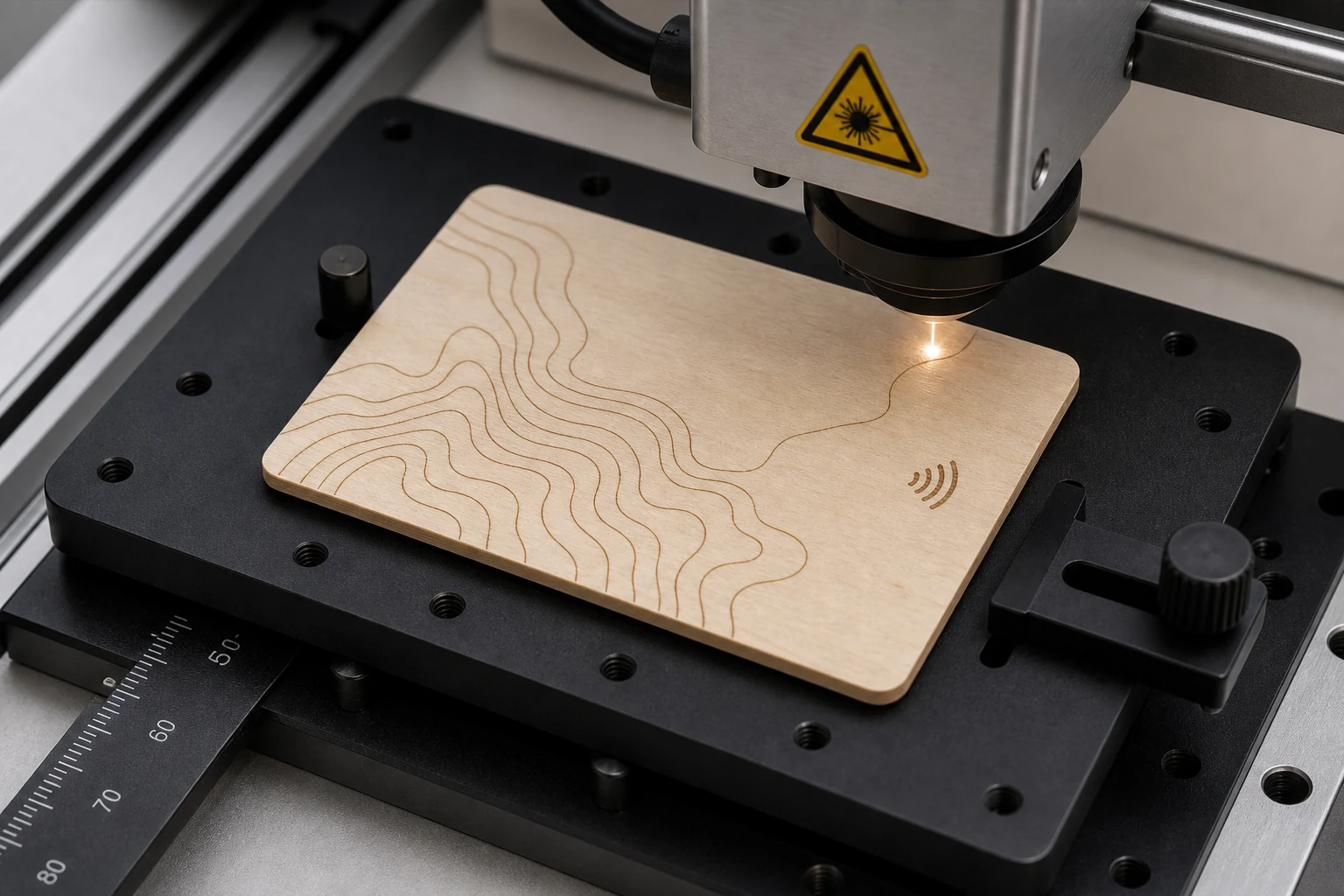
Laser engraved wood RFID cards use the most natural personalization route for wood — a permanent, tone-on-tone mark burned into the surface that feels part of the material instead of sitting on top of it. It suits logos, serials, member numbers, and fine linework, and behaves differently across every wood tone.
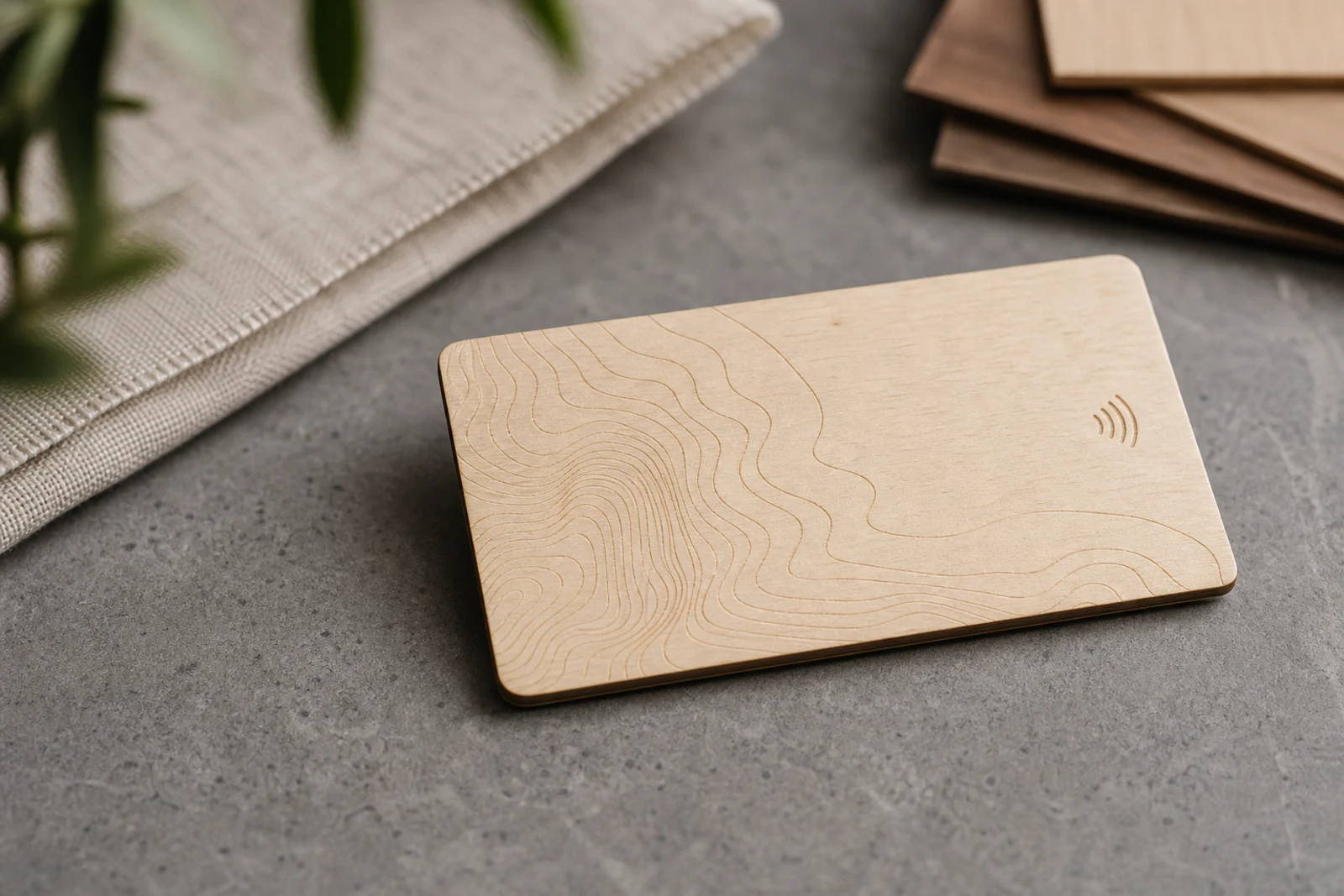
Laser engraving gallery
Compare engraved linework, machine marks, and contrast across wood tones.
Laser behaves differently on light bamboo, pale beech, warm cherry, dark walnut, and black wood. These references show how fine geometry, logos, and tone-on-tone marks change by material.
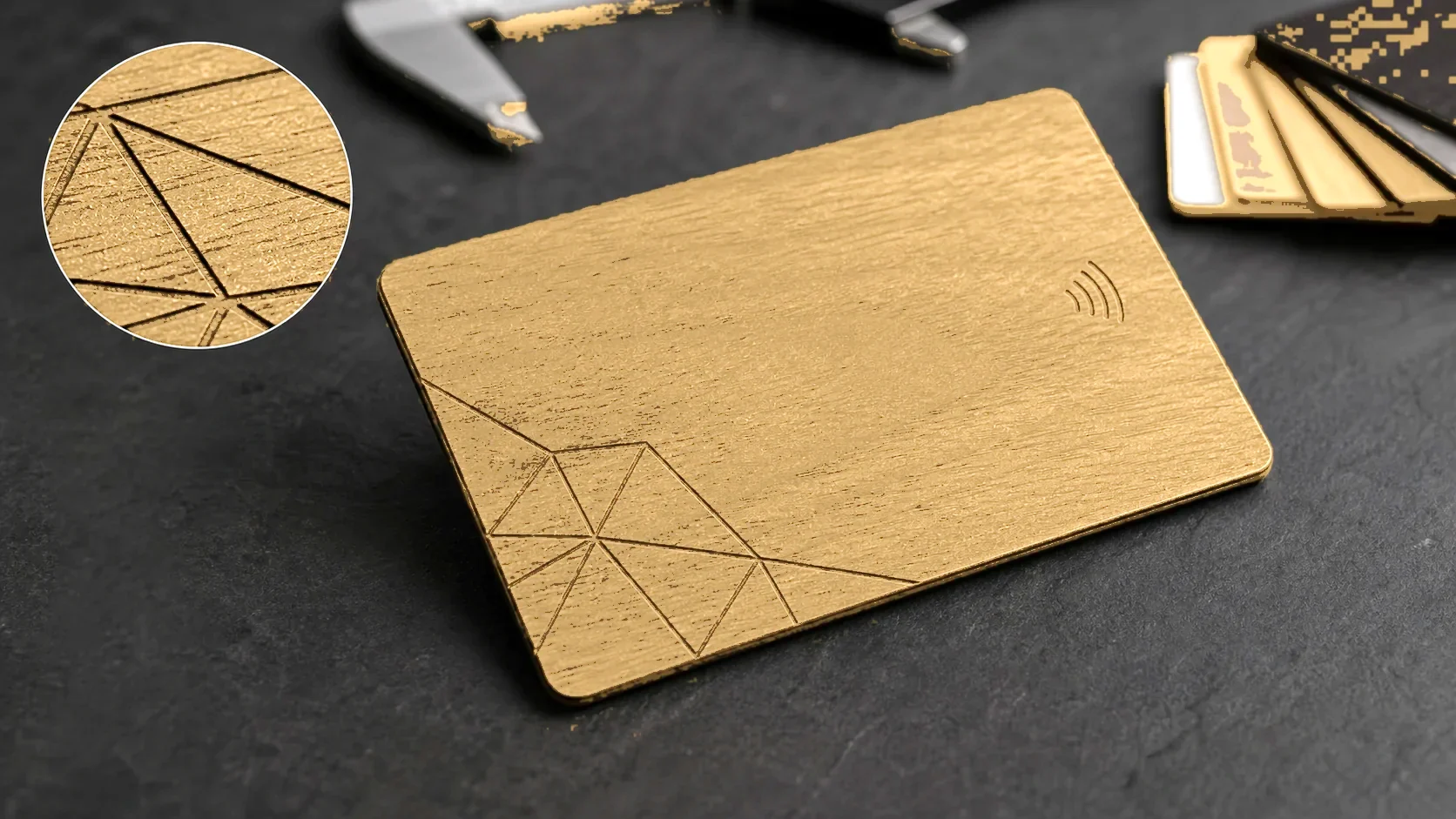
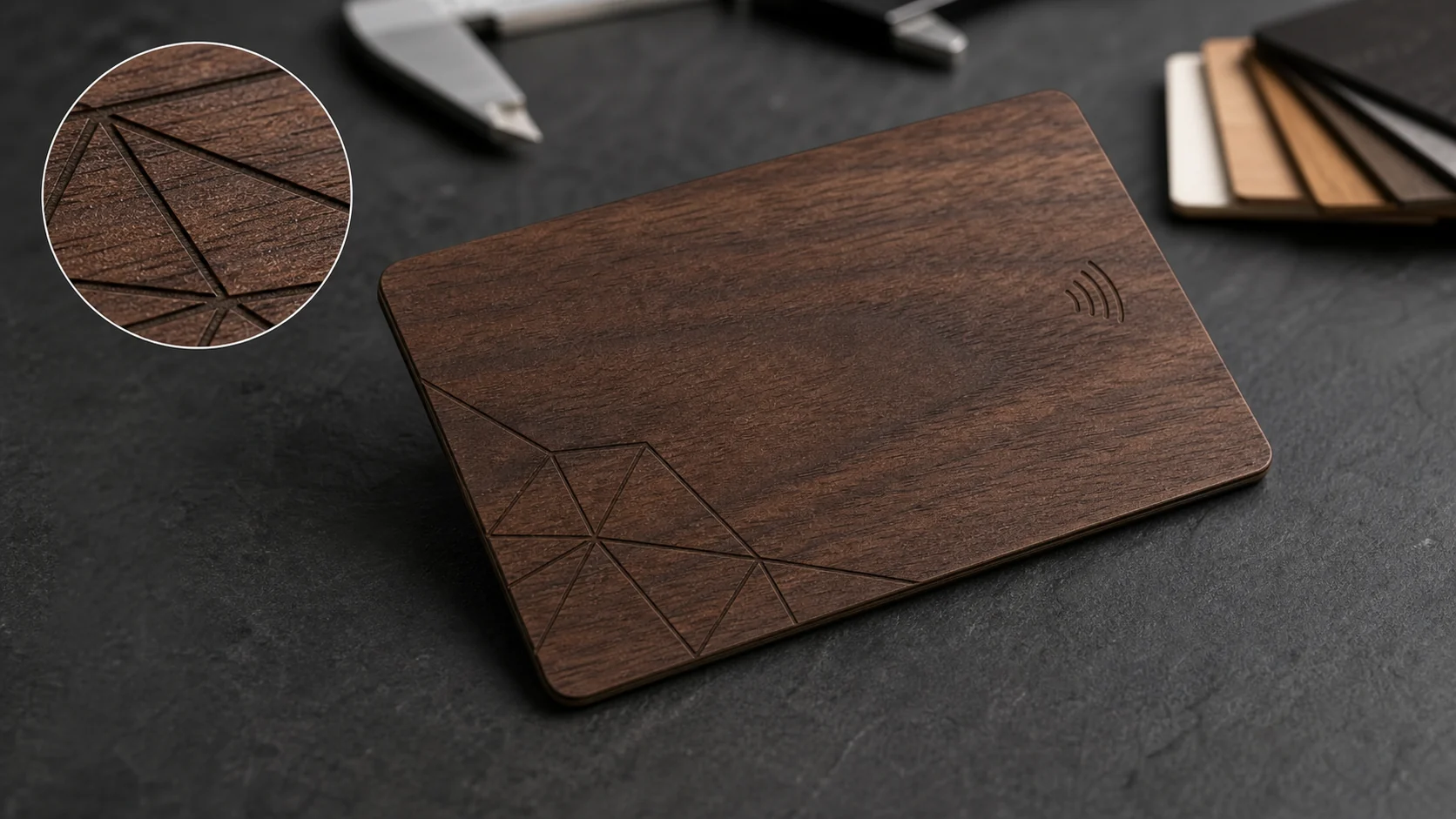
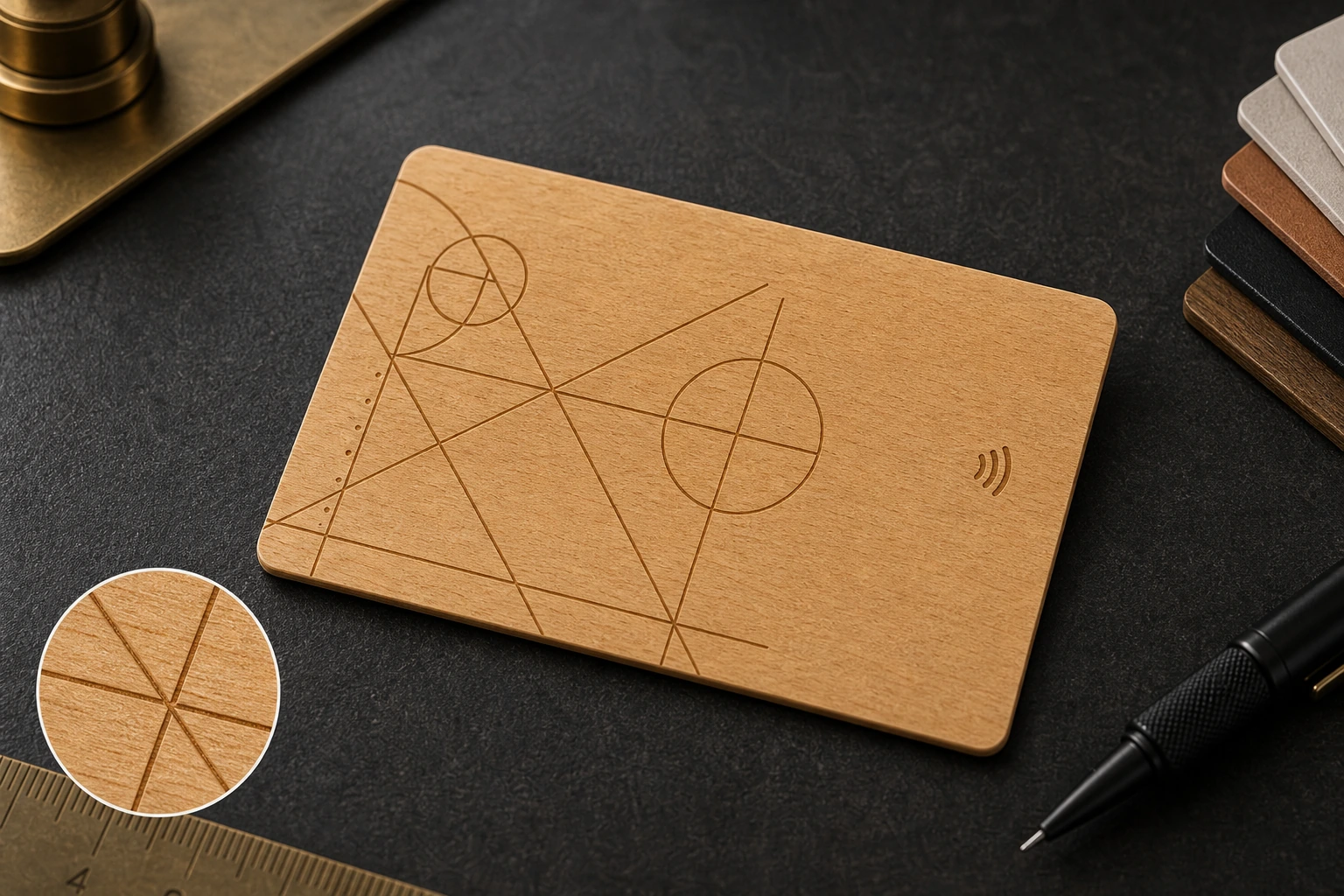
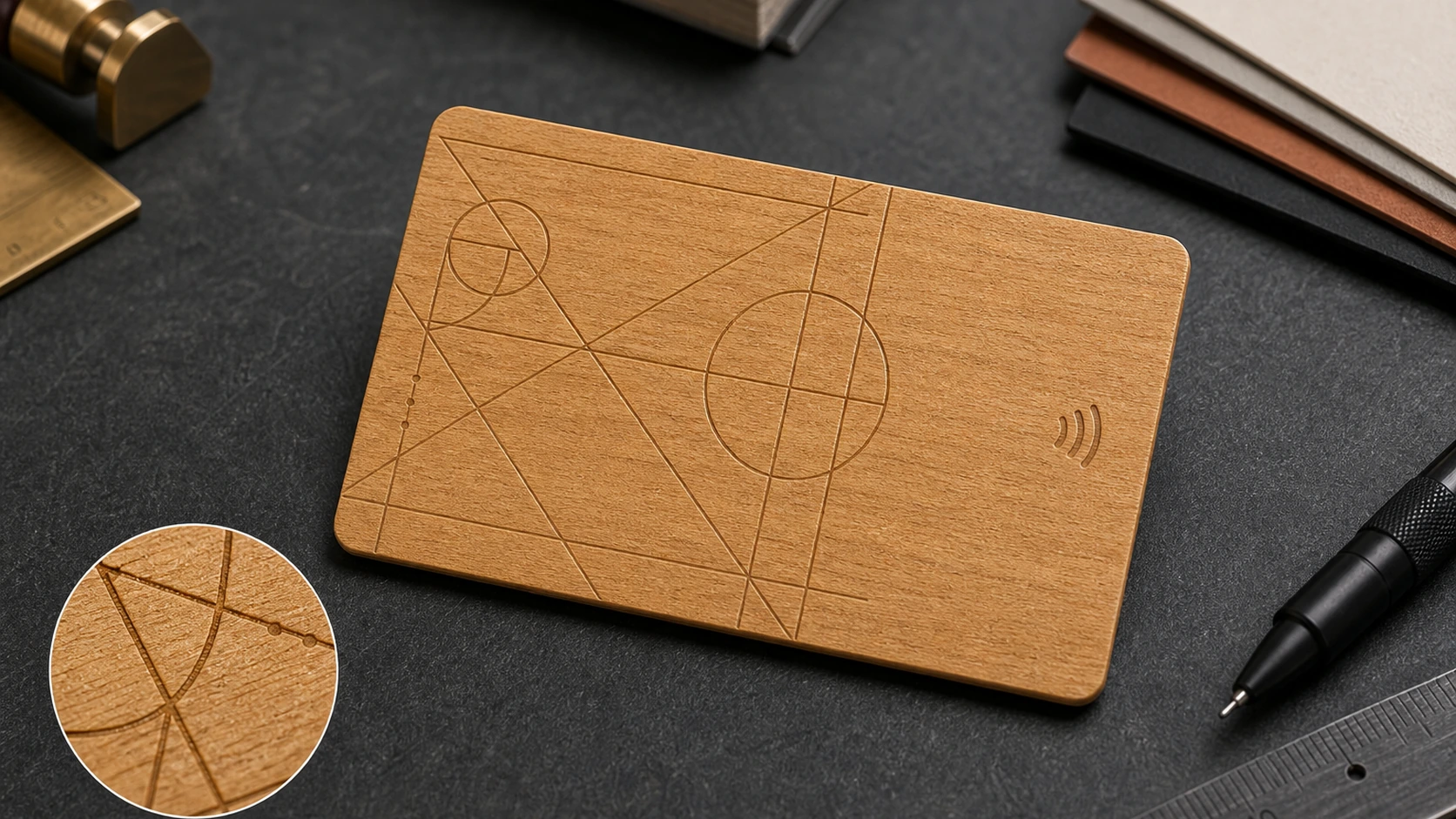
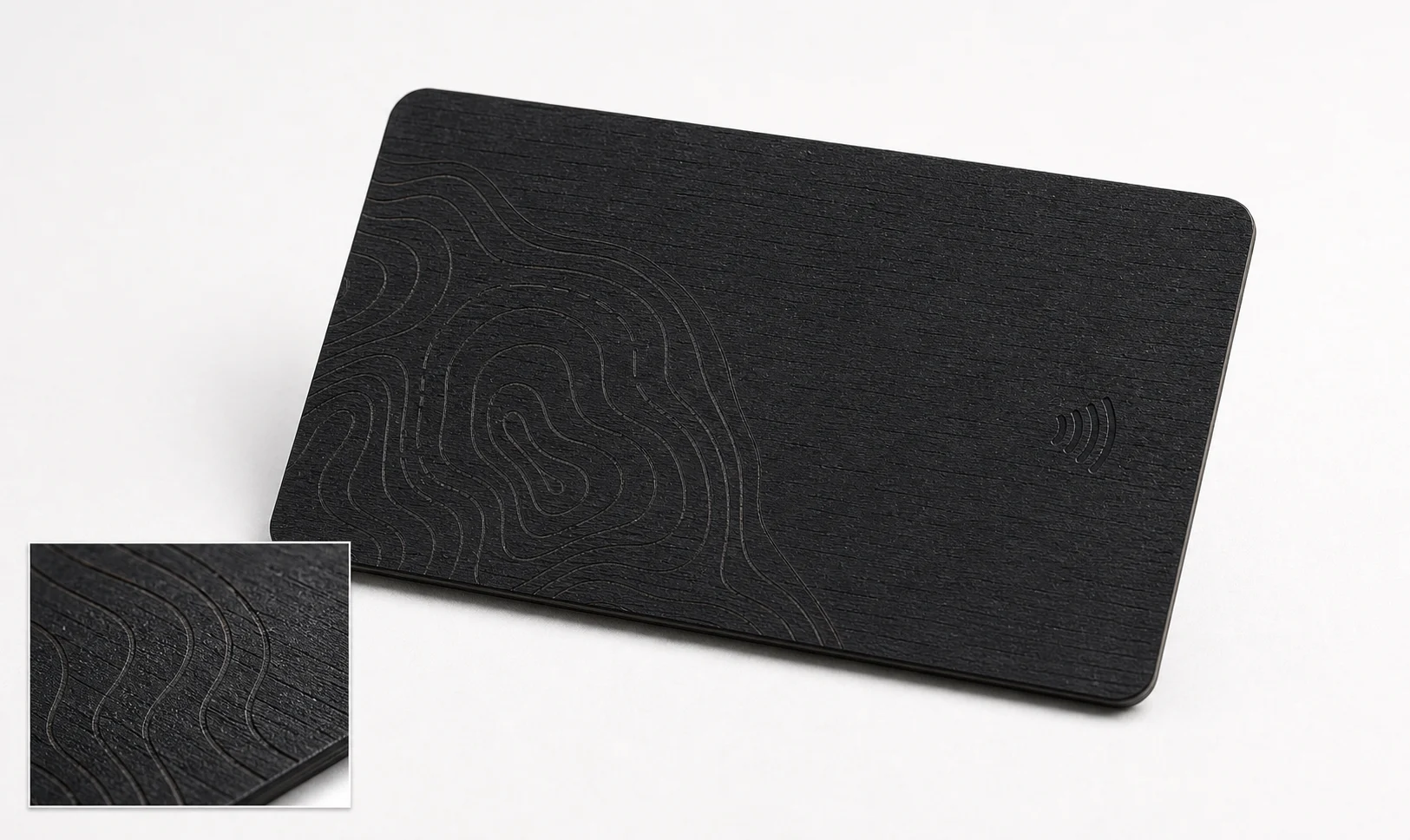
Laser works with the grain, not against it.
The same laser mark can look different across walnut, birch, bamboo, cherry, or cork. Samples should define acceptable contrast and grain variation before production.
Keep tiny text and QR practical.
Very small data marks need testing on the chosen wood and finish. For QR-heavy work, pale woods or printed QR may be more reliable than engraving alone.
Engraving is permanent and low-maintenance.
Because a laser mark is burned into the wood rather than printed on top, it will not scratch, peel, or fade with handling — an advantage for cards that live in wallets, on lanyards, or at busy readers. It suits logos, serial numbers, and member IDs that must stay legible for the life of the card.
Pair laser with white ink or foil for contrast.
On very dark woods a tone-on-tone engraving can read too quietly. Combining laser geometry with a small white-ink fill or a foil line keeps the mark subtle while adding just enough contrast for logos, QR zones, or tier marks. The combination is approved together on the final wood tone.
Best uses
- Natural wood logos
- Serial and member numbering
- Fine line patterns
- Premium tone-on-tone branding
Frequently asked questions
Does laser engraving wear off?
No. The mark is burned into the wood rather than printed on top, so it will not scratch, peel, or fade with wallet, lanyard, or reader handling.
How does engraving look on different woods?
Pale woods give higher contrast; dark woods give a quiet tone-on-tone mark. Samples define acceptable contrast and grain variation before production.
Can engraving be combined with other finishes?
Yes — a white-ink fill or foil line adds contrast to engraved geometry on dark woods. The combination is approved together on the final wood tone.
Specification
| Card size | CR80 and custom dimensions by drawing |
|---|---|
| Card body | Plastic-free, FSC-certified wood body options |
| Thickness | 0.80 mm to 2.0 mm by wood species and chip |
| Minimum order | None — single samples to production runs |
| Production time | About one week after artwork and sample approval |
| RF planning | Chip, antenna, thickness, and finish approved together |
| Approval route | Material sample, working RF sample, production proof |
| Best surfaces | Birch, beech, bamboo, walnut, cherry |
| Use cases | Logo, serial, line art, NFC icon, member number |
| Approval need | Contrast and minimum line width sample |
Related wood RFID card pages
- UV Printed Wood RFID Cards
- White Ink Wood Cards
- Foil Wood RFID Cards
- Spot UV Wood Cards
- QR and Serial Wood RFID Cards
- Wood Card Edge Finishing
- Wood RFID Card Artwork Specs