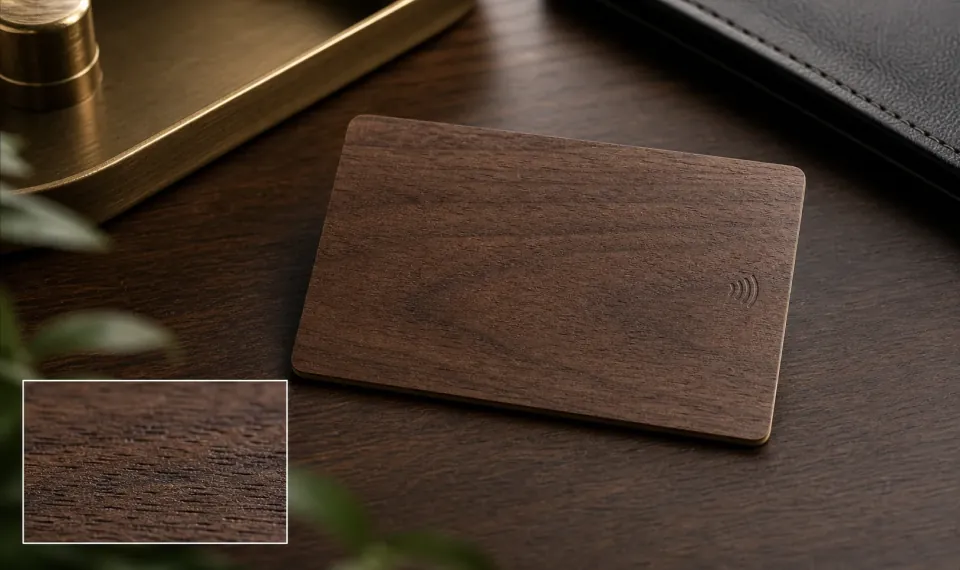
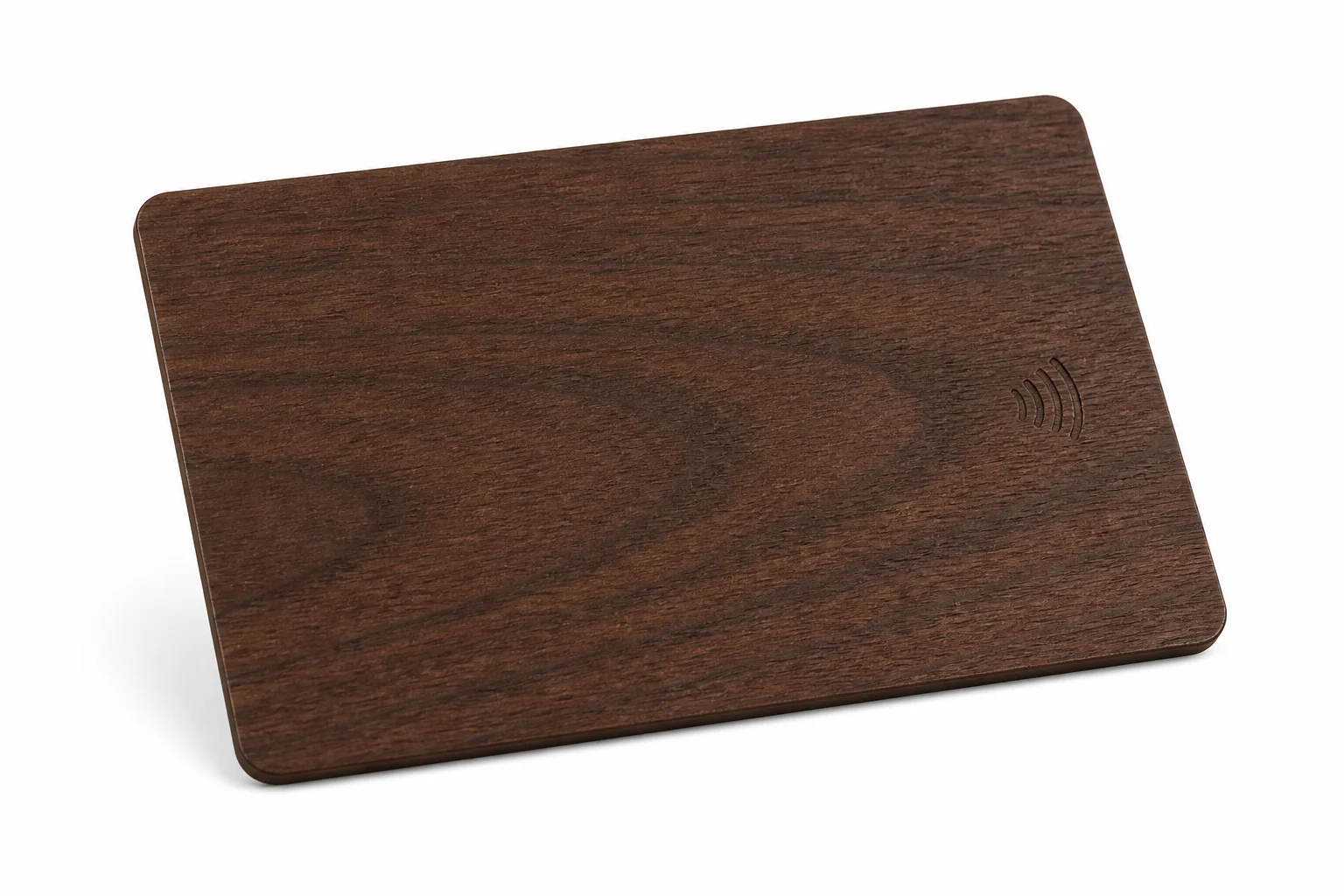
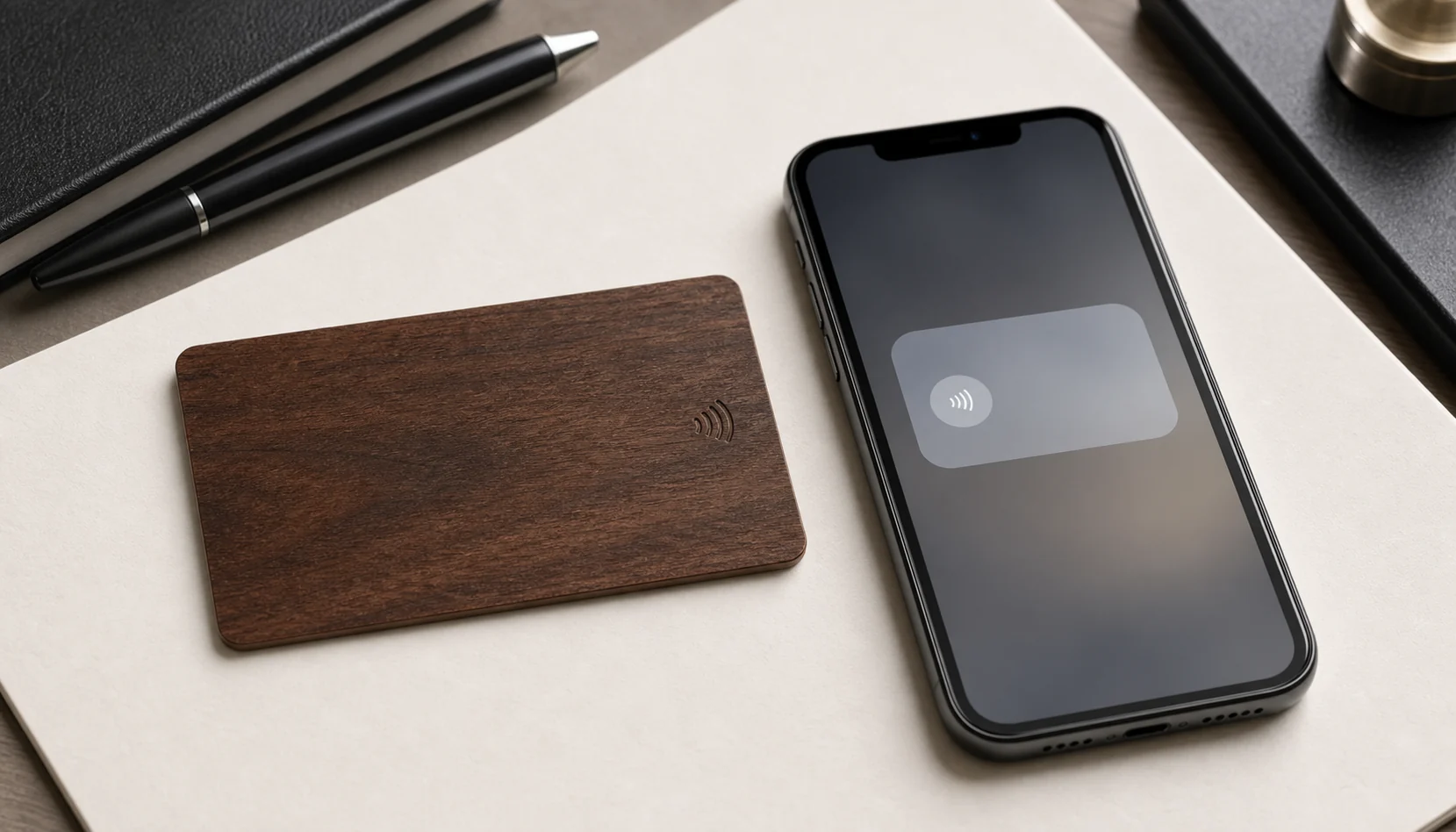
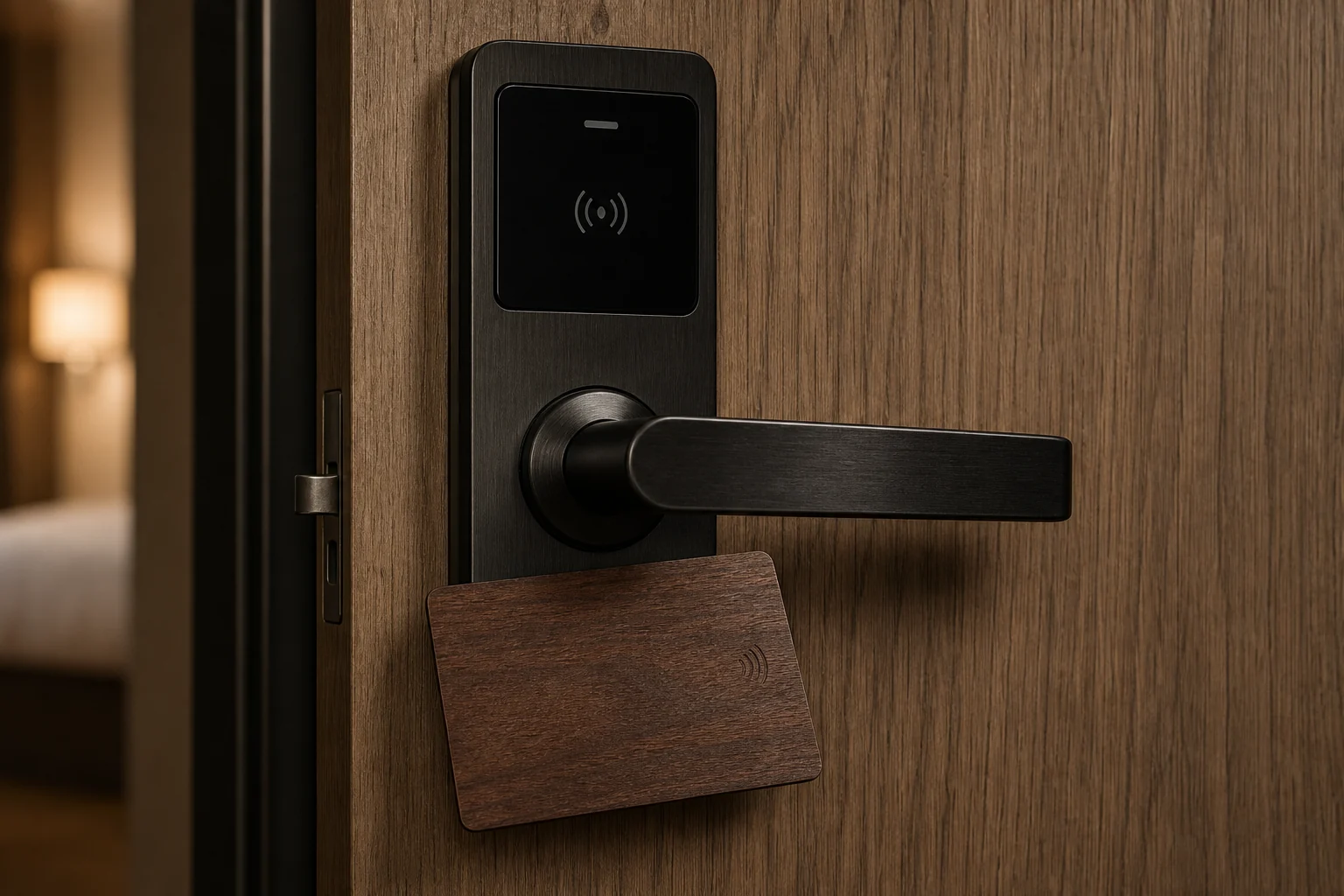
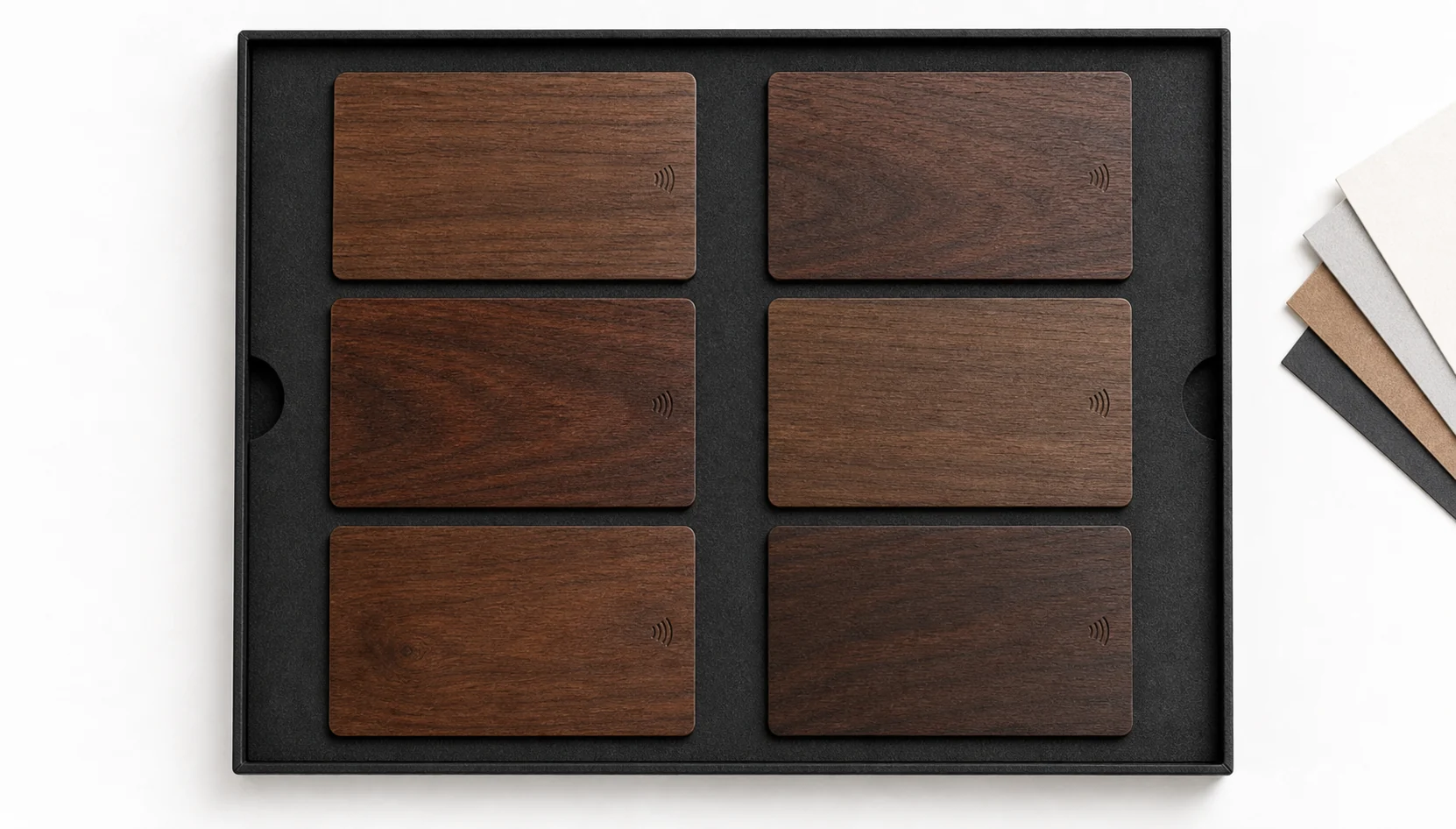
Walnut RFID cards are the most serious wood direction in the range — dark, warm, and quiet, easy to make premium without looking artificial. These walnut wood NFC cards are strongest for private memberships, executive access, boutique hotel keys, sample boxes, and short luxury batches, where the buyer will judge grain, edge, and finish closely.
Private club and luxury membership cardsPremium NFC business cards in small batchesBoutique hotel and resort key cardsGift, loyalty, invitation, and VIP access cardsExecutive sample kits and approval boxes
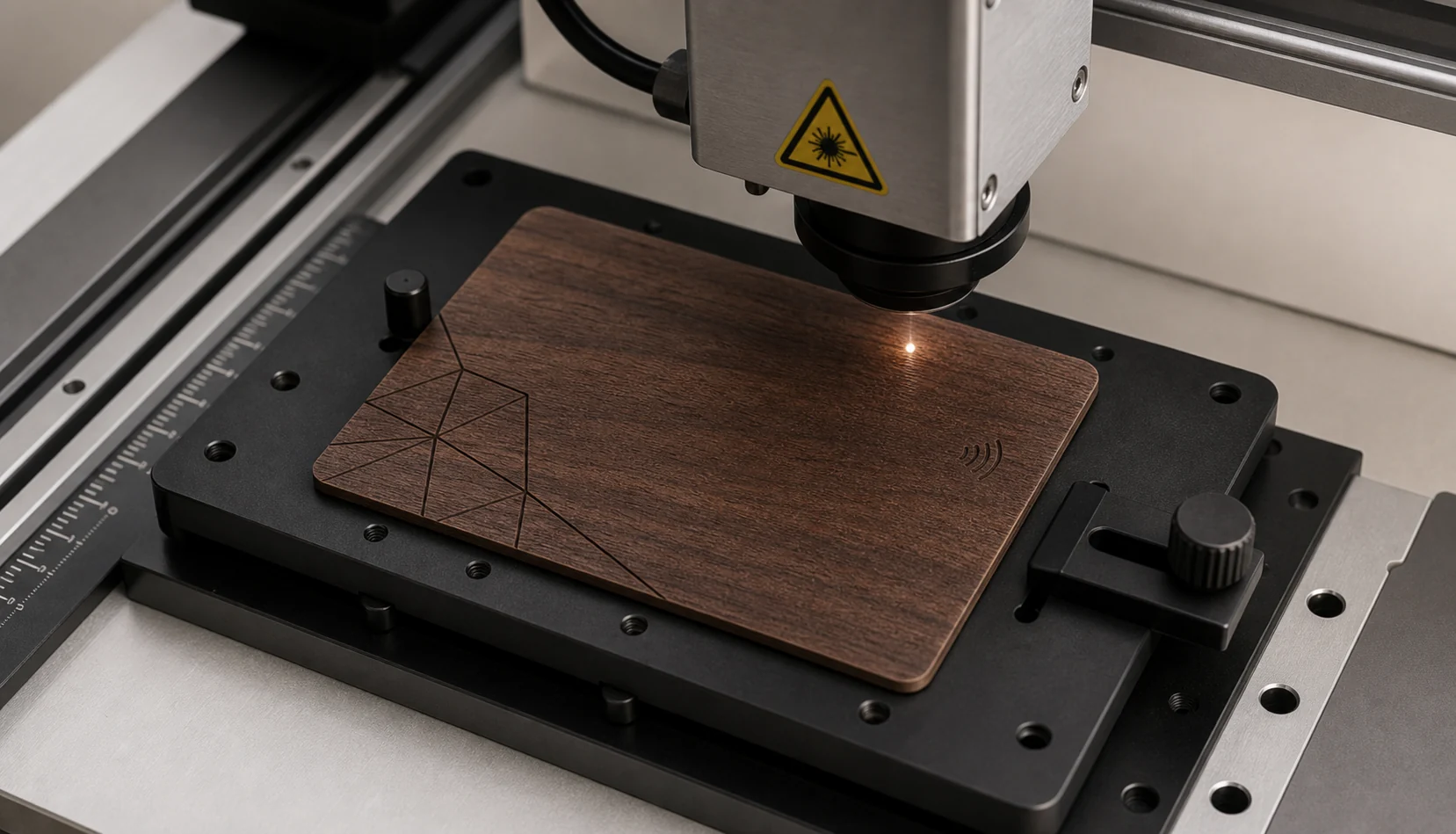
The laser cutting linework into walnut — smoke-fine detail, permanent mark.
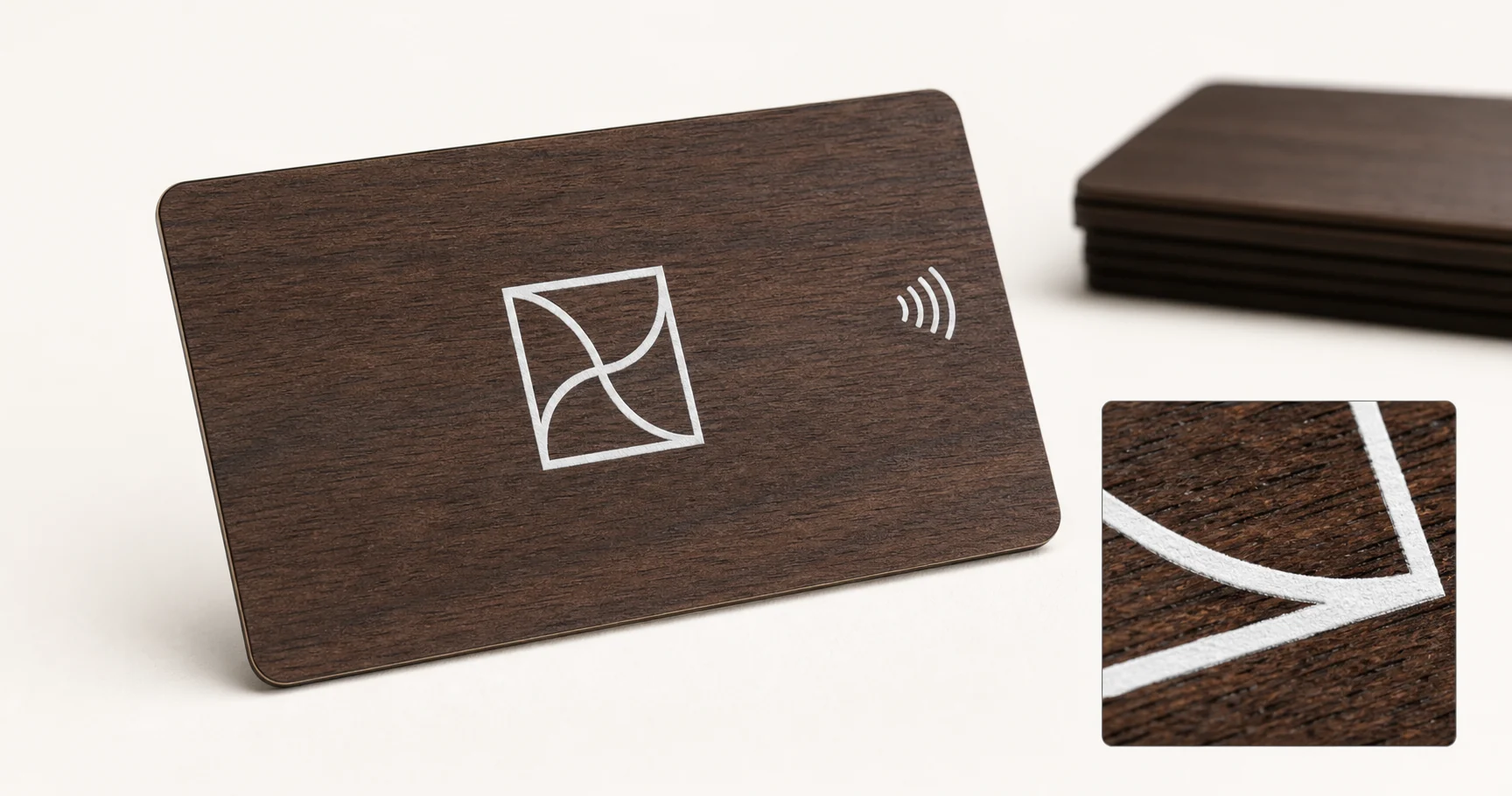
08 / What this showsWhite ink
Opaque white on dark walnut: the contrast recipe for logos, QR zones, and serials.
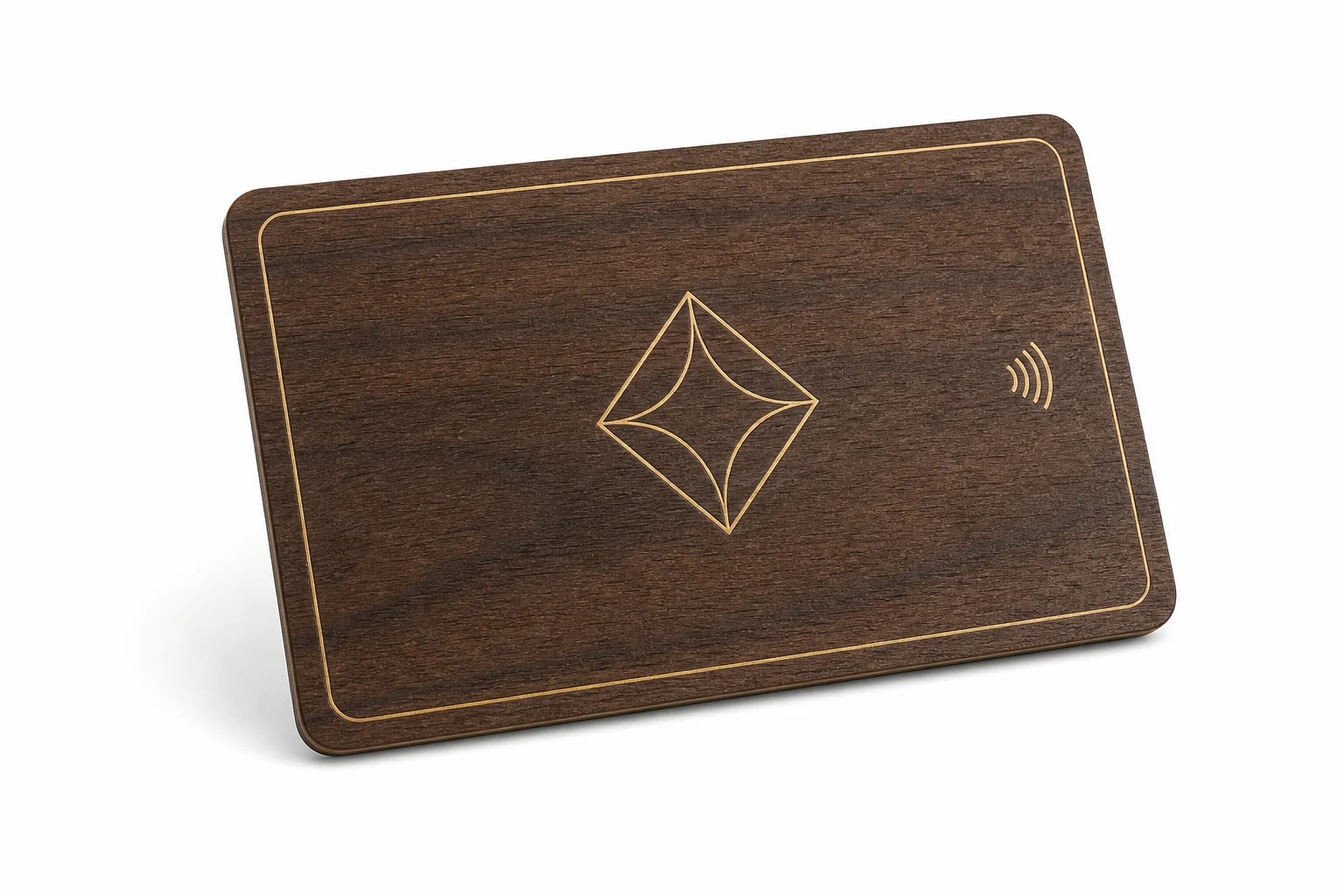
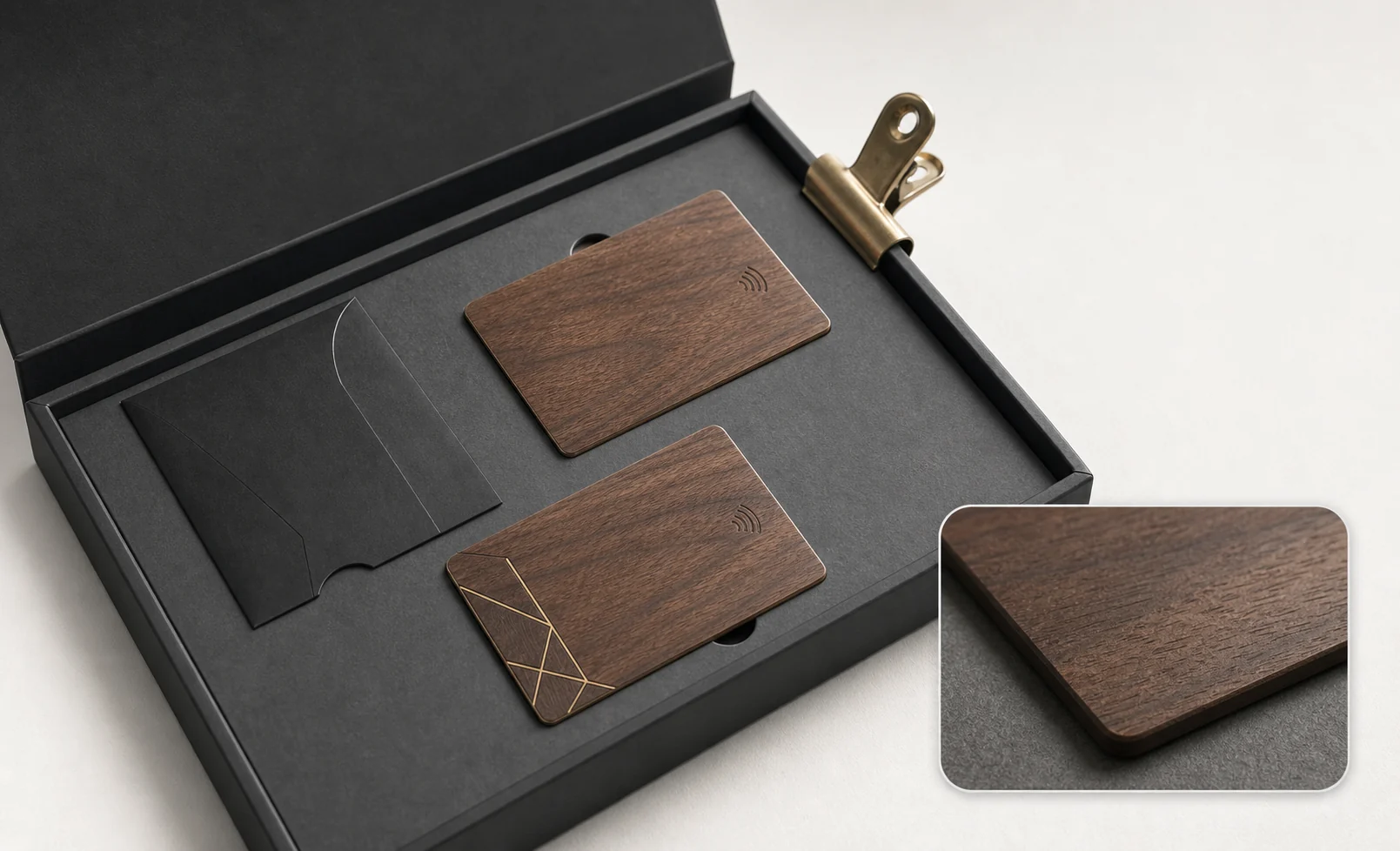
09 / What this showsBrass line
One thin brass line on walnut — restraint doing the luxury work.
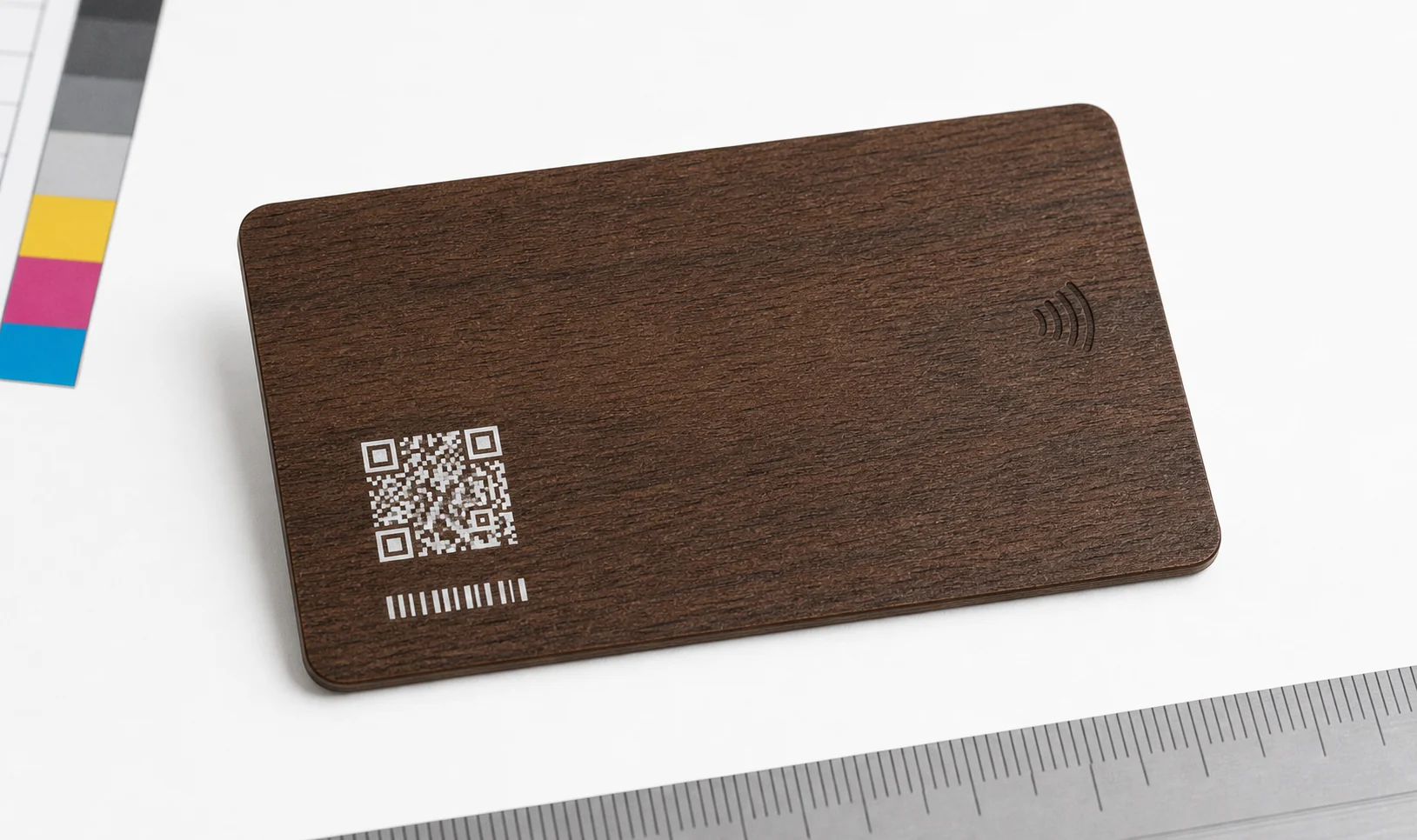
10 / What this showsQR and serial
Walnut card back: QR block and serial zone placed for reliable first scans.
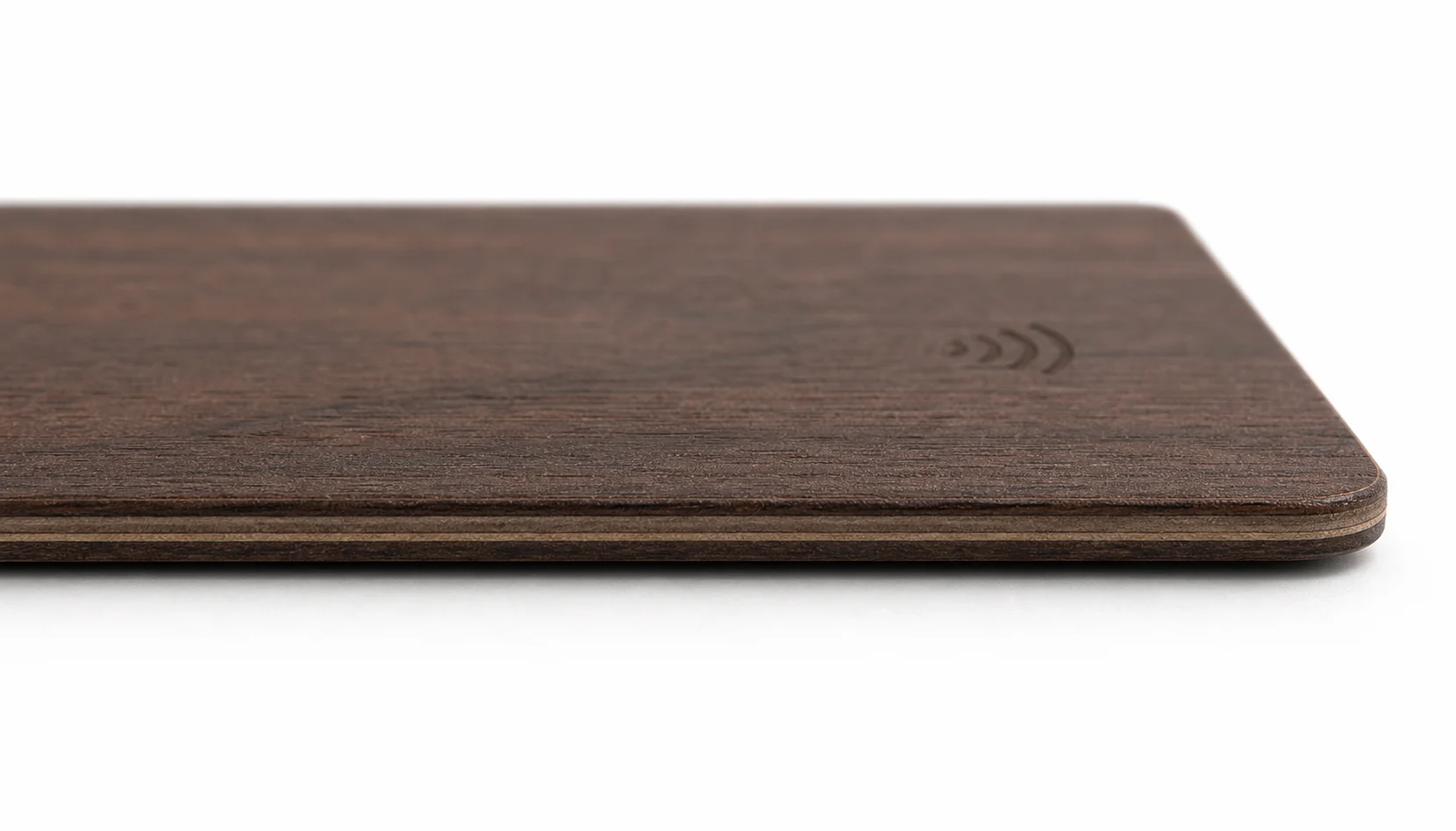
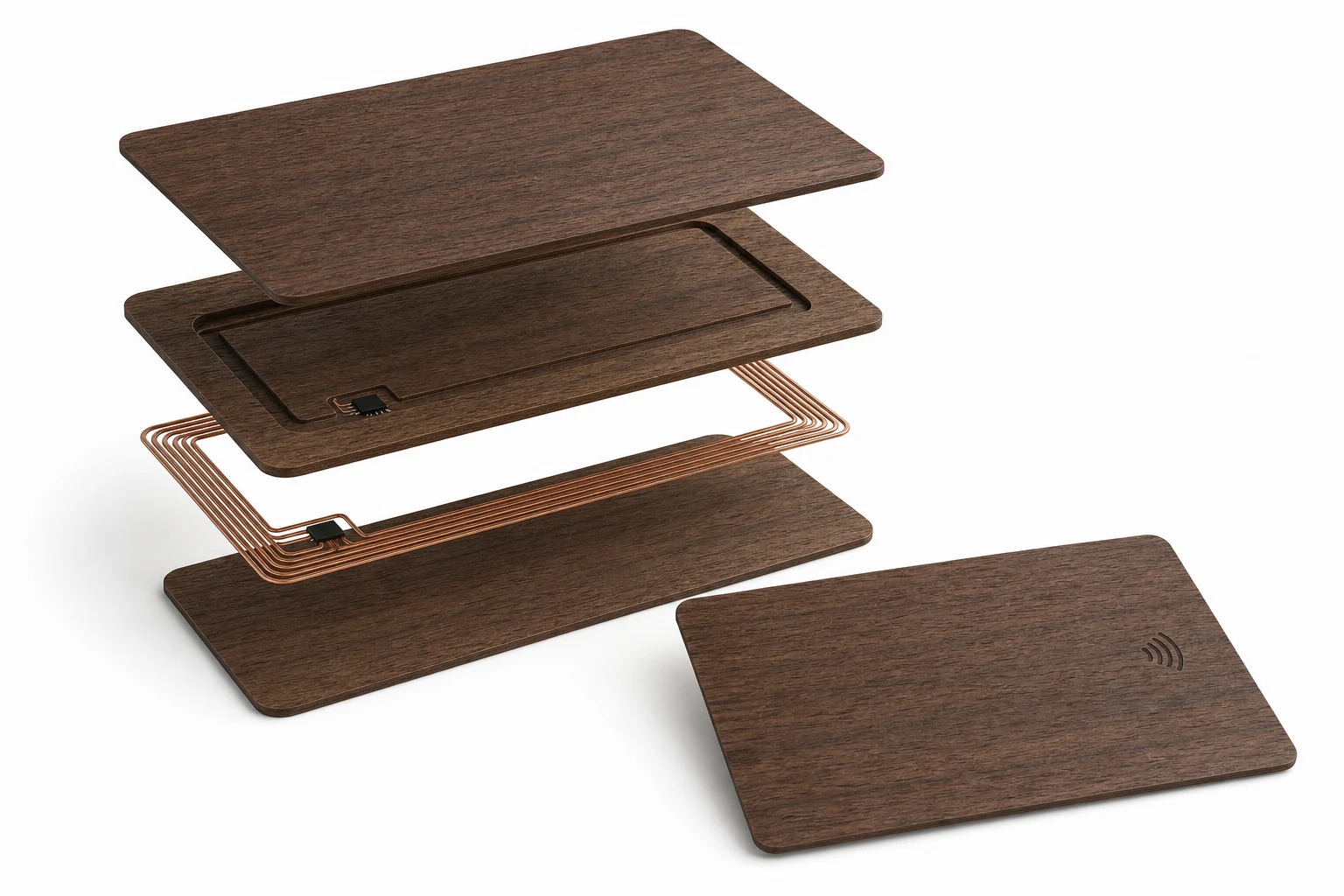
11 / What this showsRF construction
Veneer, inlay, core, and finished body shown as a build reference.
12 / What this showsSample box
The walnut sample box a private-club batch ships in for sign-off.
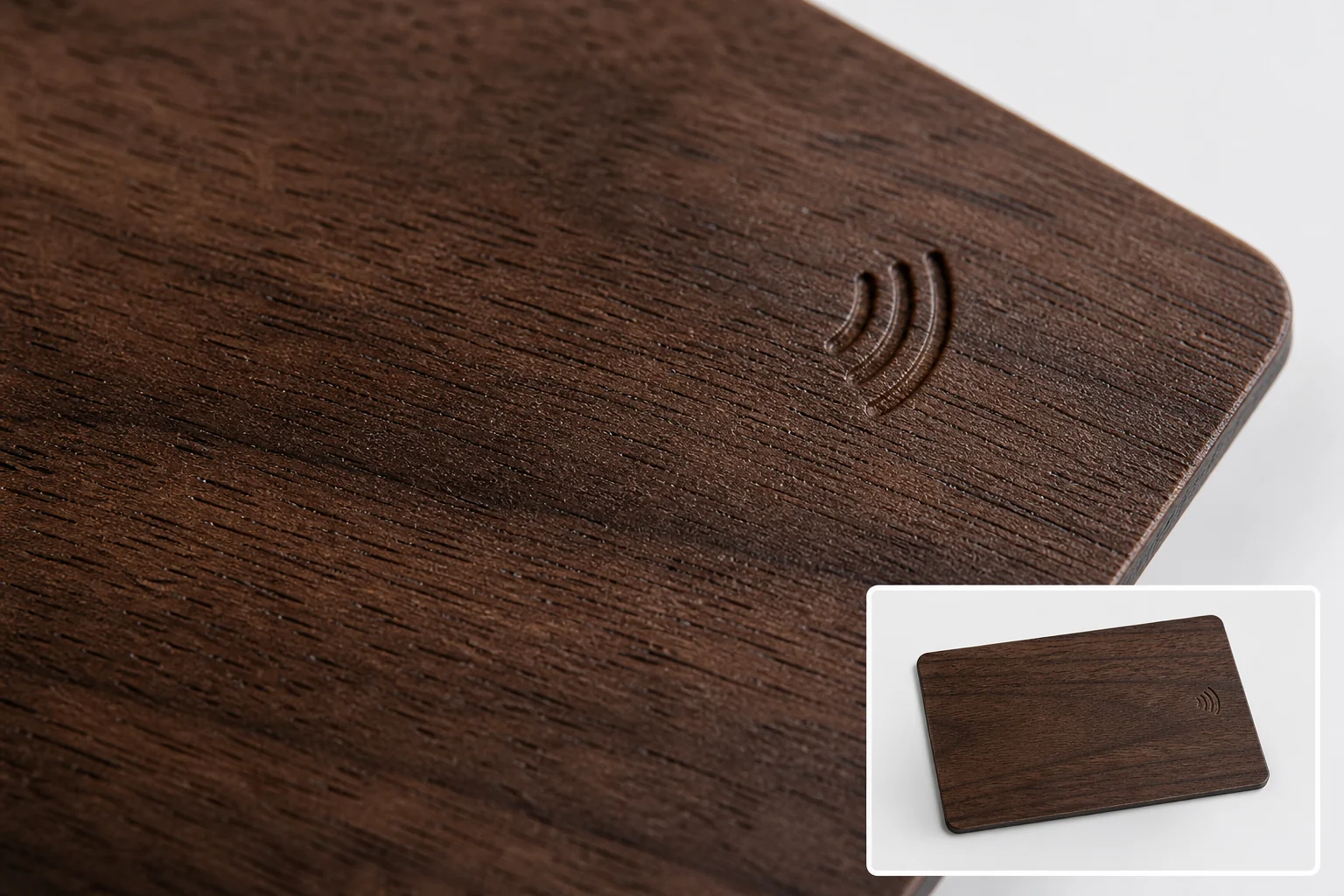
13 / What this showsGrain macro
Close material read for walnut pores, tone, and matte seal.
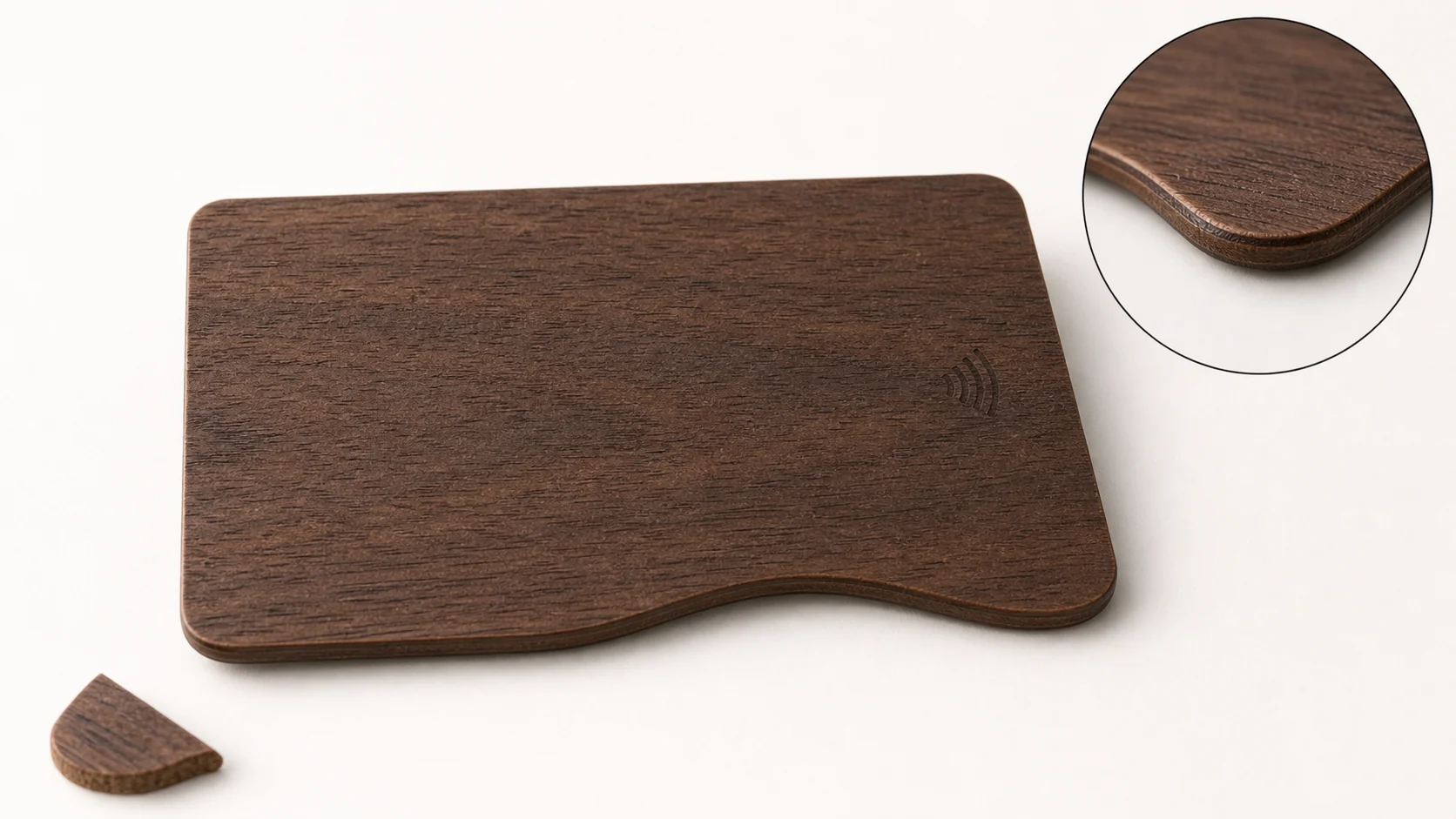
14 / What this showsSubtle custom shape
A wave-cut walnut edge — custom enough to notice, controlled enough to produce.
(02) — RFID construction
RF construction notes.
Walnut is a dense, stable hardwood, and that density is an asset for RFID work: the veneer stack holds the inlay flat, the CR80 body stays rigid in wallets and sample boxes, and the finished card taps consistently once the antenna is tuned for the final thickness. Typical walnut programs pair standard or high-security HF access with club readers and boutique hotel locks, or NFC tag encoding for executive NFC cards — in every case the encoded sample is approved on the actual reader before the run.
(03) — Print and marking
How the surface behaves.
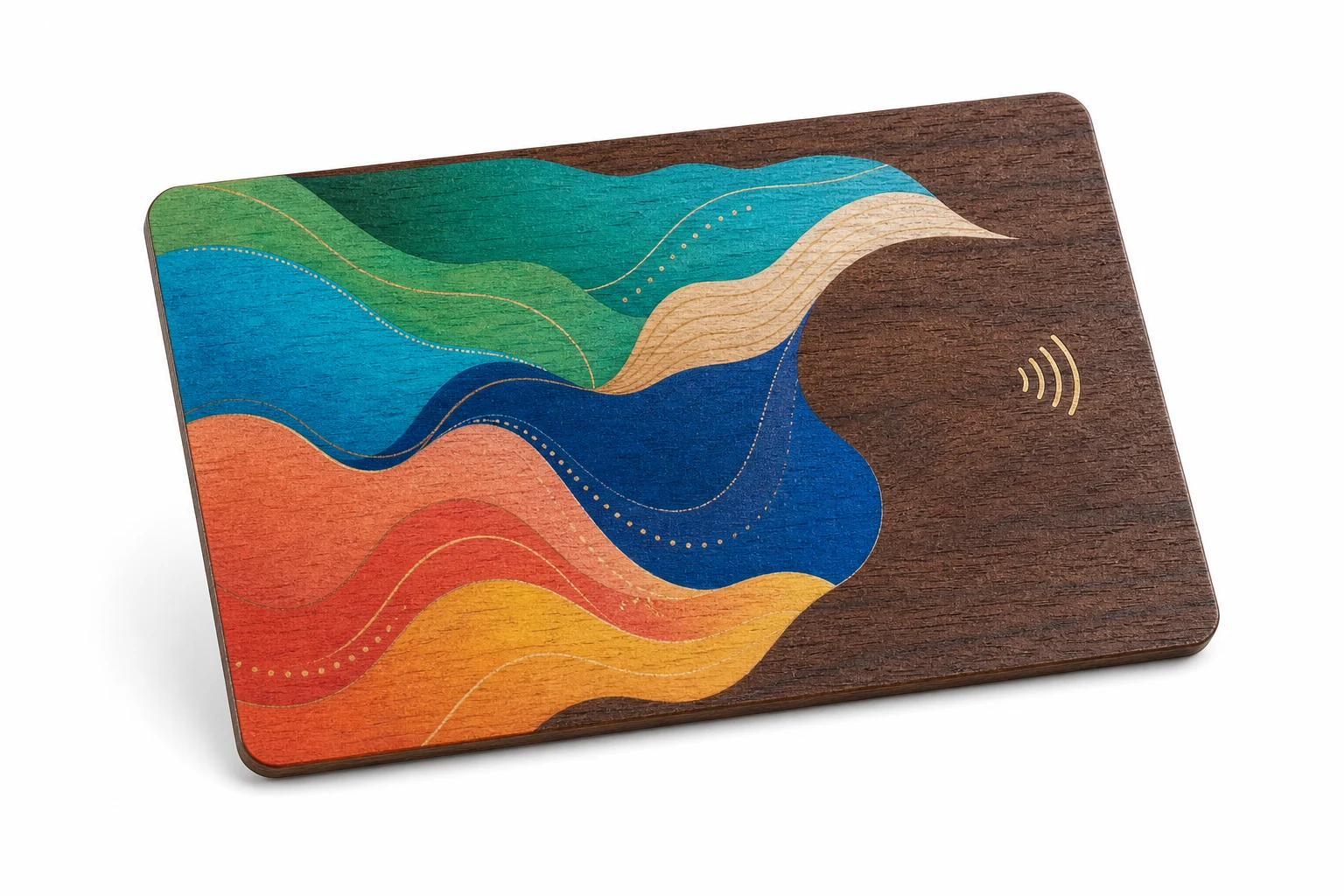
Dark walnut rewards restraint. The most reliable premium finishes are laser engraving, opaque white ink, thin brass/gold foil, small NFC marks, QR/serial zones with enough contrast, and simple geometric linework. Full-color artwork can work, but it should use a white base and be approved on sealed walnut because the grain will warm and darken the final color.
(04) — Uses and finishes
Where this material makes sense.
Every wood RFID card should be approved as a real stack: material, chip, antenna, marking method, edge, encoding, and packaging.
Best for
Private club and luxury membership cards
Premium NFC business cards in small batches
Boutique hotel and resort key cards
Gift, loyalty, invitation, and VIP access cards
Executive sample kits and approval boxes
Finish options
Natural matte seal with engraved NFC mark
Laser engraving and fine corner linework
Opaque white ink for logos, QR, and serial zones
Gold or brass foil border and icon details
Custom edge profiles after RF layout approval
Card sizeCR80-style 85.6 x 54 mm, custom shapes by RF reviewVisual characterDark brown walnut grain with natural variationSurface feelMatte sealed wood, visible pores, warm premium toneBest contrastWhite ink, laser engraving, brass or gold foilLogo behaviorWorks best with restrained marks, linework, and iconsQR / serialUse high-contrast white zones and approve scan distanceRF routeLF, HF/NFC, standard and high-security HF routes, selected UHF by testReader approvalTest against the real lock, phone, reader, or scannerEdge optionsRounded CR80 edge, bevel control, subtle custom profilesBatch fitNo minimum order — single samples through larger runsPackagingPairs well with sample boxes, envelopes, and member kitsApproval noteApprove grain tolerance, contrast, edge, and encoded sample
Private club and luxury membership cards, executive NFC business cards, boutique hotel keys, and short premium batches where grain, edge, and finish are judged closely.
02What printing works best on walnut?
Walnut rewards restraint: laser engraving, opaque white ink, thin brass or gold foil, and simple linework. Full-color artwork is possible with a white underbase, approved on sealed walnut.
03Can walnut cards work with hotel locks and NFC phones?
Yes. Walnut bodies can carry LF, HF/NFC, standard HF, high-security AES HF, and selected UHF builds — approved against the target lock, reader, or phone before the run.
(06) — Request a quote
Send quantity, chip, finish, and encoding requirements.
No PVC card coreNo PET laminateReal veneer or solid wood bodyEmbedded RFID/NFC electronicsUID, NDEF, and access encodingLaser, UV print, QR, and serialization