Selected UHF builds
UHF Wooden RFID Cards
UHF wooden RFID cards are a specialist build, not a default. They are chosen when a project genuinely needs longer read range or EPC Gen2-style identification, and only when the antenna can be tuned and tested inside the final wood body — because a natural wood card still affects UHF performance more than it affects HF.
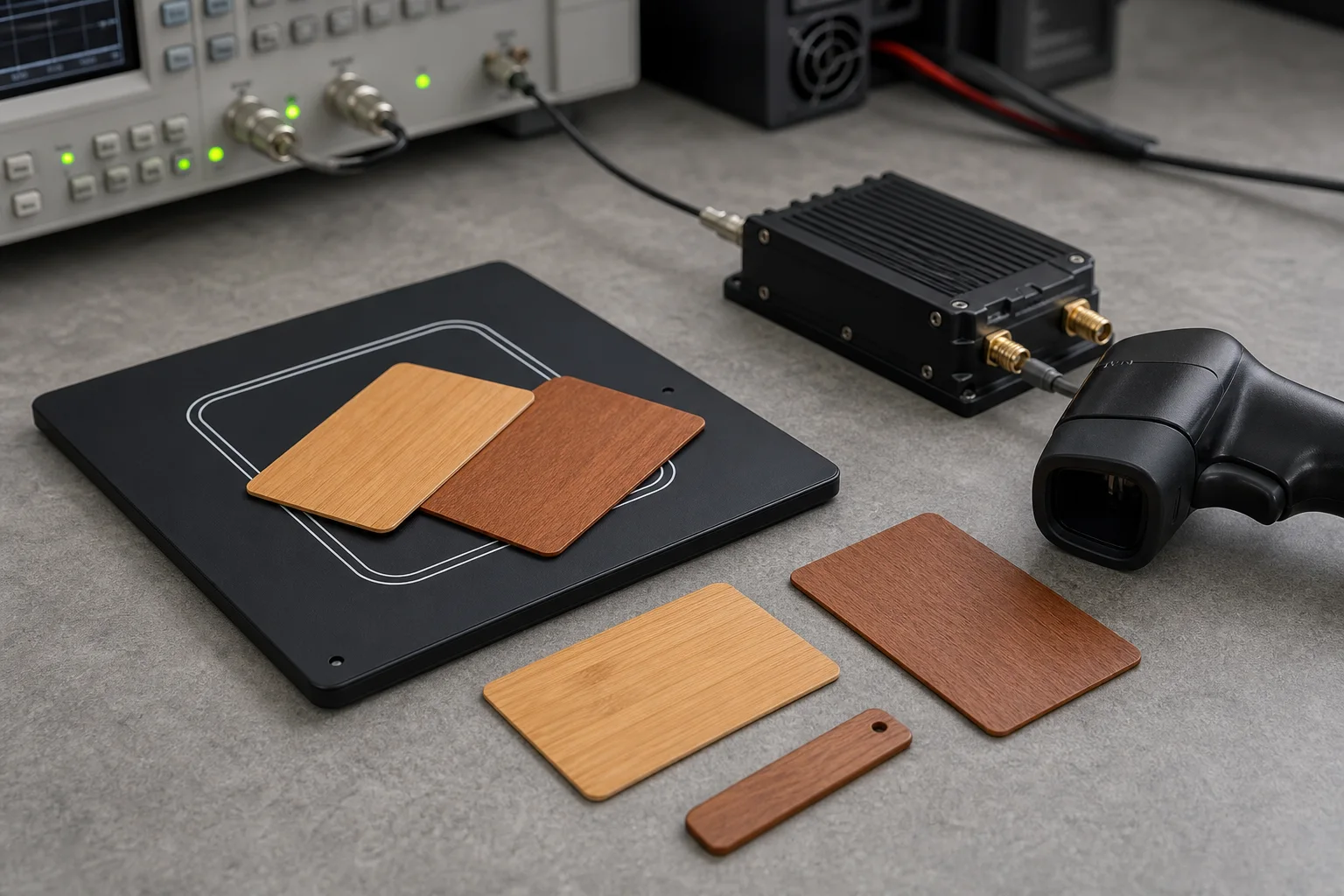
UHF RFID route brief
| Frequency | Regional UHF band |
|---|---|
| Best use | Selected long-range identification, EPC-style data, asset flow, event experiments, and product authentication tags. |
| Chip route | UHF inlay and antenna construction selected around read range, reader power, orientation, and body limits. |
| Phone behavior | Not smartphone NFC. It needs a UHF reader or scanner. |
| Encoding | EPC, TID or UID reference, asset ID, batch ID, or project-specific data. |
| Approval check | Test range, orientation, nearby materials, reader power, antenna placement, and the final finish stack. |
Visual references
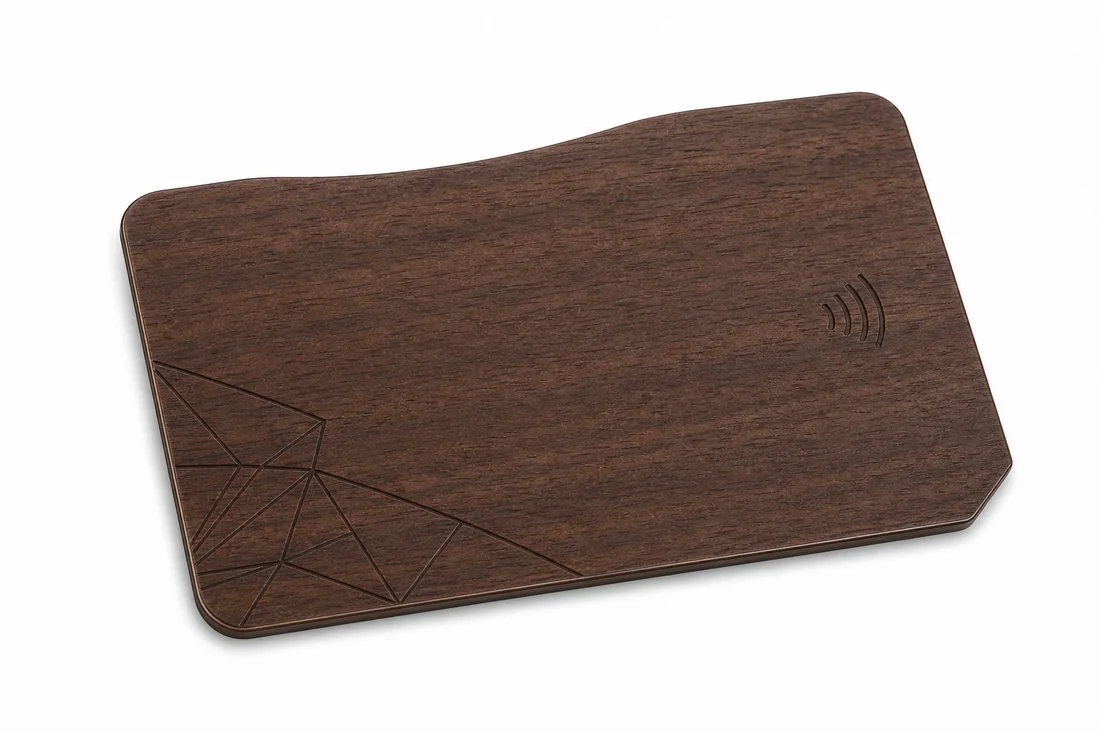
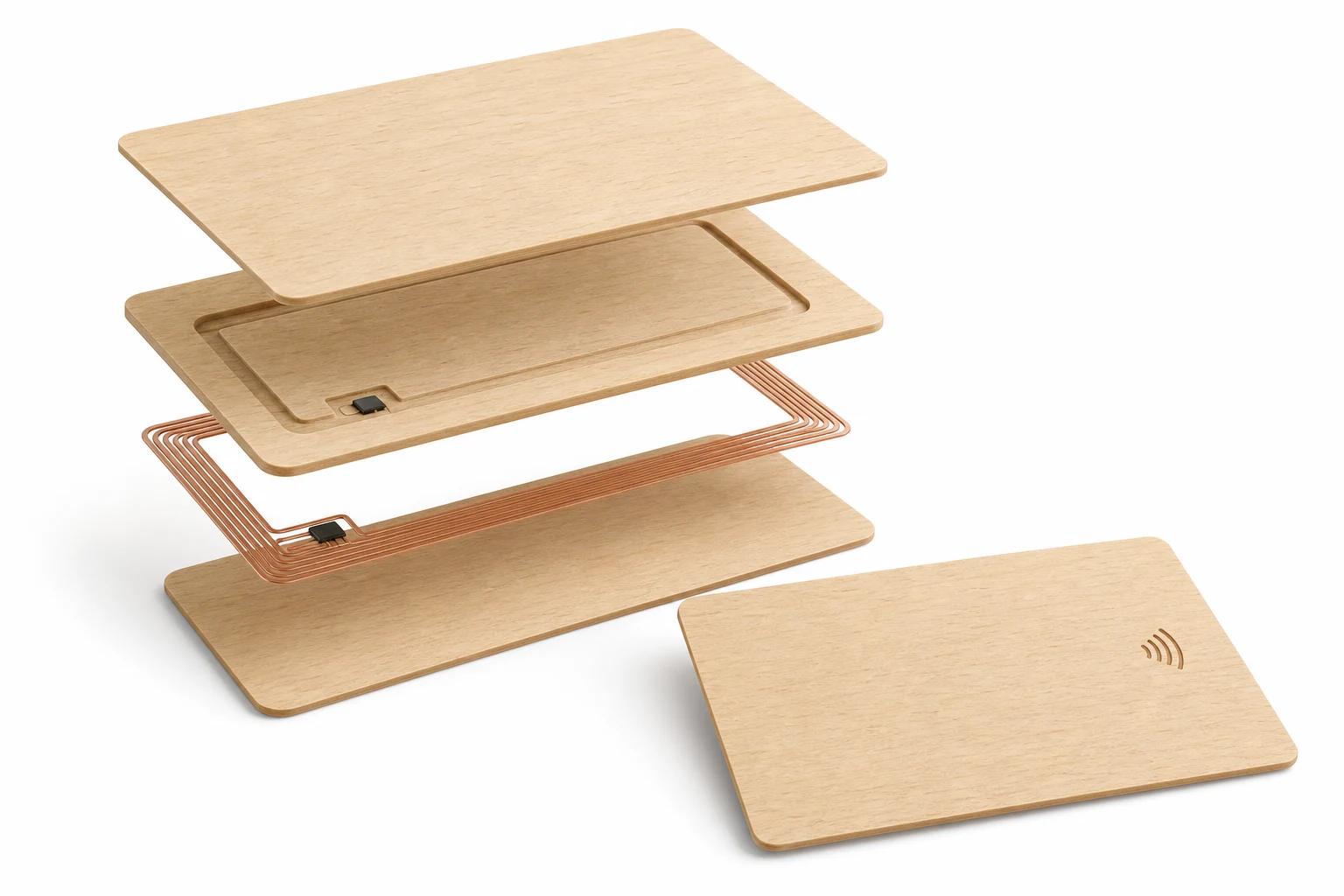
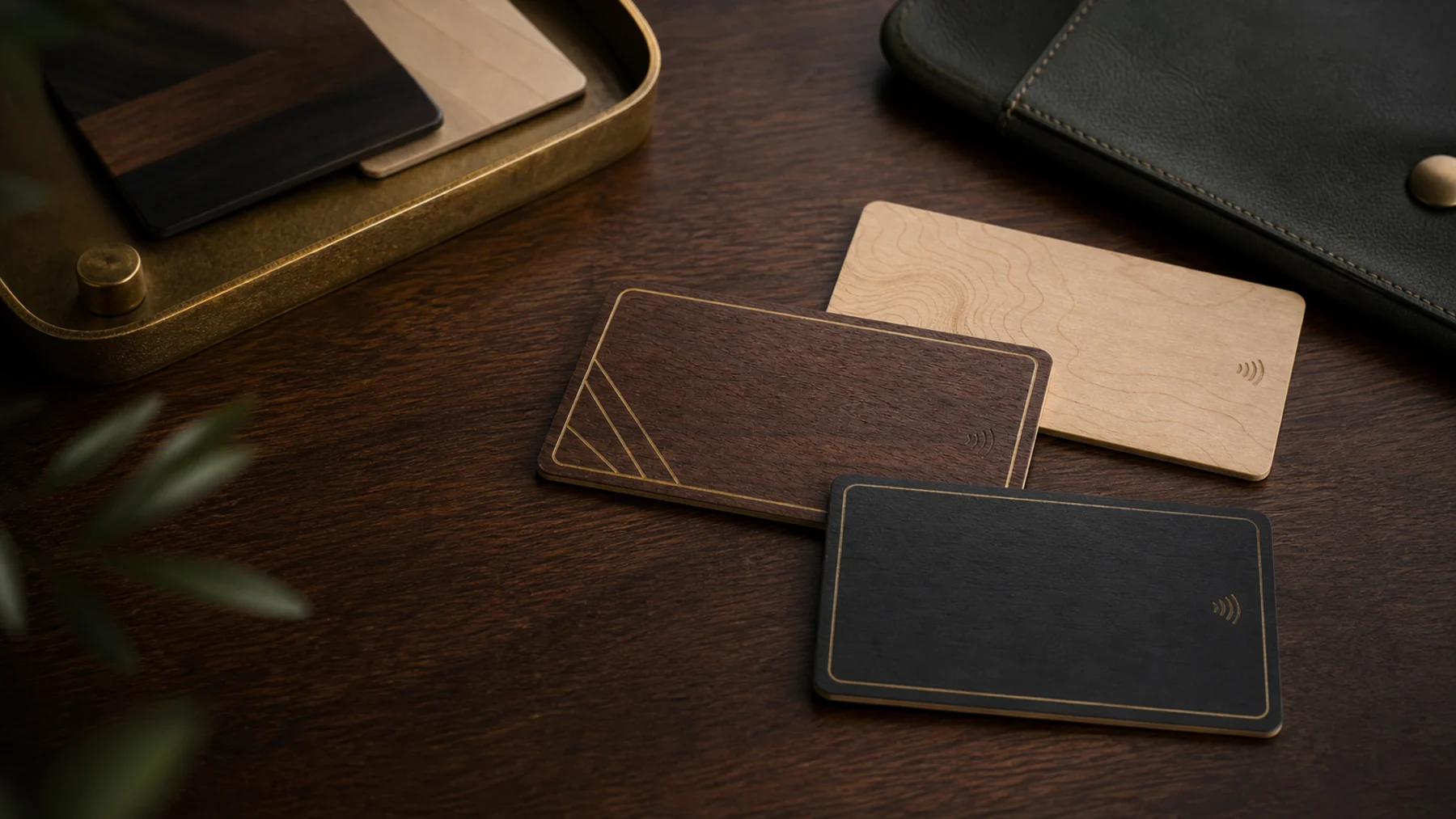
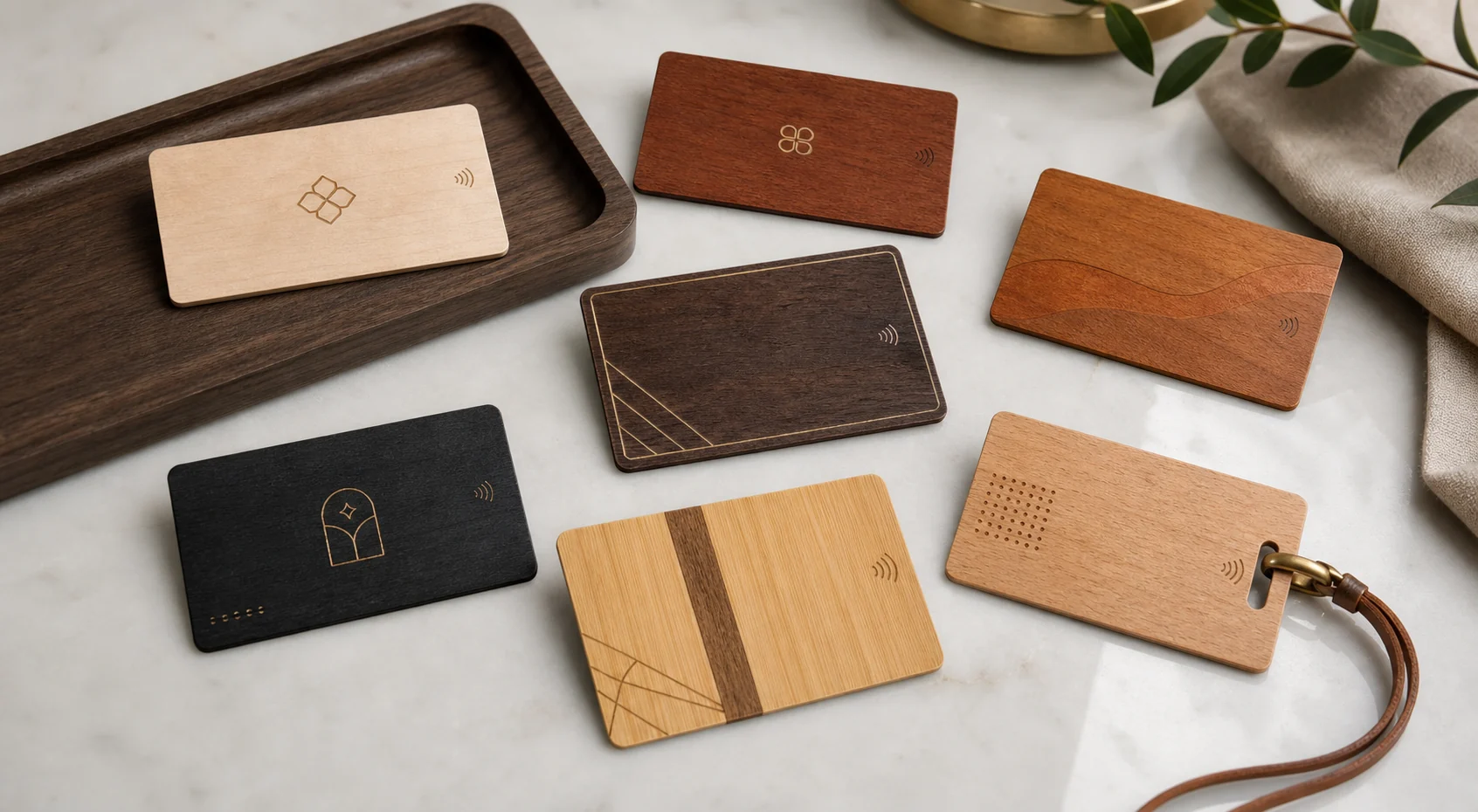
UHF requires sample testing in the real environment.
Read range depends heavily on antenna design, reader power, orientation, nearby materials, and body construction. The final wood card should be tested in the real use environment.
Not every premium card needs UHF.
If the buyer only needs phone tap, door access, or membership check-in, HF/NFC is often a better fit. UHF should be chosen because the use case requires it.
UHF range is set by antenna, reader, and environment.
Read distance depends on antenna design, reader power, orientation, and nearby materials such as hands, tables, and walls — not on the card alone. A wooden UHF card must be tested in the real environment, because a lab reading rarely matches a doorway, shelf, or gate in daily use.
Confirm the region and frequency band.
UHF EPC Gen2 uses different frequency bands by region, so a card tuned for one market can underperform in another. The target region, reader, and use case should be confirmed before sampling, so the antenna is built for where the cards will actually be read.
Best uses
- Selected asset identification
- Event and guest flow experiments
- Product authentication tags
- Programs requiring EPC-style data
Frequently asked questions
When does a wood card need UHF?
Only when the use case genuinely requires longer read range or EPC Gen2-style identification. For phone tap, door access, or check-in, HF/NFC is usually the better fit.
What decides UHF read range?
Antenna design, reader power, orientation, and nearby materials — not the card alone. The final card is tested in the real environment, not just a lab.
Does region matter for UHF cards?
Yes. UHF bands differ by region, so the target market and reader are confirmed before sampling so the antenna is tuned for where the cards will actually be read.
Specification
| Card size | CR80 and custom dimensions by drawing |
|---|---|
| Card body | Plastic-free, FSC-certified wood body options |
| Thickness | 0.80 mm to 2.0 mm by wood species and chip |
| Minimum order | None — single samples to production runs |
| Production time | About one week after artwork and sample approval |
| RF planning | Chip, antenna, thickness, and finish approved together |
| Approval route | Material sample, working RF sample, production proof |
| Frequency | Regional UHF band |
| Chip route | UHF inlay and antenna construction selected around read range, reader power, orientation, and body limits. |
| Encoding | EPC, TID or UID reference, asset ID, batch ID, or project-specific data. |
| Approval check | Test range, orientation, nearby materials, reader power, antenna placement, and the final finish stack. |
| Range variables | Reader power, antenna geometry, orientation, body material, surroundings, and regional band |
Related wood RFID card pages
- RFID UID Converter & Wiegand 26-bit Calculator
- LF Wooden RFID Cards
- HF and NFC Wooden Cards
- NFC Tag Wood NFC Cards
- Entry-Level HF Wooden RFID Cards
- AES-Secured HF Wooden RFID Cards
- Standard HF Access Wooden RFID Cards
- High-Security AES Wooden RFID Cards
- Programmable 125 kHz Wooden RFID Cards
- Wooden RFID Card Encoding