13.56 MHz
HF and NFC Wooden Cards
HF and NFC wooden cards run at 13.56 MHz and are the most common route for modern wood card programs, because one frequency can support access readers, NFC phone interaction, loyalty flows, event check-in, and encoded digital experiences. The right chip family and data model depend on whether the card mainly opens doors, opens a phone experience, or does both.
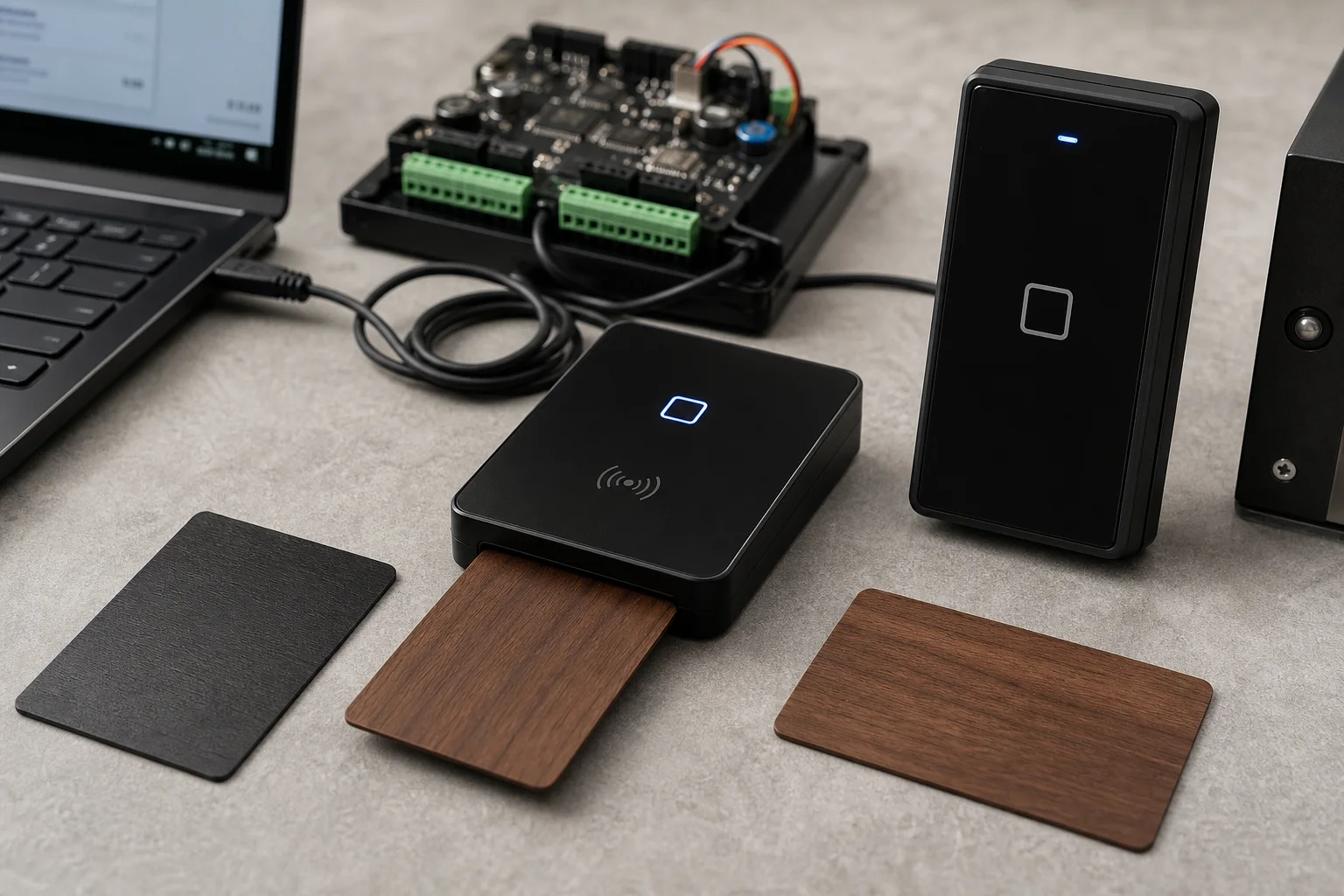
HF / NFC route brief
| Frequency | 13.56 MHz |
|---|---|
| Best use | Modern access, NFC business cards, loyalty, events, hospitality, member ID, tap-to-profile, and QR plus tap programs. |
| Chip route | NFC tag, standard HF, high-security AES HF family, or a platform-required 13.56 MHz chip. |
| Phone behavior | Can be phone-readable when the chip and encoded record are selected for NFC behavior. |
| Encoding | NDEF URL, vCard, UID list, access data, member ID, QR or serial matching, and optional locking. |
| Approval check | Test on target phones, readers, scanners, or locks in the final wood body. |
Visual references
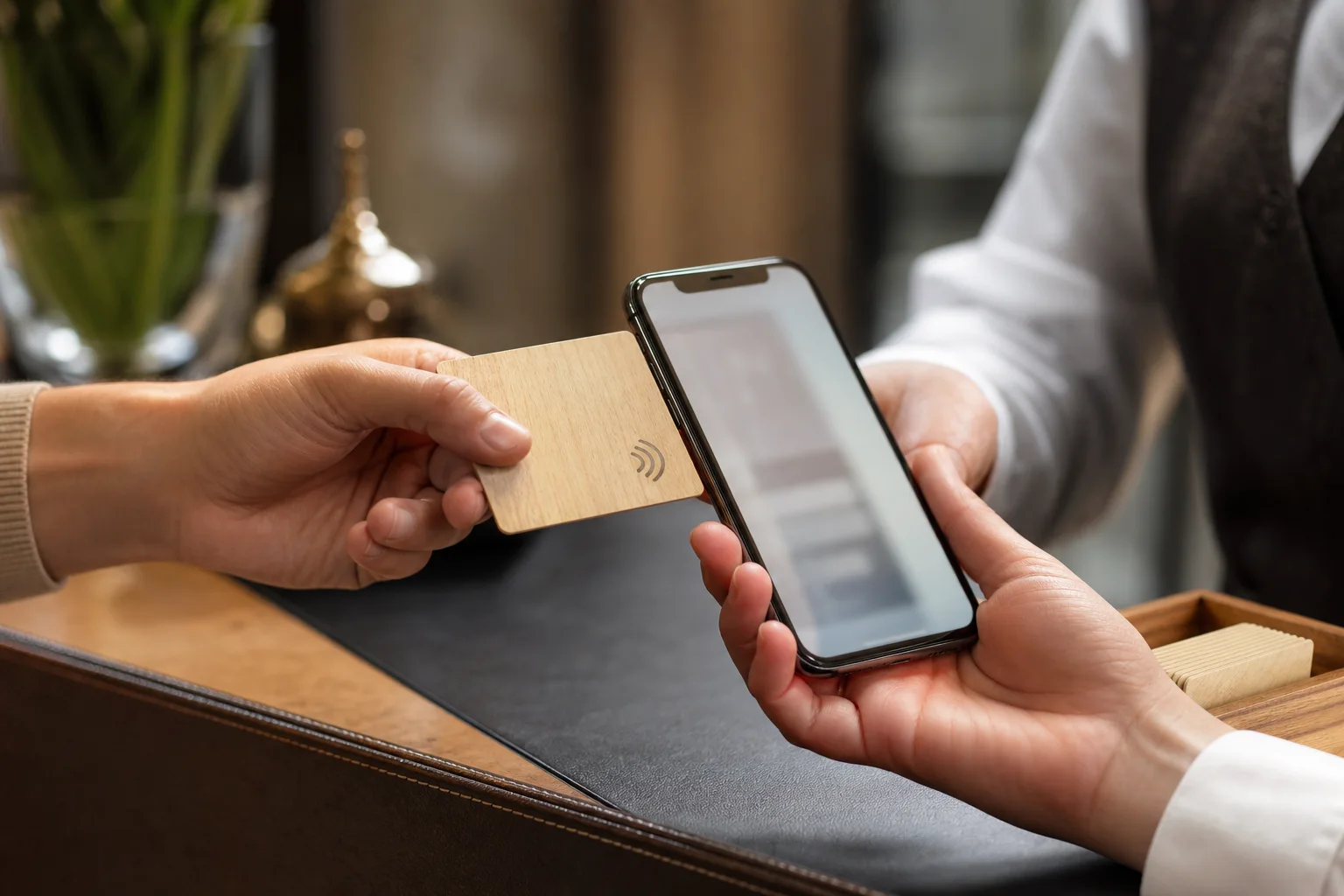
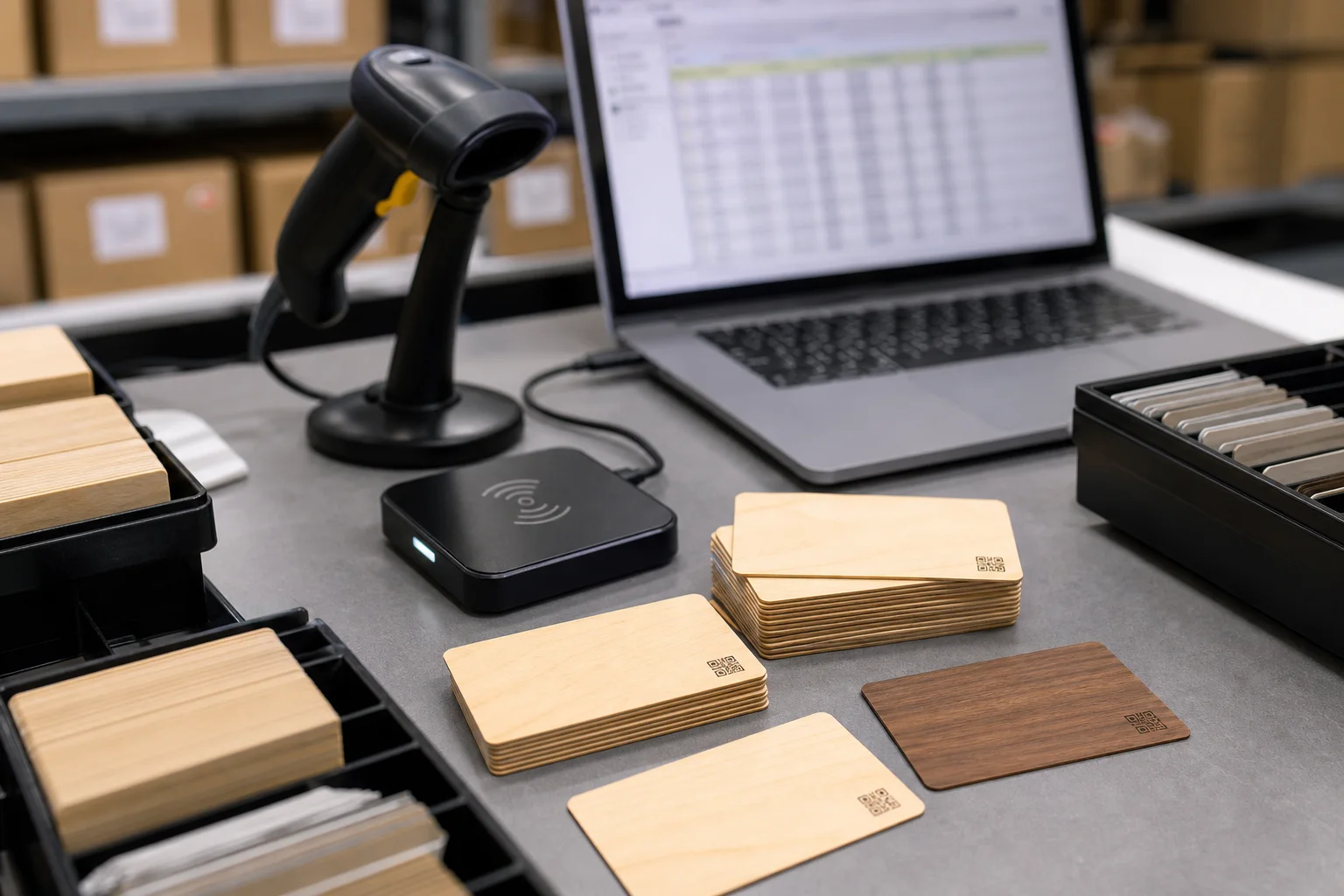
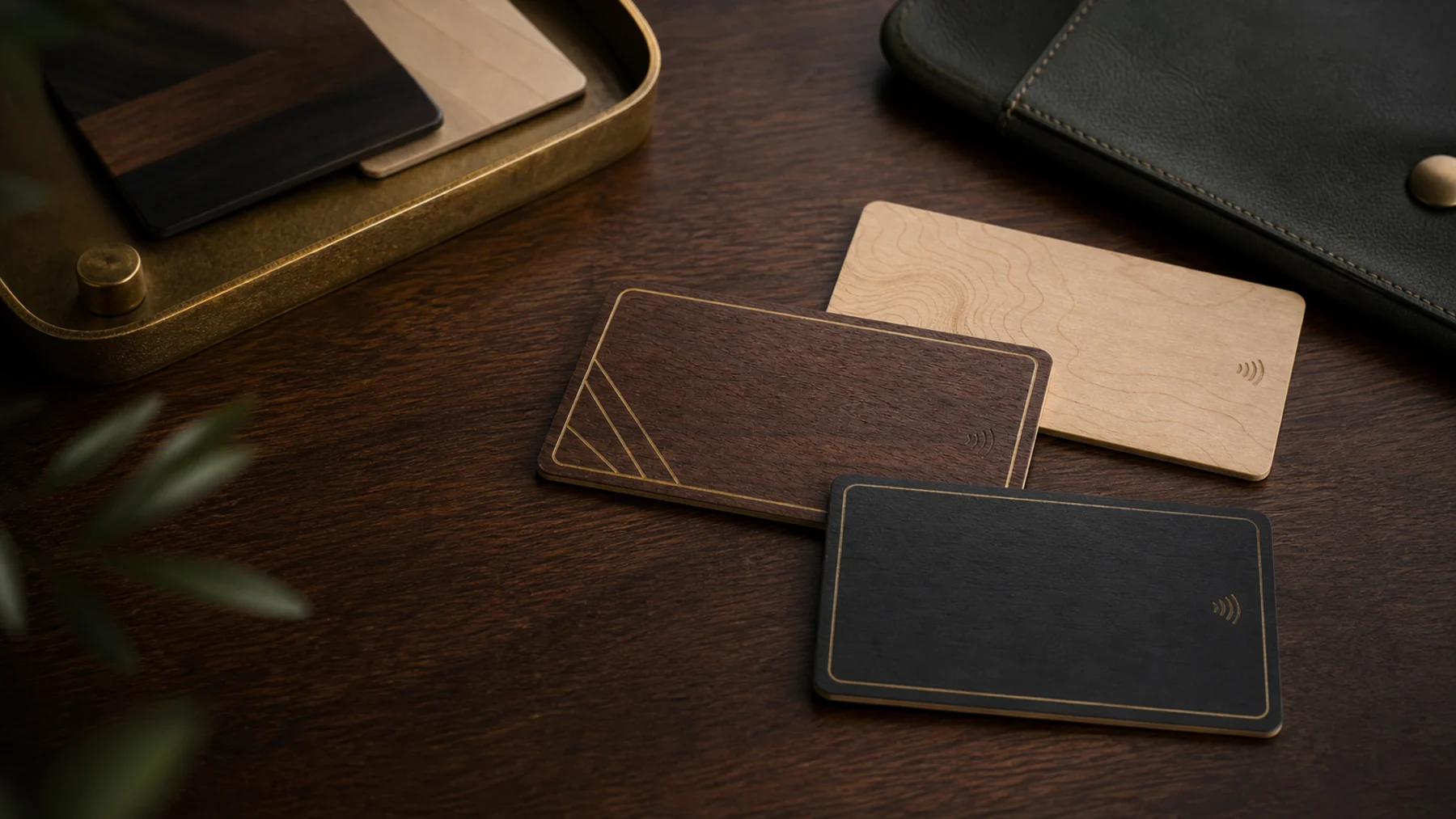
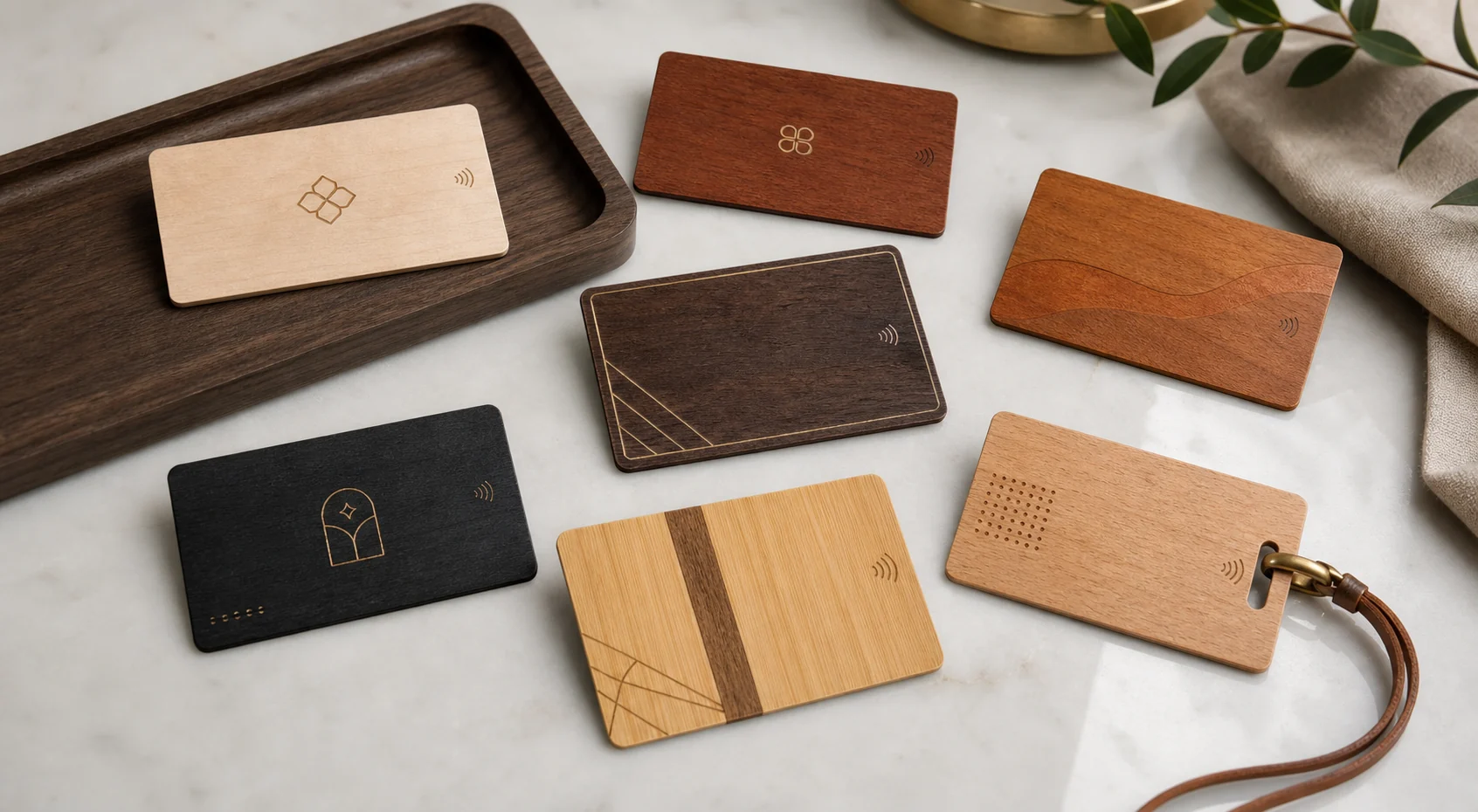
HF and NFC are related but not identical use cases.
A 13.56 MHz card can be built for access, phone interaction, or secure credential use. The chip family and data model should be selected for the target reader or phone behavior.
Plan the tap experience before artwork approval.
For phone-readable cards, define the NDEF record, URL behavior, QR fallback, campaign tracking, and whether data should remain editable or locked after encoding.
Access, tap, and secure are three different HF builds.
A 13.56 MHz wood card can be an NFC tag tap card, a standard HF access card, or a high-security AES credential. They share a frequency but not a data model, so the chip is chosen from the target reader, the phone behavior, or the security requirement — never from the frequency alone.
13.56 MHz reads well through a thin wood body.
HF antennas tolerate a natural wood body far better than long-range UHF, which makes 13.56 MHz the safest starting point for premium wood cards. Final read distance is still confirmed on the real phone, lock, or desk reader with the approved thickness and finish.
Best uses
- NFC business cards
- Hotel and club access
- Event and loyalty cards
- QR plus tap campaigns
Frequently asked questions
What is the difference between HF and NFC?
They share 13.56 MHz but not a data model. An HF card can be an NFC tag tap card, a standard HF access card, or a high-security AES credential — the target reader or phone behavior decides.
Why is 13.56 MHz the default for wood cards?
HF antennas tolerate a natural wood body far better than long-range UHF, making it the safest starting point for premium wood card programs.
Can one HF card do both access and phone tap?
Sometimes, depending on the chip and platform. Define the tap experience and the access requirement before chip selection so neither is compromised.
Specification
| Card size | CR80 and custom dimensions by drawing |
|---|---|
| Card body | Plastic-free, FSC-certified wood body options |
| Thickness | 0.80 mm to 2.0 mm by wood species and chip |
| Minimum order | None — single samples to production runs |
| Production time | About one week after artwork and sample approval |
| RF planning | Chip, antenna, thickness, and finish approved together |
| Approval route | Material sample, working RF sample, production proof |
| Frequency | 13.56 MHz |
| Chip route | NFC tag, standard HF, high-security AES HF family, or a platform-required 13.56 MHz chip. |
| Encoding | NDEF URL, vCard, UID list, access data, member ID, QR or serial matching, and optional locking. |
| Approval check | Test on target phones, readers, scanners, or locks in the final wood body. |
| Typical families | NFC tag, standard HF, high-security AES HF, or platform-required 13.56 MHz chip |
Related wood RFID card pages
- RFID UID Converter & Wiegand 26-bit Calculator
- LF Wooden RFID Cards
- NFC Tag Wood NFC Cards
- Entry-Level HF Wooden RFID Cards
- AES-Secured HF Wooden RFID Cards
- Standard HF Access Wooden RFID Cards
- High-Security AES Wooden RFID Cards
- UHF Wooden RFID Cards
- Programmable 125 kHz Wooden RFID Cards
- Wooden RFID Card Encoding