Variable data
QR and Serial Wood RFID Cards
QR and serial wood RFID cards carry the variable data that makes a program operational — member IDs, UID matching, NFC records, and QR backup. The craft is keeping the premium wood appearance while making every code, number, and record scannable and traceable.
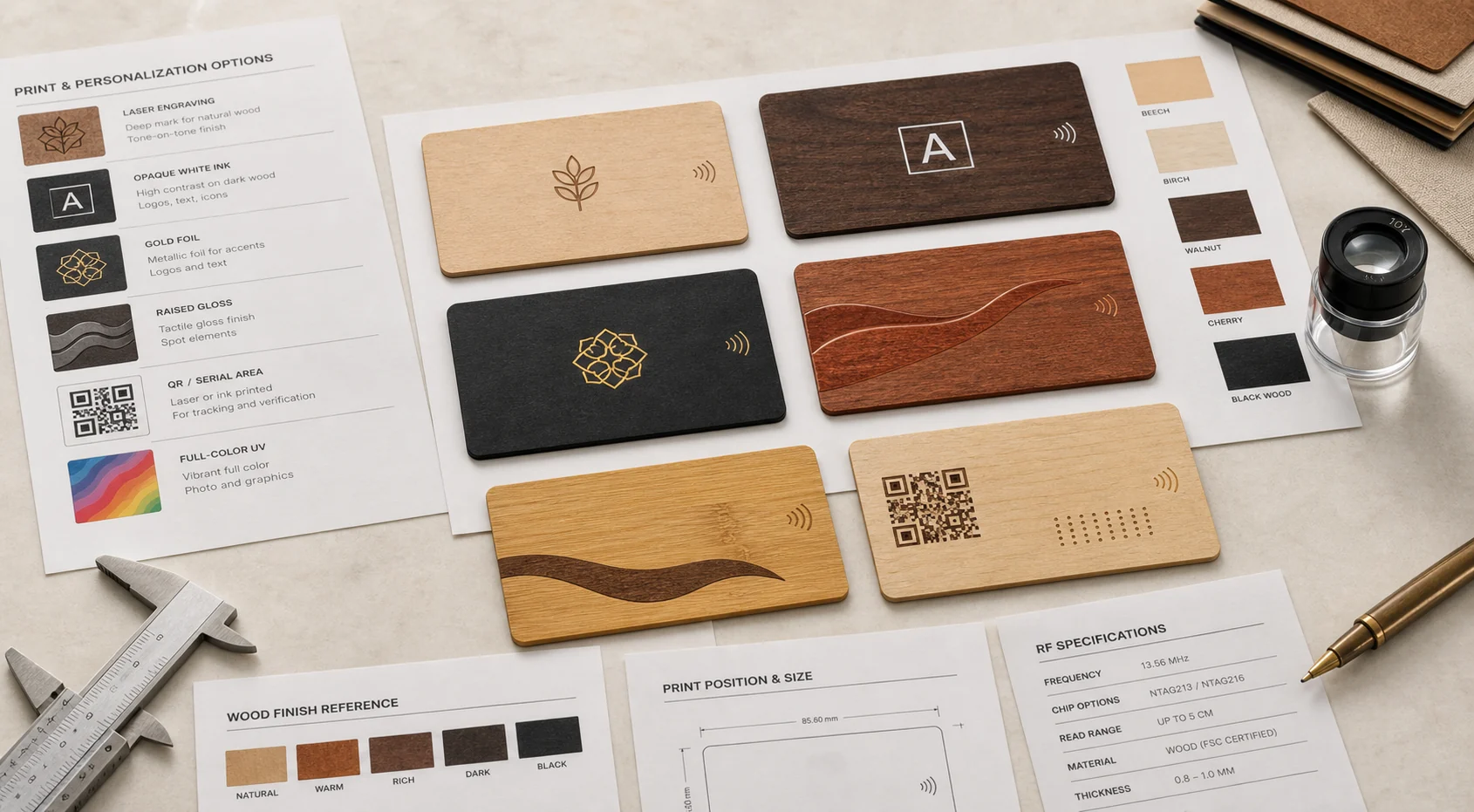
QR and serial gallery
Compare scannable data zones across light, dark, and warm woods.
QR and serial details must stay readable without making the card feel operational only. These references show data contrast, white-print options, and proofing views.
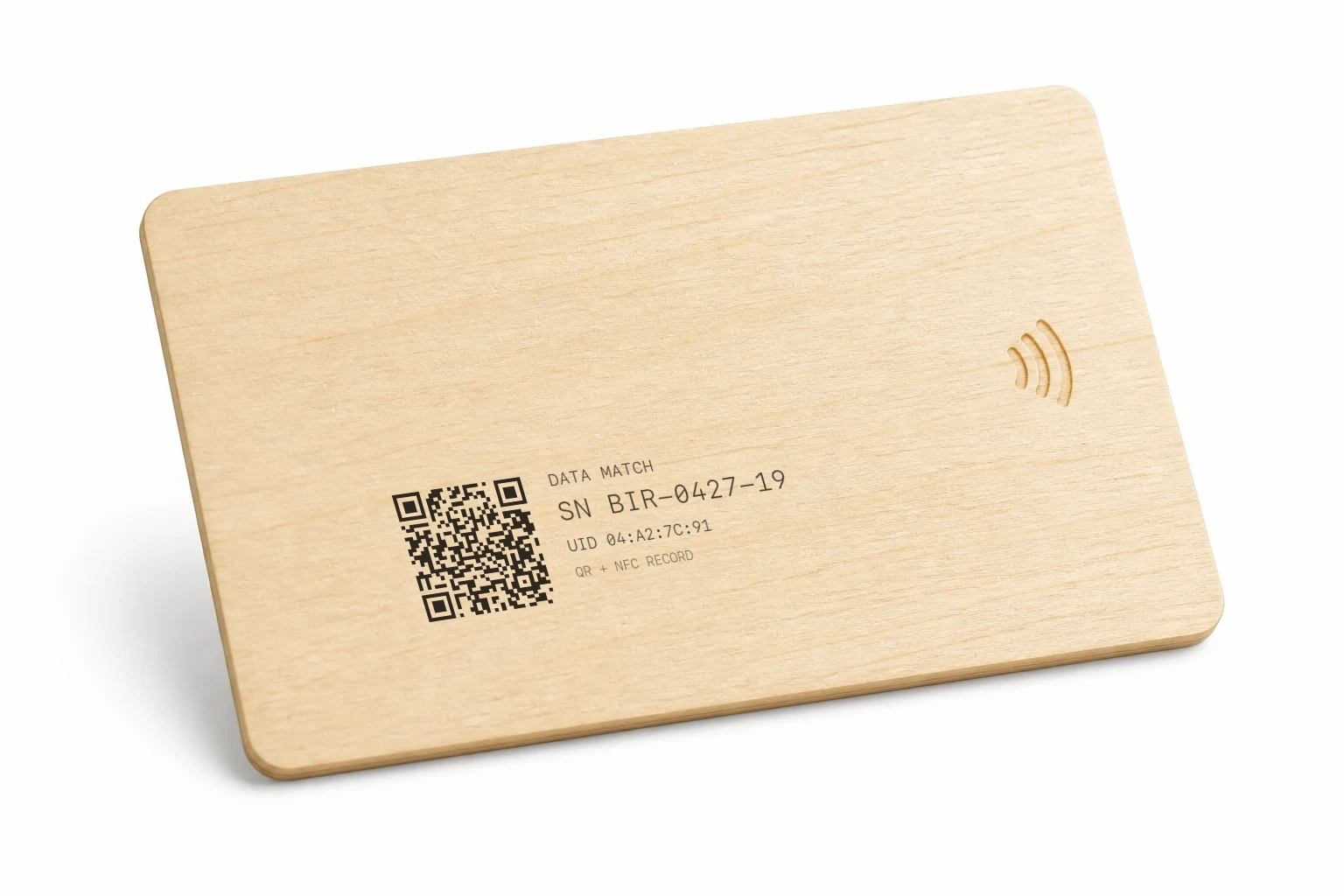
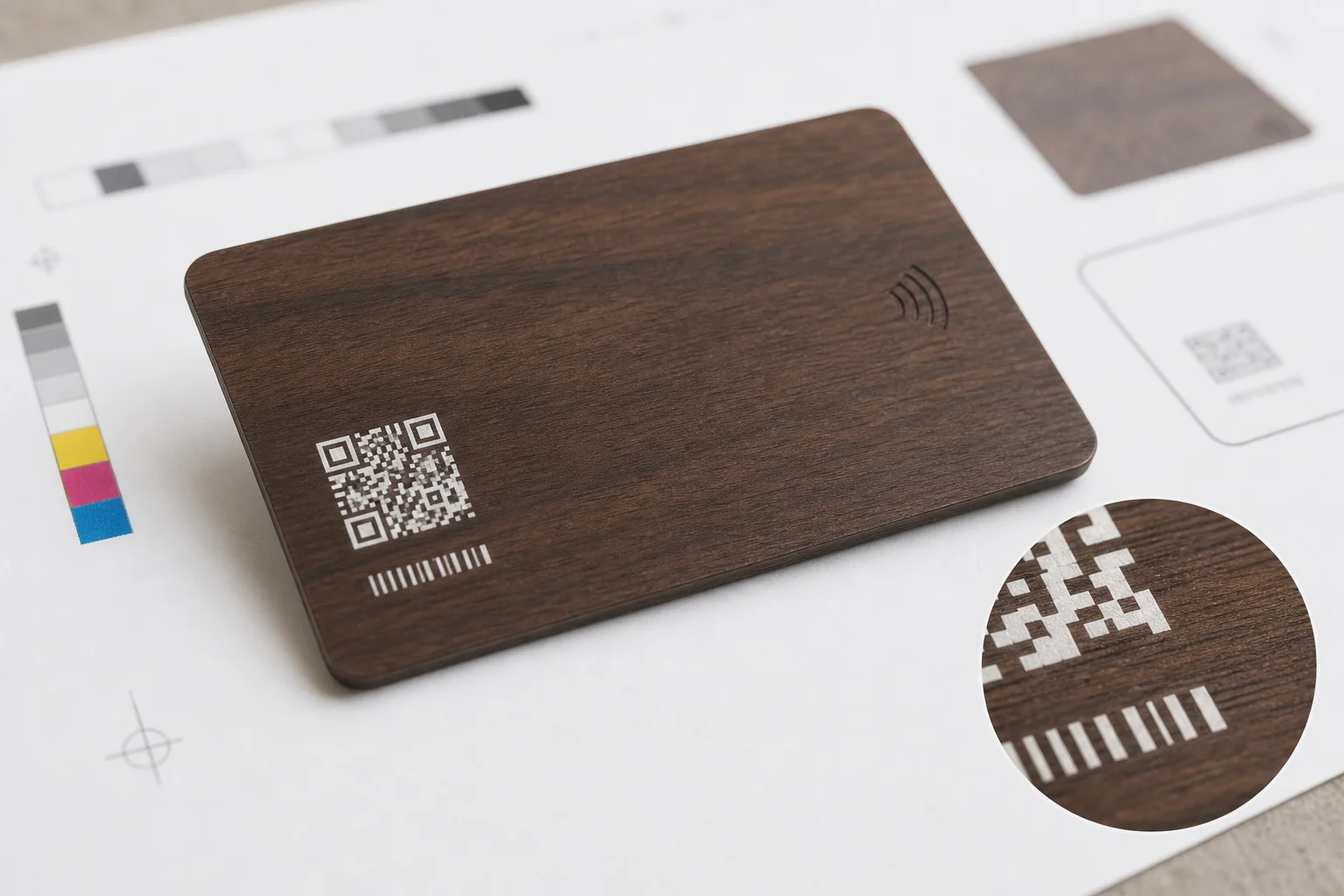
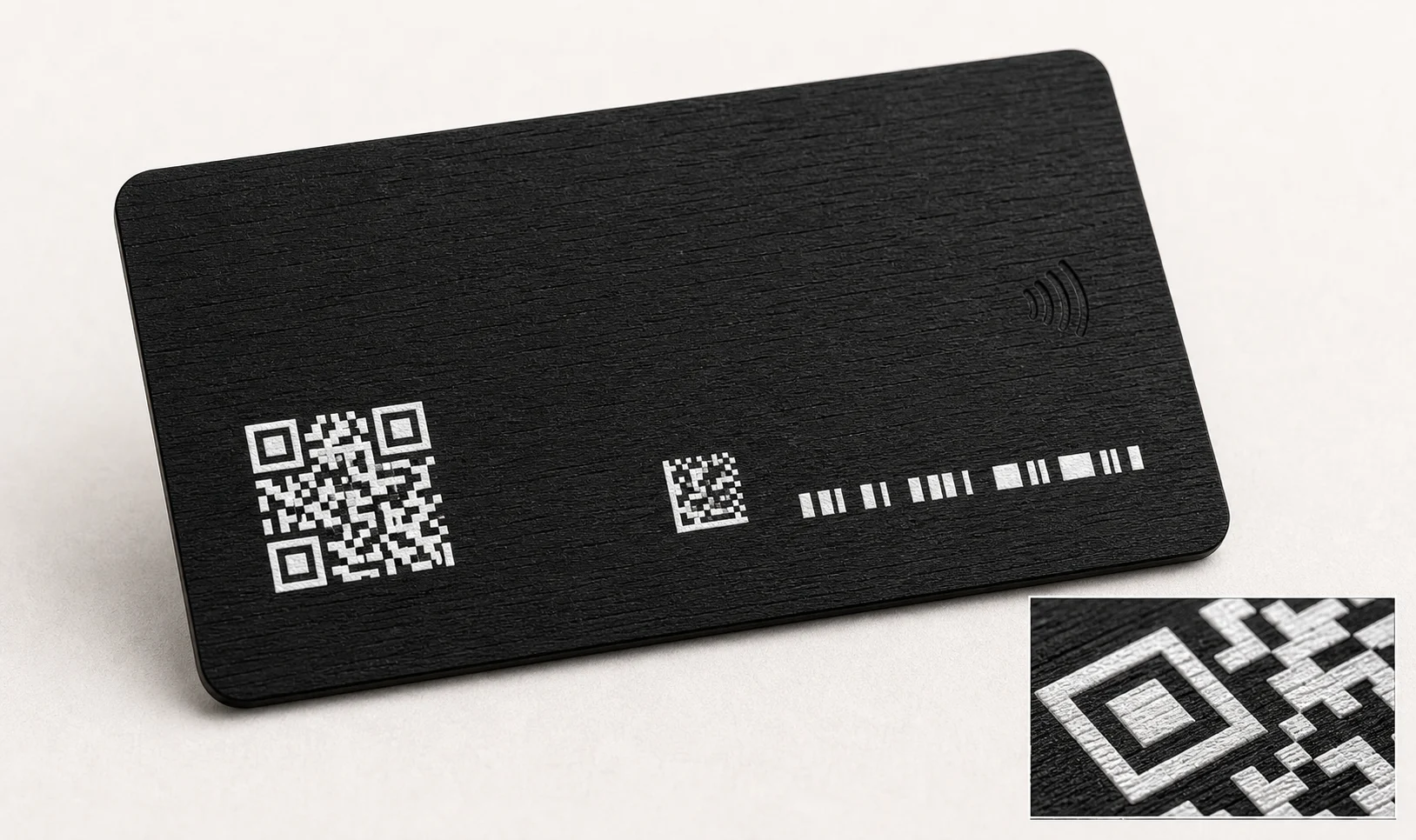
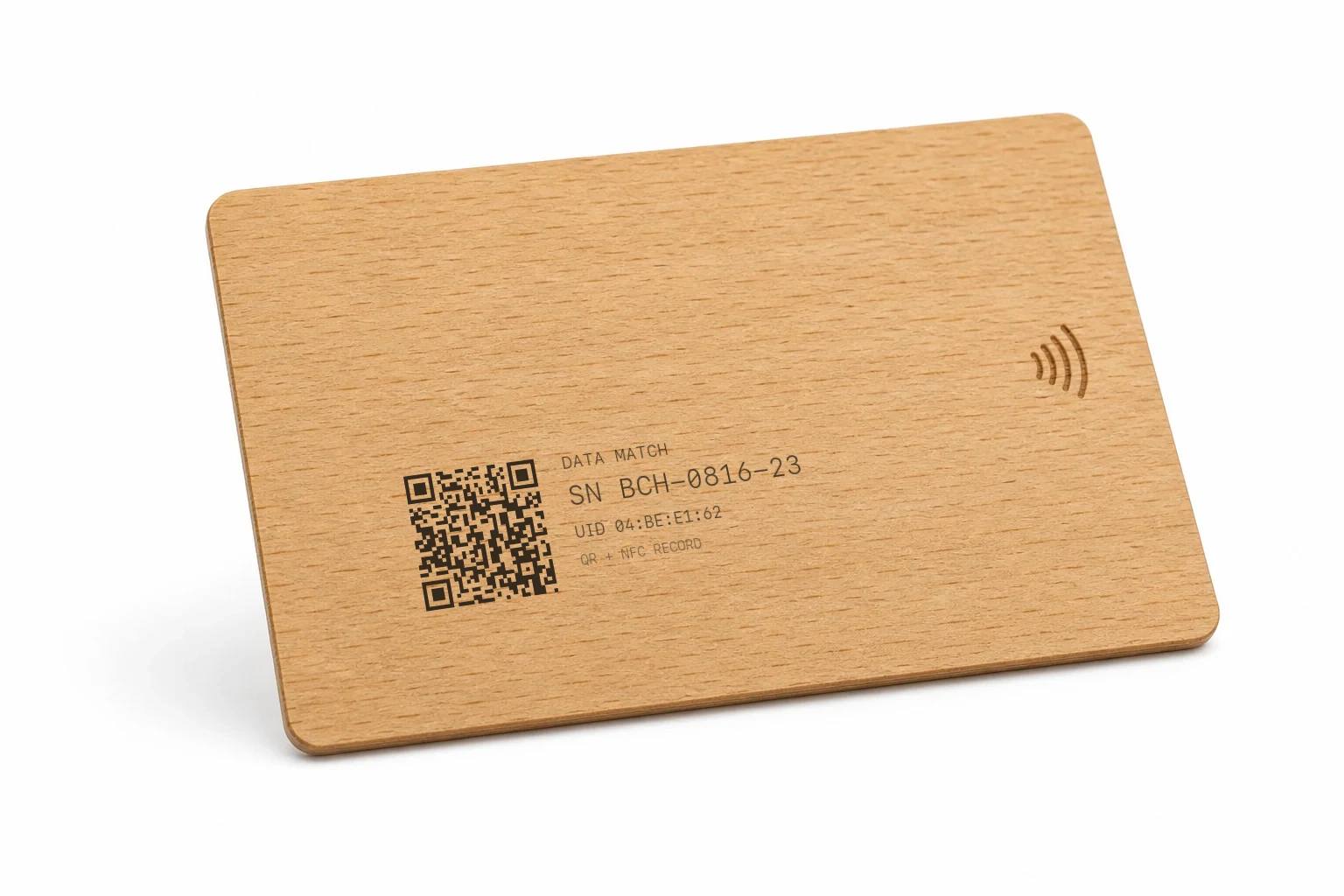
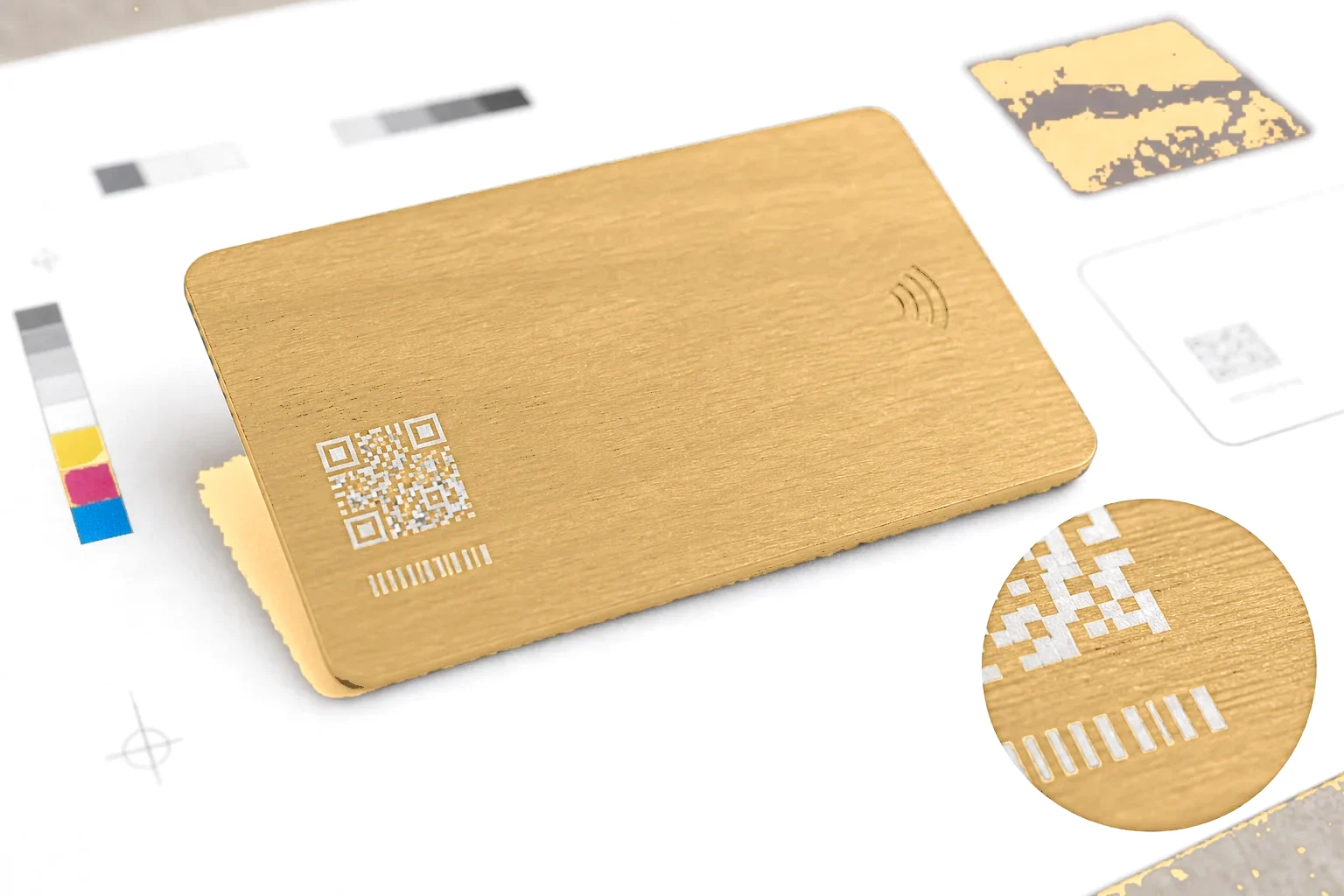
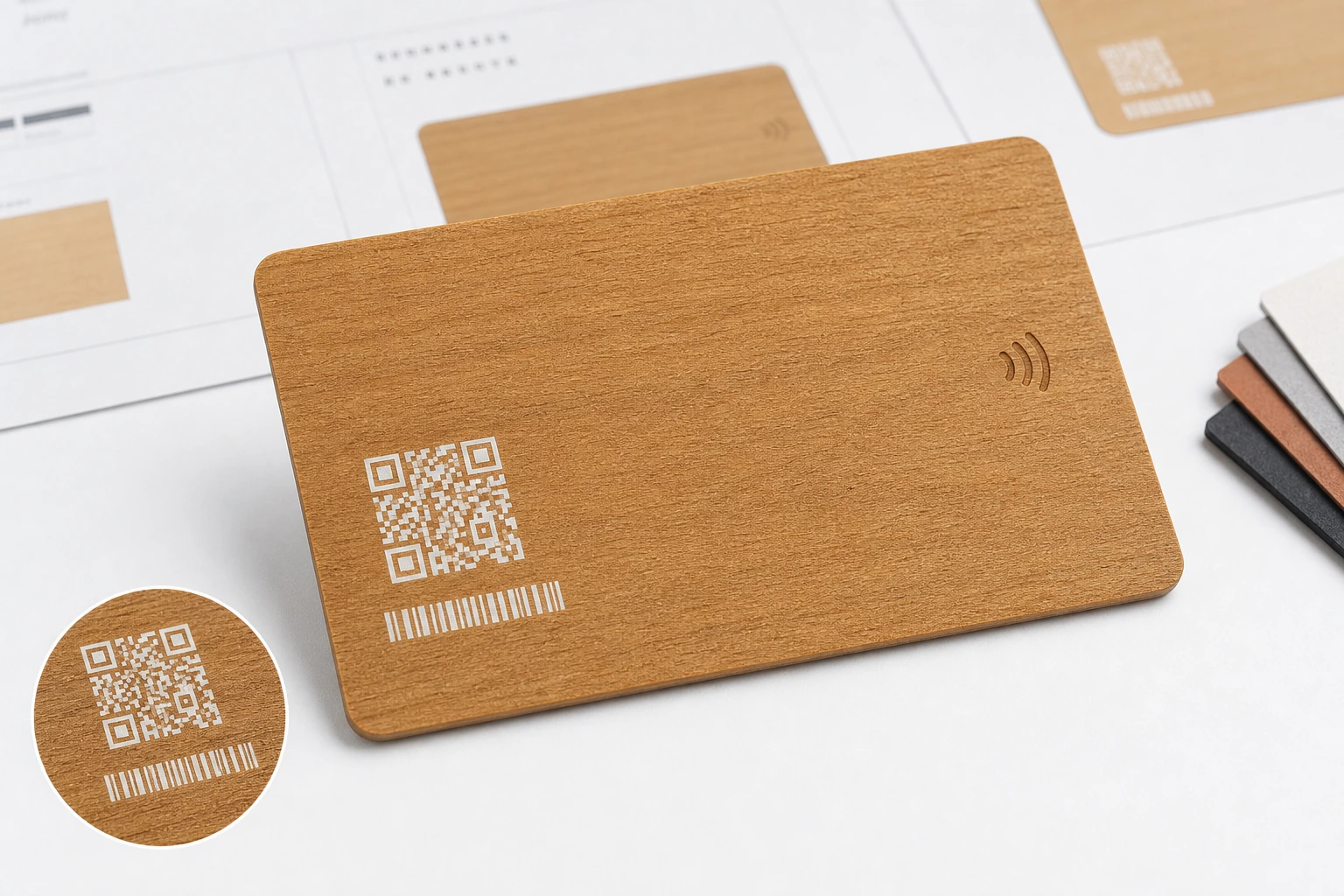
QR codes need real material testing.
Wood grain, finish, gloss, and contrast can affect QR scanning. Test code size, quiet zone, color, and placement on the selected material before production.
Data should reconcile across every touchpoint.
QR payload, serial number, NFC record, UID export, box label, and packing list should be generated from the same approved source file.
Contrast and quiet zone decide whether a QR scans.
A QR on wood needs enough contrast and a clean quiet zone to scan first time. On dark grain that usually means white-ink modules; on pale birch or beech a dark code can print directly. Module size and placement are tested on the real finish, not assumed from screen artwork.
Serial logic should be agreed before the batch.
Sequential numbers, member-ID formats, batch prefixes, and how reissued cards are numbered should be defined up front. Getting the serial scheme right early keeps the printed card, the encoded data, and the CRM or access record aligned across the whole run.
Best uses
- Membership programs
- Event credentials
- Gift and loyalty cards
- Product authentication cards
Frequently asked questions
Will a QR code scan reliably on wood?
Yes, with enough contrast and a clean quiet zone. Dark grain usually needs white-ink modules; pale woods can carry a dark code directly. Module size is tested on the real finish.
How do QR, serial, and NFC data stay in sync?
All are generated from the same approved source file — QR payload, serial, NFC record, UID export, box label, and packing list reconcile before production.
Can each card carry unique data?
Yes. Variable member IDs, sequential serials, batch prefixes, and per-card QR payloads are standard, with the numbering scheme agreed before the run.
Specification
| Card size | CR80 and custom dimensions by drawing |
|---|---|
| Card body | Plastic-free, FSC-certified wood body options |
| Thickness | 0.80 mm to 2.0 mm by wood species and chip |
| Minimum order | None — single samples to production runs |
| Production time | About one week after artwork and sample approval |
| RF planning | Chip, antenna, thickness, and finish approved together |
| Approval route | Material sample, working RF sample, production proof |
| Data options | QR, serial, UID, NDEF URL, member ID, box code |
| Best surfaces | Birch, beech, bamboo, white ink over dark wood |
| Approval need | Scan test and data reconciliation proof |
Related wood RFID card pages
- Laser Engraved Wood RFID Cards
- UV Printed Wood RFID Cards
- White Ink Wood Cards
- Foil Wood RFID Cards
- Spot UV Wood Cards
- Wood Card Edge Finishing
- Wood RFID Card Artwork Specs