LF compatibility
Programmable 125 kHz Wooden RFID Cards
Programmable 125 kHz wooden RFID cards use a rewritable 125 kHz chip and are chosen when a project needs low-frequency credential behavior for an existing reader, lock, or enrollment device. Because programmable 125 kHz can emulate several LF formats, the exact encoding or cloning workflow should be confirmed before quoting.
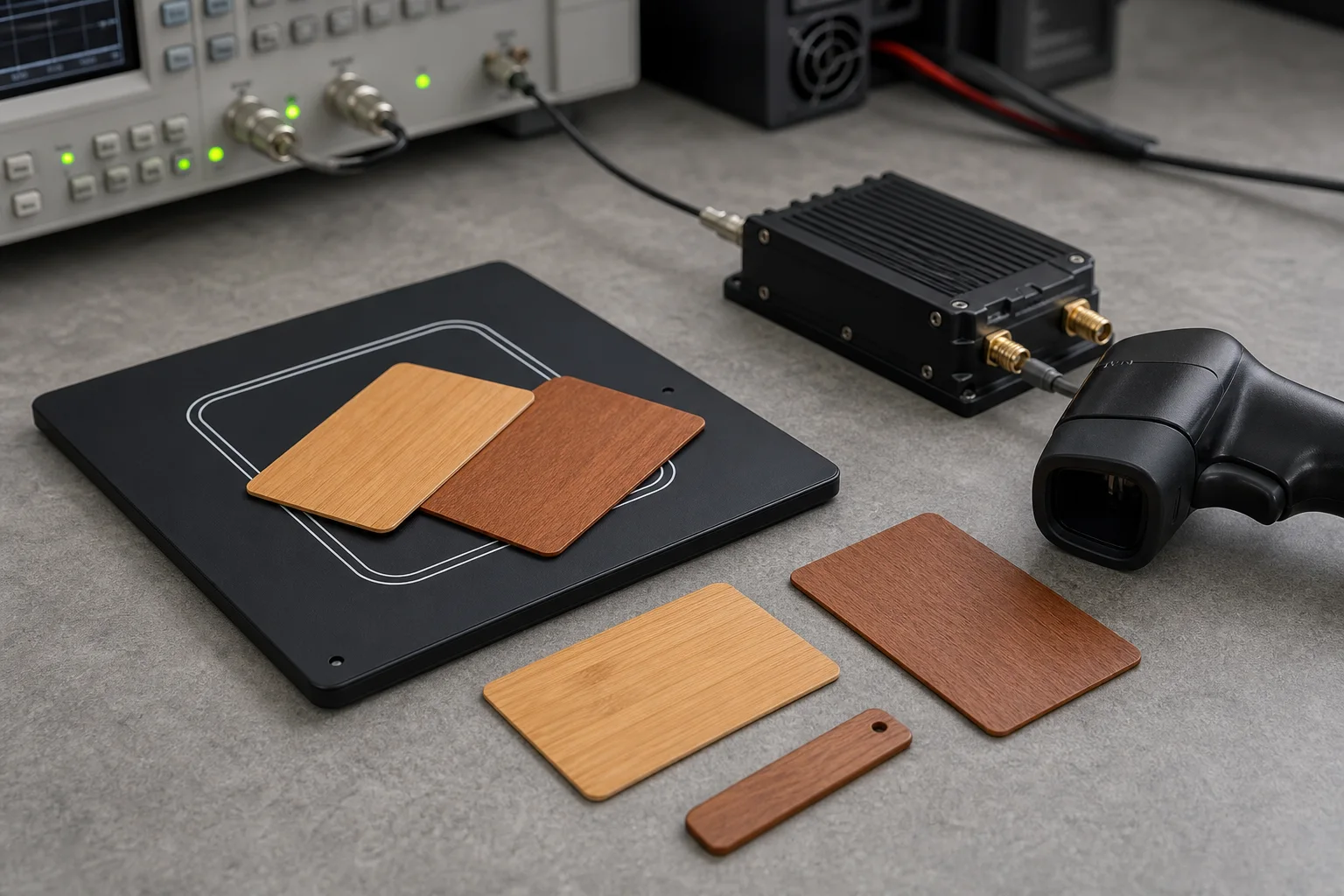
Programmable 125 kHz route brief
| Frequency | 125 kHz LF |
|---|---|
| Best use | Compatibility-driven LF access, hotel, ID, and legacy replacement projects. |
| Chip route | programmable 125 kHz LF credential route when the reader or lock specifically needs that behavior. |
| Phone behavior | Not phone-readable. |
| Encoding | Blank, encoded, cloned by the buyer, or access-provider format depending on the project rules. |
| Approval check | Define who encodes the card, confirm the target format, then test on the real reader. |
Visual references
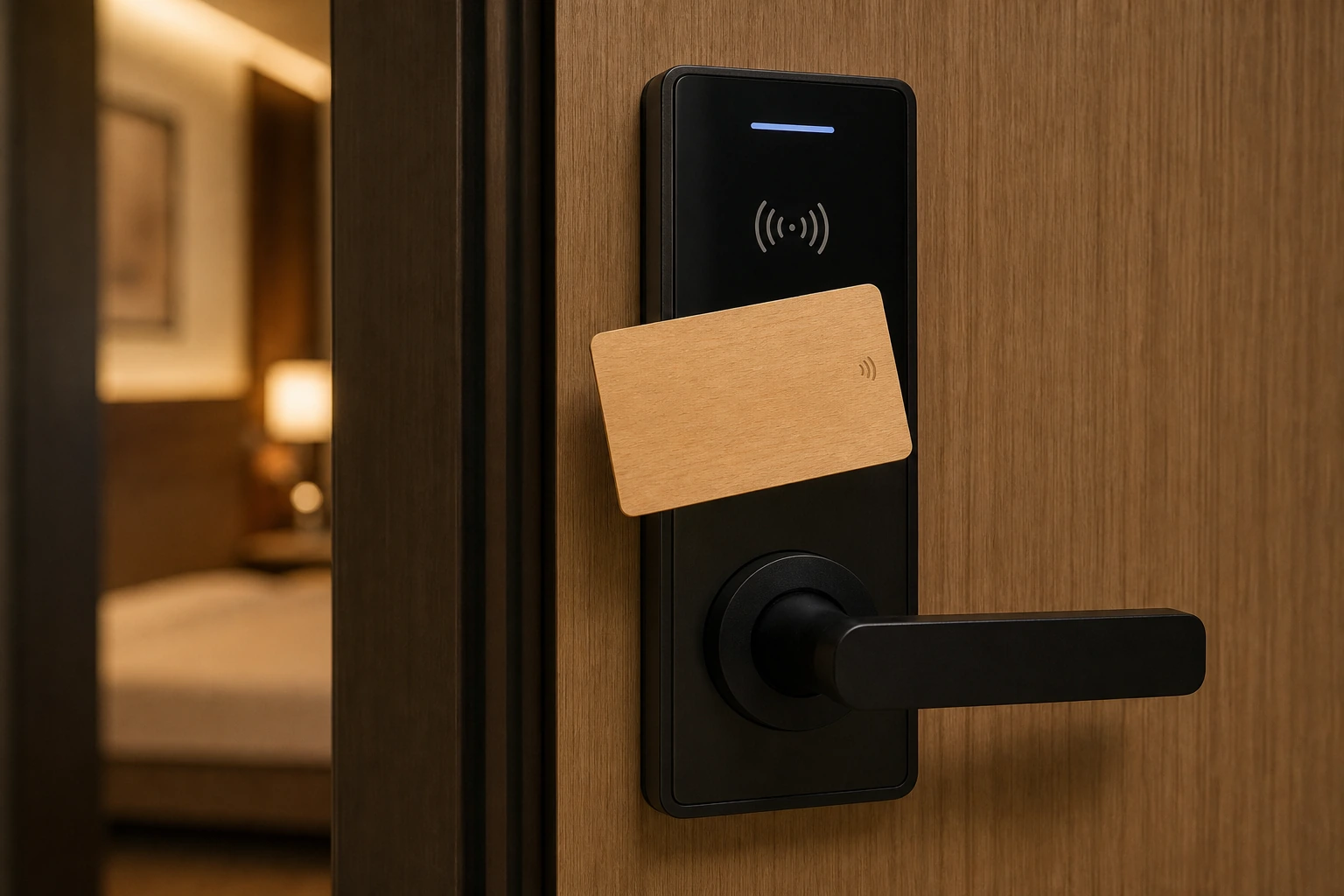
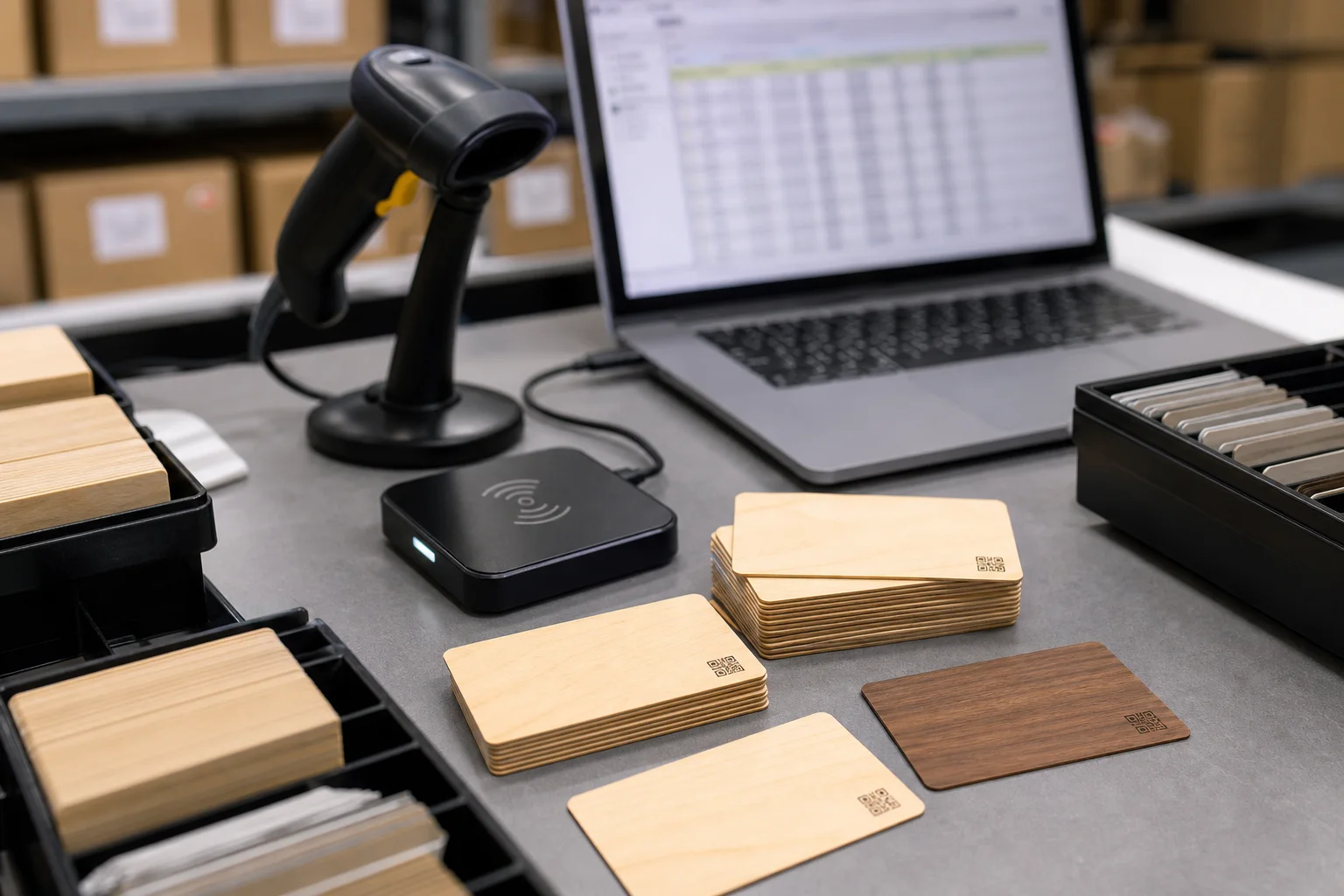
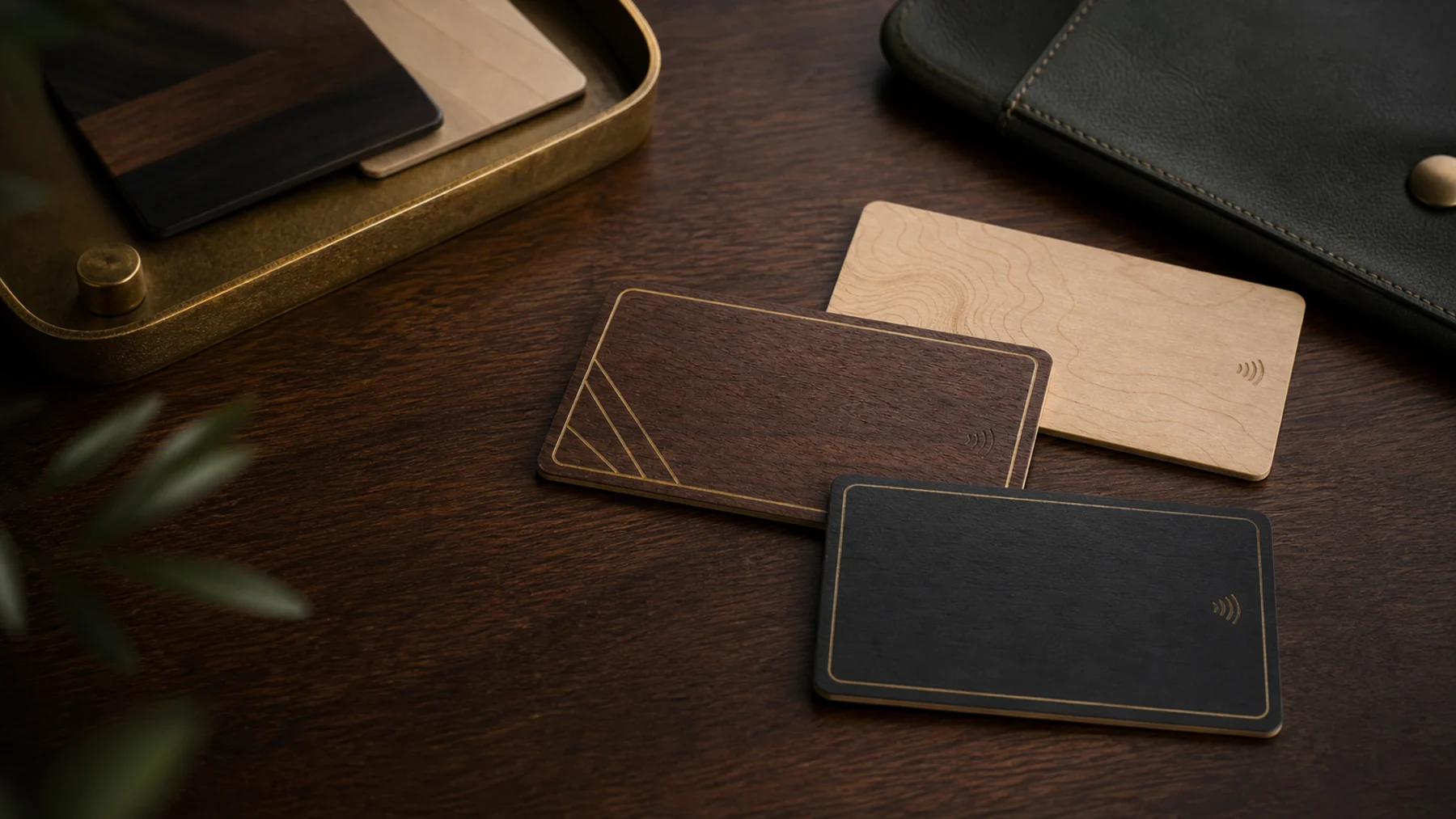
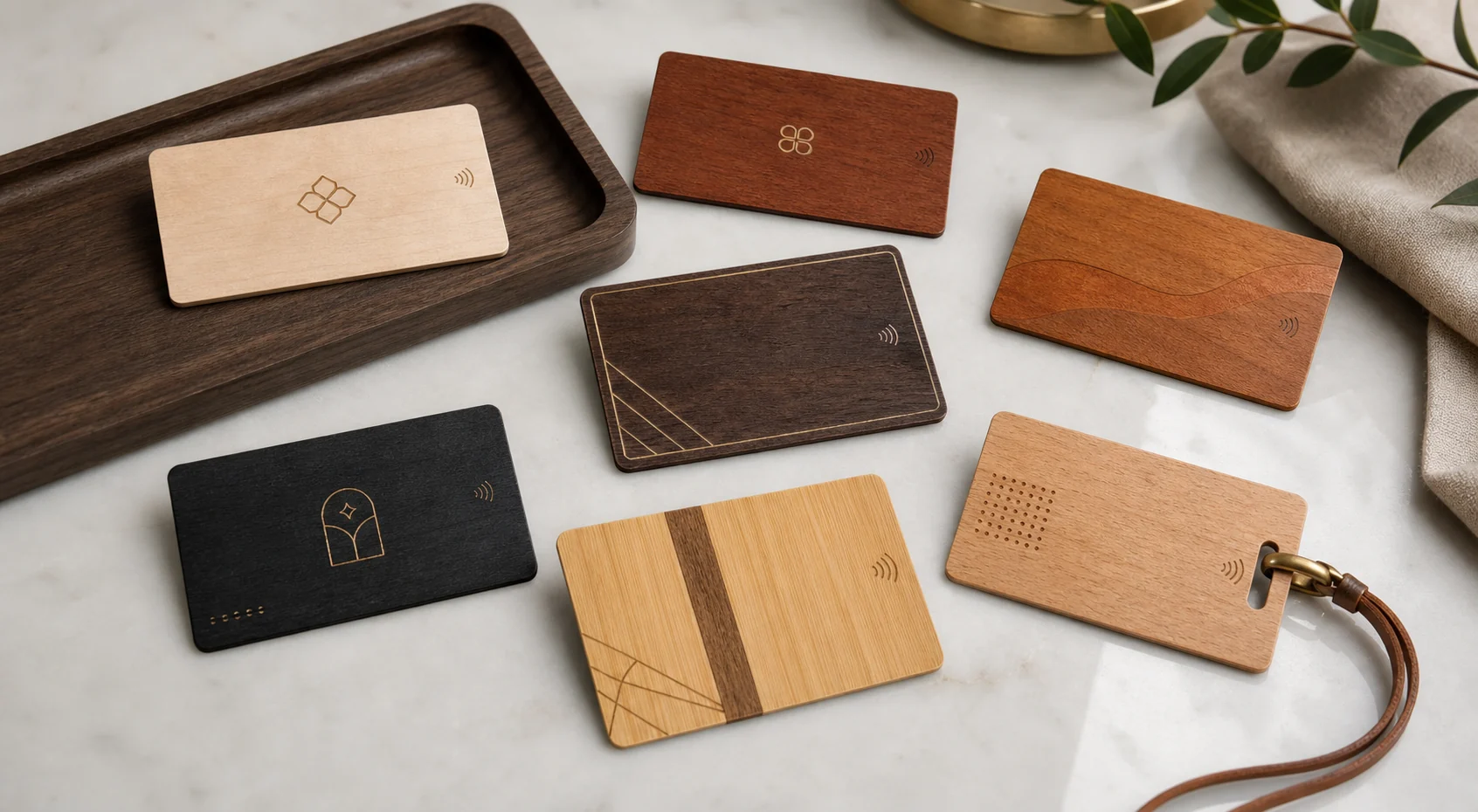
Confirm the target behavior before production.
Programmable 125 kHz projects should define whether the buyer needs blank cards, encoded cards, cloned data handled by the buyer, or a specific format from the access provider.
Treat sample approval as a system test.
The wood card should be tested on the target door, reader, or enrollment device with the final thickness and finish rather than evaluated as a visual sample only.
programmable 125 kHz is chosen for its rewritability.
Unlike a fixed fixed-ID 125 kHz ID, programmable 125 kHz can be programmed and reprogrammed, which is why it is common for hotel locks and access systems that enroll cards on site. Decide whether you need blank cards for the site to encode, or cards pre-encoded to a supplied format, before production.
Approve on the real enrollment device.
A programmable 125 kHz wooden card should be tested on the actual door, reader, or enrollment station with its final thickness and finish, not judged as a visual sample. This confirms the 125 kHz antenna reads correctly through the wood body before the full batch is produced.
Best uses
- Selected 125 kHz access systems
- Legacy hotel and ID platforms
- Replacement cards where wood body is requested
- Compatibility-driven sample approvals
Frequently asked questions
Why choose programmable 125 kHz over a fixed LF chip?
programmable 125 kHz is rewritable and can emulate several LF formats, which is why it suits hotel locks and access systems that enroll cards on site.
Do you deliver programmable 125 kHz cards blank or encoded?
Either: blank cards for the site to enroll, or cards pre-encoded to a supplied format. The workflow is confirmed before quoting.
How is a programmable 125 kHz wood card tested?
On the actual door, reader, or enrollment station with the final thickness and finish — a system test, not just a visual sample.
Specification
| Card size | CR80 and custom dimensions by drawing |
|---|---|
| Card body | Plastic-free, FSC-certified wood body options |
| Thickness | 0.80 mm to 2.0 mm by wood species and chip |
| Minimum order | None — single samples to production runs |
| Production time | About one week after artwork and sample approval |
| RF planning | Chip, antenna, thickness, and finish approved together |
| Approval route | Material sample, working RF sample, production proof |
| Frequency | 125 kHz LF |
| Chip route | programmable 125 kHz LF credential route when the reader or lock specifically needs that behavior. |
| Encoding | Blank, encoded, cloned by the buyer, or access-provider format depending on the project rules. |
| Approval check | Define who encodes the card, confirm the target format, then test on the real reader. |
| Supply options | Blank, pre-encoded, or buyer-personalized by approved project workflow |
Related wood RFID card pages
- RFID UID Converter & Wiegand 26-bit Calculator
- LF Wooden RFID Cards
- HF and NFC Wooden Cards
- NFC Tag Wood NFC Cards
- Entry-Level HF Wooden RFID Cards
- AES-Secured HF Wooden RFID Cards
- Standard HF Access Wooden RFID Cards
- High-Security AES Wooden RFID Cards
- UHF Wooden RFID Cards
- Wooden RFID Card Encoding