Print and personalization
Wooden Card Printing Specs
Wooden card printing specs start from one fact: printing on wood is different from printing on plastic. Grain, surface seal, white ink, QR contrast, foil adhesion, laser tone, edge finish, and antenna position all influence the final approval — this guide covers each print method and links to its detail page.
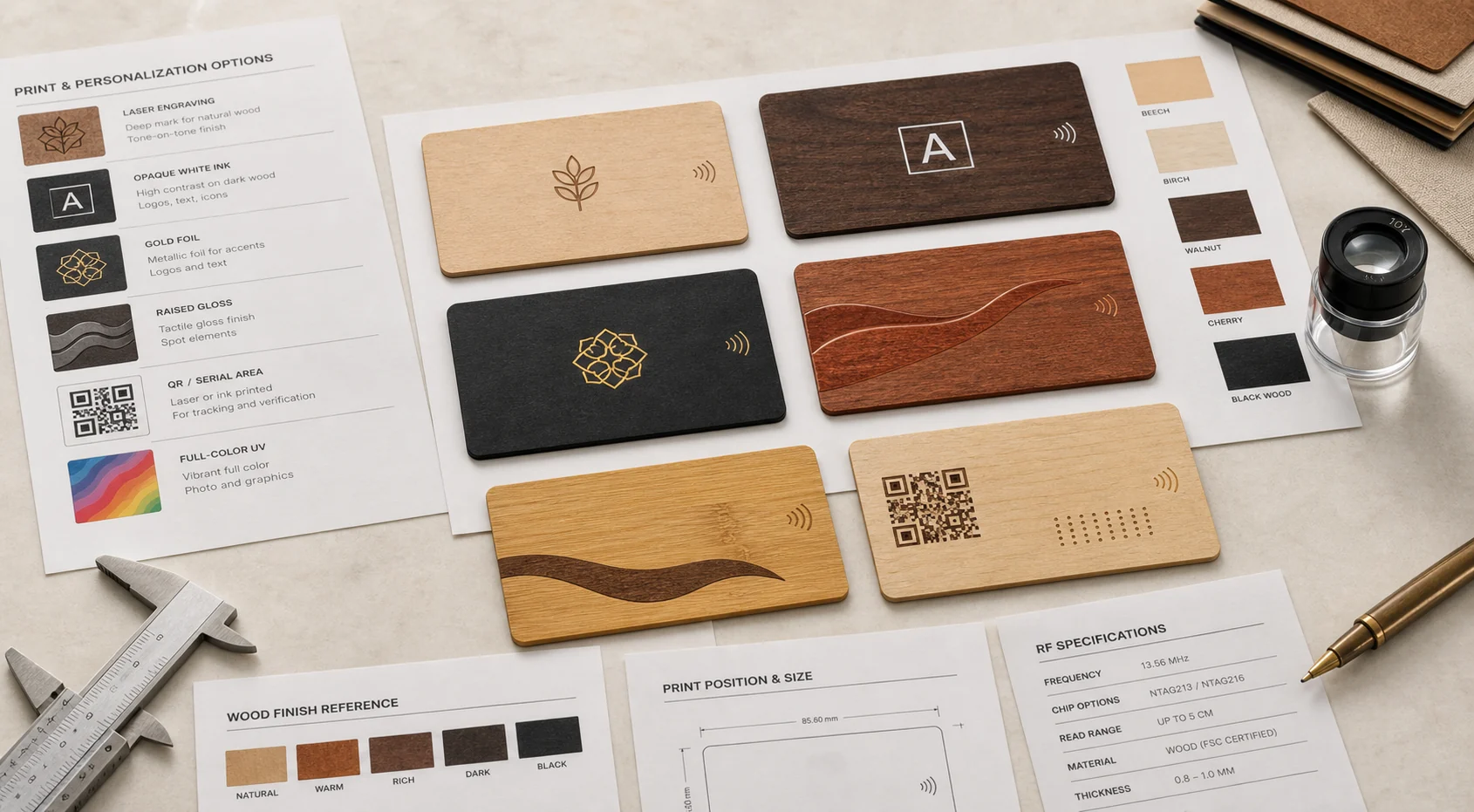
Printing Specs pages
- Laser Engraved Wood RFID Cards
Laser engraved wood RFID cards use the most natural personalization route for wood — a permanent, tone-on-tone mark burned into the surface that feels part of the material instead of sitting on top of it. It suits logos, serials, member numbers, and fine linework, and behaves differently across every wood tone.
- UV Printed Wood RFID Cards
UV printed wood RFID cards are the route when a card needs readable full color, logos, QR codes, or graphics that laser alone cannot produce. Light woods are the most forgiving base, while a white underbase lets brand color stay accurate over darker grain.
- White Ink Wood Cards
White ink wood cards are the cleanest way to make logos, icons, names, QR zones, and serials readable on walnut, black wood, and other darker card bodies. An opaque white layer gives dark grain the contrast it needs without making the card look like printed plastic.
- Foil Wood RFID Cards
Foil wood RFID cards turn a wood card into a premium presentation object when the metallic is used as a controlled accent — border lines, monograms, tier marks, serial plates, and small logo details in gold, silver, copper, or brass.
- Spot UV Wood Cards
Spot UV wood cards use raised gloss as a subtle tactile detail. A clear, raised layer can catch the light on a logo, pattern, member mark, or premium tier without covering the natural grain.
- QR and Serial Wood RFID Cards
QR and serial wood RFID cards carry the variable data that makes a program operational — member IDs, UID matching, NFC records, and QR backup. The craft is keeping the premium wood appearance while making every code, number, and record scannable and traceable.
- Wood Card Edge Finishing
Wood card edge finishing is where buyers feel the difference between a premium wood card and a flat printed sample. Thickness, radius, matte seal, layered construction, and cut quality should all be part of sample approval, not left to chance in production.
- Wood RFID Card Artwork Specs
Wood RFID card artwork specs need to define far more than the logo. A print-ready production file has to control material, print layers, laser layers, foil, QR, serial data, the chip area, antenna-safe zones, and packaging references, so the card can be quoted, proofed, and produced without surprises.
Gallery
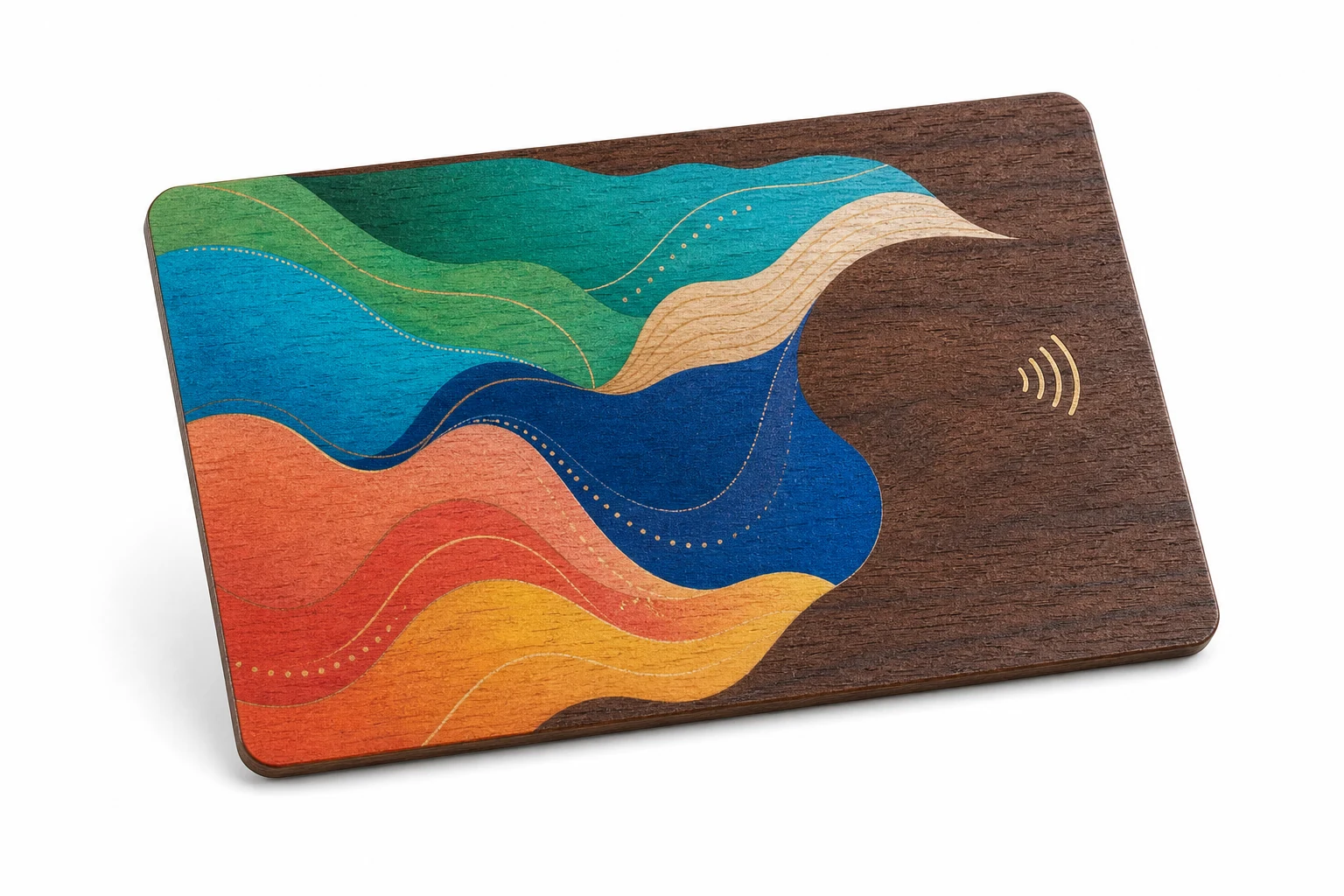
Saturated color over dark grain, with the natural wood left visible around the artwork.
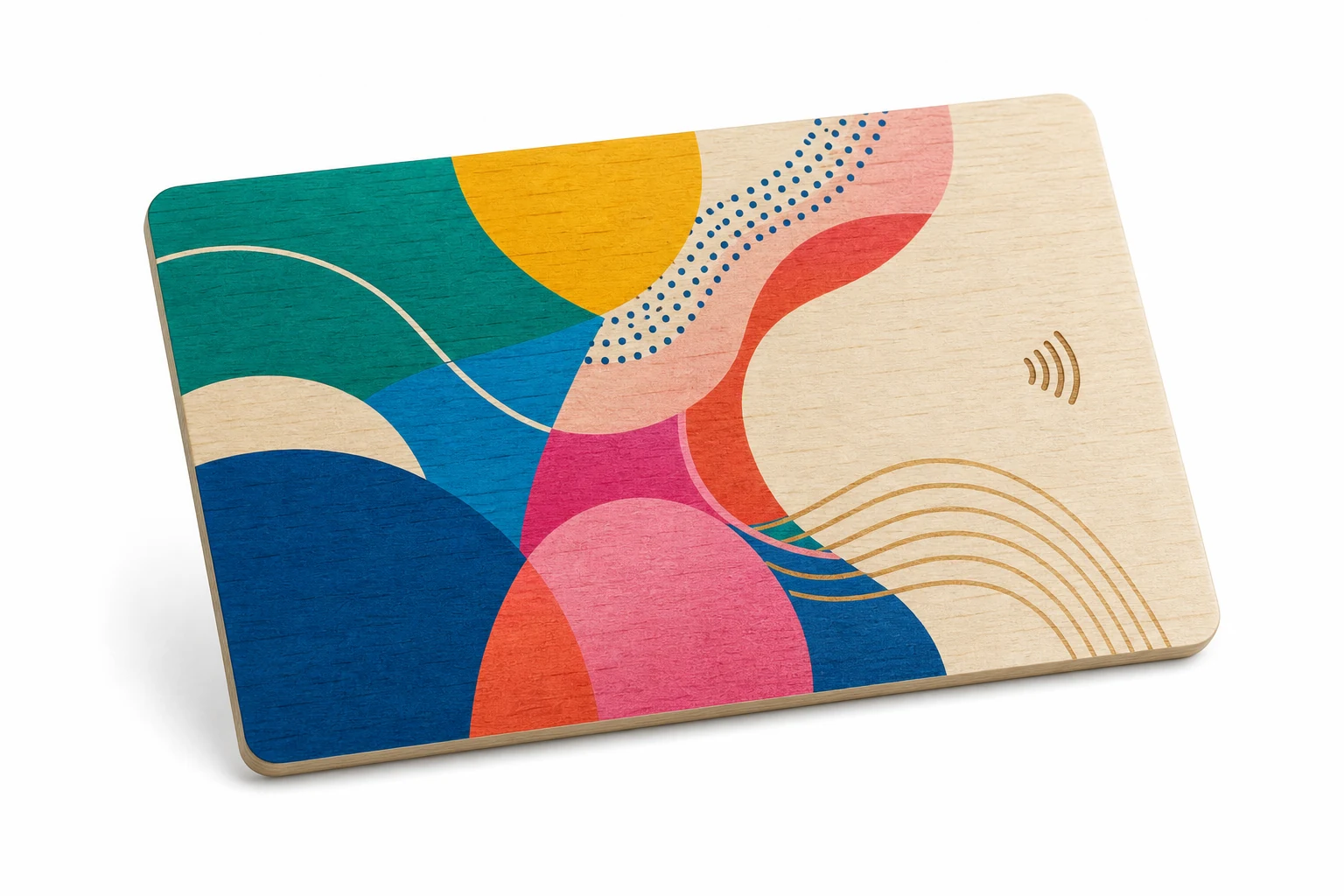
Light wood keeps vivid print fresh and clear for colorful hospitality, retail, and event cards.
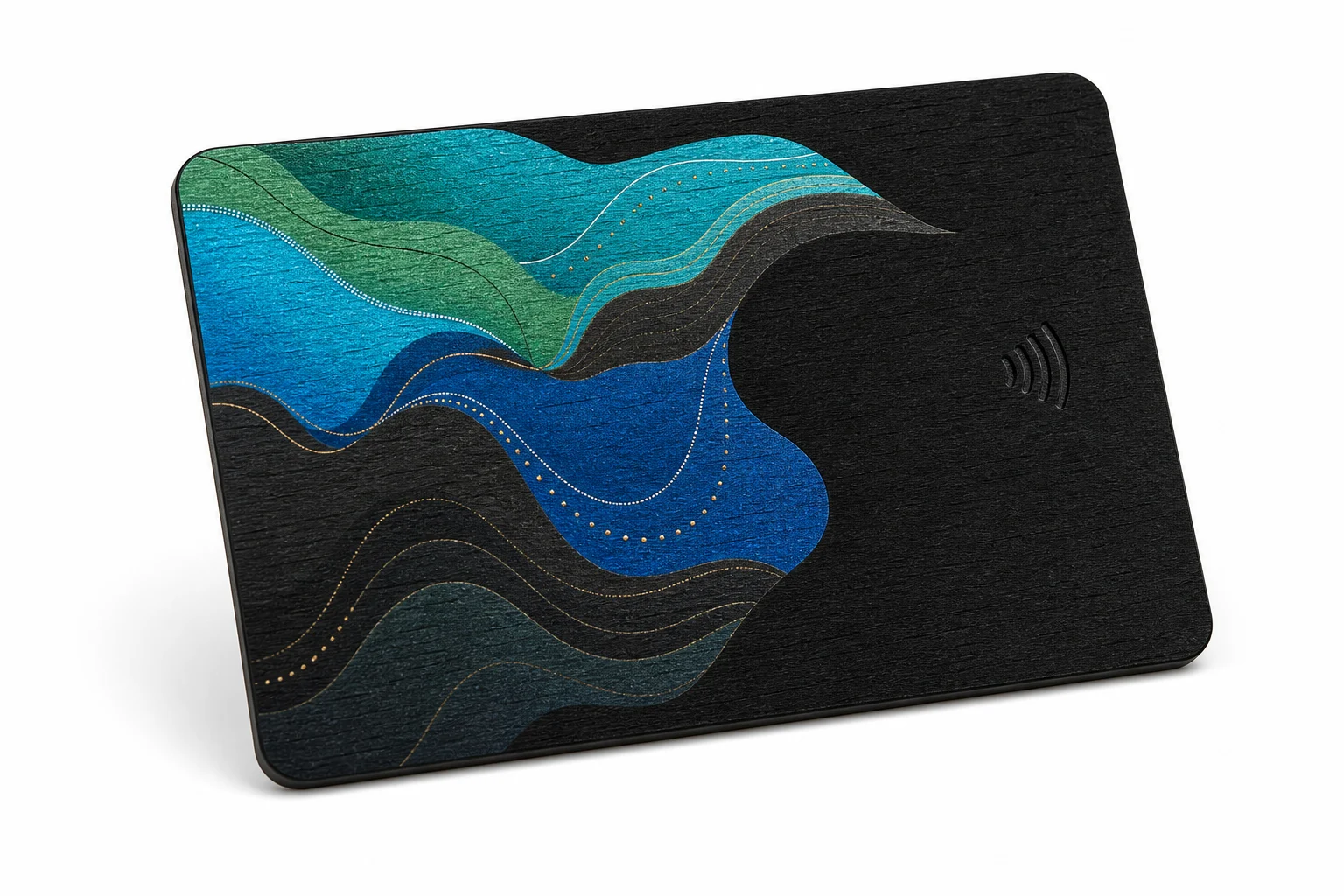
High-contrast print over a dark body for premium programs that need rich color and drama.
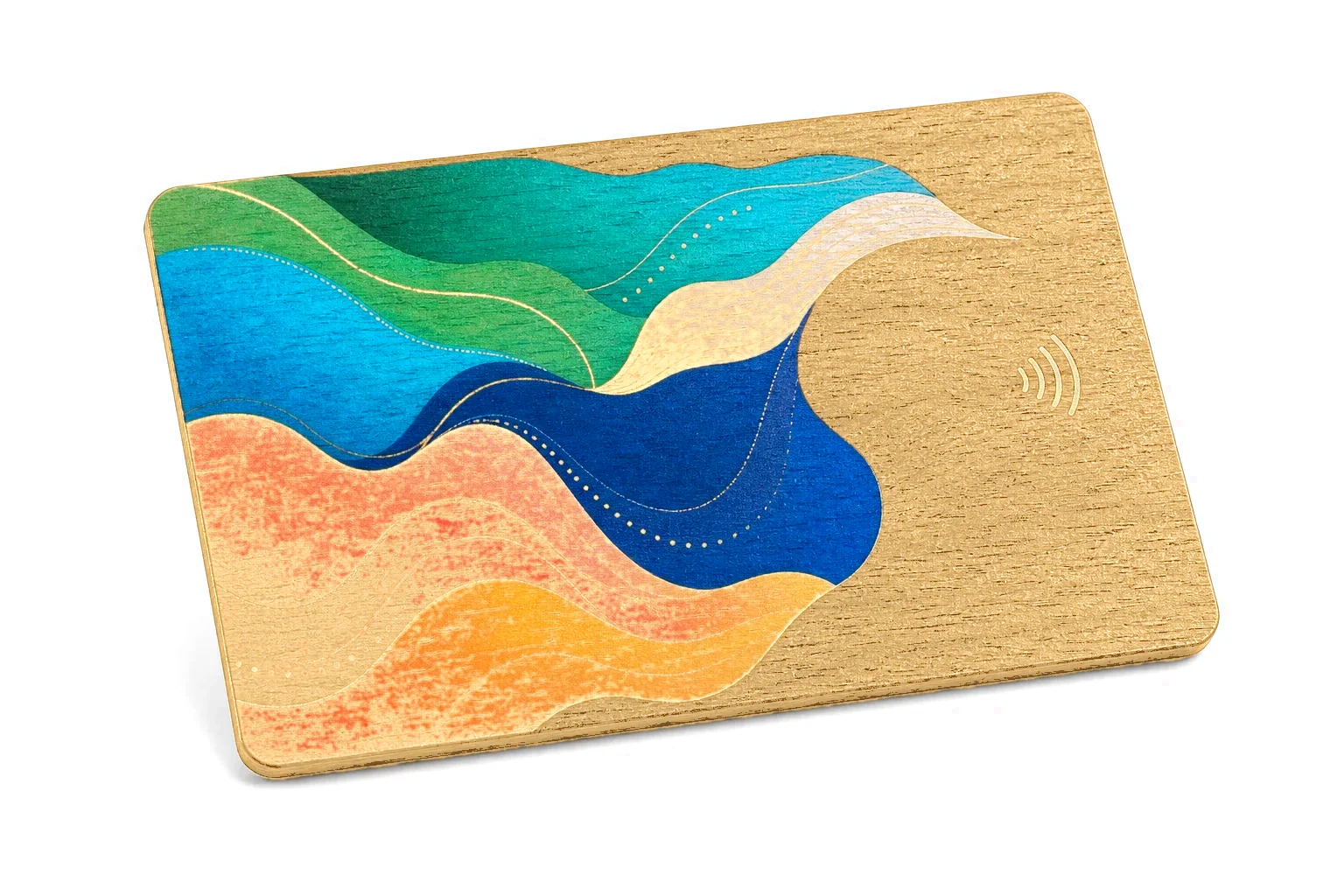
Natural bamboo gives bright graphics a lighter, more eco-focused direction.
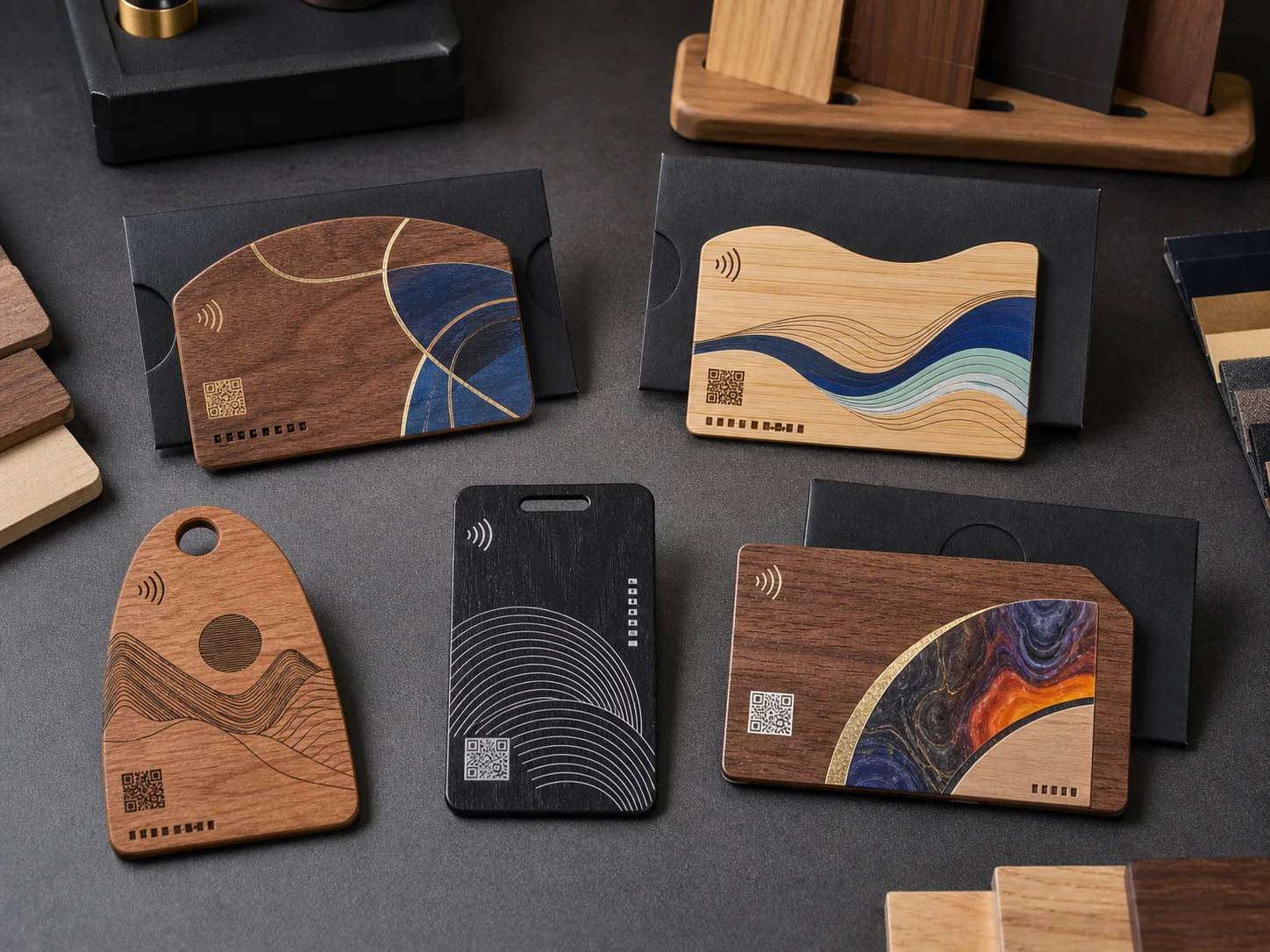
Shape, full-color print, white ink, gloss, metallic accents, and QR zones reviewed together.
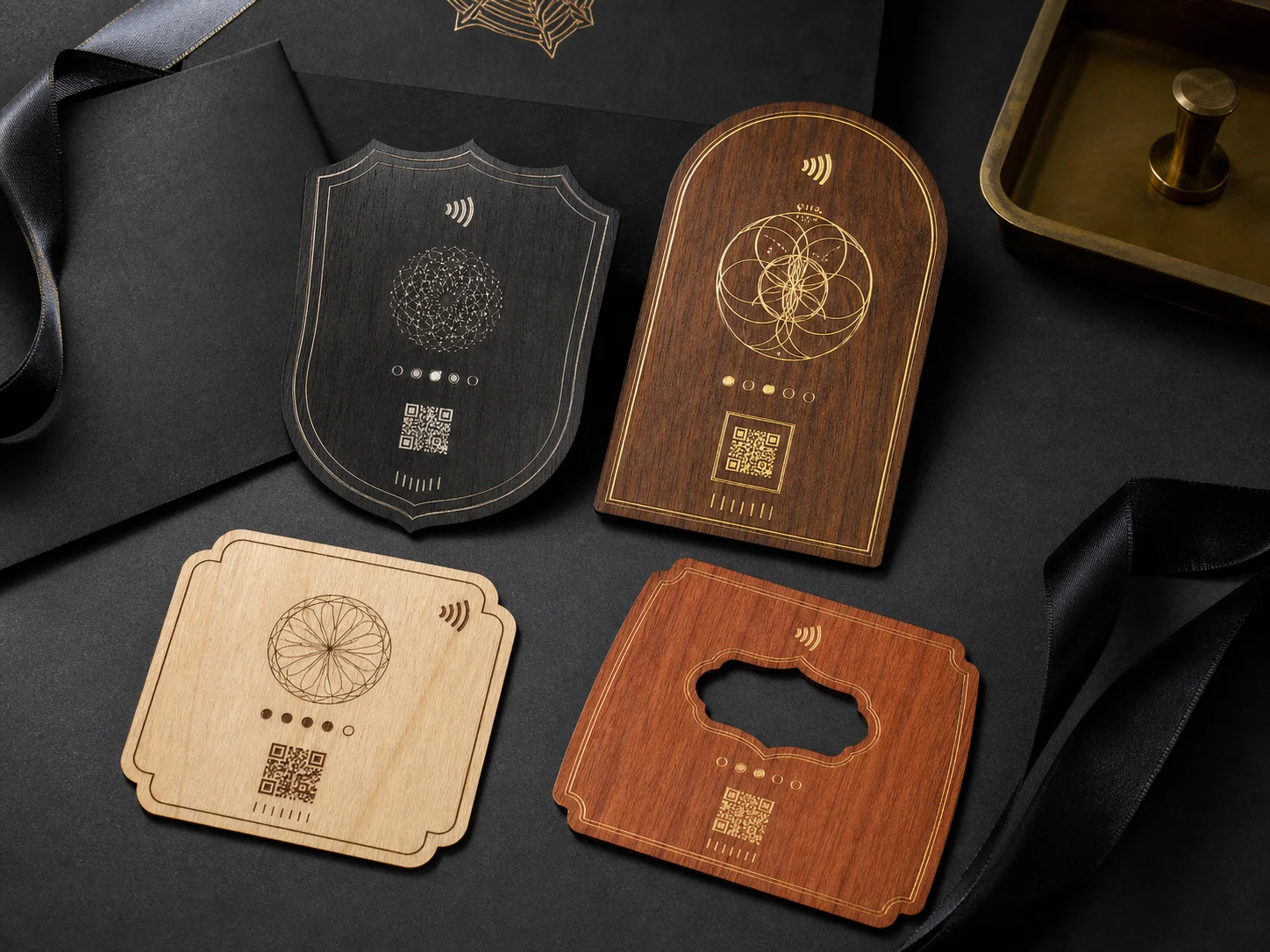
A presentation-ready route for invitation cards, VIP programs, gifting, and boxed sample approval.
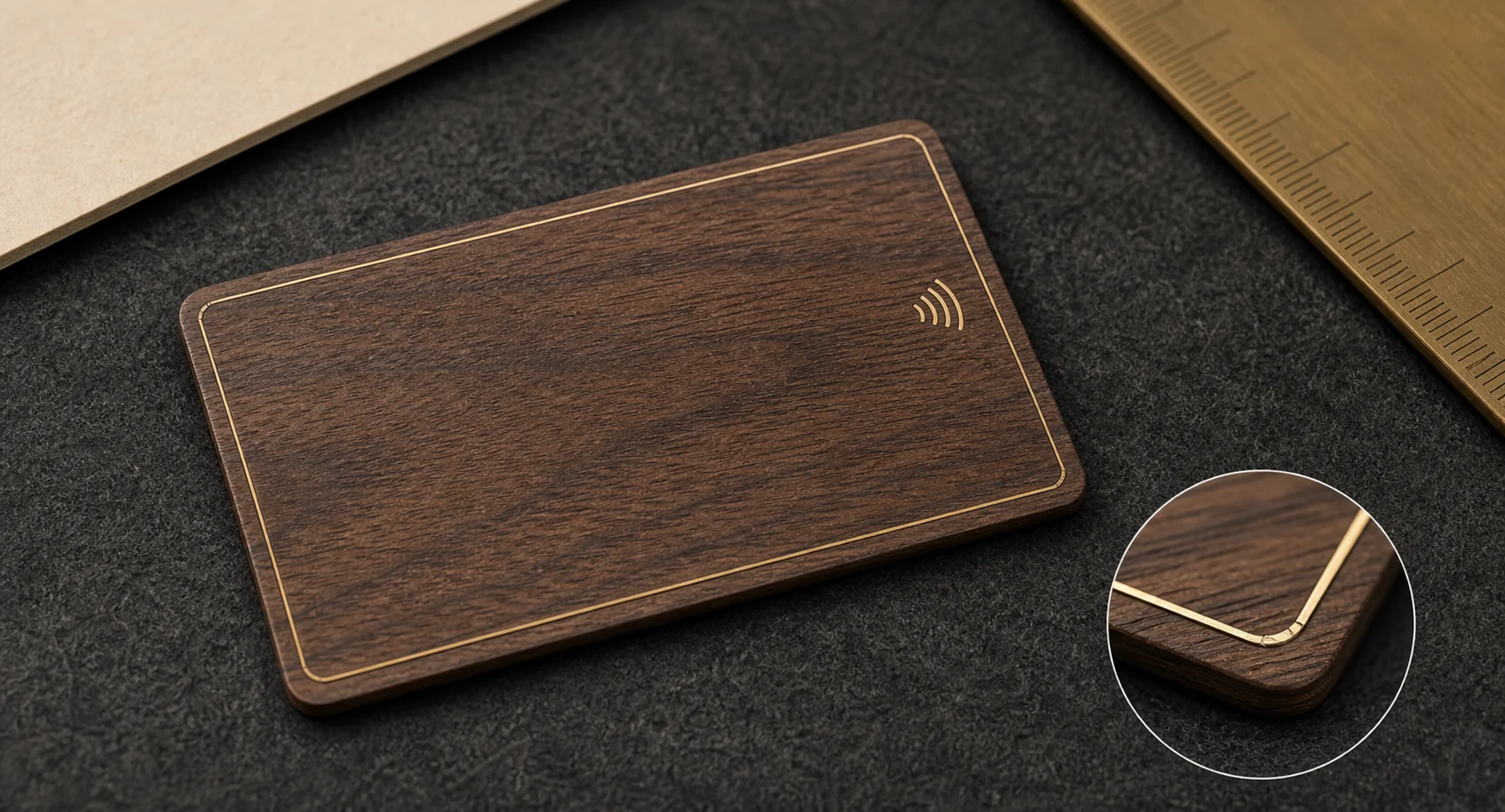
A restrained brass-gold line adds shine without covering the walnut grain.
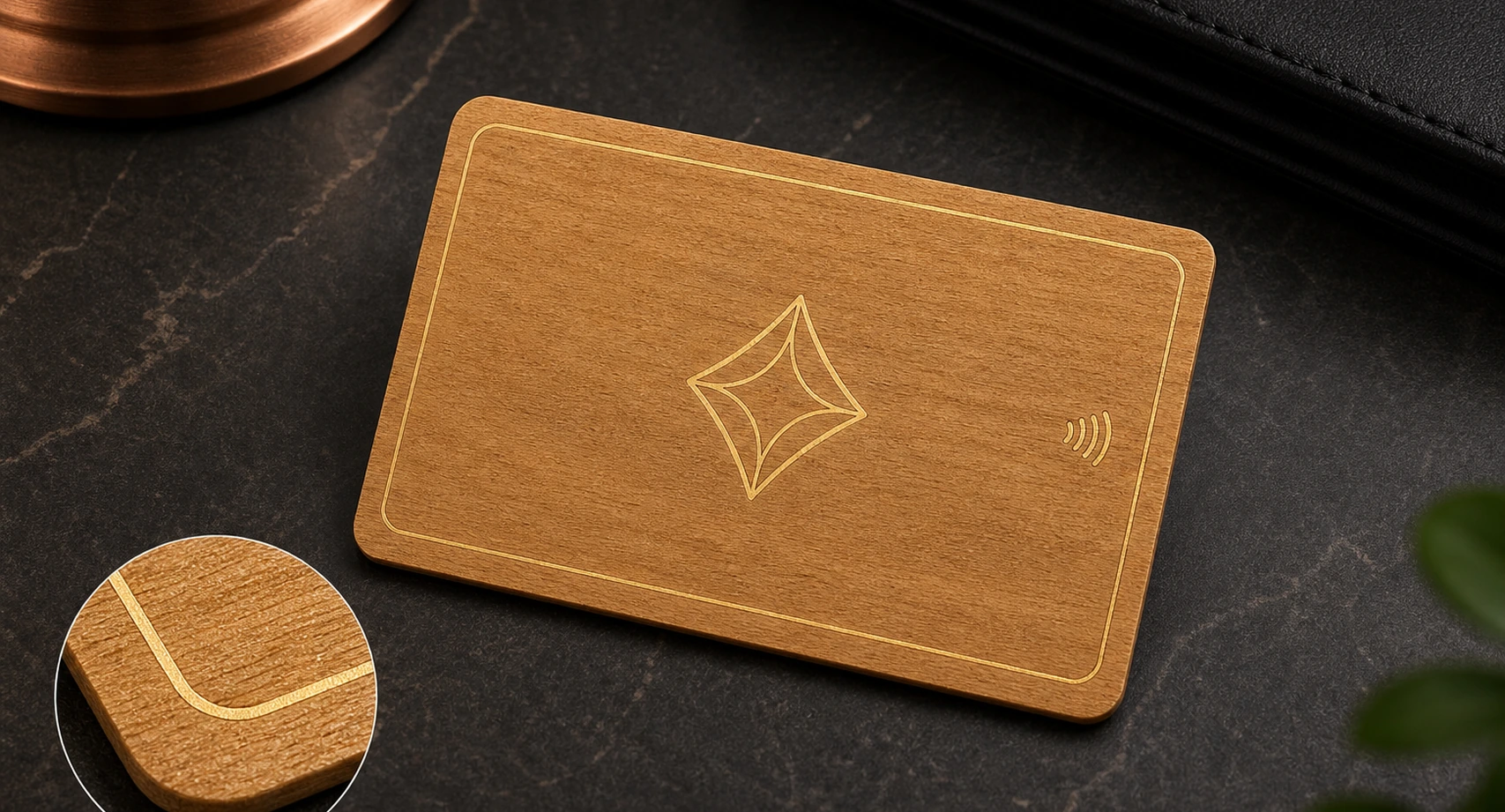
Warm wood and metallic edging create a refined finish for membership and gift-card work.
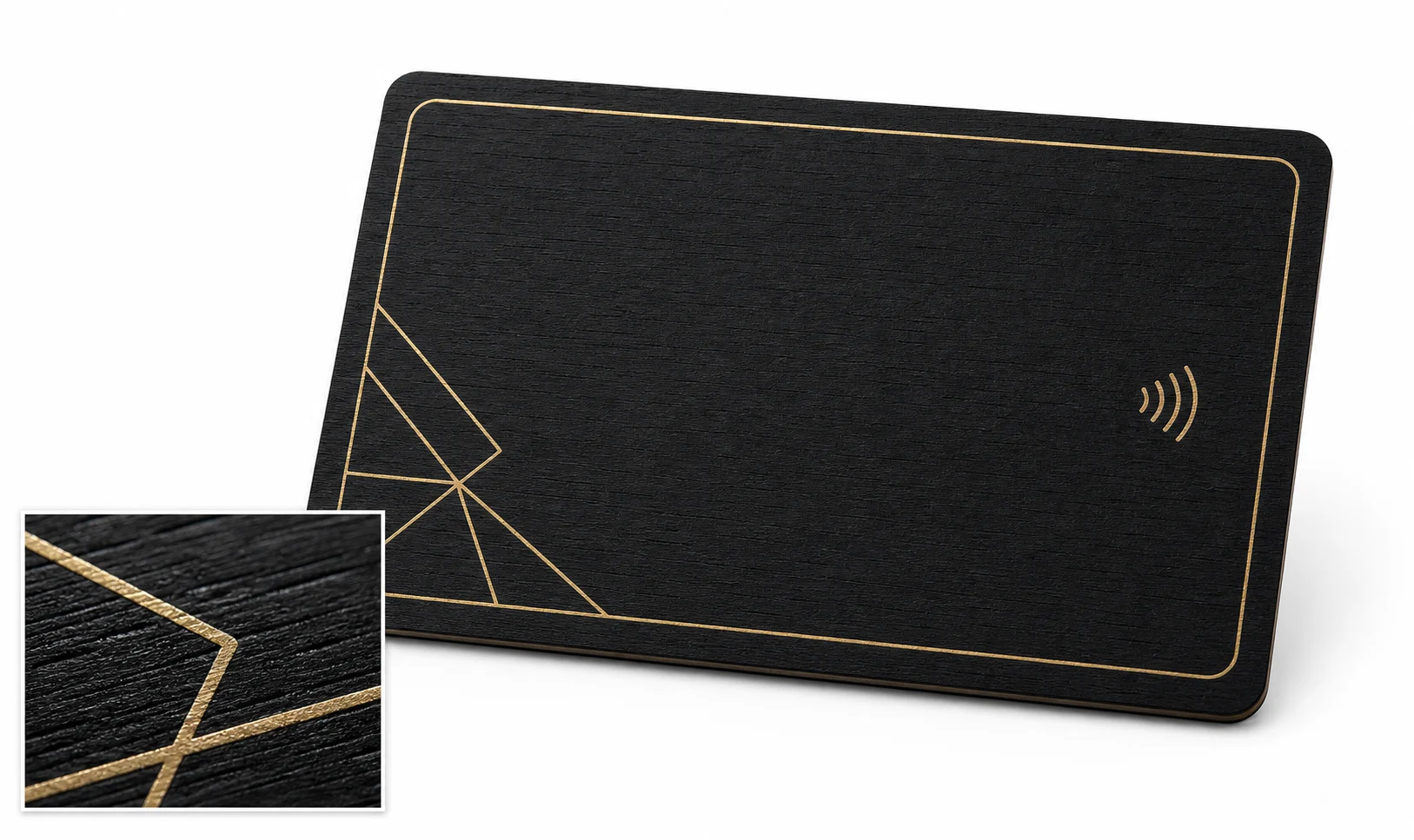
Dark wood makes the gold edge read sharper, richer, and more formal.
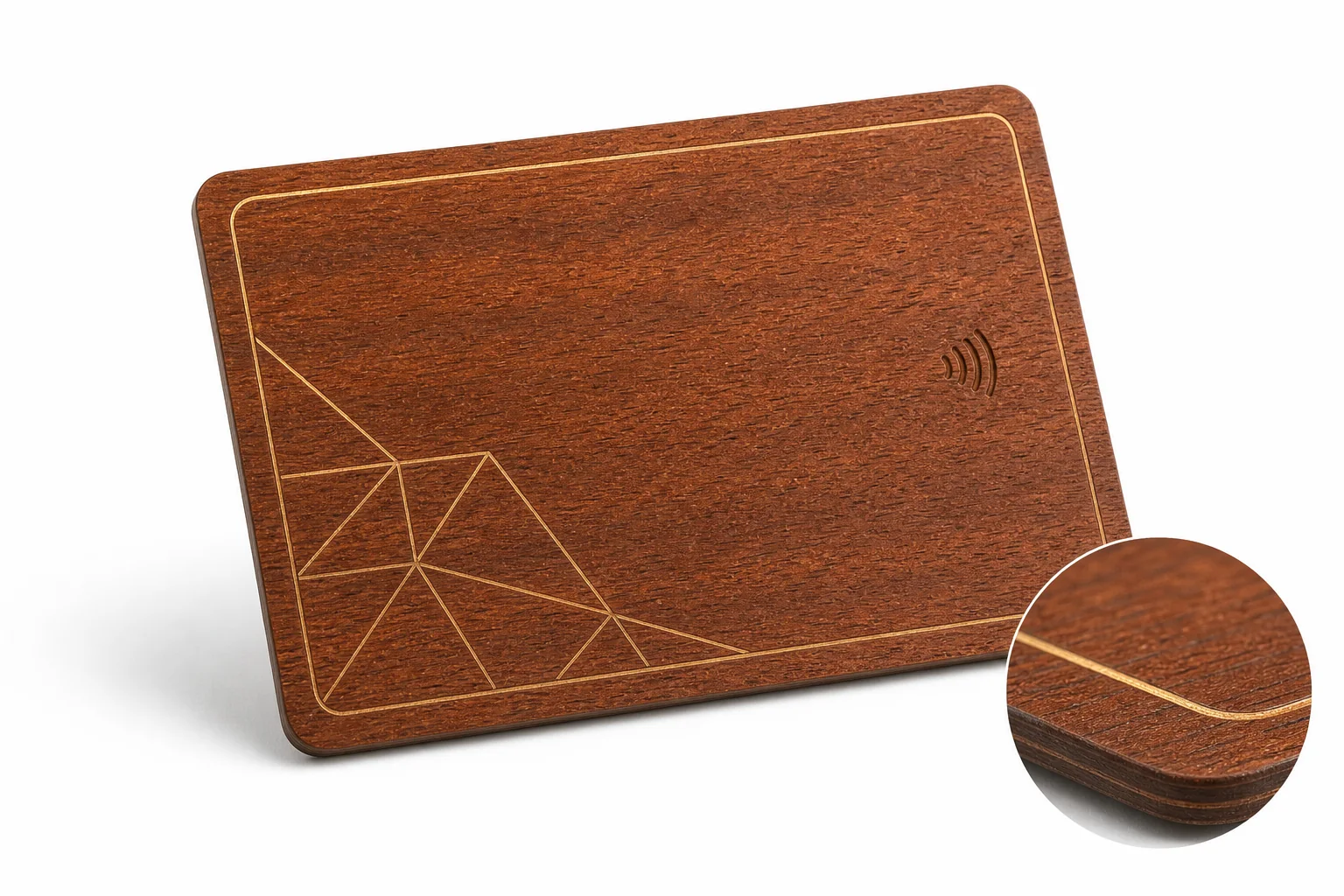
Red-brown grain gives the gold edge a warmer, boutique hospitality feel.
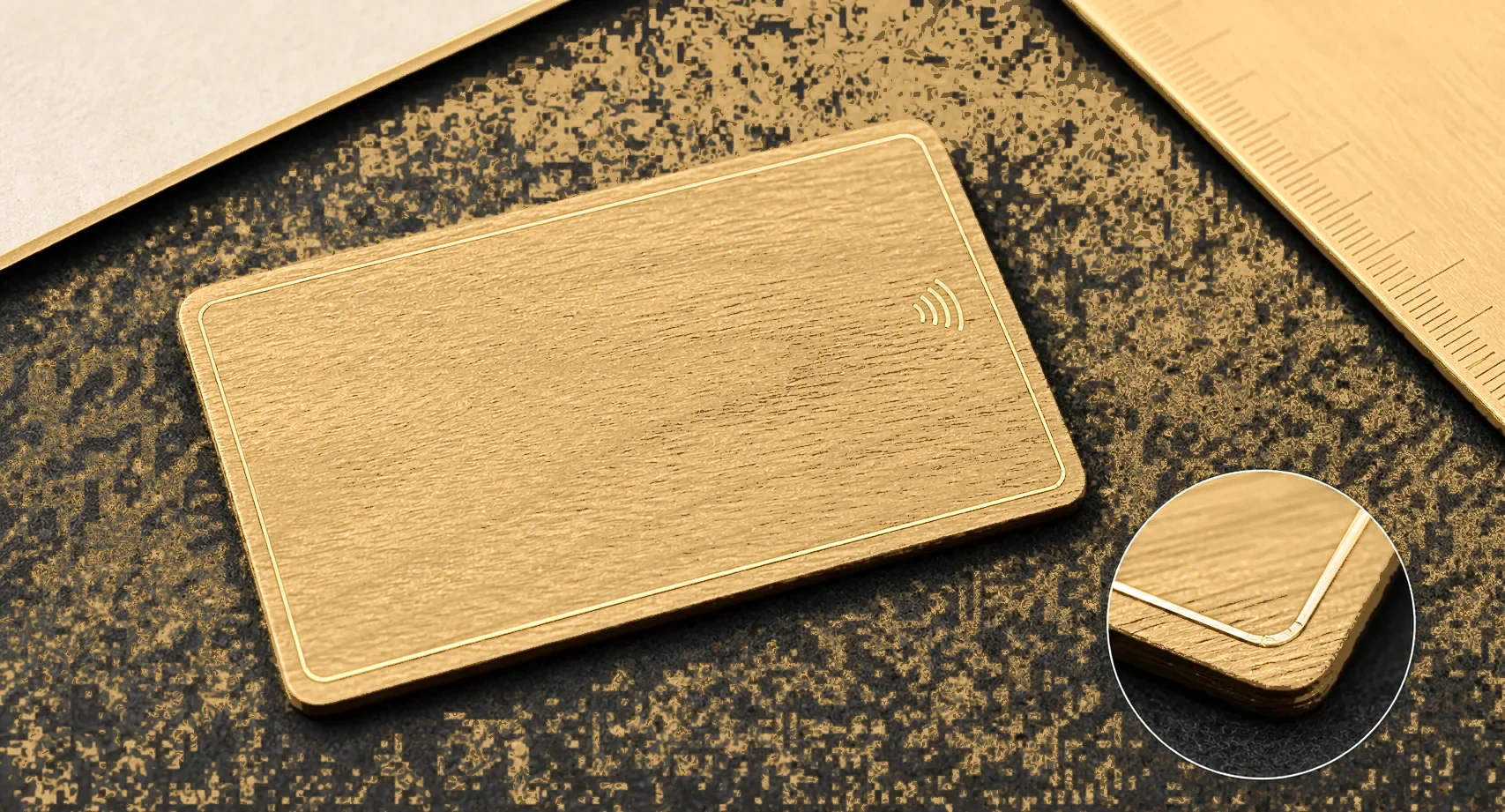
Light bamboo keeps the gold accent bright while preserving the natural eco look.
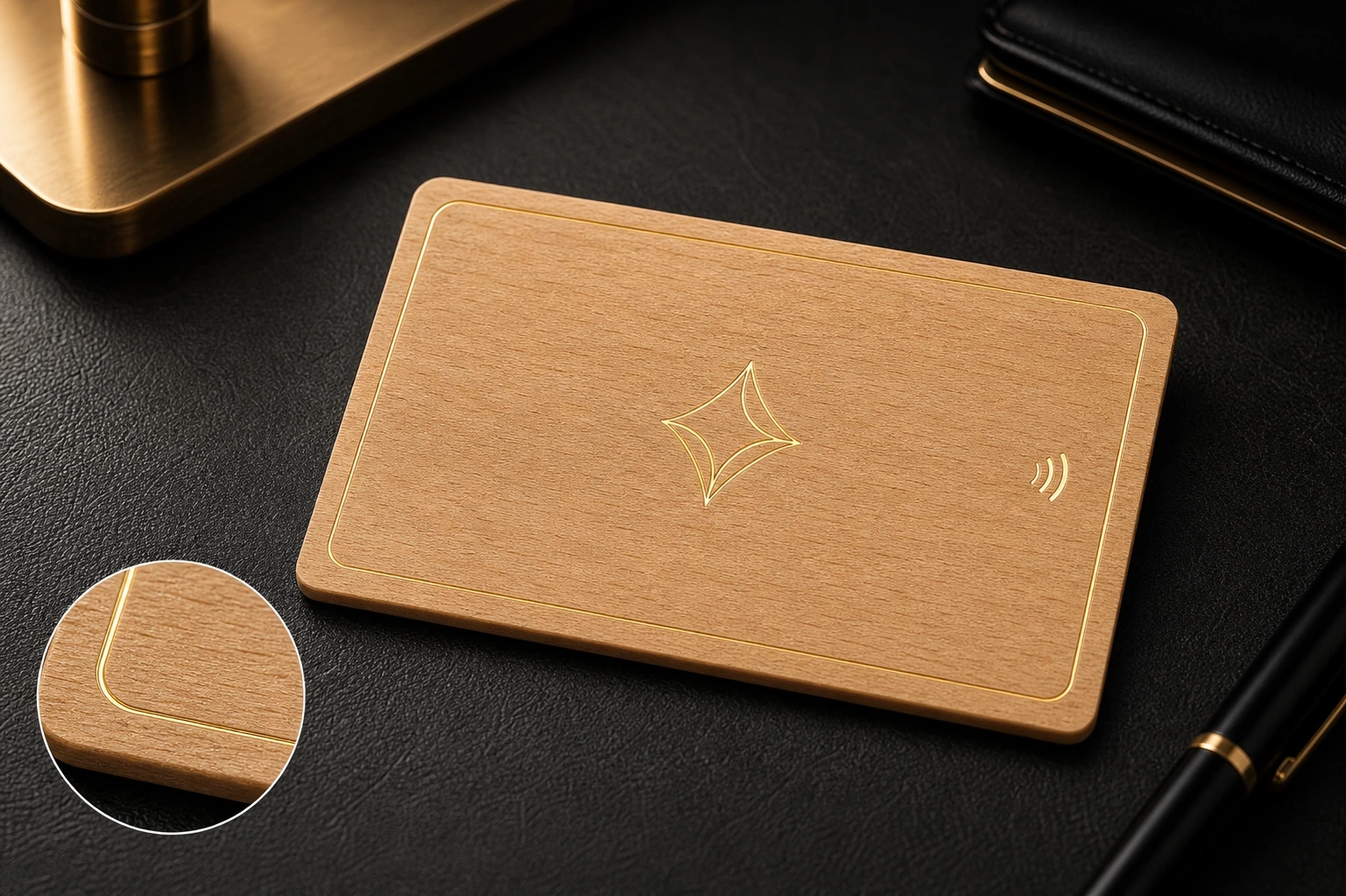
A pale, smooth base lets the gold line feel precise, clean, and premium.
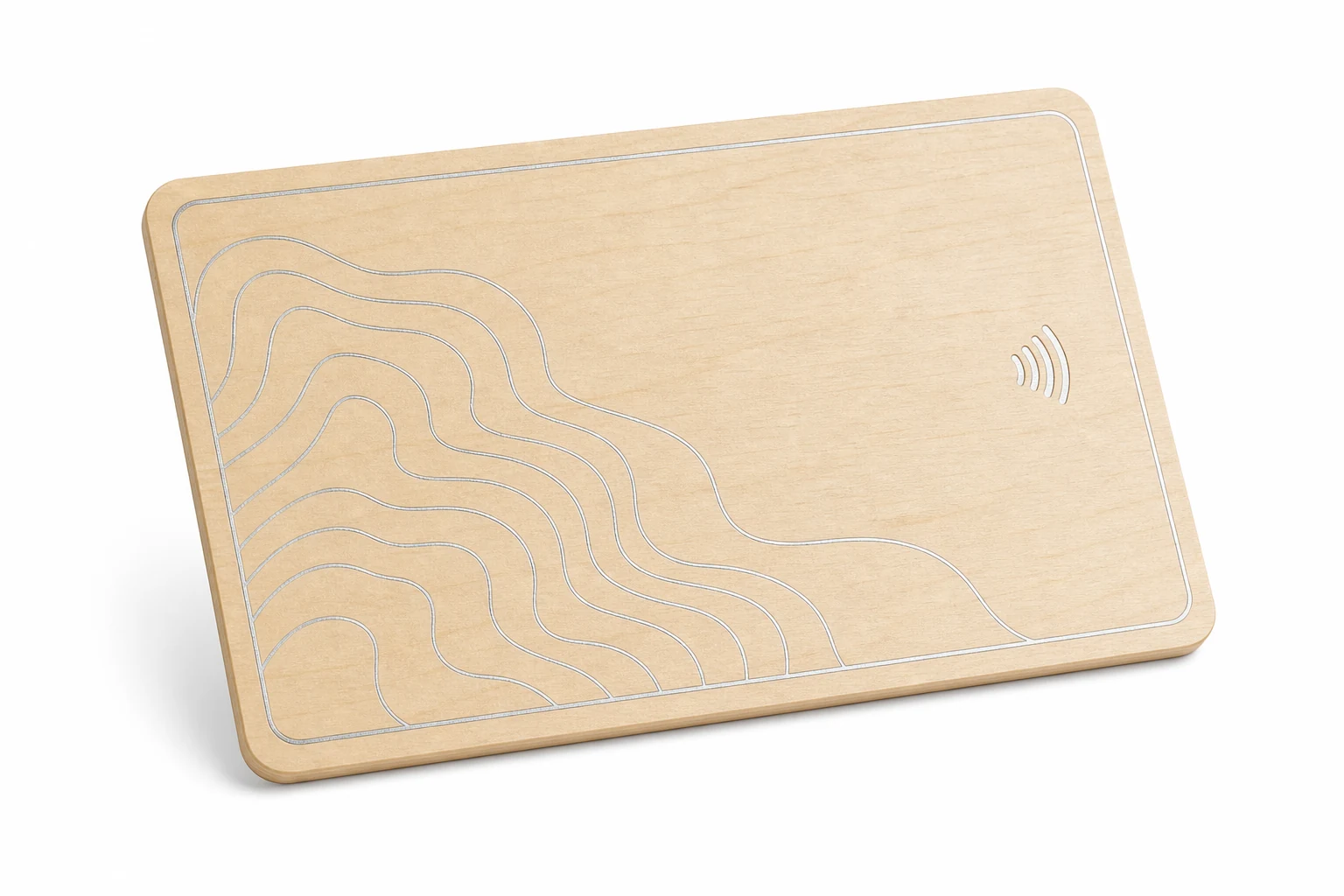
Cool metallic linework creates a cleaner, brighter alternative to warm gold accents.
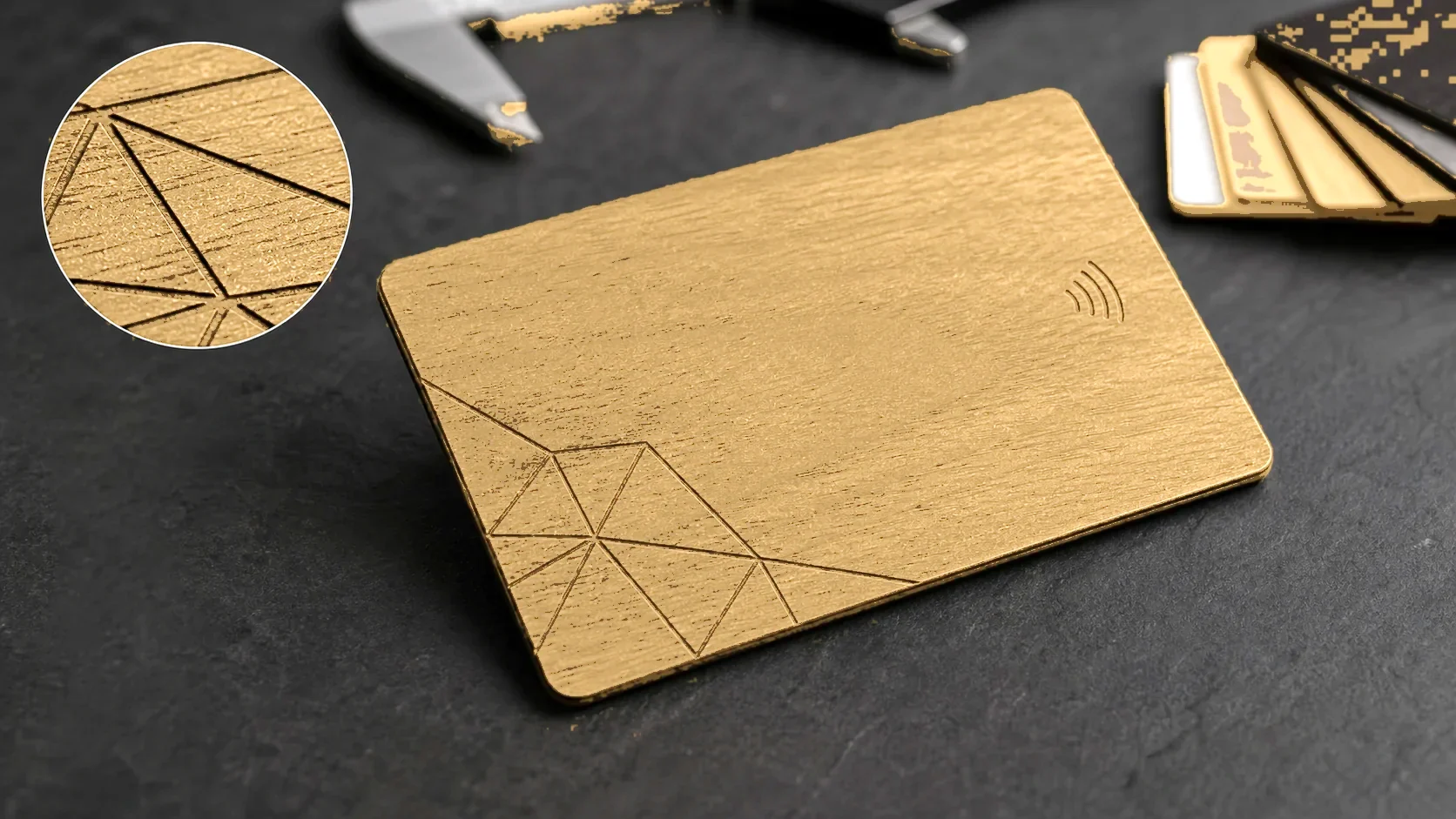
Fine engraved linework stays clean on light wood and supports natural hospitality styles.
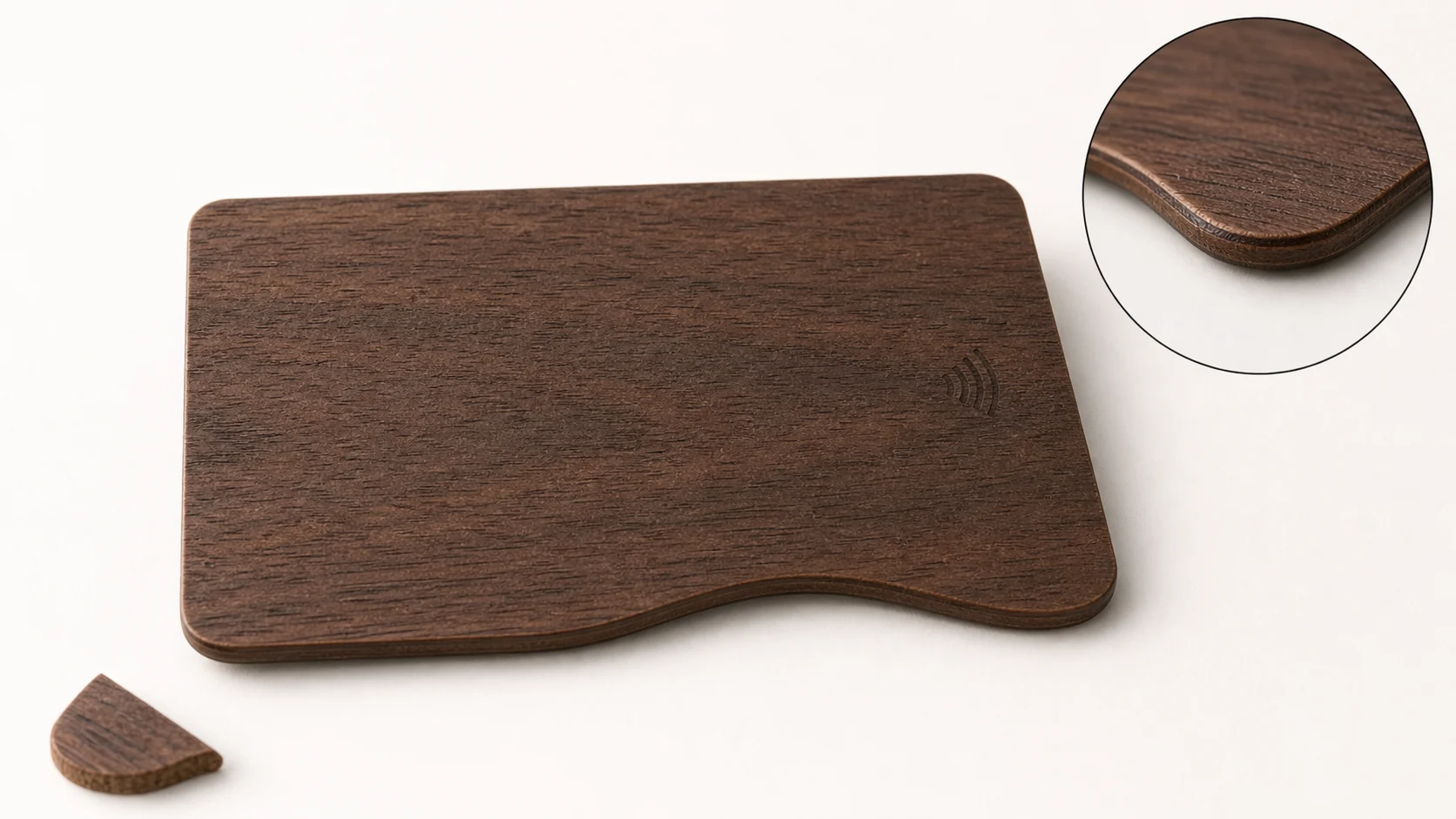
A sculpted outline and visible edge finish make the card feel custom before printing starts.
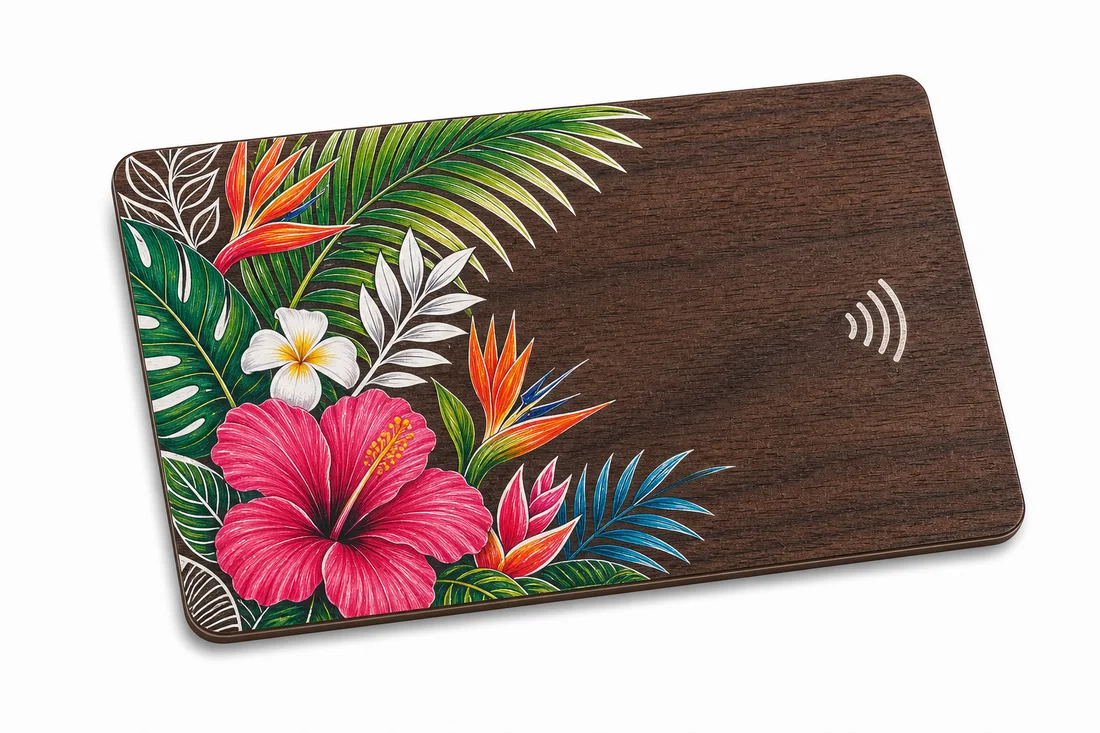
Opaque white ink creates crisp contrast on dark wood without hiding the material.
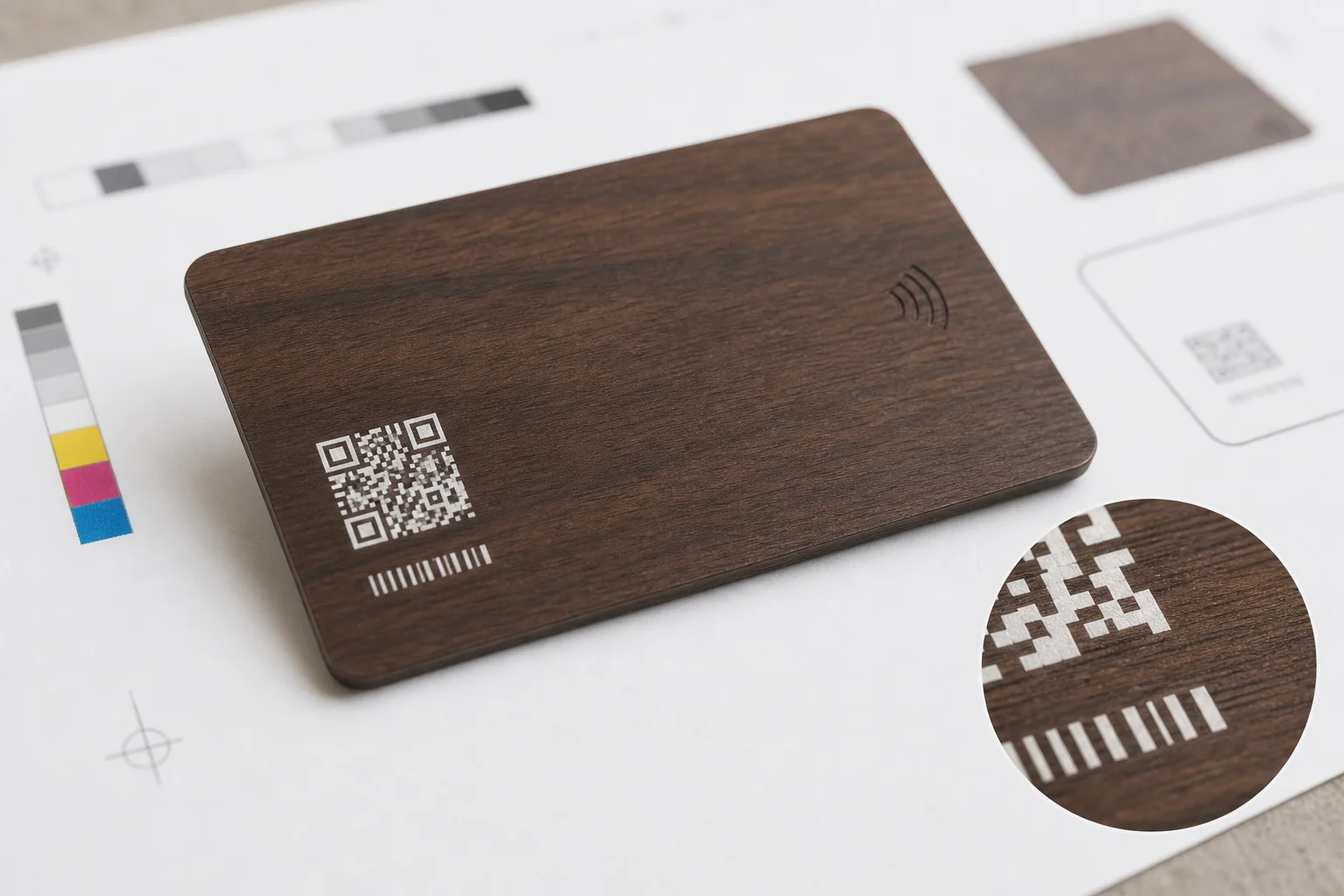
Variable data can stay functional while matching the premium print language.
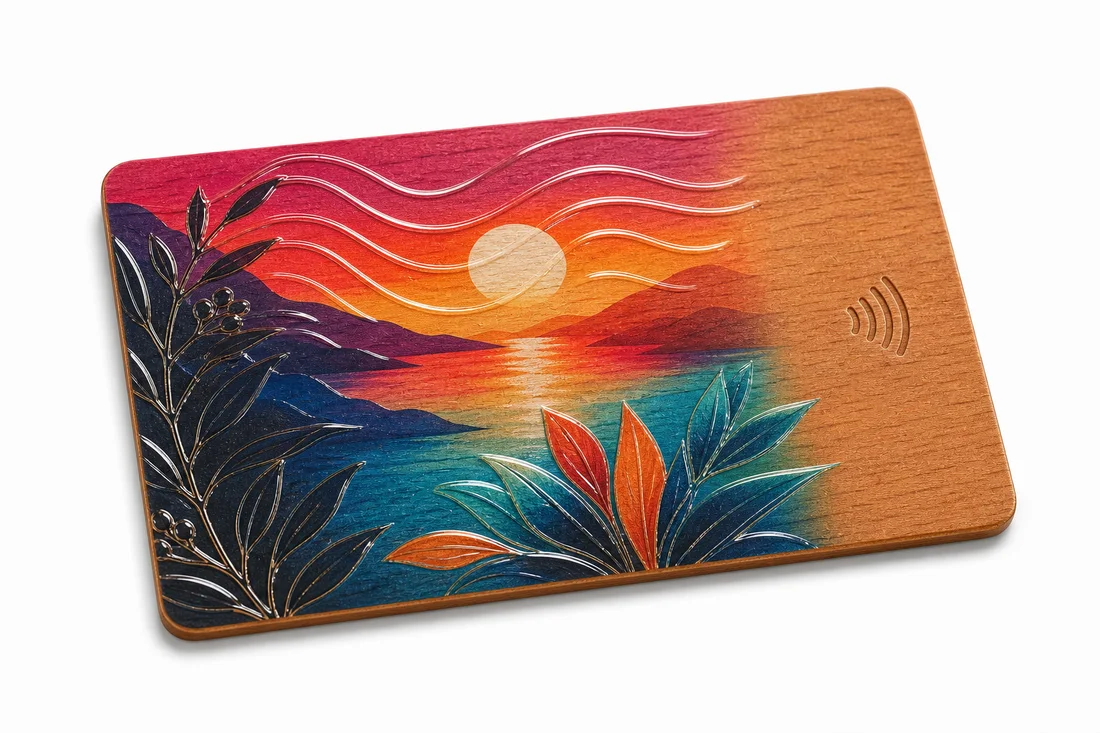
Clear gloss creates a premium tactile effect while leaving the wood color and grain intact.
The strongest wood card designs are controlled.
Use the material as the hero. Laser, white ink, foil, QR, and gloss should support the wood instead of hiding it under heavy graphics.
Artwork and RF constraints belong in the same proof.
Chip area, antenna-safe zones, hole placement, QR size, serial data, and print layers should be approved together so the card is both attractive and functional.
Frequently asked questions
What printing methods work on wooden cards?
Laser engraving, full-color UV print, opaque white ink, metallic foil, raised spot gloss, and QR or serial data printing — each behaves differently by wood tone, and each has its own detail page.
Is printing on wood different from printing on plastic?
Yes. Grain, surface seal, ink opacity, foil adhesion, and laser tone all shift with the material, so color proofs and marking samples are approved on the actual wood rather than on screen.
Can one card combine several print effects?
Yes. Laser, white ink, foil, gloss, and variable data are often combined, and they are approved together on one production proof so no effect overpowers another.
Specification
| Primary methods | Laser engraving, UV print, white ink, foil, spot UV |
|---|---|
| Variable data | QR, serial, member ID, UID matching, box labels |
| Artwork input | Vector art, print layers, data file, die line if needed |
| Approval need | Real material print sample for critical effects |