Touch and thickness
Wood Card Edge Finishing
Wood card edge finishing is where buyers feel the difference between a premium wood card and a flat printed sample. Thickness, radius, matte seal, layered construction, and cut quality should all be part of sample approval, not left to chance in production.
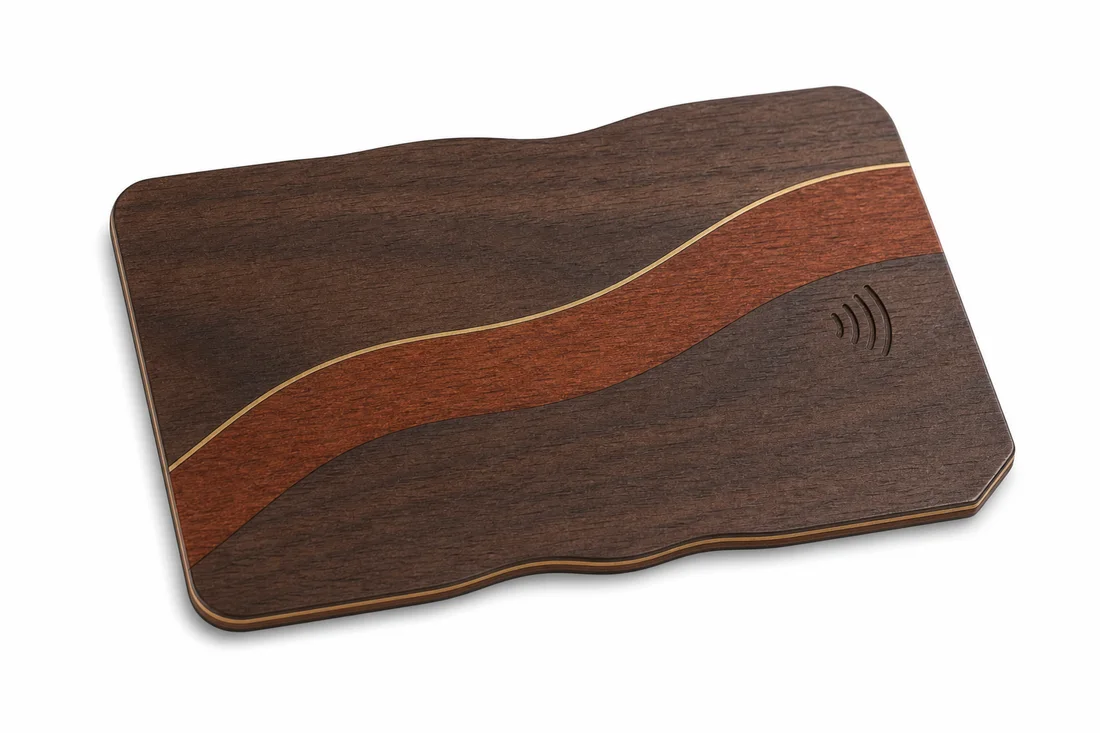
Edge finishing gallery
Compare shaped outlines, side profiles, edge seals, and tactile thickness.
The edge defines hand feel before the buyer reads the artwork. These references show custom wave cuts, macro edge detail, side profiles, notches, and sealed thickness options.
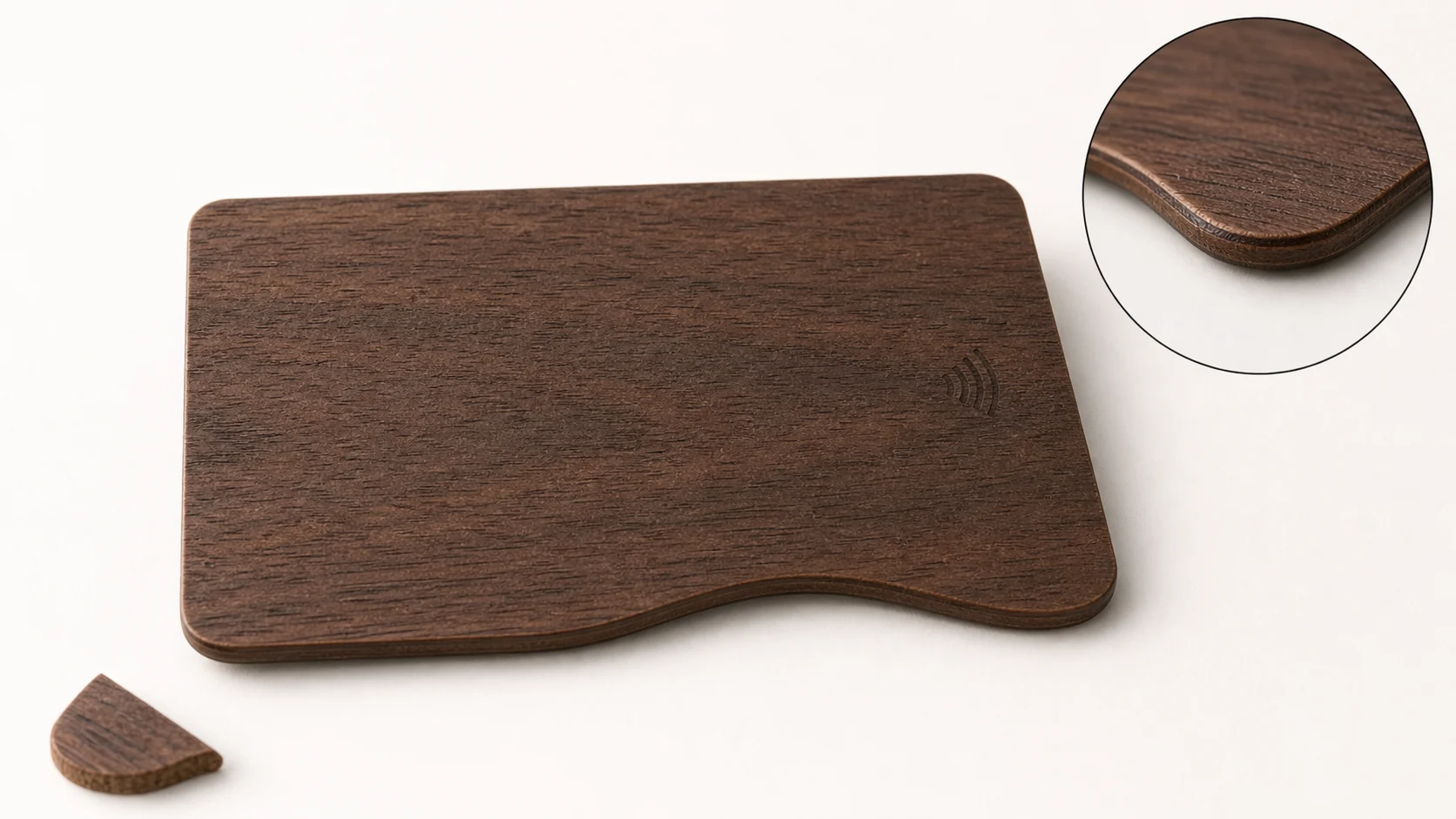
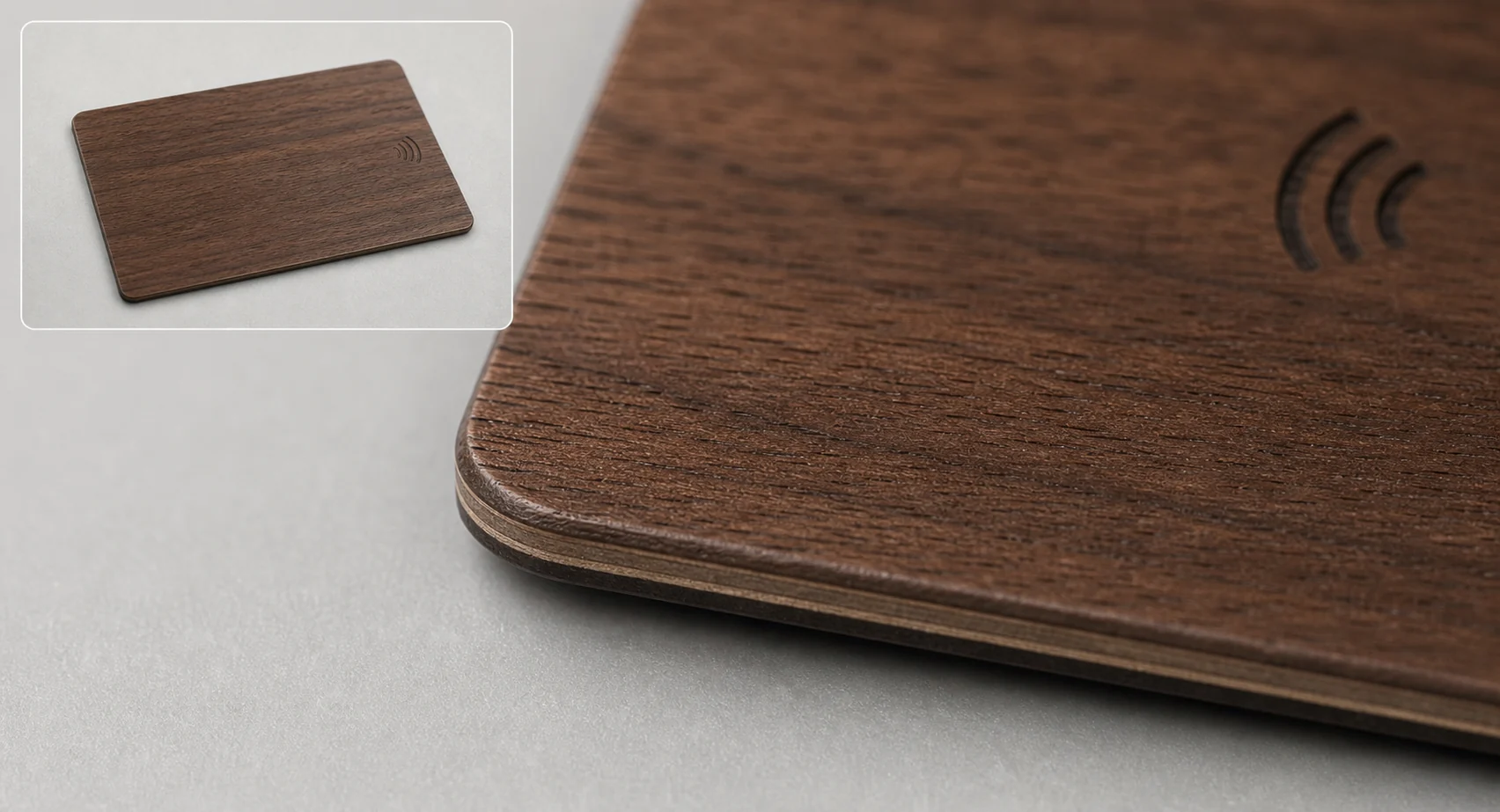
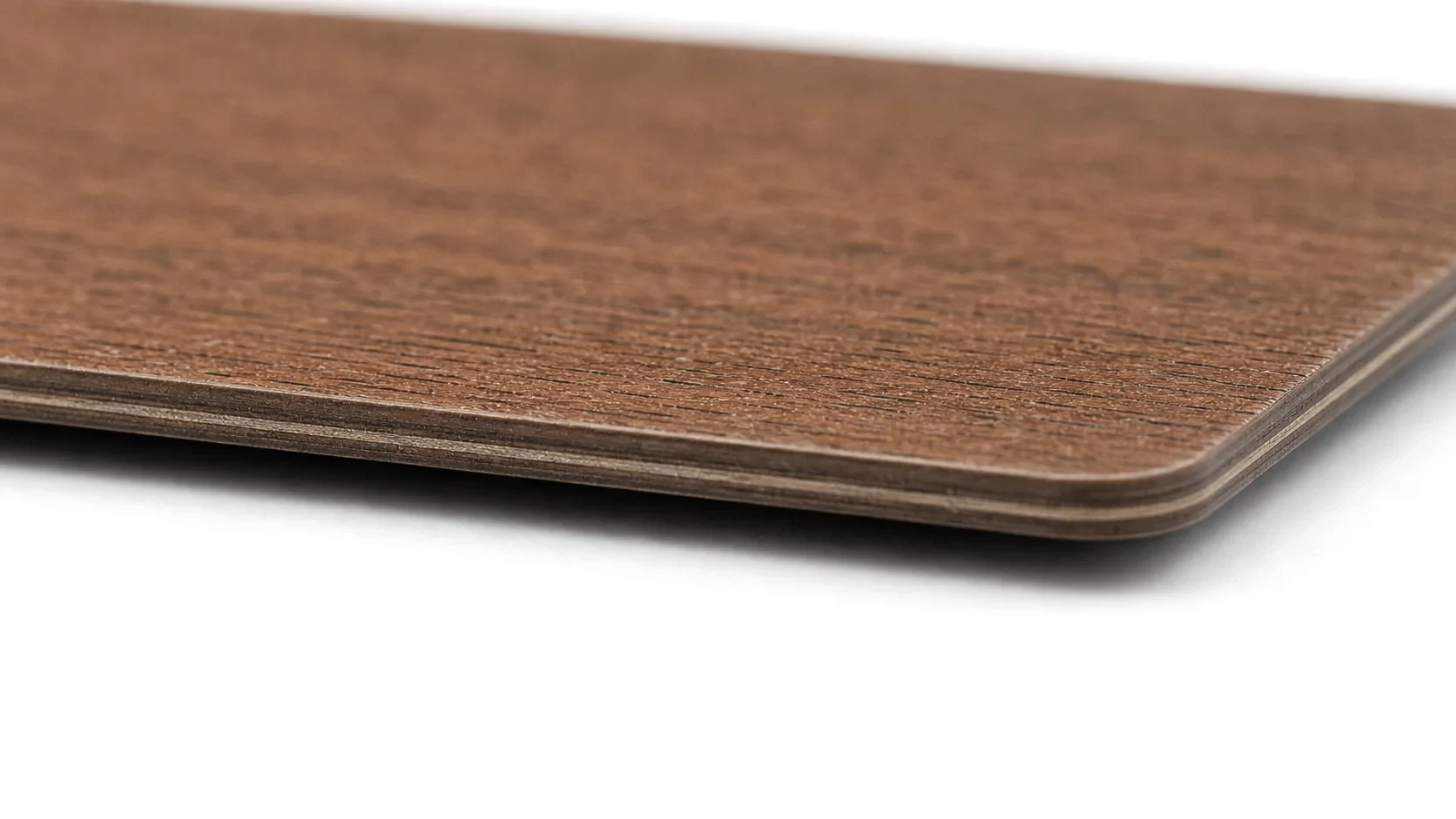
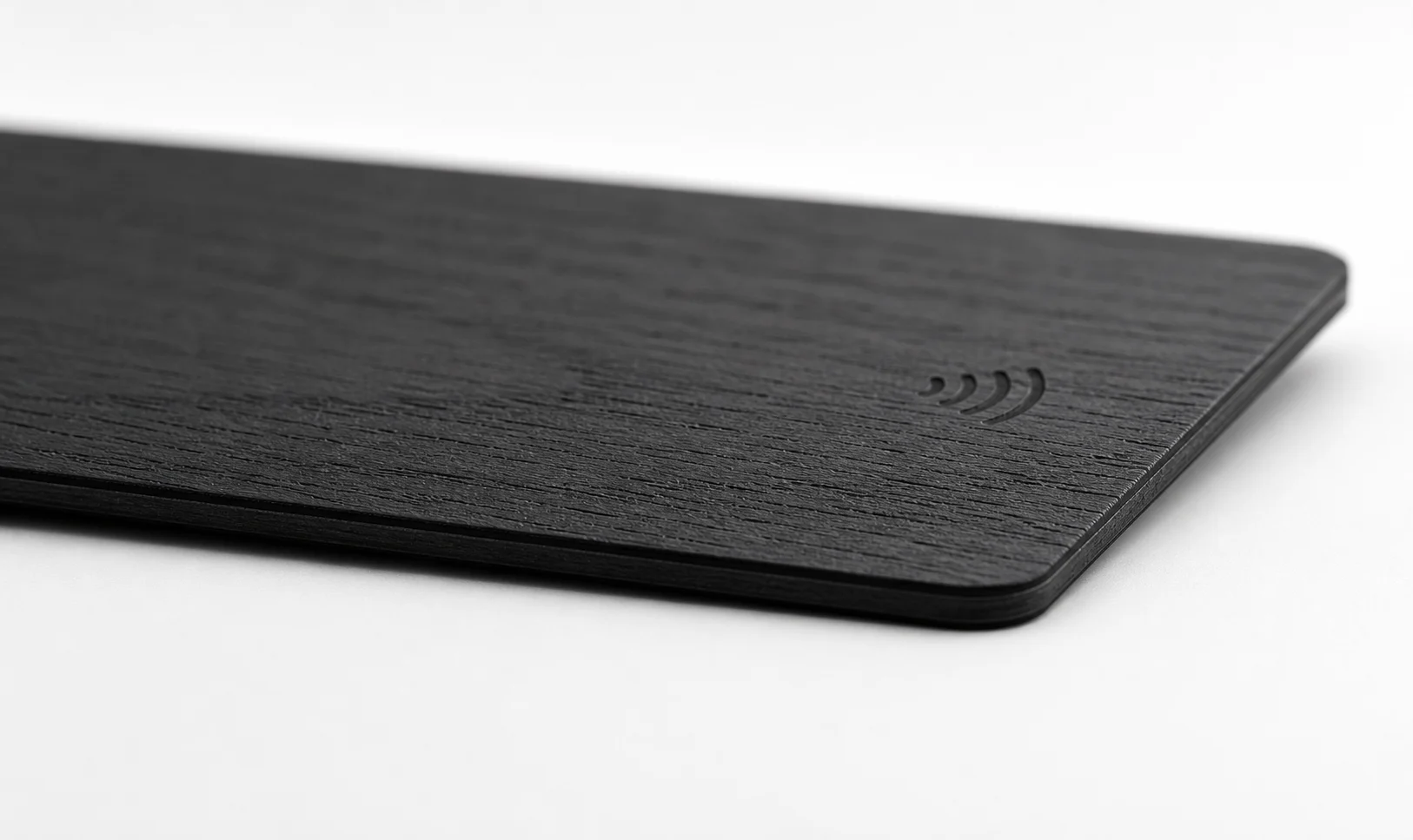
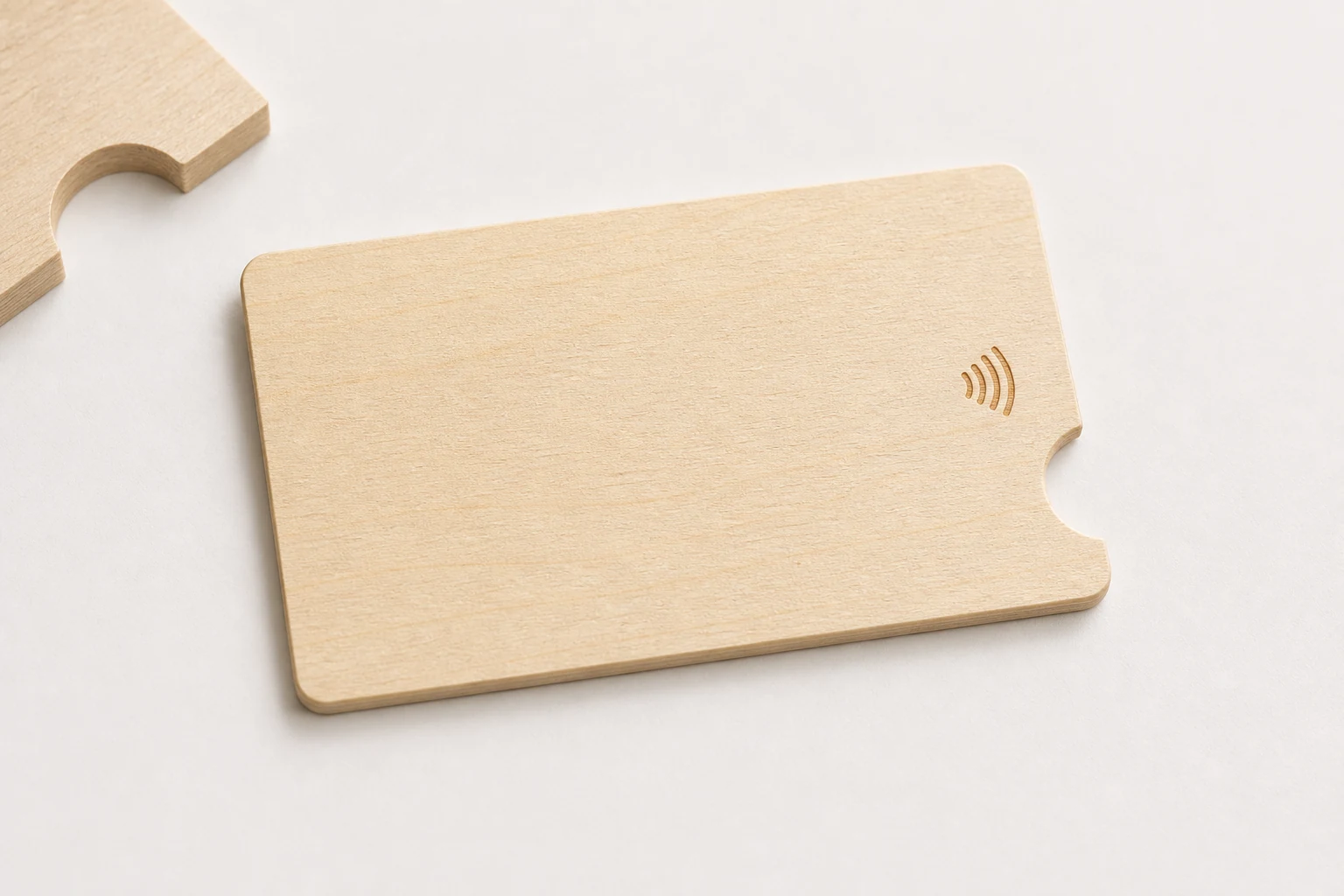
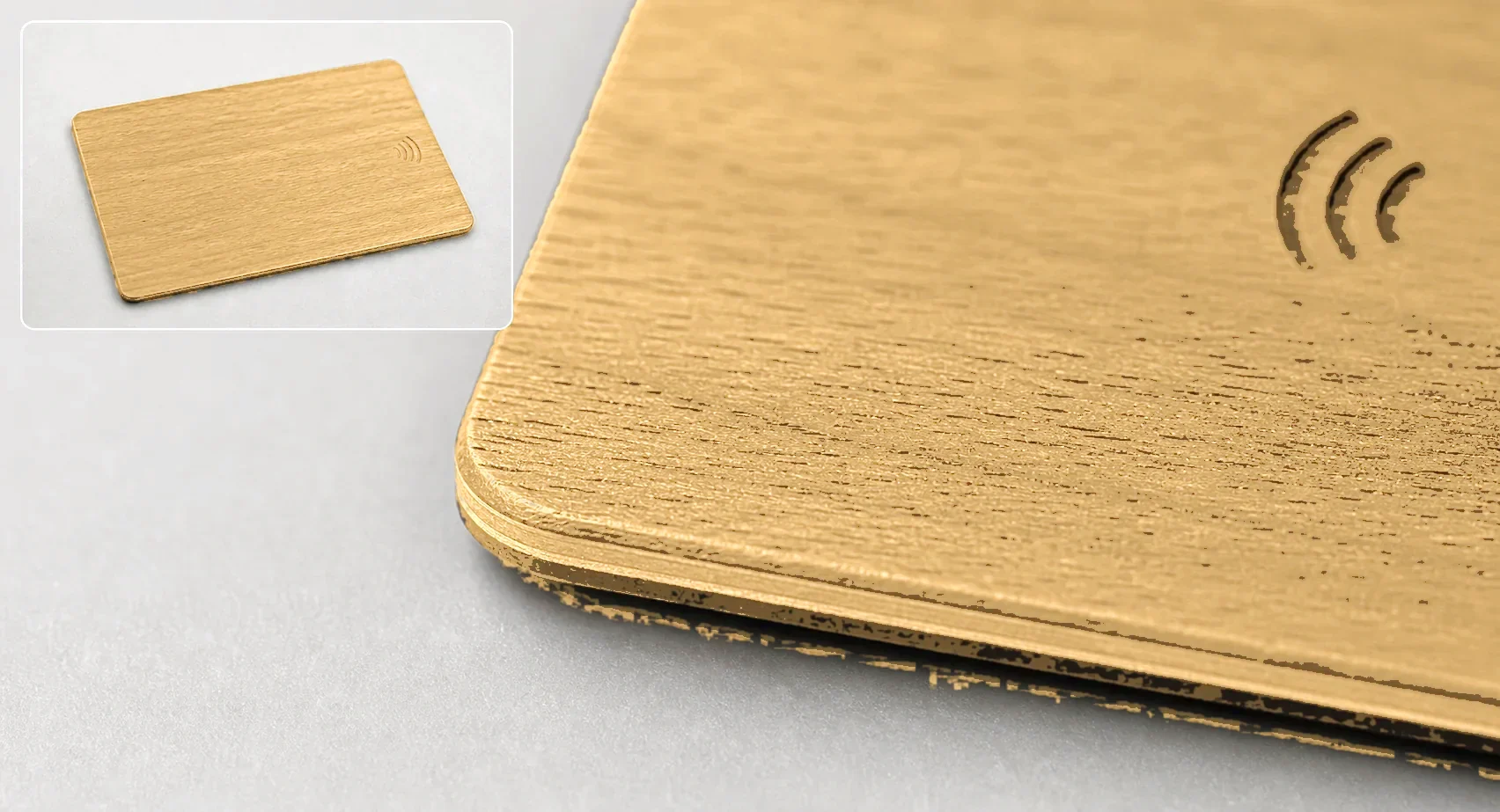
Edge quality affects perceived value immediately.
A clean radius, sealed edge, and controlled thickness make a small batch feel intentional. Rough edges make even good artwork look unfinished.
Custom shapes must respect the antenna.
Slots, holes, and unusual outlines should be checked against antenna position and card strength before design approval.
Thickness is both a feel and an RF decision.
A thicker wood body feels more substantial but changes how the antenna reads, so target thickness is chosen with both hand-feel and reader performance in mind. The final thickness is locked on a physical sample and then held consistent across the production run.
A sealed edge protects the wood in daily use.
Raw wood edges can absorb moisture and mark quickly; a matte or satin seal keeps the edge clean through wallet, lanyard, and reader handling. The seal is part of the sample, so the buyer approves both the look and the durability of the finished edge.
Best uses
- Premium hand-feel cards
- Custom-shaped credentials
- Gift and membership programs
- Short-run sample approvals
Frequently asked questions
Why does edge finishing matter on wood cards?
The edge is the first thing buyers feel. A clean radius, sealed edge, and controlled thickness make even a small batch feel intentional.
Are wood card edges sealed?
Yes. A matte or satin seal protects the edge through wallet, lanyard, and reader handling — approved as part of the physical sample.
How is card thickness decided?
As both a feel and an RF decision: the range runs from 0.80 mm to 2.0 mm, where thicker feels more substantial but changes antenna reading. The target is locked on a sample and held across the run.
Specification
| Card size | CR80 and custom dimensions by drawing |
|---|---|
| Card body | Plastic-free, FSC-certified wood body options |
| Thickness | 0.80 mm to 2.0 mm by wood species and chip |
| Minimum order | None — single samples to production runs |
| Production time | About one week after artwork and sample approval |
| RF planning | Chip, antenna, thickness, and finish approved together |
| Approval route | Material sample, working RF sample, production proof |
| Edge options | Radius, layered edge, matte seal, custom outline, slot or hole |
| Approval need | Physical sample for thickness and hand feel |
| Design input | Vector die line or dimensioned drawing |
Related wood RFID card pages
- Laser Engraved Wood RFID Cards
- UV Printed Wood RFID Cards
- White Ink Wood Cards
- Foil Wood RFID Cards
- Spot UV Wood Cards
- QR and Serial Wood RFID Cards
- Wood RFID Card Artwork Specs