Design the ID layout around daily checks.
Staff and campus wood ID cards should define photo fields, department marks, visible serials, UID export, cardholder data fields, replacement rules, and reader requirements before artwork is locked.
Wood ID cards work best when the credential is designed as an access object first: reader compatibility, UID or staff ID, photo field, department color, QR or serial backup, lanyard hardware, and daily handling are approved together.
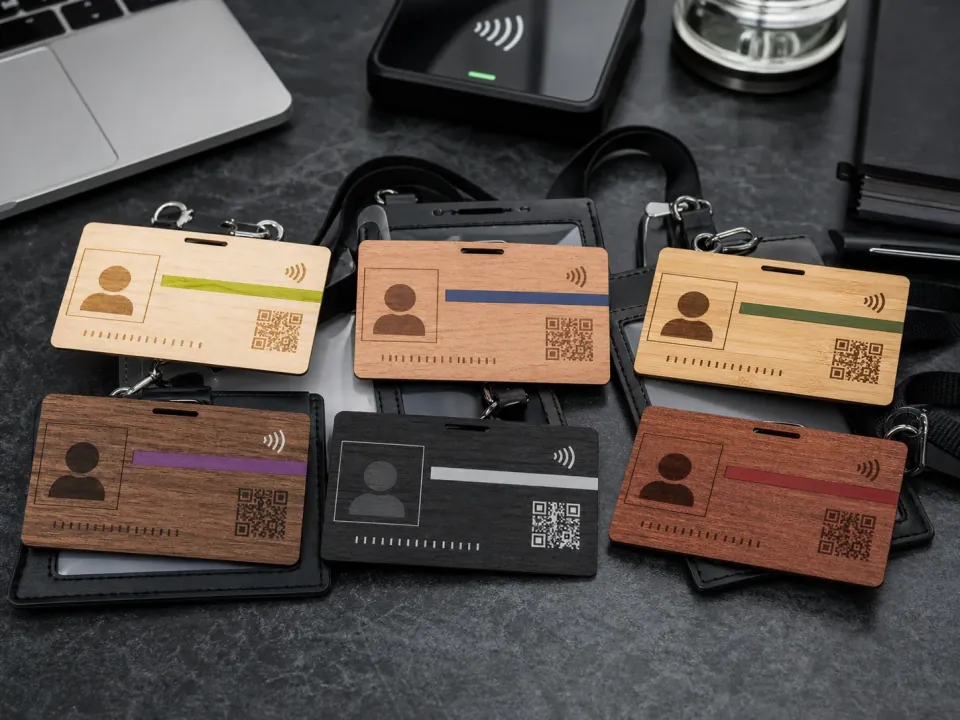
Review staff, campus, coworking, and venue ID credentials with photo fields, department marks, QR-style backup, contactless cues, lanyard slots, and reader context before final artwork and encoding.
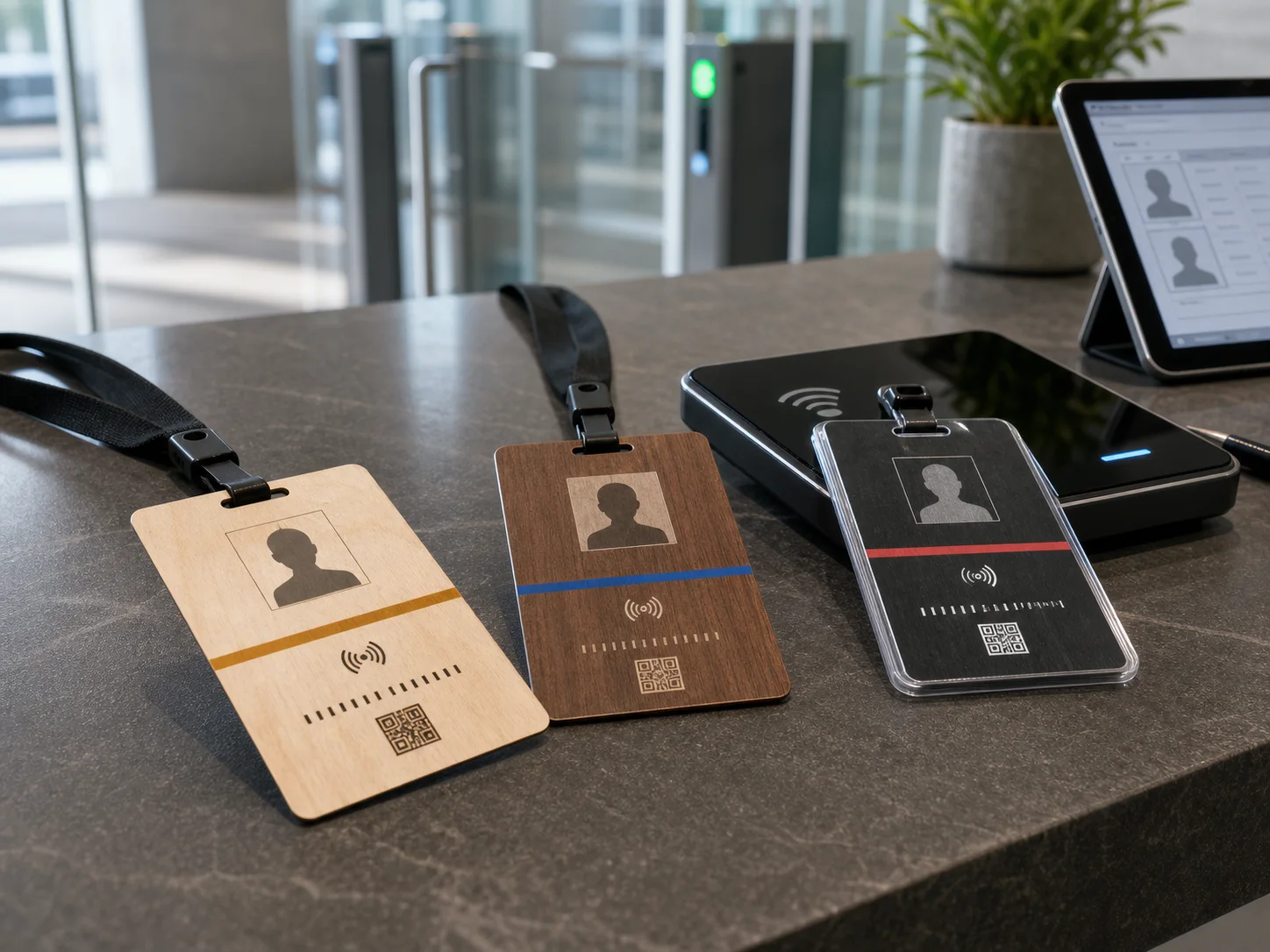
Match UID format, department color, visible serials, lanyard hardware, and reader behavior before issuing workplace credentials.
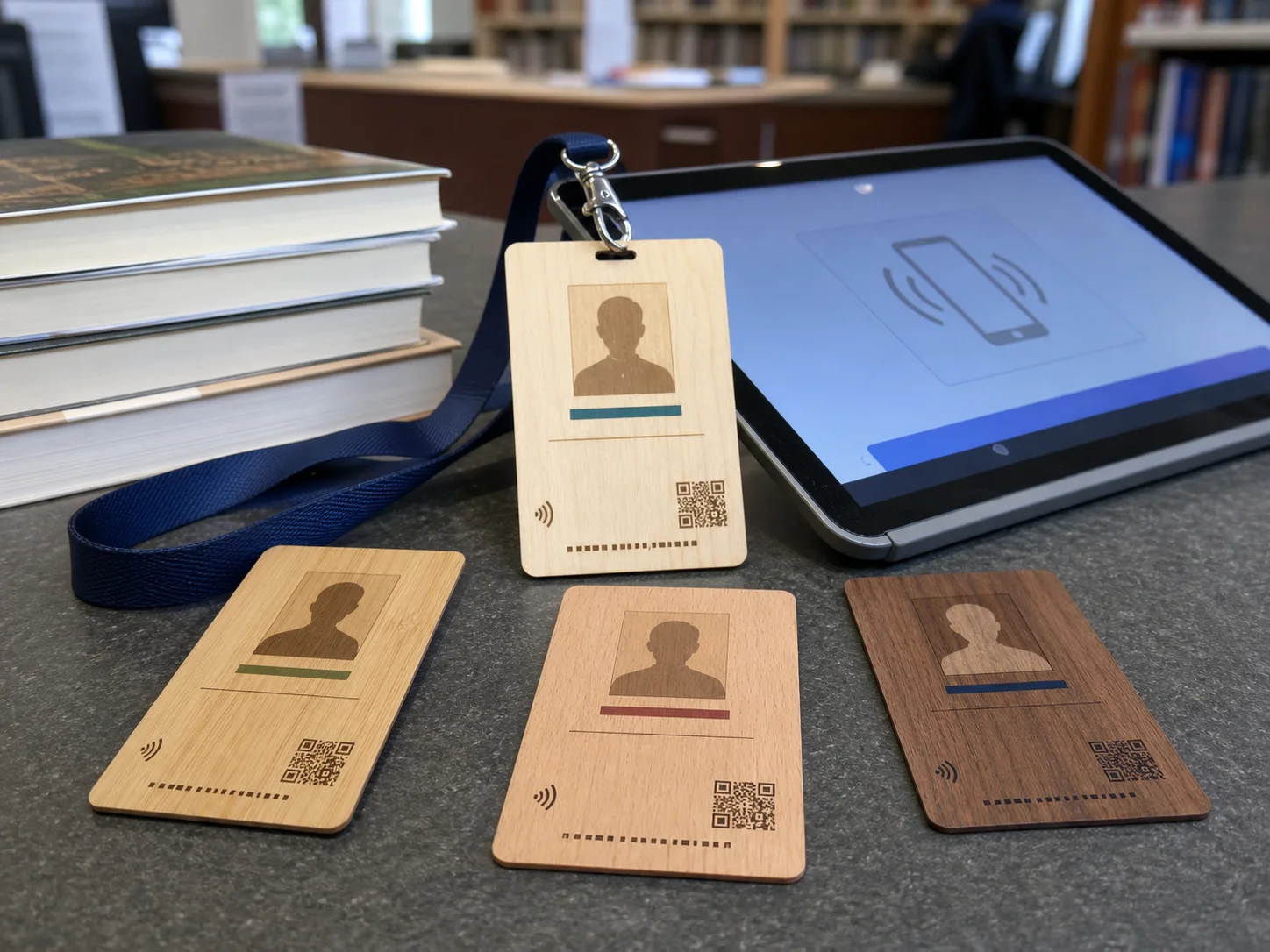
Campus cards need clear photo fields, class or department bands, QR backup, and reader approval for libraries, labs, dorms, and gates.
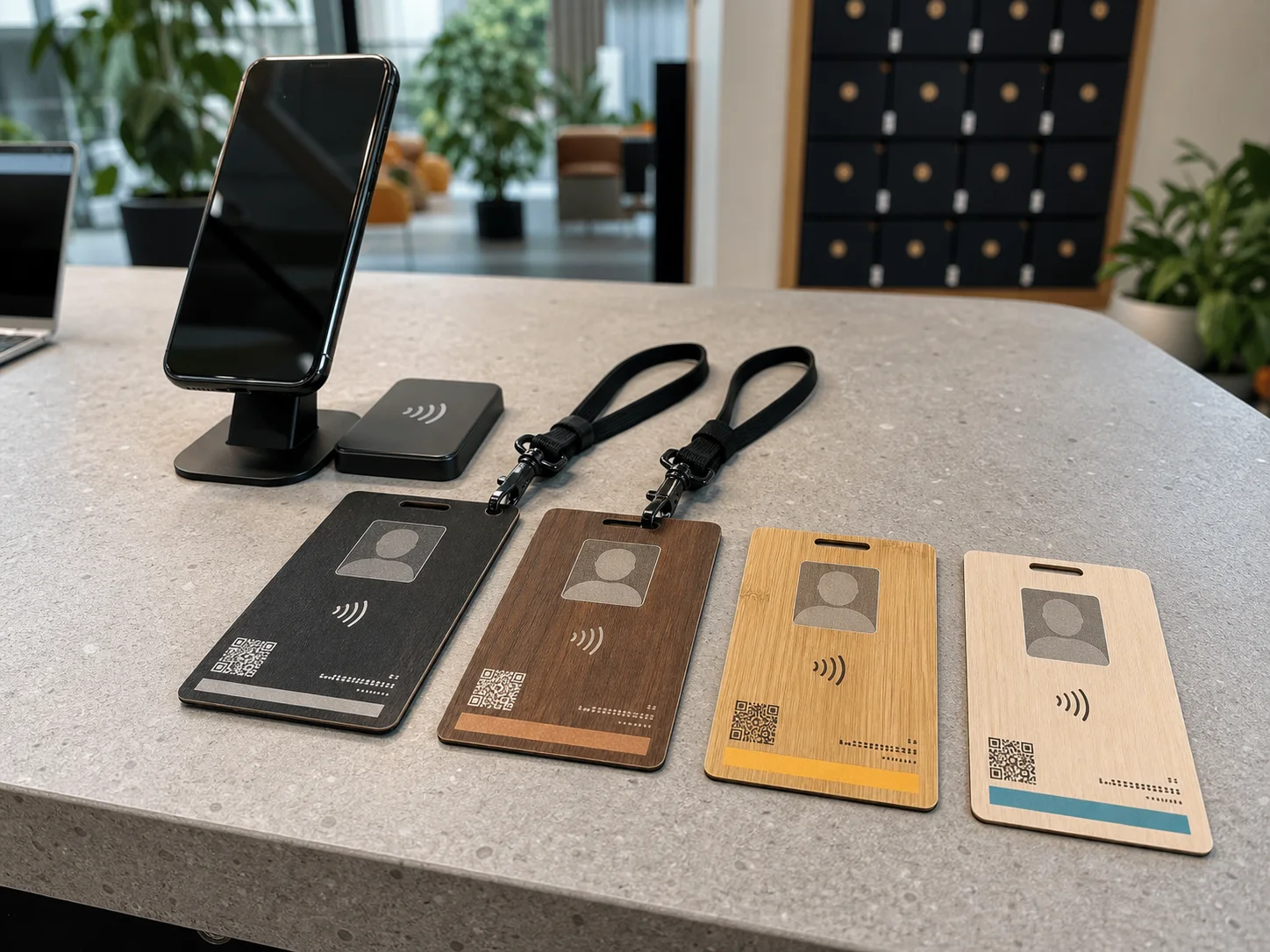
Member cards can support reception check-in, meeting-room access, lockers, and phone workflows when the chip and fallback data are planned together.
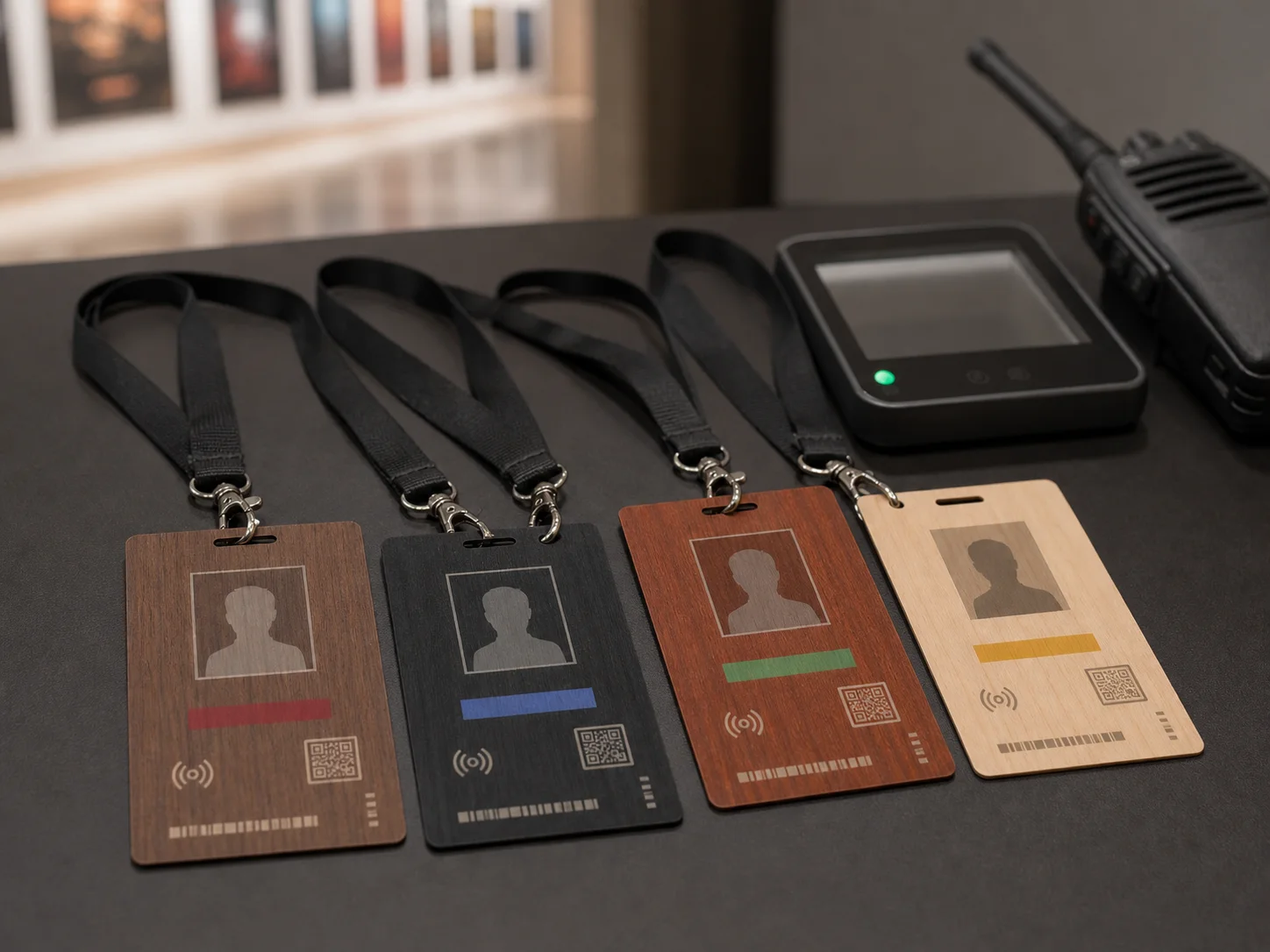
Dark and light wood staff passes should separate role color, photo block, QR backup, and access tier without making daily checks slow.
Staff and campus wood ID cards should define photo fields, department marks, visible serials, UID export, cardholder data fields, replacement rules, and reader requirements before artwork is locked.
Wood ID cards make sense for offices, campuses, coworking spaces, and venues when procurement, reuse, and reissue policies support a credential employees or members keep rather than discard.
Because wood body thickness affects antenna behavior, the chip, encoding, slot position, badge holder, and finished card are tested on the actual door reader, desktop reader, or turnstile before rollout.
The practical route is selected from the system, audience, and handling context before the final wood finish and mark treatment are approved.
Wood card production should confirm body construction, finish, chip route, data handling, marking layers, and approval samples in one brief.
Yes. LF, HF/NFC, standard, or high-security HF routes are chosen by the system, and the finished card is tested on the actual door reader, desktop reader, or turnstile before rollout.
Yes. Photo fields, department colors, visible serials, and role bands are designed into the layout and printed with the contrast the wood tone needs.
Lanyard slots, clip holders, sleeves, and badge reels — the slot position is planned around the antenna before the die line is approved.