Wood tone changes printed color.
Exact brand color usually needs a white underbase or pale wood. Printing directly over dark grain creates a more natural but less controlled color result.
UV printed wood RFID cards are the route when a card needs readable full color, logos, QR codes, or graphics that laser alone cannot produce. Light woods are the most forgiving base, while a white underbase lets brand color stay accurate over darker grain.
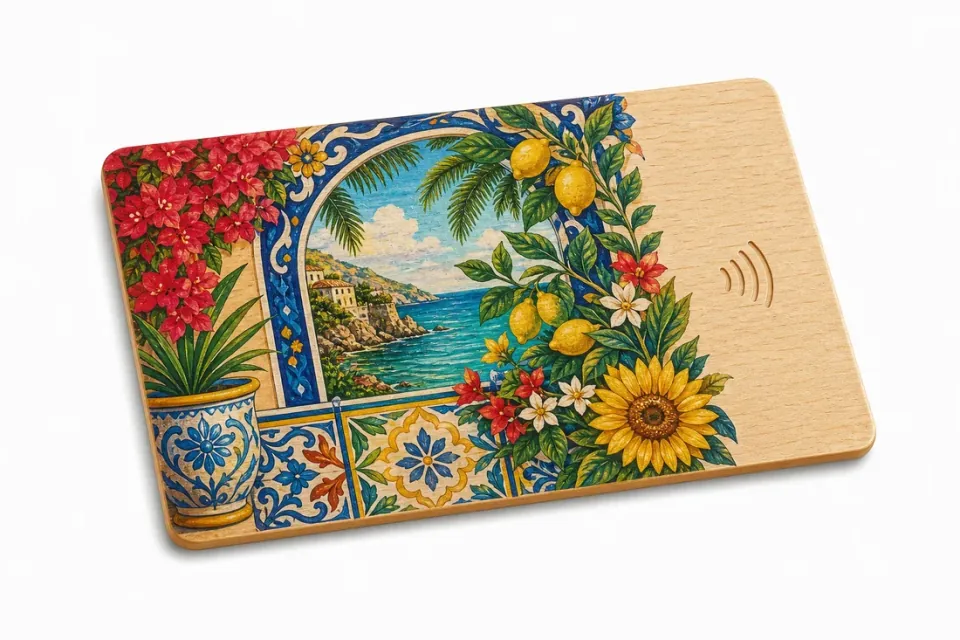
UV color changes with the base material. Light woods keep color clear and bright, while walnut and black wood create a richer printed look with visible grain.
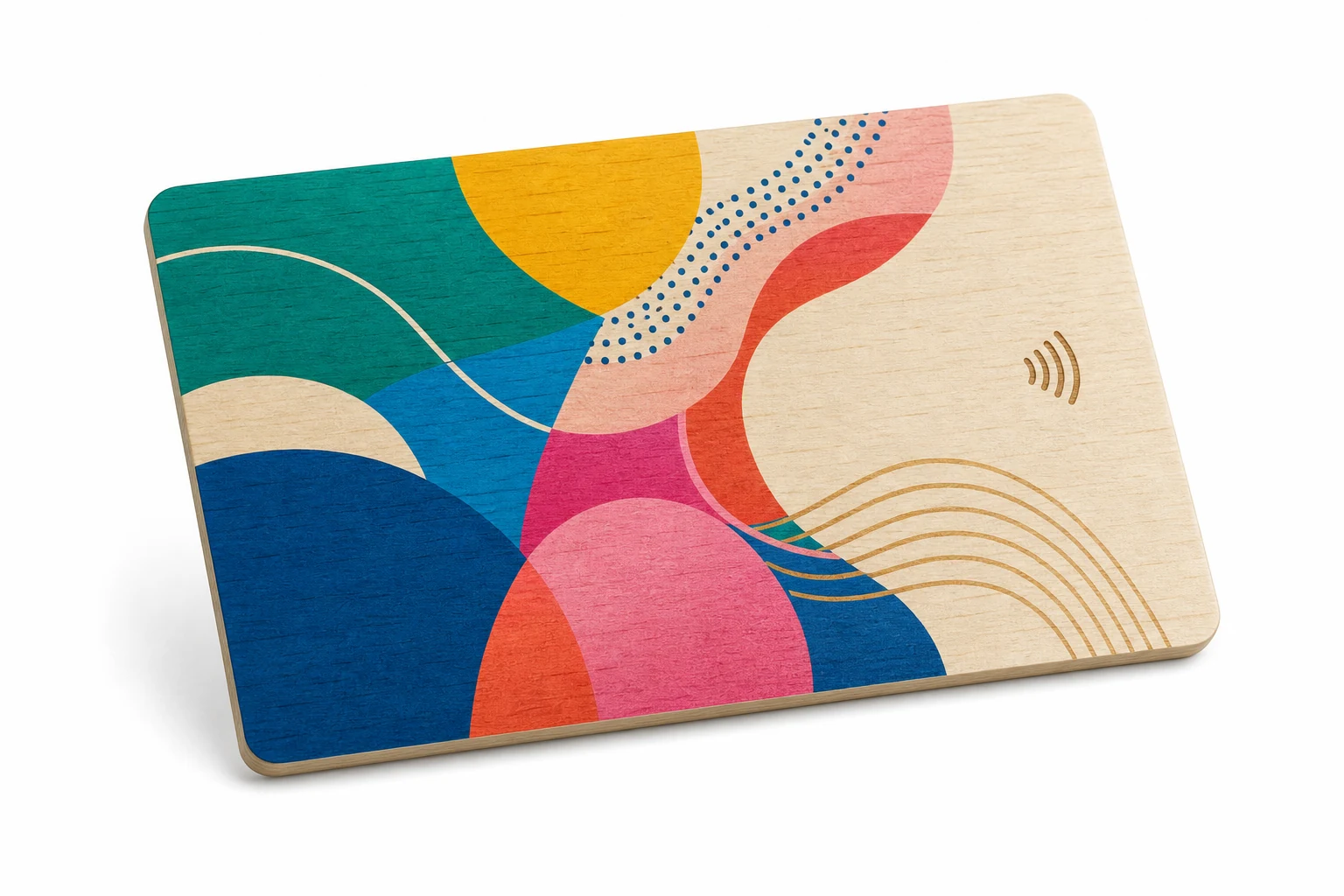
Light birch keeps saturated colors crisp for event, retail, and hospitality artwork.
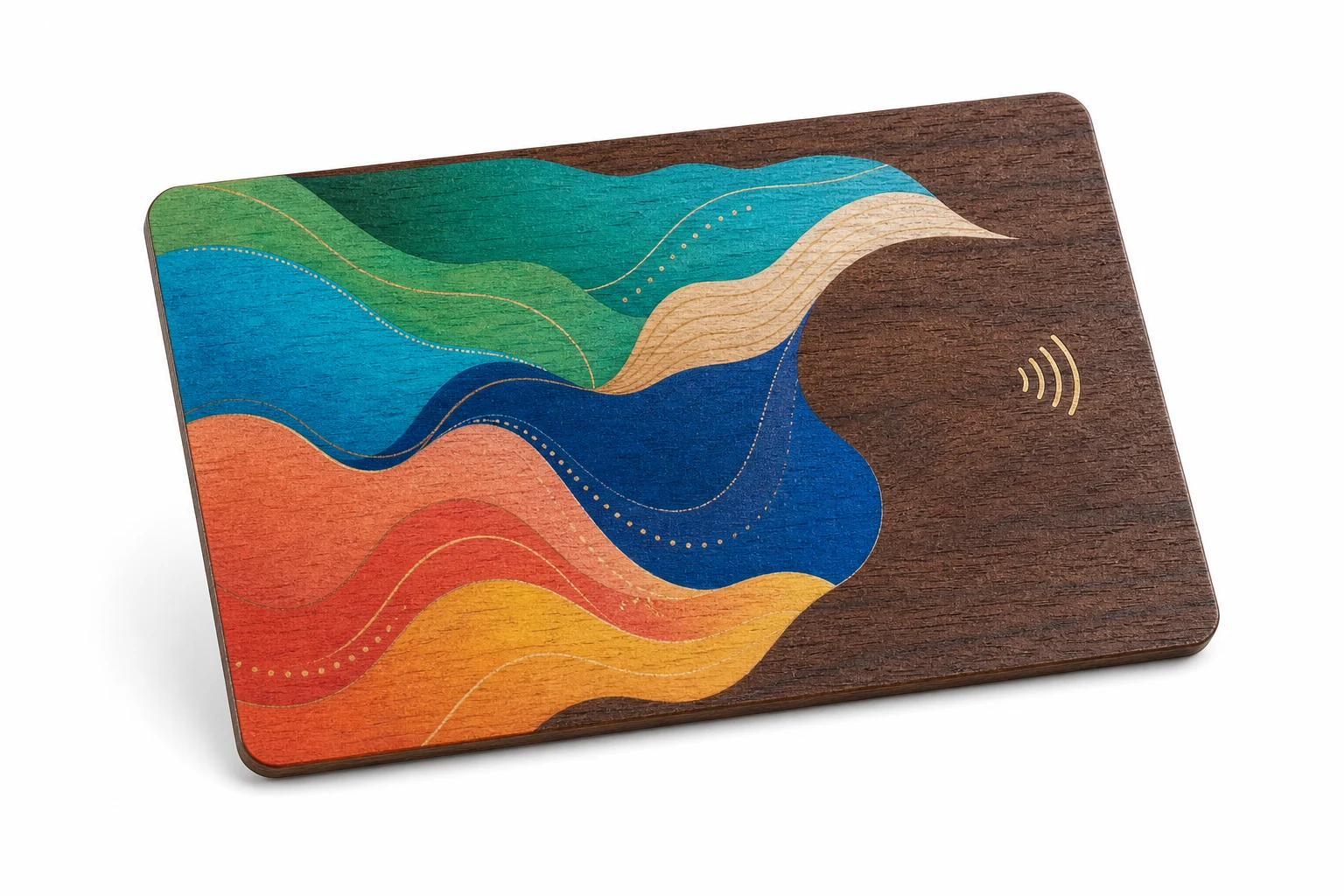
Vivid print over walnut keeps the grain visible while adding strong color movement.
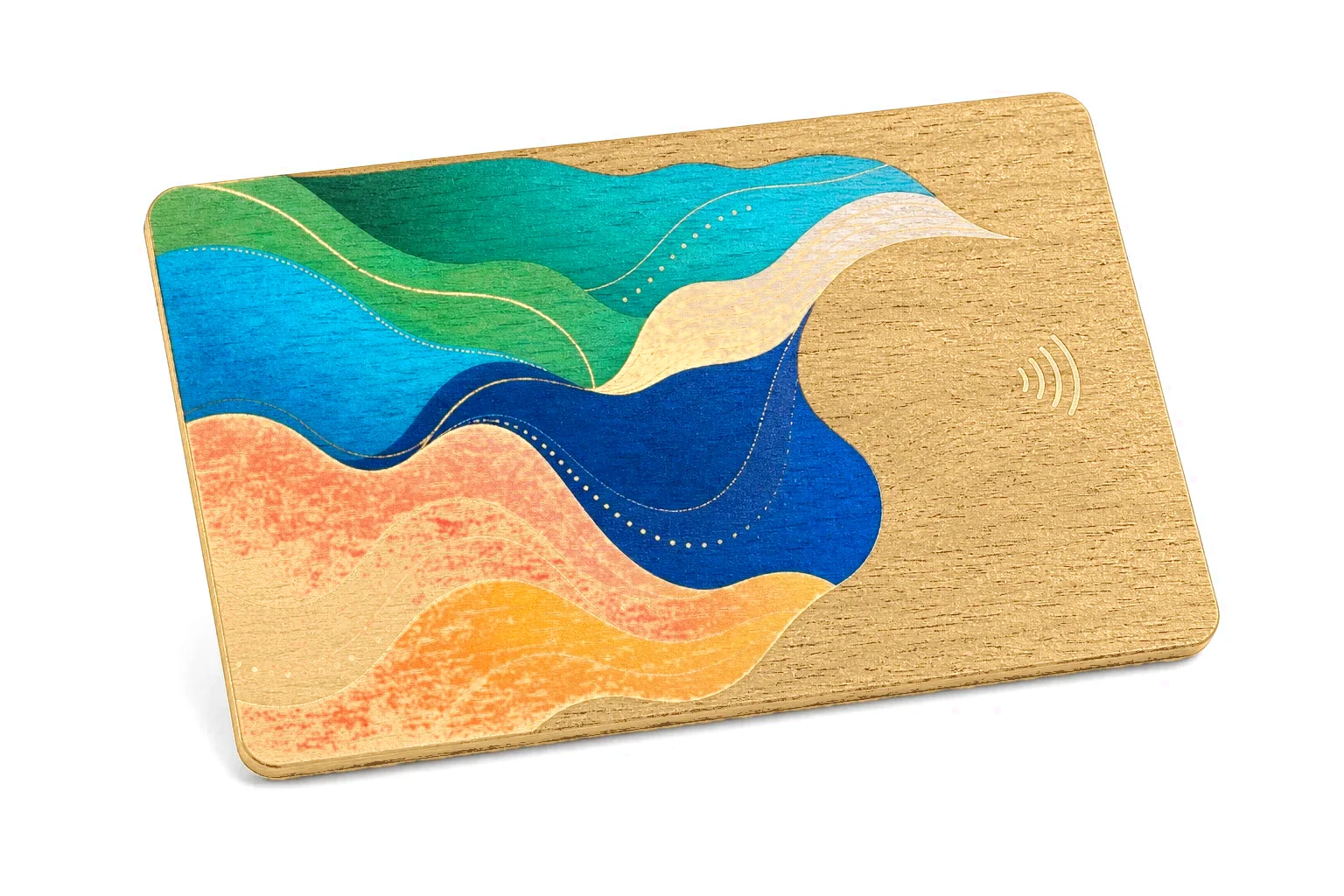
Bamboo gives colorful artwork a lighter eco-card direction.
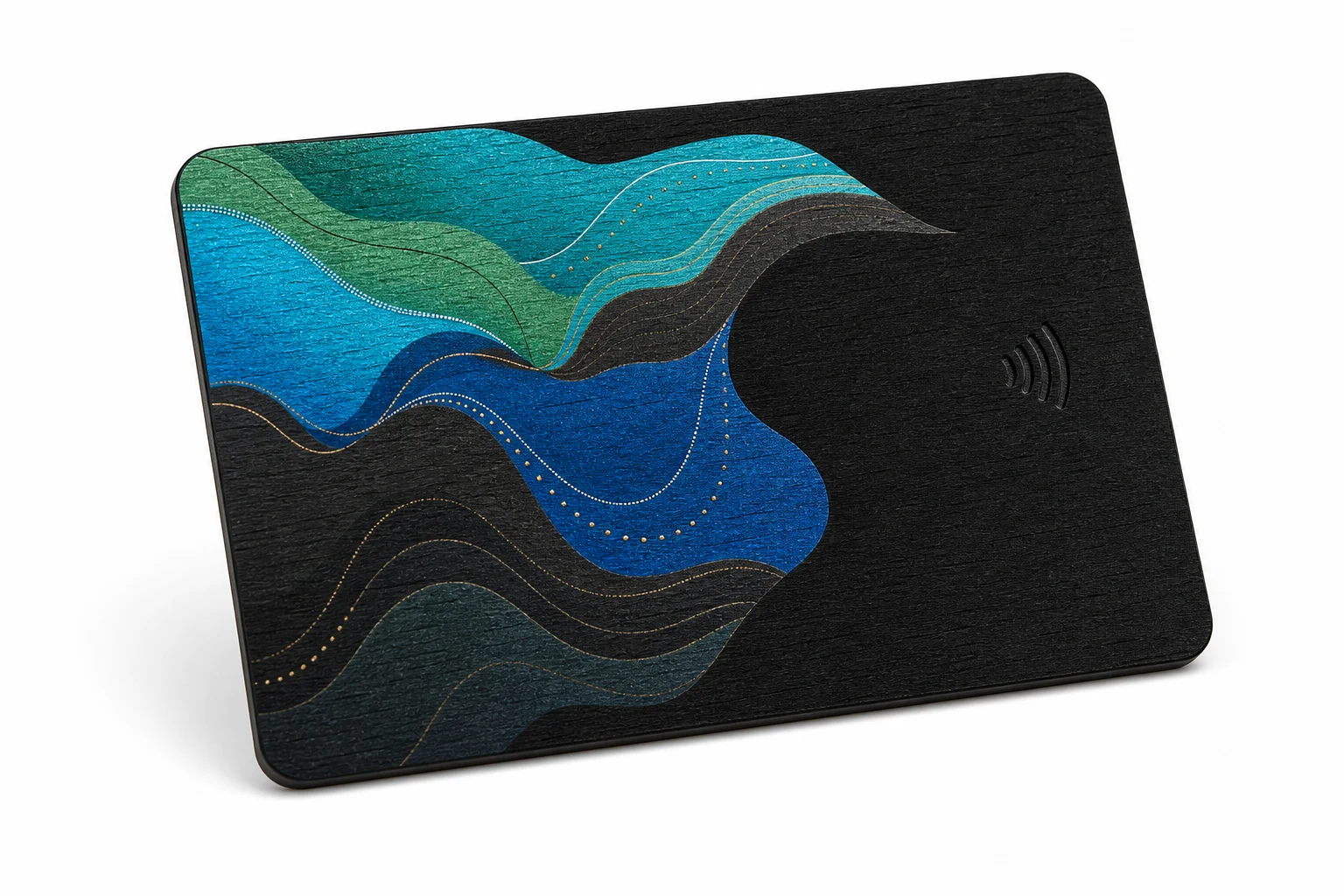
Dark wood makes color feel more dramatic and premium.
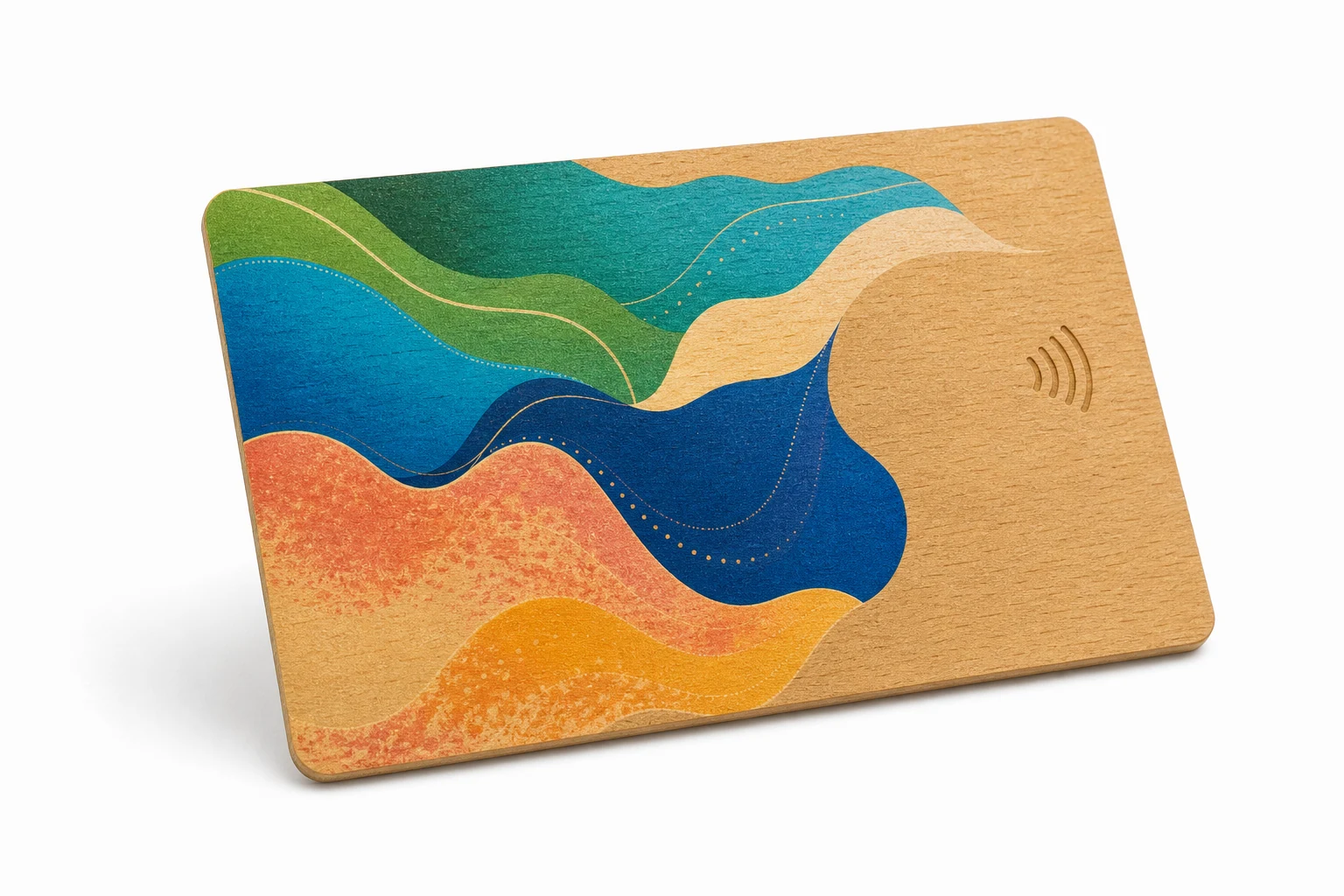
Beech offers a smooth pale base for readable brand color and graphic detail.
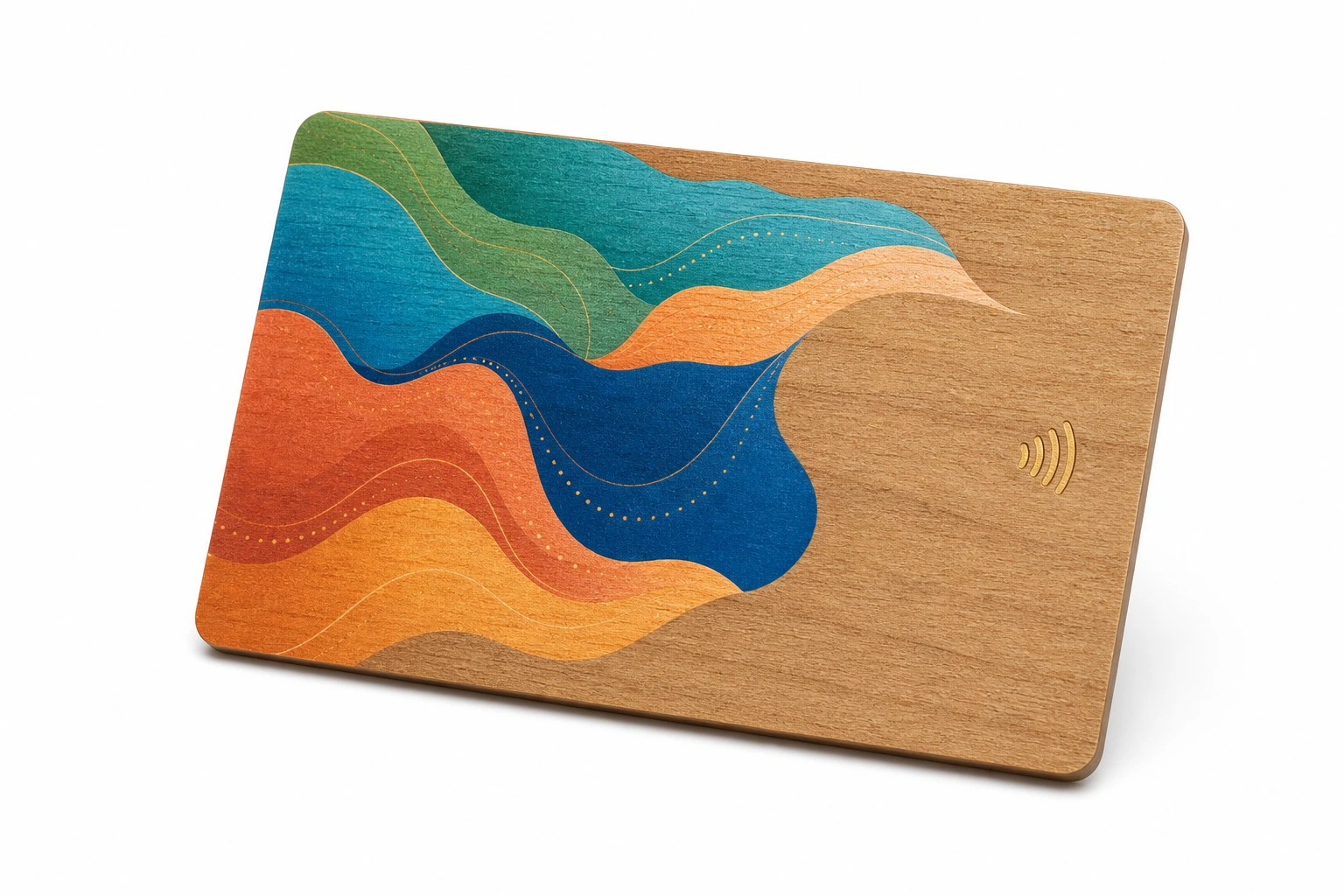
Warm cherry gives full-color artwork a softer red-brown undertone.
Exact brand color usually needs a white underbase or pale wood. Printing directly over dark grain creates a more natural but less controlled color result.
Dense ink, clear coat, QR zones, chip area, and antenna routing should be reviewed together so the card remains readable visually and electronically.
Printing directly on wood lets the grain tint the artwork; a white-ink underbase blocks that tint so brand CMYK, gradients, and photos print close to proof. Whether to run a full underbase, a partial one, or none is a deliberate choice made per design on the chosen wood.
A protective clear coat over UV ink helps color, QR codes, and small text survive wallet friction and repeated taps. For event, retail, and loyalty runs where cards are handled hard, the coat and the QR contrast are confirmed on a real sample before the batch.
The practical route is selected from the system, audience, and handling context before the final wood finish and mark treatment are approved.
Wood card production should confirm body construction, finish, chip route, data handling, marking layers, and approval samples in one brief.
Yes. UV printing puts CMYK color, gradients, and QR codes on wood. A white-ink underbase keeps brand color accurate; printing direct lets the grain tint the artwork.
With a protective clear coat, color and small text survive wallet friction and repeated taps. Durability is confirmed on a real sample for hard-use programs.
Birch, beech, and bamboo are the most forgiving bases. Darker woods create richer, less color-exact results unless a white underbase is used.