Raised gloss
Spot UV Wood Cards
Spot UV wood cards use raised gloss as a subtle tactile detail. A clear, raised layer can catch the light on a logo, pattern, member mark, or premium tier without covering the natural grain.
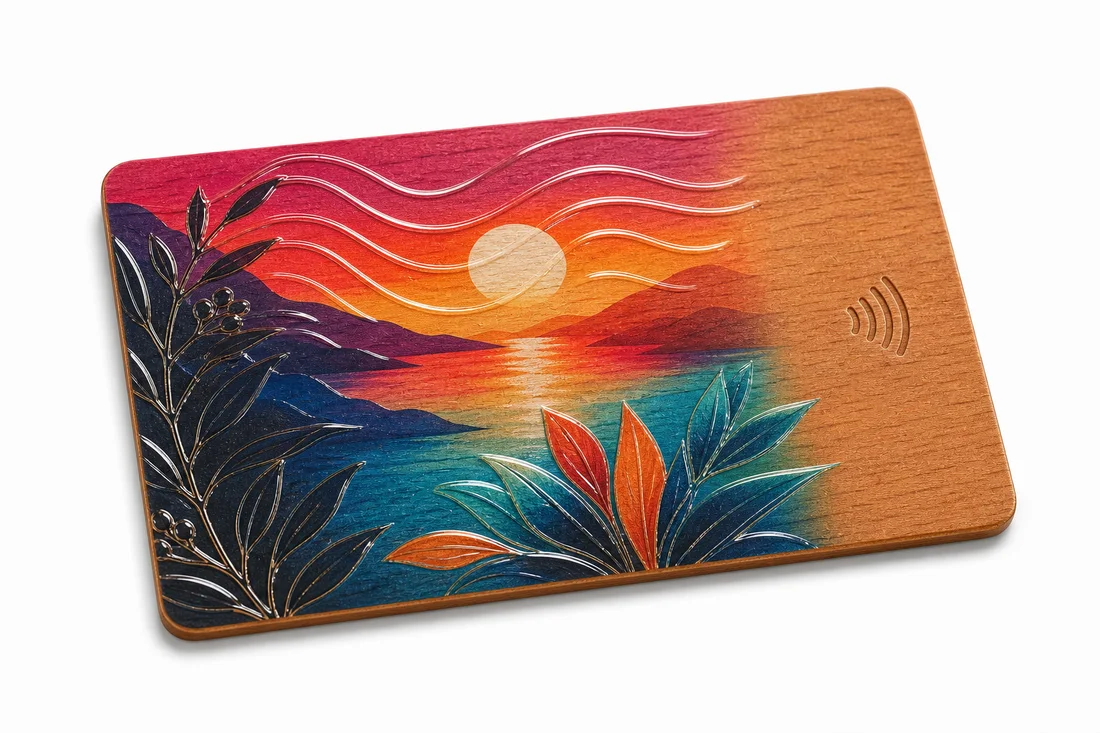
Raised gloss gallery
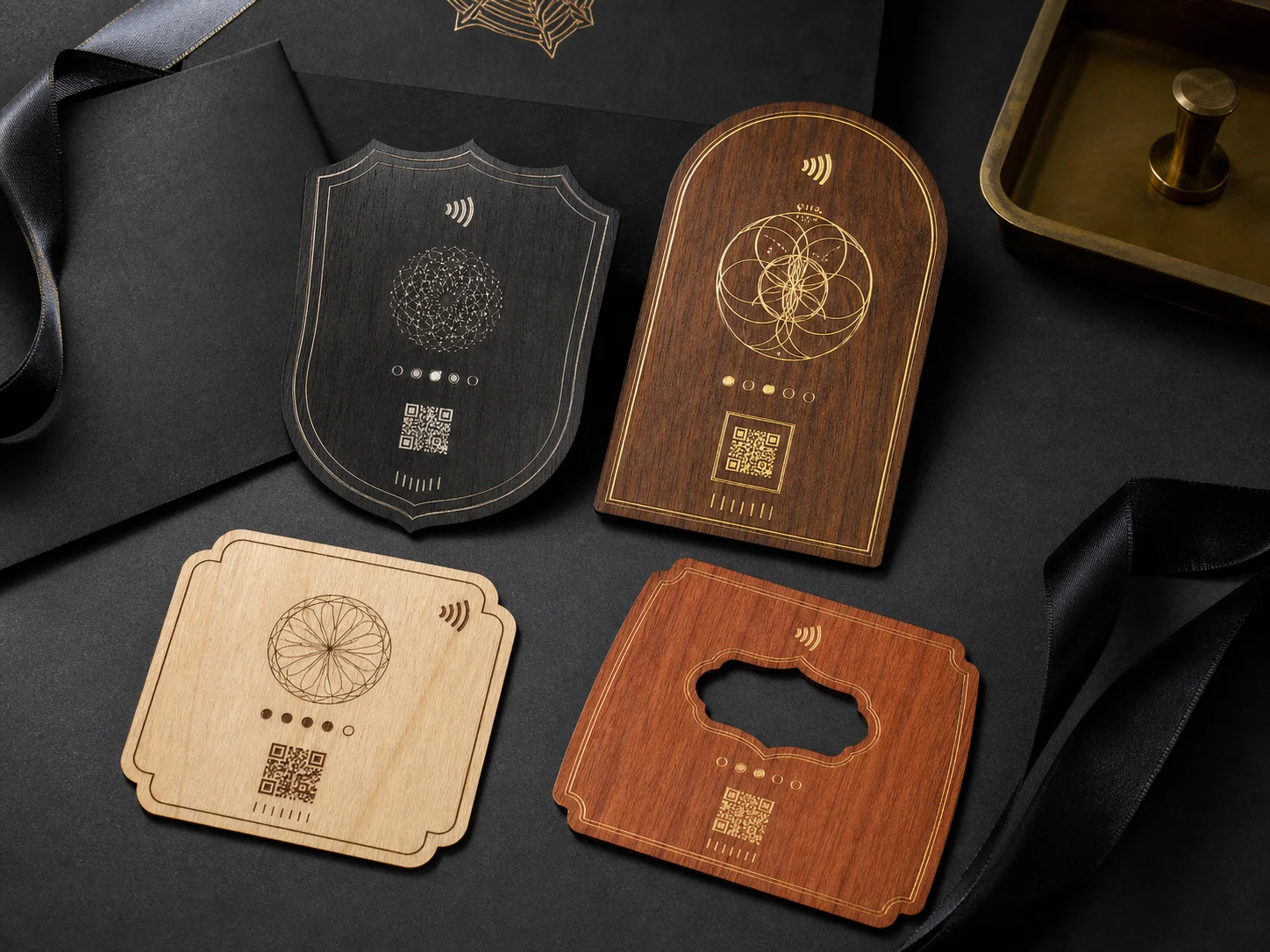
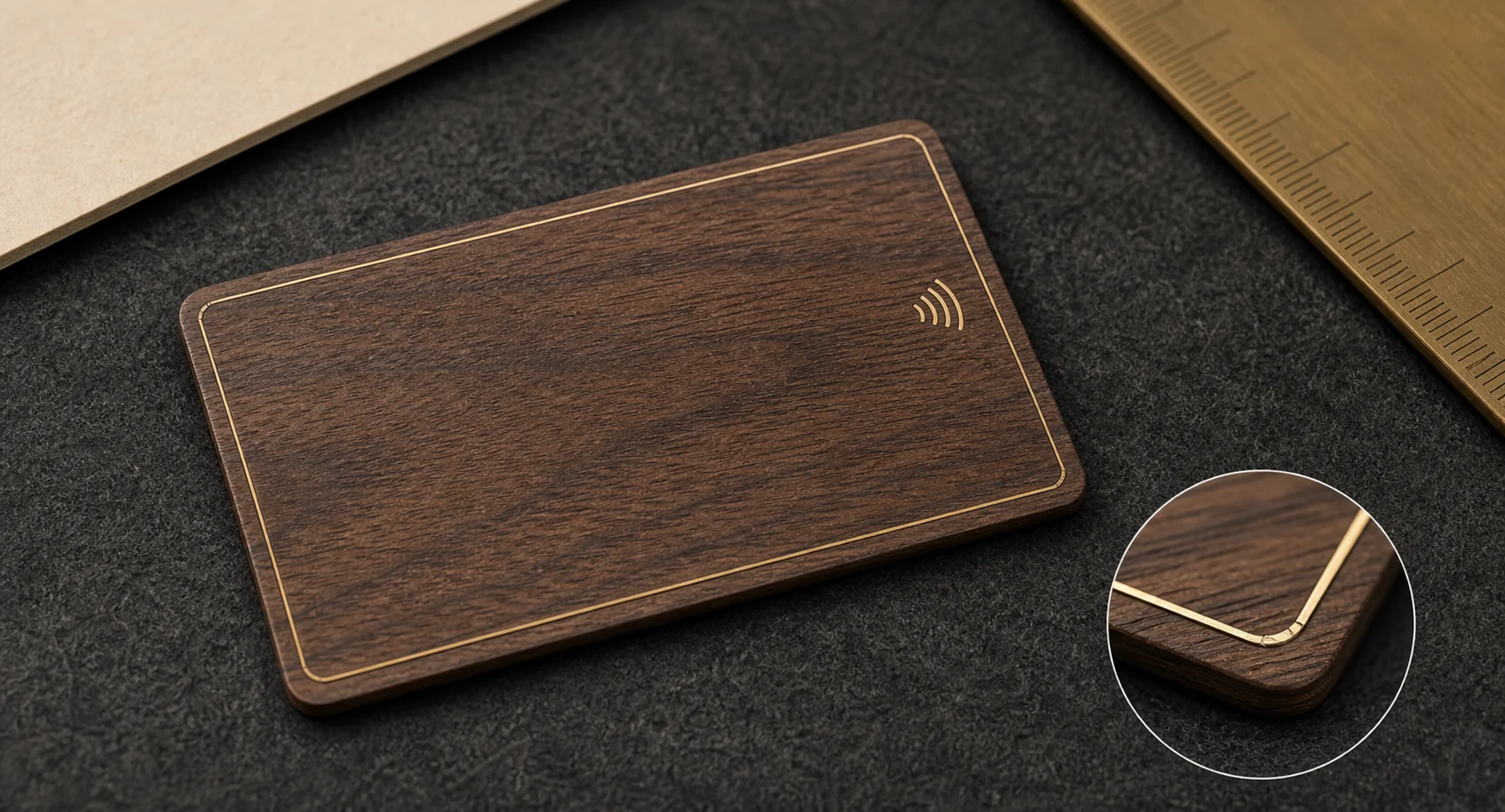
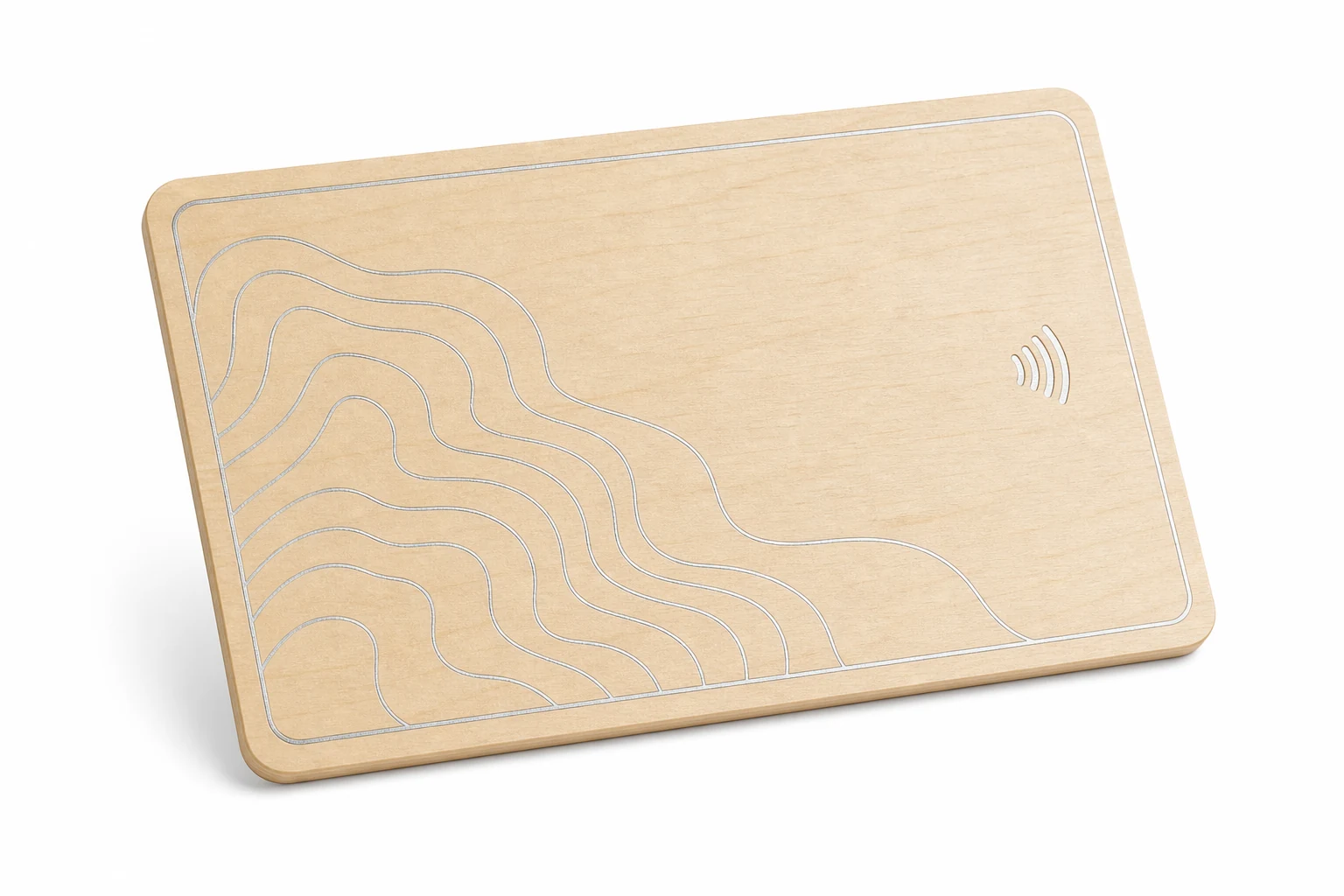
Compare gloss, tactile linework, and premium finish references.
Raised gloss is judged by light angle and hand feel. These references show subtle clear patterns, premium cherry surfaces, and the adjacent print effects that usually share the same proof.
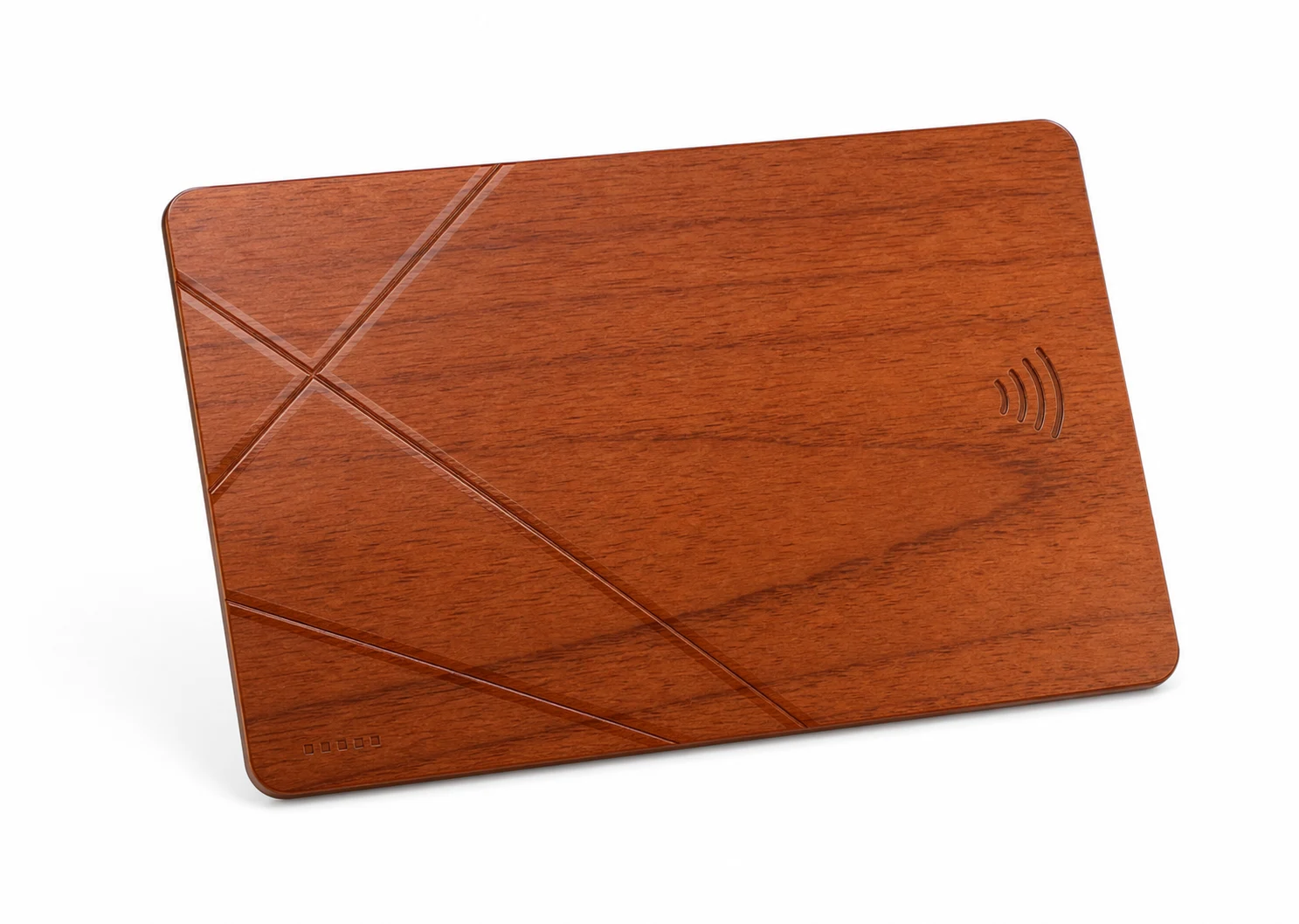
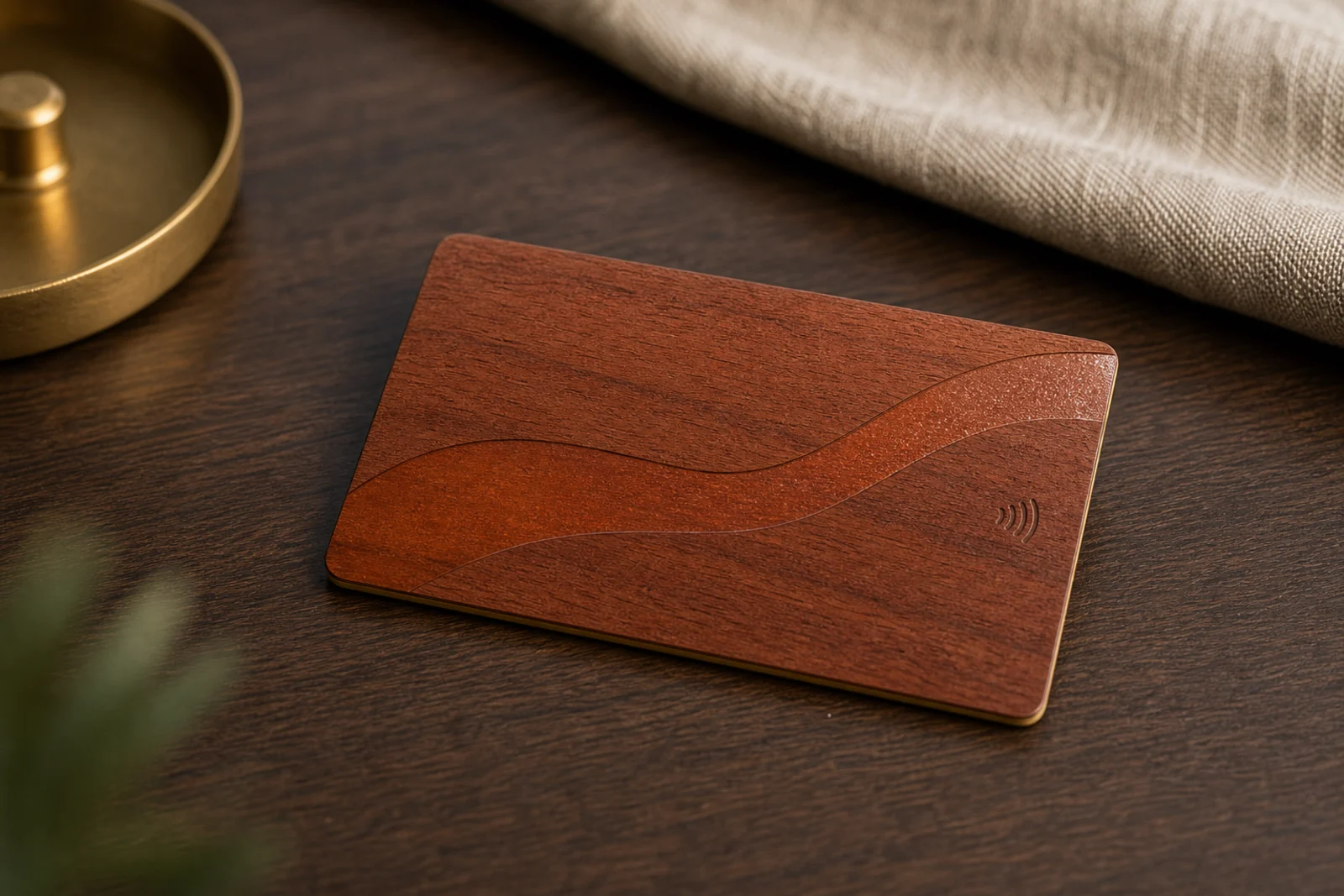
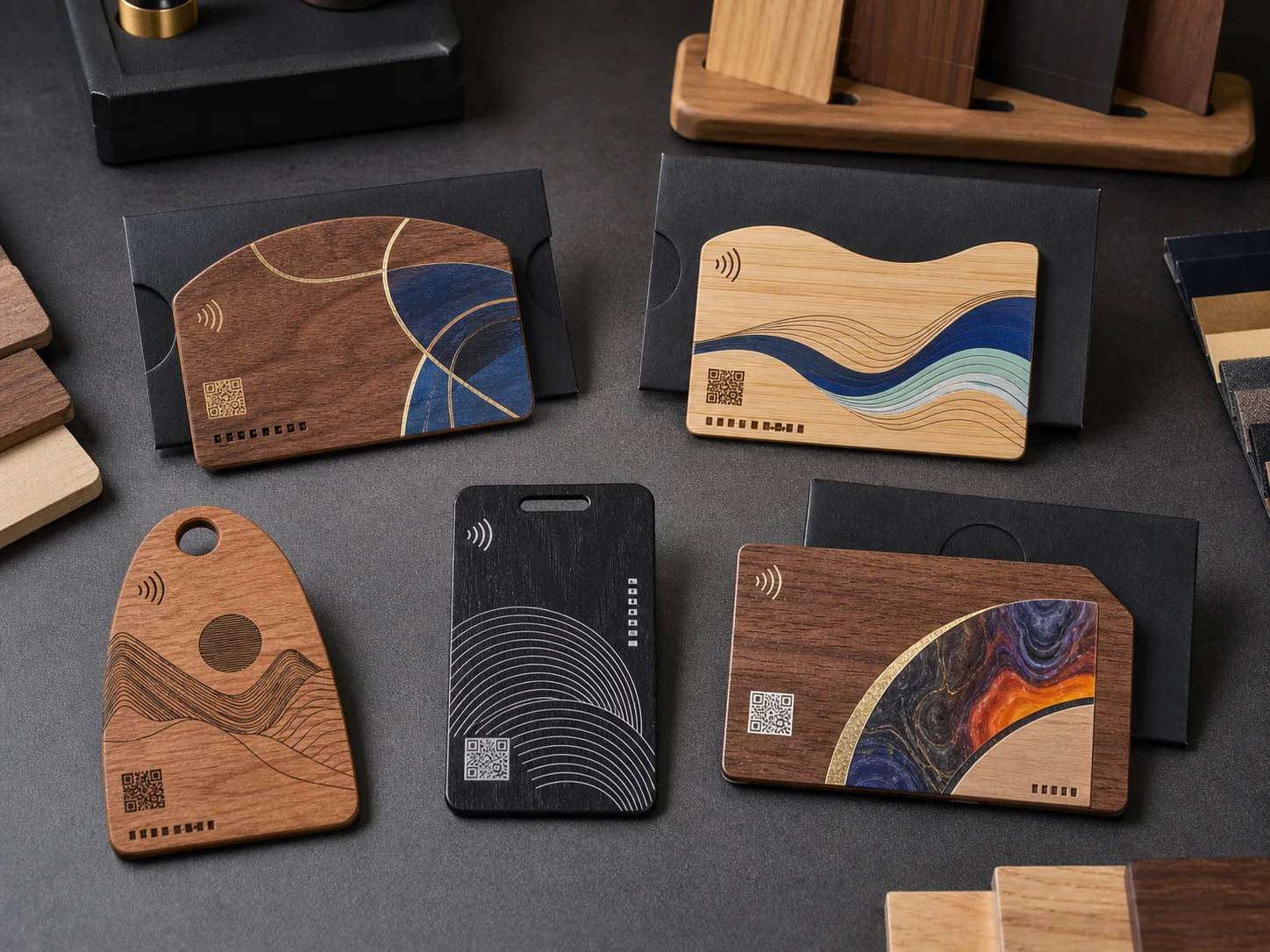
Gloss depends on lighting.
Spot UV may look quiet in flat light and strong under angled light. Sample approval should include the real lighting context where the card will be presented.
Raised details should not interfere with handling.
Keep raised gloss away from zones that need heavy scanning, writing, or repeated wallet friction unless the sample has been tested for that use.
Tone-on-tone gloss is the most premium use.
The strongest spot-UV effect on wood is often invisible until the light hits it — a clear logo or pattern in the same tone as the grain that appears only at an angle. This restraint reads as quiet luxury and keeps the natural material the hero of the card.
Spot UV usually shares a proof with other effects.
Because gloss is judged alongside UV color, white ink, foil, and laser, it is normally approved on the same production proof rather than in isolation. Reviewing the effects together avoids one finish overpowering another on the final wood.
Best uses
- Subtle premium marks
- Membership and gift cards
- Tone-on-tone logos
- Luxury hospitality programs
Frequently asked questions
What does spot UV look like on wood?
A clear raised layer that catches light on a logo, pattern, or tier mark. The most premium use is tone-on-tone: invisible until the light hits it.
Where should raised gloss not go?
Away from zones with heavy scanning, writing, or wallet friction, unless the sample has been tested for that use.
How is spot UV approved?
Under real presentation lighting, usually on the same production proof as UV color, white ink, foil, and laser — so no effect overpowers another.
Specification
| Card size | CR80 and custom dimensions by drawing |
|---|---|
| Card body | Plastic-free, FSC-certified wood body options |
| Thickness | 0.80 mm to 2.0 mm by wood species and chip |
| Minimum order | None — single samples to production runs |
| Production time | About one week after artwork and sample approval |
| RF planning | Chip, antenna, thickness, and finish approved together |
| Approval route | Material sample, working RF sample, production proof |
| Best surfaces | Cherry, walnut, black wood, birch with clear contrast |
| Use cases | Logo, pattern, tier mark, linework, invitation detail |
| Approval need | Gloss height, visibility, and durability sample |
Related wood RFID card pages
- Laser Engraved Wood RFID Cards
- UV Printed Wood RFID Cards
- White Ink Wood Cards
- Foil Wood RFID Cards
- QR and Serial Wood RFID Cards
- Wood Card Edge Finishing
- Wood RFID Card Artwork Specs