Wooden Card RFID Technology Types
Wooden RFID Card Encoding
Wooden RFID card encoding is where a finished wood card becomes a working credential. UID exports, NDEF URLs, access data, QR codes, serial numbers, and packaging labels should all be generated from one approved production file, so every card ships with data that matches its print, its box, and the system that will read it.
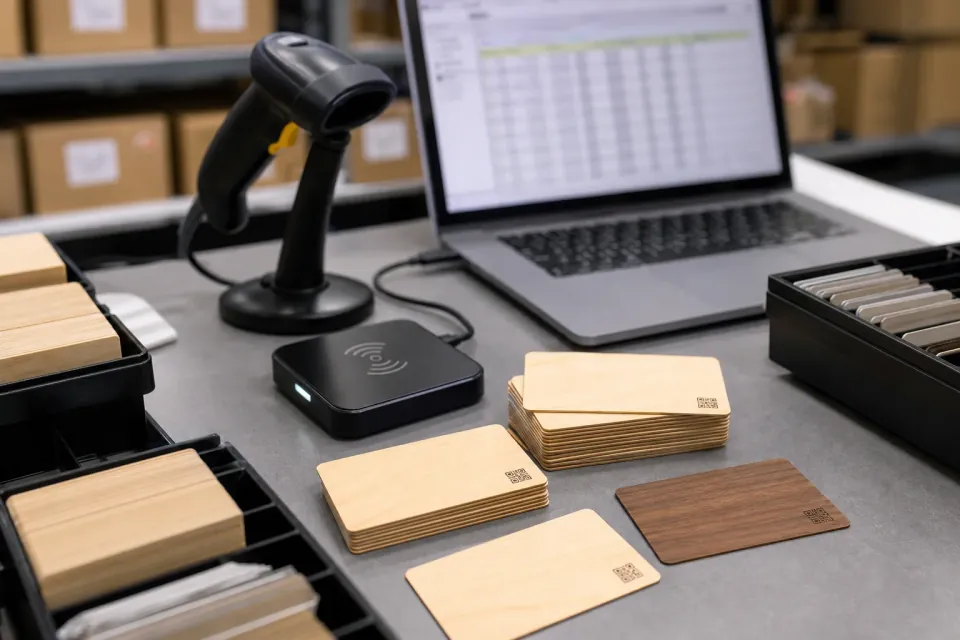
(01) — Route brief
Match the chip, data, and approval path before choosing the finish.
This is the production brief for Encoding: what it is for, how it behaves, what needs encoding, and what must pass before the batch starts.
(02) — Visual references
Compare the details that change the finished card.
Use this board to read the essentials at a glance: wood finish, marking contrast, edge quality, reader fit, and presentation style.
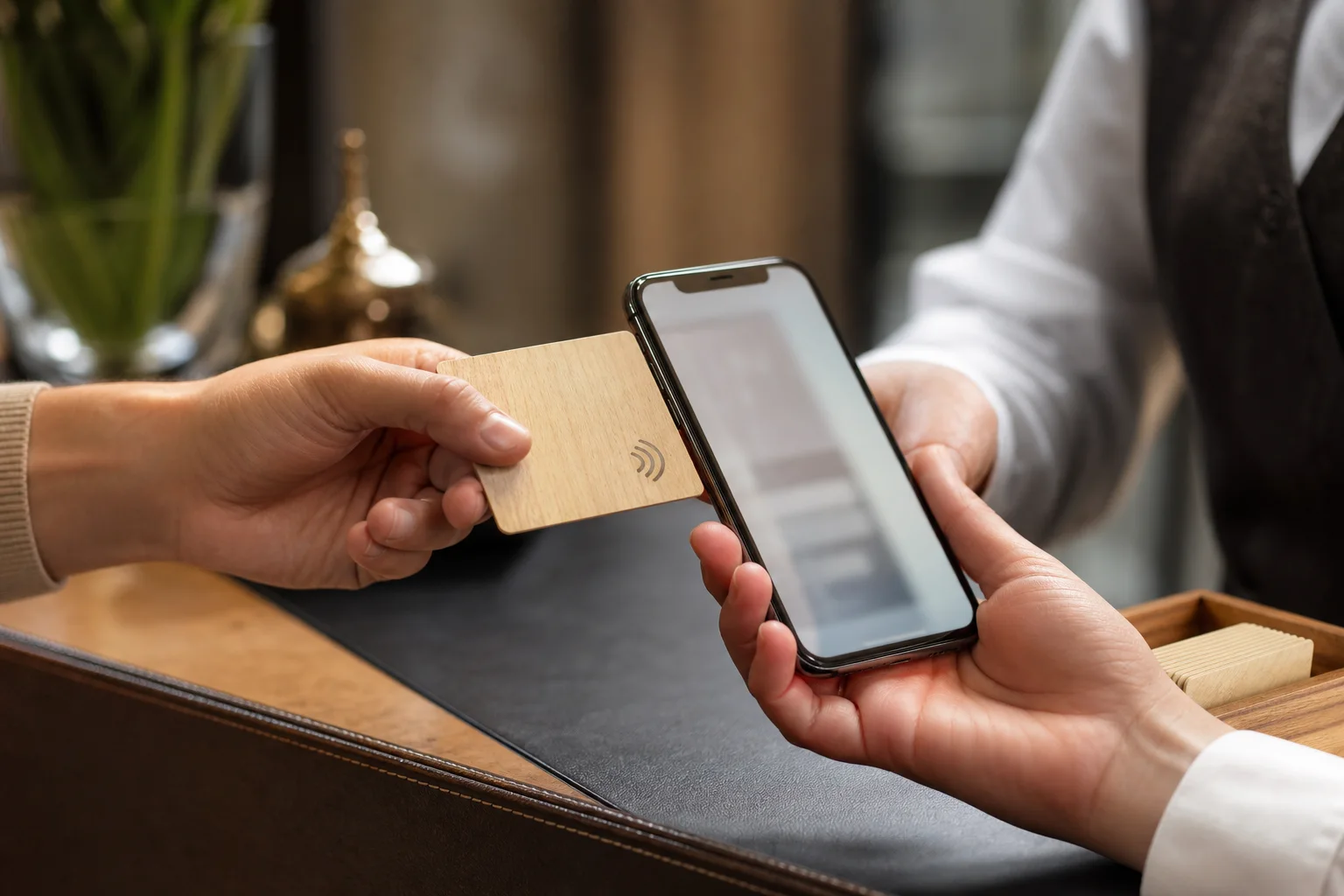
NDEF behavior, redirect, mobile destination, QR fallback, and lock state are checked before batch encoding.
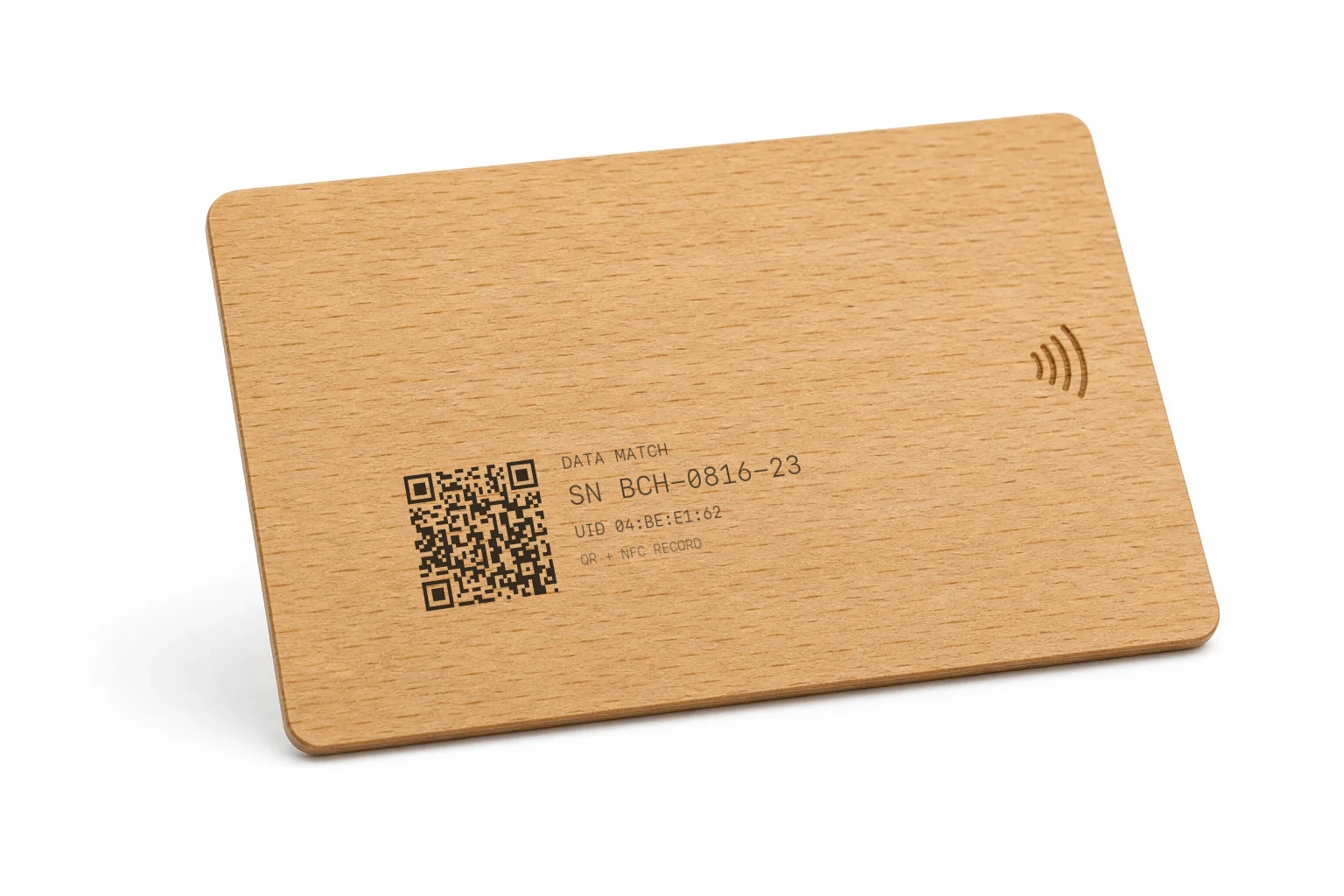
UID, QR, serial, member or room data, box label, and CSV output reconcile against one approved source file.
One production file should control data and artwork.
Card number, QR payload, NFC payload, UID, member name, box label, and packaging reference should be reconciled before production so no card leaves with mismatched data.
Define locked versus editable NFC records.
Some NFC projects need records locked after encoding; others need editable sample cards. This decision affects approval, testing, and reissue workflow.
Match the card, the QR, and the box.
On serialized programs the printed serial, the QR payload, the encoded NFC or UID, and the box or sleeve label must all agree. Reconciling them in one file before production stops mismatched cards from reaching members, guests, or access systems.
Plan QA scanning into the run.
Encoding quality is proven by scanning — a sample scan for approval, then batch scanning during production — against a data file that maps each card to its record. Output files such as CSV UID lists, serial lists, and box mapping can be delivered so the card data reconciles cleanly in your CRM or access platform.
(07) — Applications
Best uses for Encoding.
The practical route is selected from the system, audience, and handling context before the final wood finish and mark treatment are approved.
Best for
- NFC URL and profile encoding
- Access card UID exports
- QR and serial matched production
- Box and sleeve label reconciliation
Quote details
- Target reader, lock, phone, scanner, or platform
- Wood species, finish, quantity, and packaging need
- Artwork files, data file, and encoding requirements
- Sample approval and delivery deadline
(08) — Specification
Production details to confirm before sample or batch.
Wood card production should confirm body construction, finish, chip route, data handling, marking layers, and approval samples in one brief.
(FAQ) — Common questions
Questions buyers ask about Encoding.
01What encoding services are available?
UID exports, NDEF URLs and vCards, access data, QR matching, serial numbers, and box labels — all generated from one approved production file.
02How is encoding quality verified?
By scanning: a sample scan for approval, then batch scanning during production, reconciled against a data file that maps each card to its record.
03What data files do you deliver after production?
CSV UID lists, serial lists, and box mapping as quoted — so the cards reconcile cleanly in your CRM, membership, or access platform.
(11) — Quote Encoding
Send quantity, chip, material, print and encoding requirements.
No PVC card coreNo PET laminateReal veneer or solid wood bodyEmbedded RFID/NFC electronicsUID, NDEF, and access encodingLaser, UV print, QR, and serialization