Production files
Wood RFID Card Artwork Specs
Wood RFID card artwork specs need to define far more than the logo. A print-ready production file has to control material, print layers, laser layers, foil, QR, serial data, the chip area, antenna-safe zones, and packaging references, so the card can be quoted, proofed, and produced without surprises.
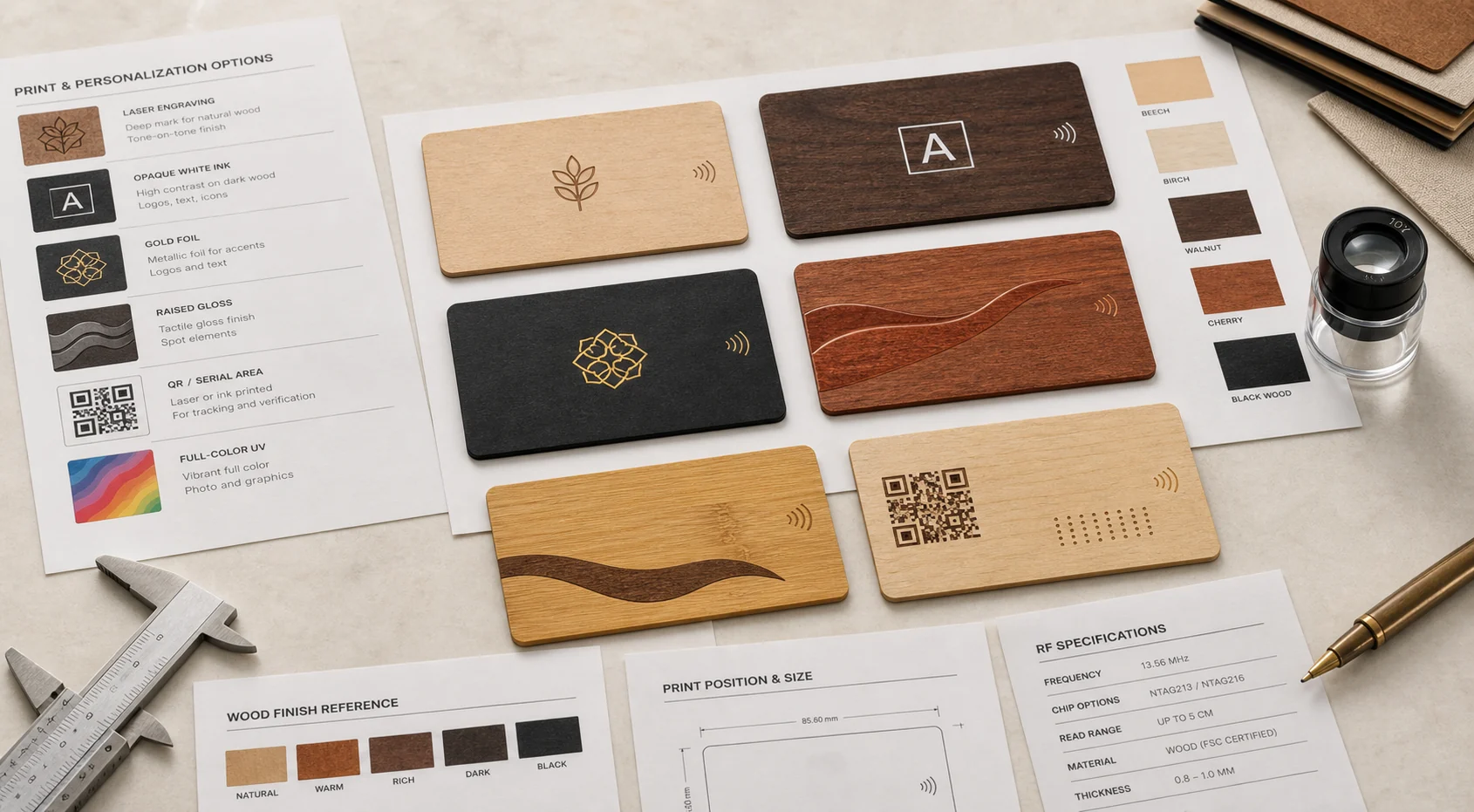
Artwork proof gallery
Compare dielines, print layers, variable data, finish boards, and sample kits.
Artwork specs should show how design, data, finish, RF constraints, and packaging fit together. These references make the production handoff more concrete.
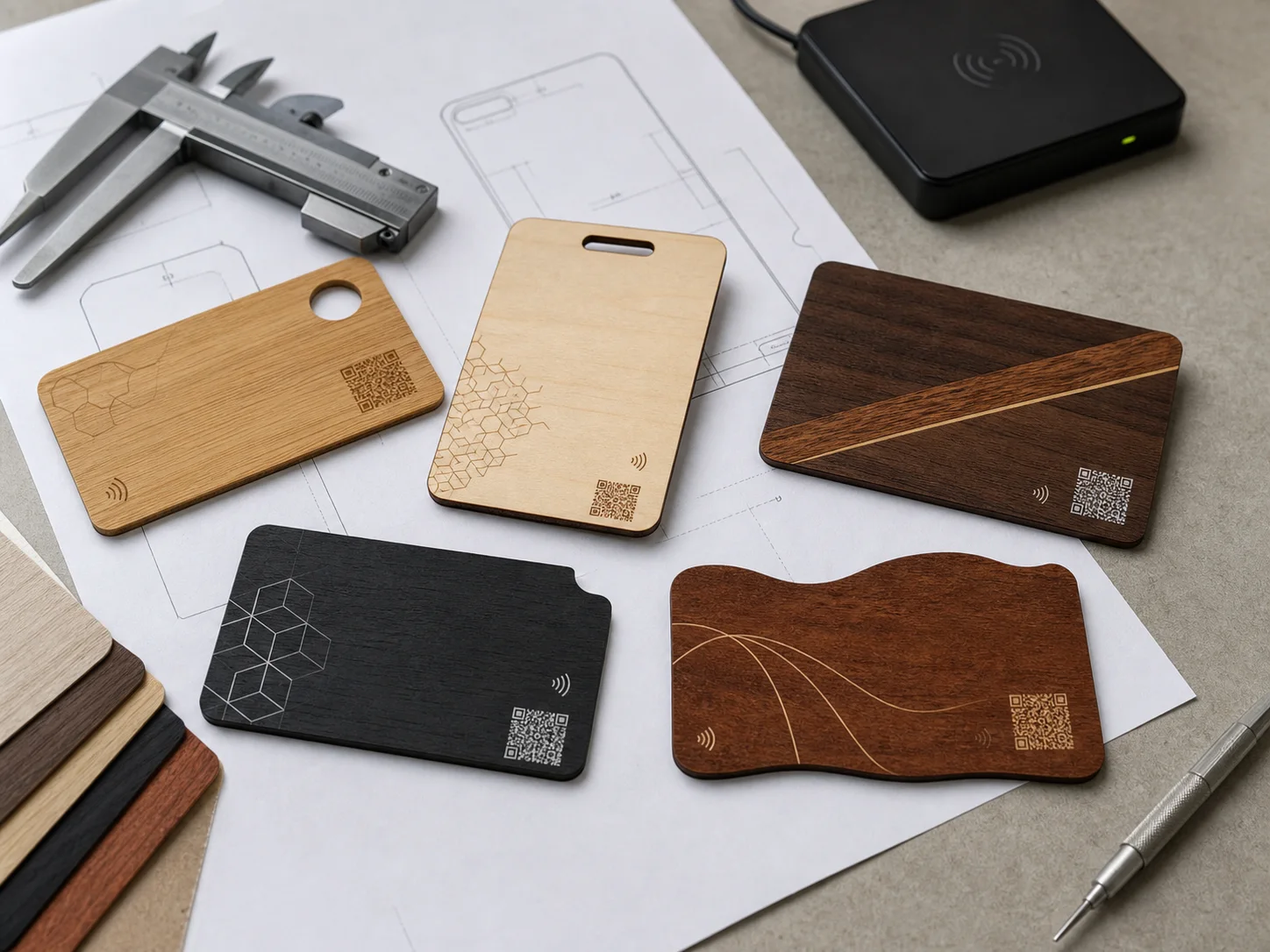
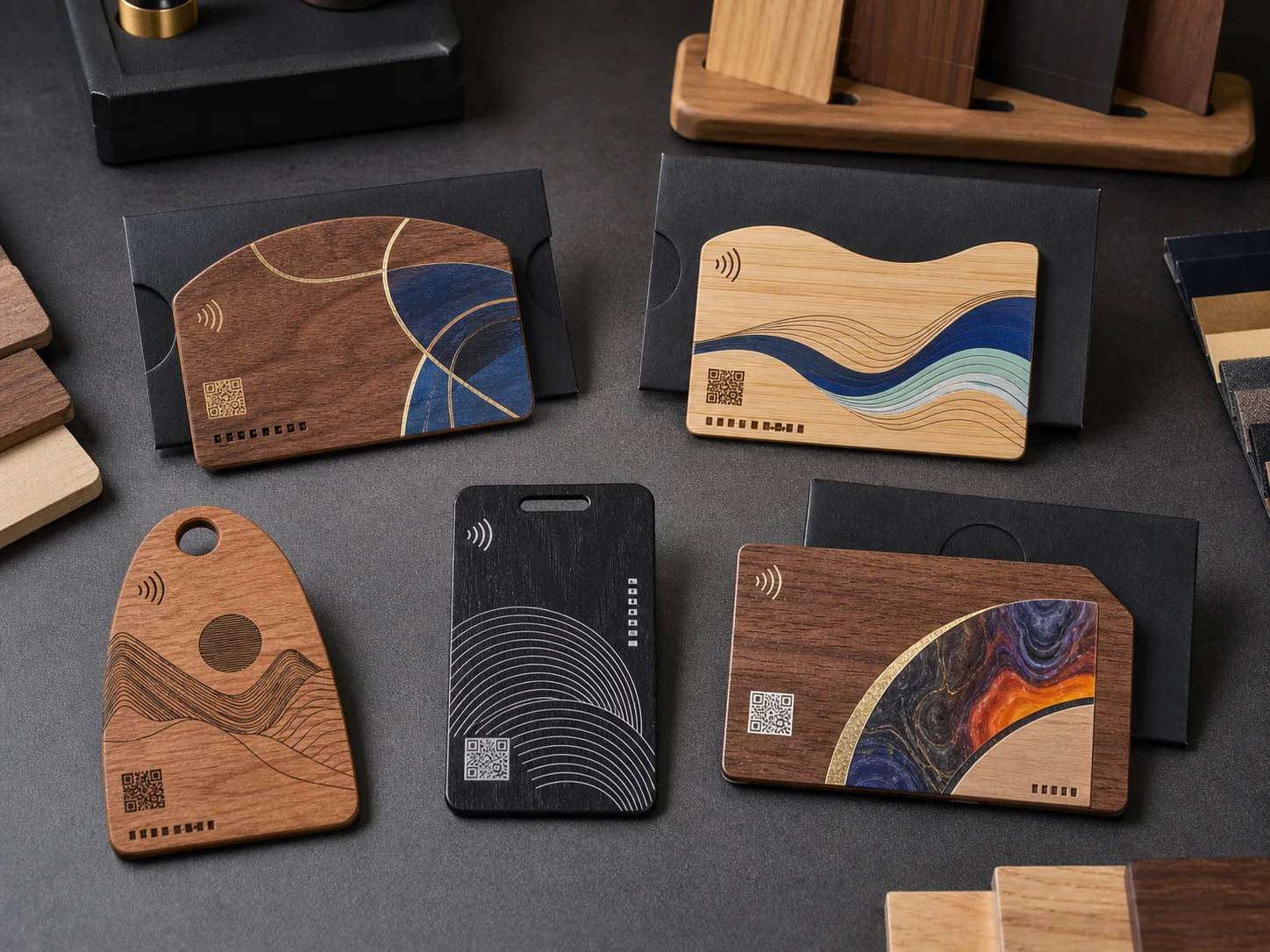
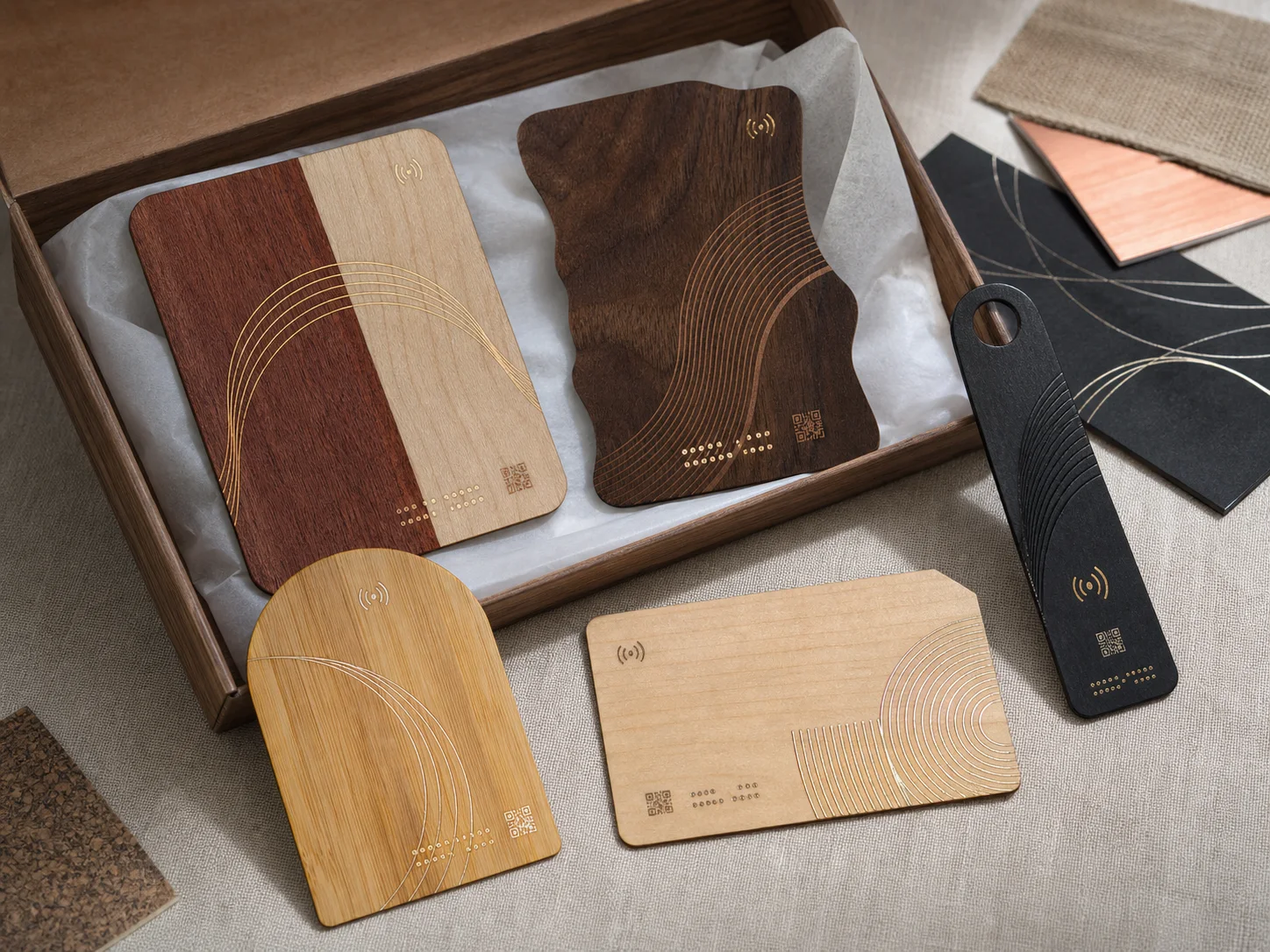
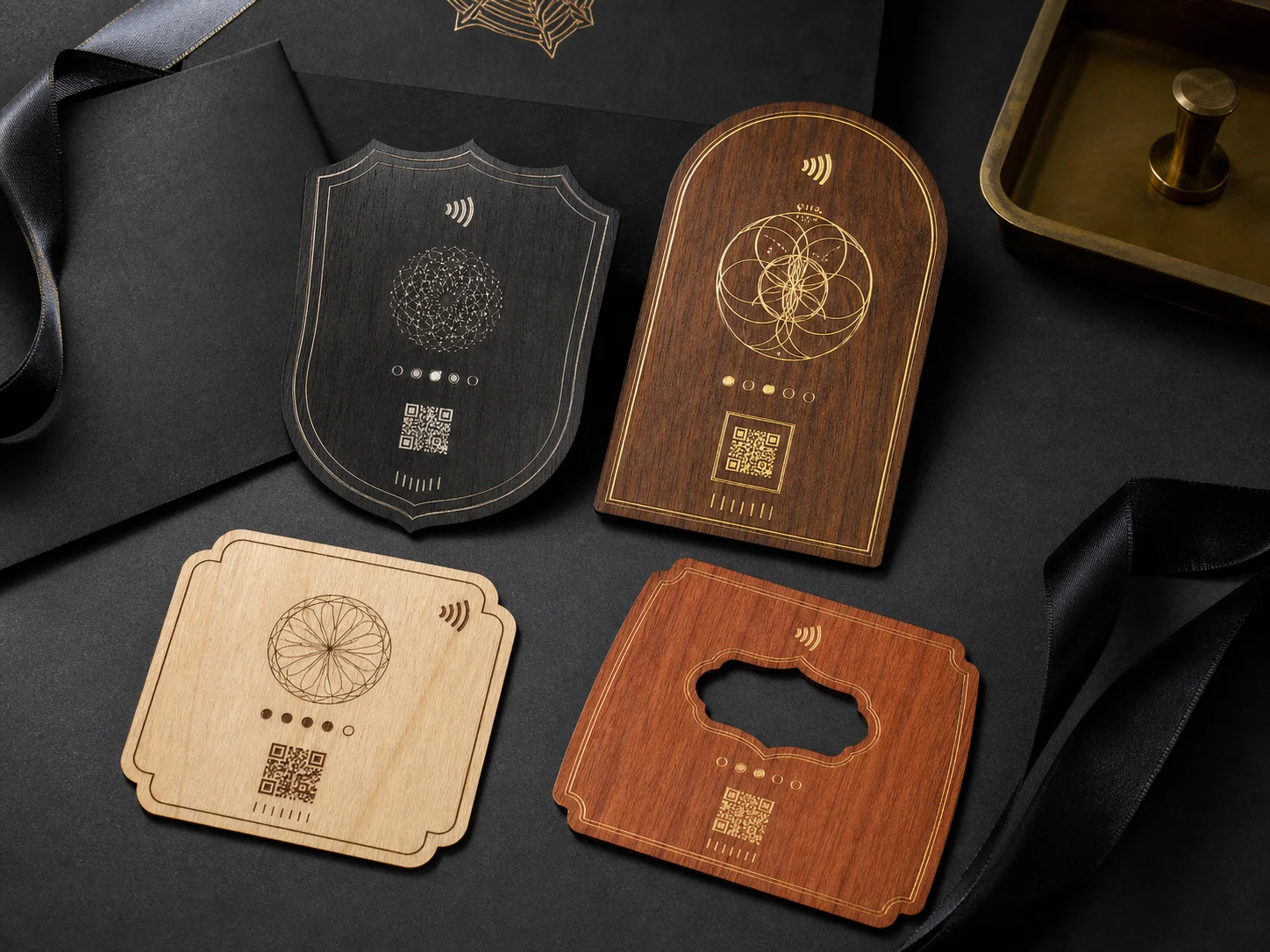
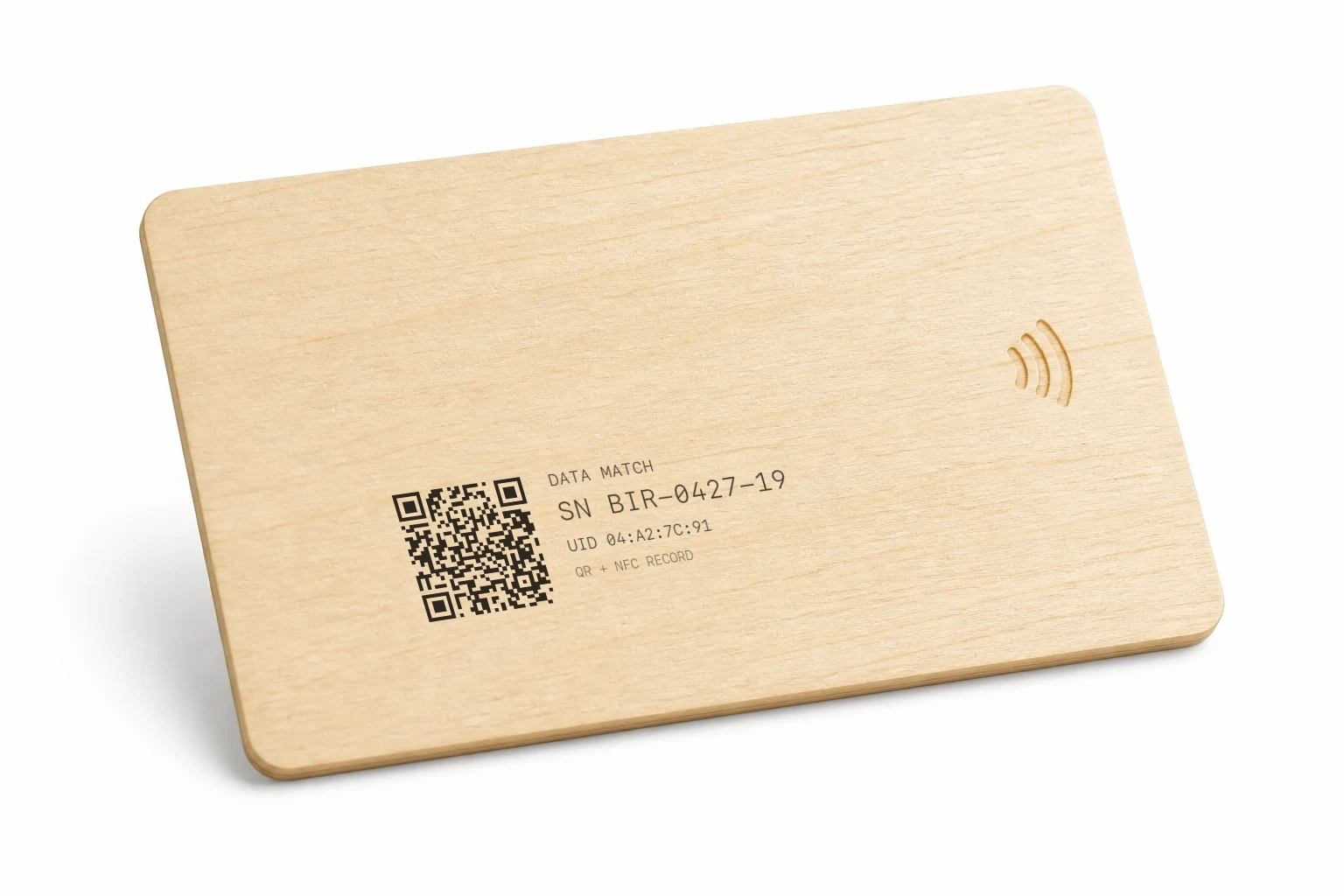
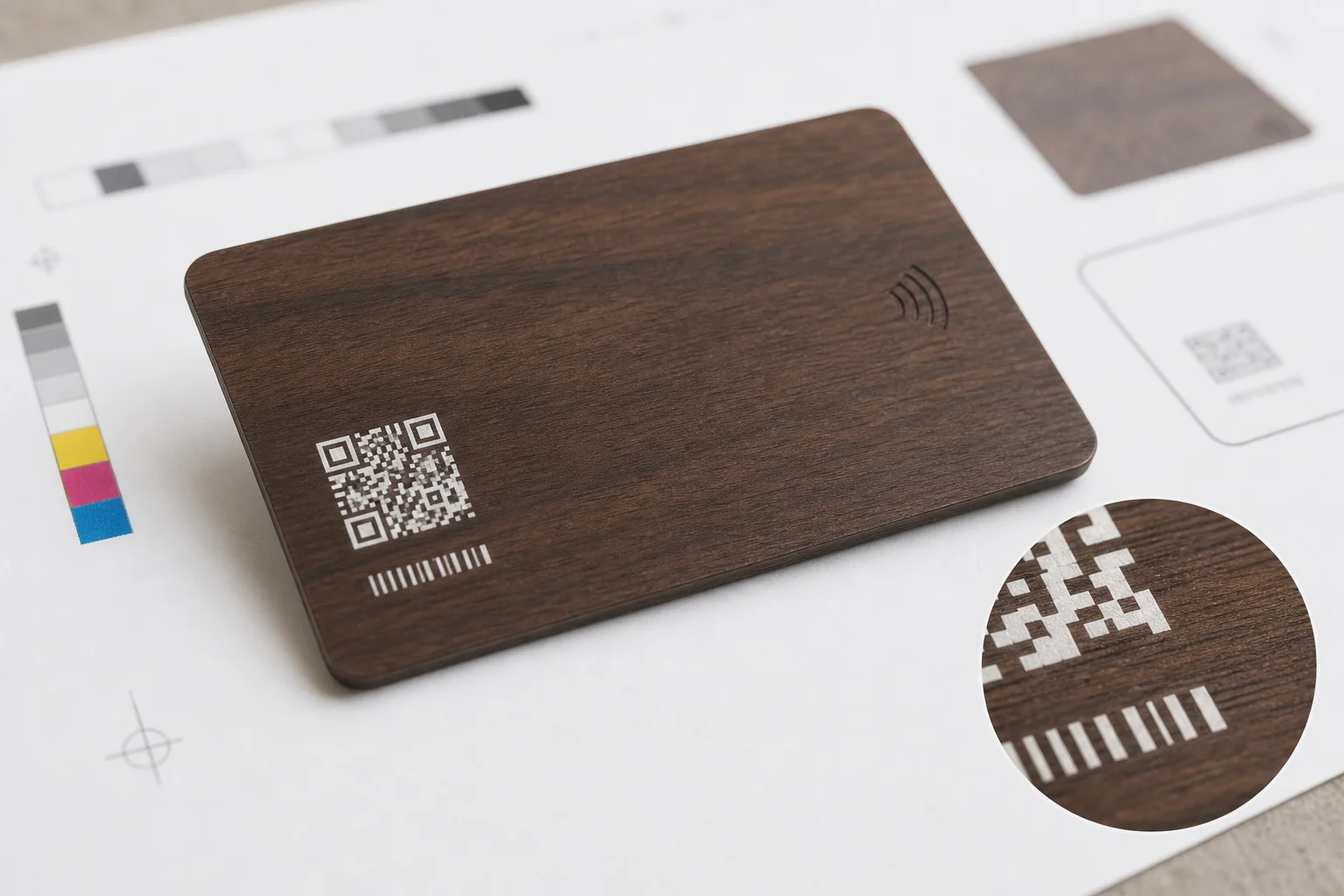
Separate each production layer clearly.
Laser, CMYK print, white ink, foil, spot UV, QR, serials, and cut lines should be separated in the file or named export layers so production can quote and proof accurately.
Artwork should include technical constraints.
Chip position, antenna-safe zones, holes, slots, edge radius, card thickness, and packaging labels should be visible in the approval package when they affect the finished card.
Set QR, text, and line minimums for wood.
Wood grain and finish set practical minimums for QR module size, text height, and line width that are coarser than on glossy plastic. Defining these minimums in the artwork spec prevents tiny details that look fine on screen but break on the real surface.
One approved file drives quote, proof, and production.
When material, layers, data, RF constraints, and packaging live in a single approved production file, the quote, the proof, and the final run all reference the same source. This removes the version drift that causes mismatched cards, reprints, and delays.
Best uses
- Pre-production approval
- Variable data card batches
- Multi-effect print projects
- Buyer and designer handoff
Frequently asked questions
What files are needed for production?
Vector artwork with separated layers (laser, CMYK, white, foil, gloss, QR, serial, cut), a linked data file for variable content, and the die line for custom shapes.
Why do print layers need separating?
So production can quote and proof each effect accurately. Chip position, antenna-safe zones, and edge details are included whenever they affect the finished card.
Are there minimum sizes for text and QR on wood?
Yes — grain and finish set coarser minimums than glossy plastic for QR modules, text height, and line width. The artwork spec defines them so details that look fine on screen don't break on the surface.
Specification
| Card size | CR80 and custom dimensions by drawing |
|---|---|
| Card body | Plastic-free, FSC-certified wood body options |
| Thickness | 0.80 mm to 2.0 mm by wood species and chip |
| Minimum order | None — single samples to production runs |
| Production time | About one week after artwork and sample approval |
| RF planning | Chip, antenna, thickness, and finish approved together |
| Approval route | Material sample, working RF sample, production proof |
| Preferred input | Vector artwork, linked data file, QR payload file, die line |
| Layer naming | Laser, CMYK, white, foil, gloss, QR, serial, cut |
| Approval need | PDF proof plus real material sample for critical effects |
Related wood RFID card pages
- Laser Engraved Wood RFID Cards
- UV Printed Wood RFID Cards
- White Ink Wood Cards
- Foil Wood RFID Cards
- Spot UV Wood Cards
- QR and Serial Wood RFID Cards
- Wood Card Edge Finishing