Membership tier design · 8 min read
How to Design Membership Tiers with Wooden Cards
Wooden cards create tier differences through species, grain, engraving, print, and presentation rather than weight or plating. A strong system still begins with benefits and operating rules. Founder, member, invitation, and guest levels must remain recognizable across natural material variation and practical to personalize, test, reorder, and replace.
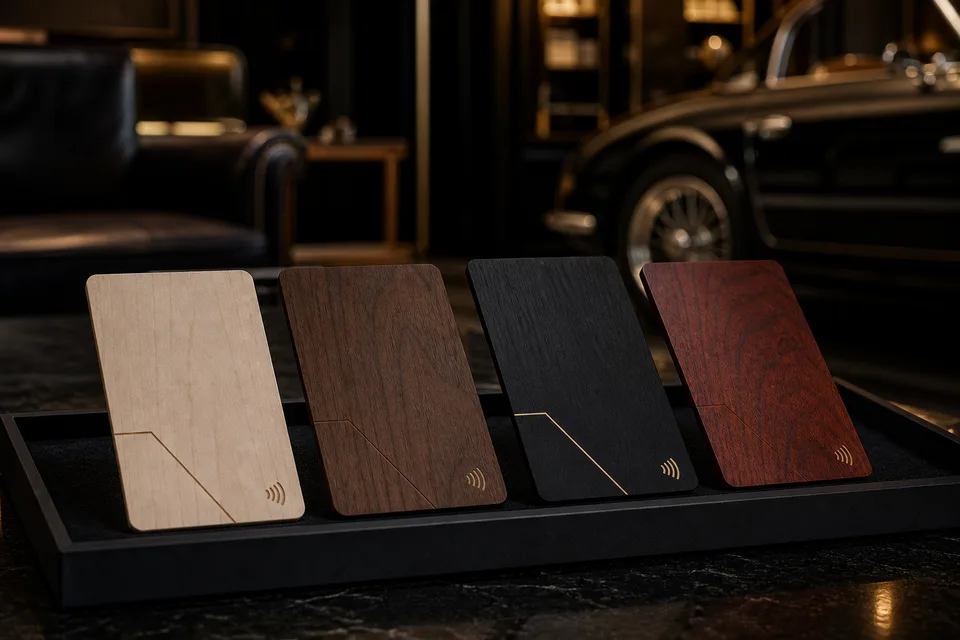
Industry program views
Build tiers that remain clear when every grain is different.
Material variation can enrich a tier system, but names, icons, data zones, and benefit rules must carry the meaning reliably.
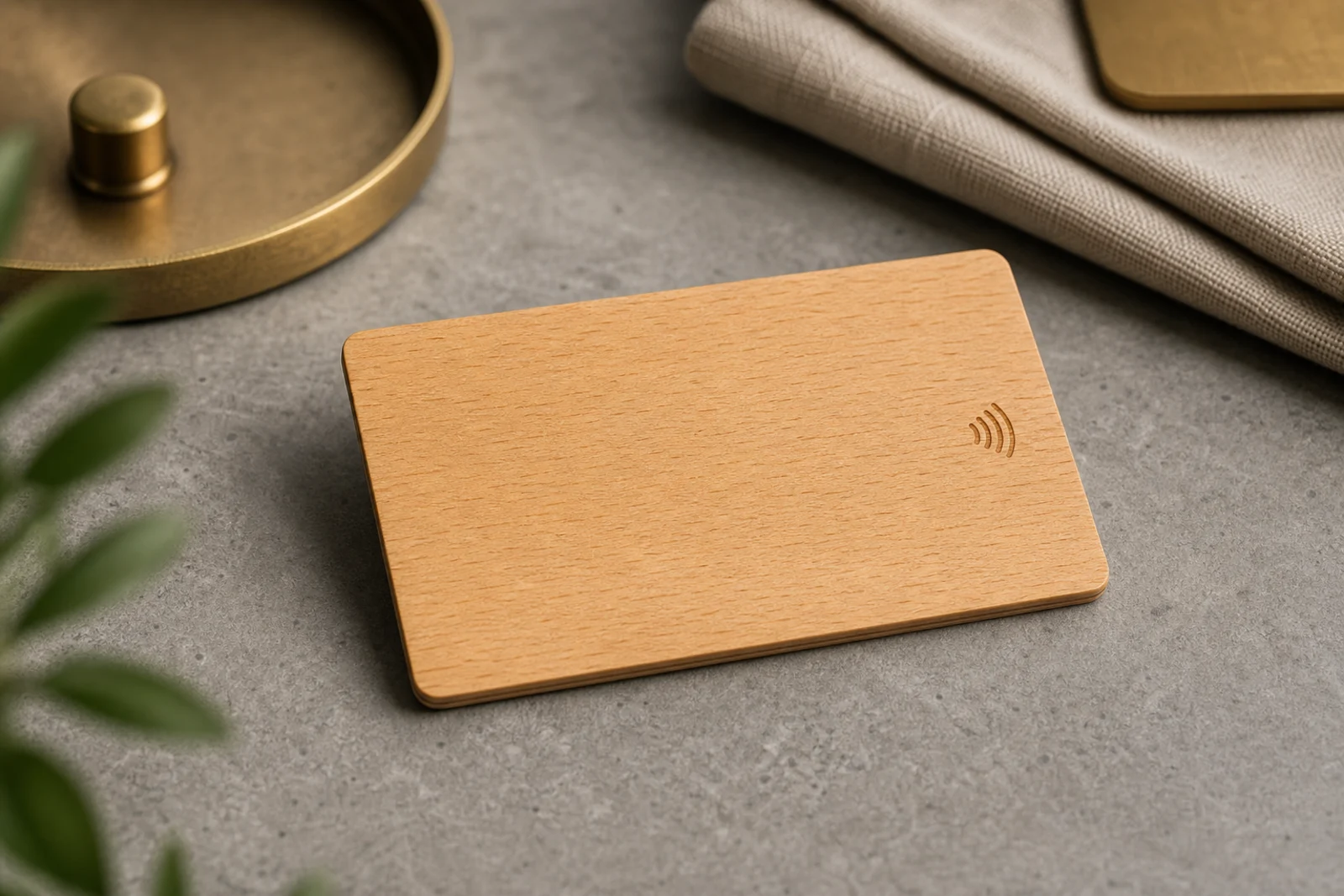
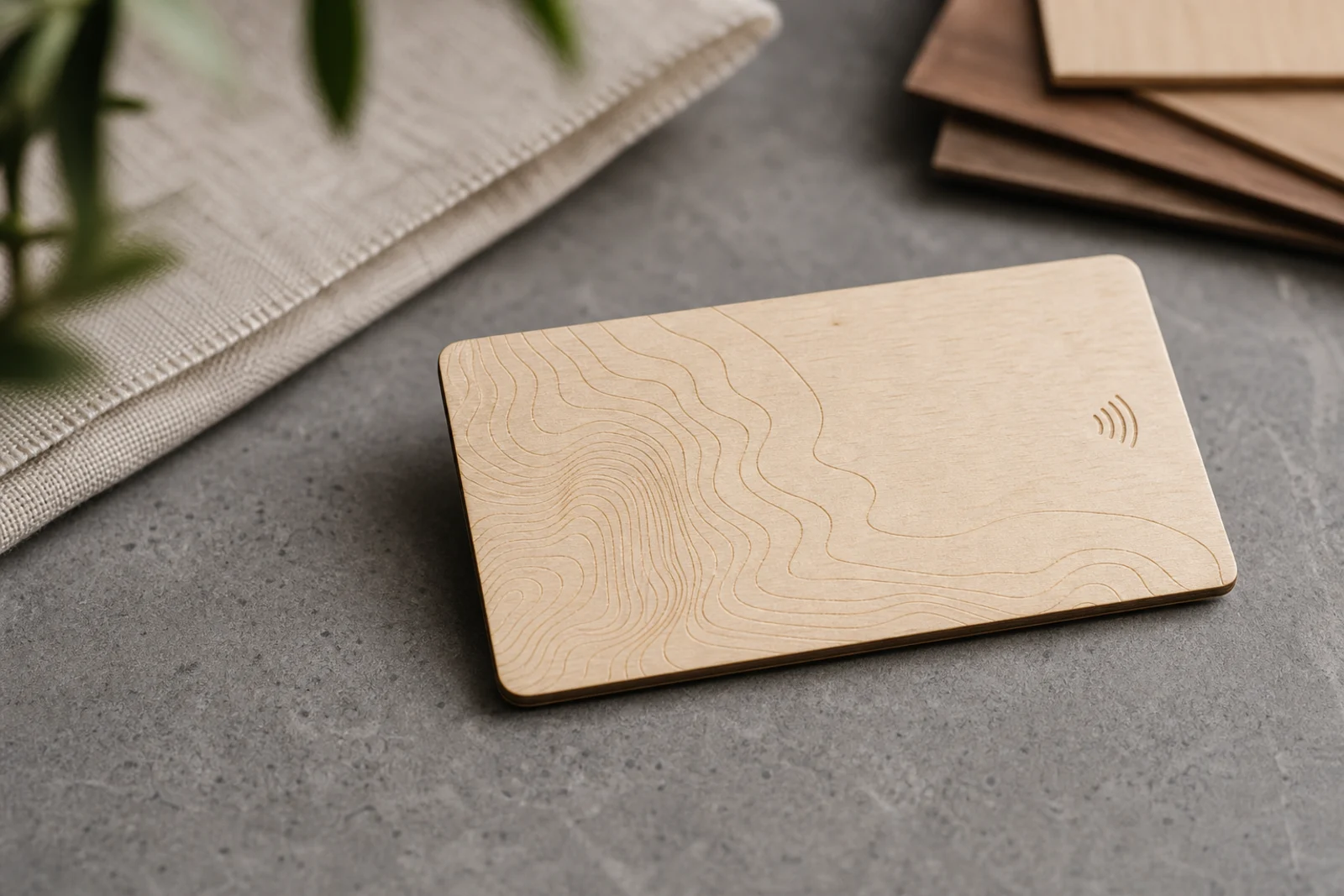
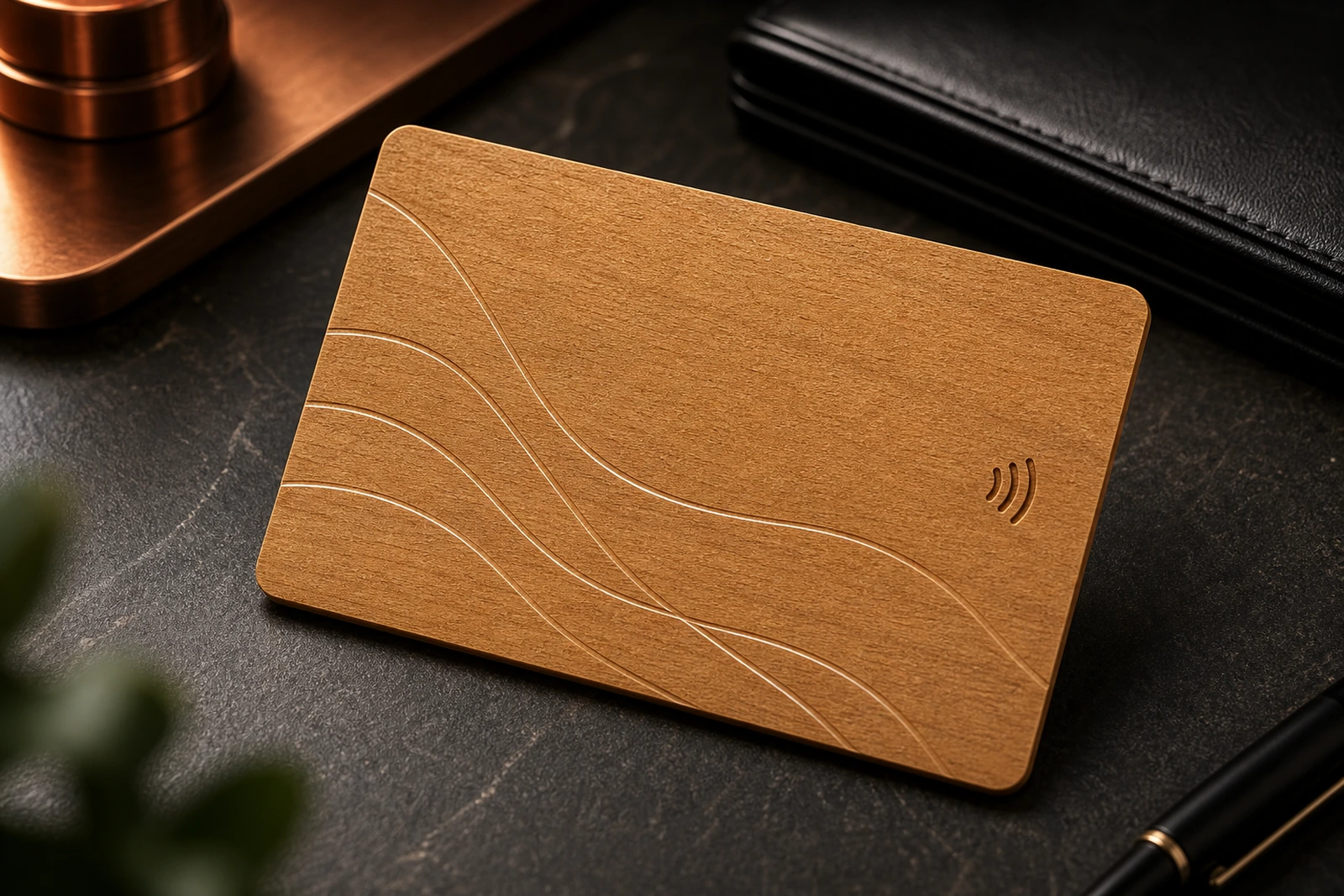
Define the benefits before naming the materials.
Write what changes between levels: booking priority, access windows, event invitations, guest allowances, service response, facility use, or renewal terms. If staff cannot explain the difference in one sentence, a new wood species will not make the tier meaningful. Keep a small number of levels and assign each an operating owner. The card should help recognition, while the live member platform controls eligibility and prevents an attractive inactive card from continuing to imply current benefits.
Use species as a cue, not the only identifier.
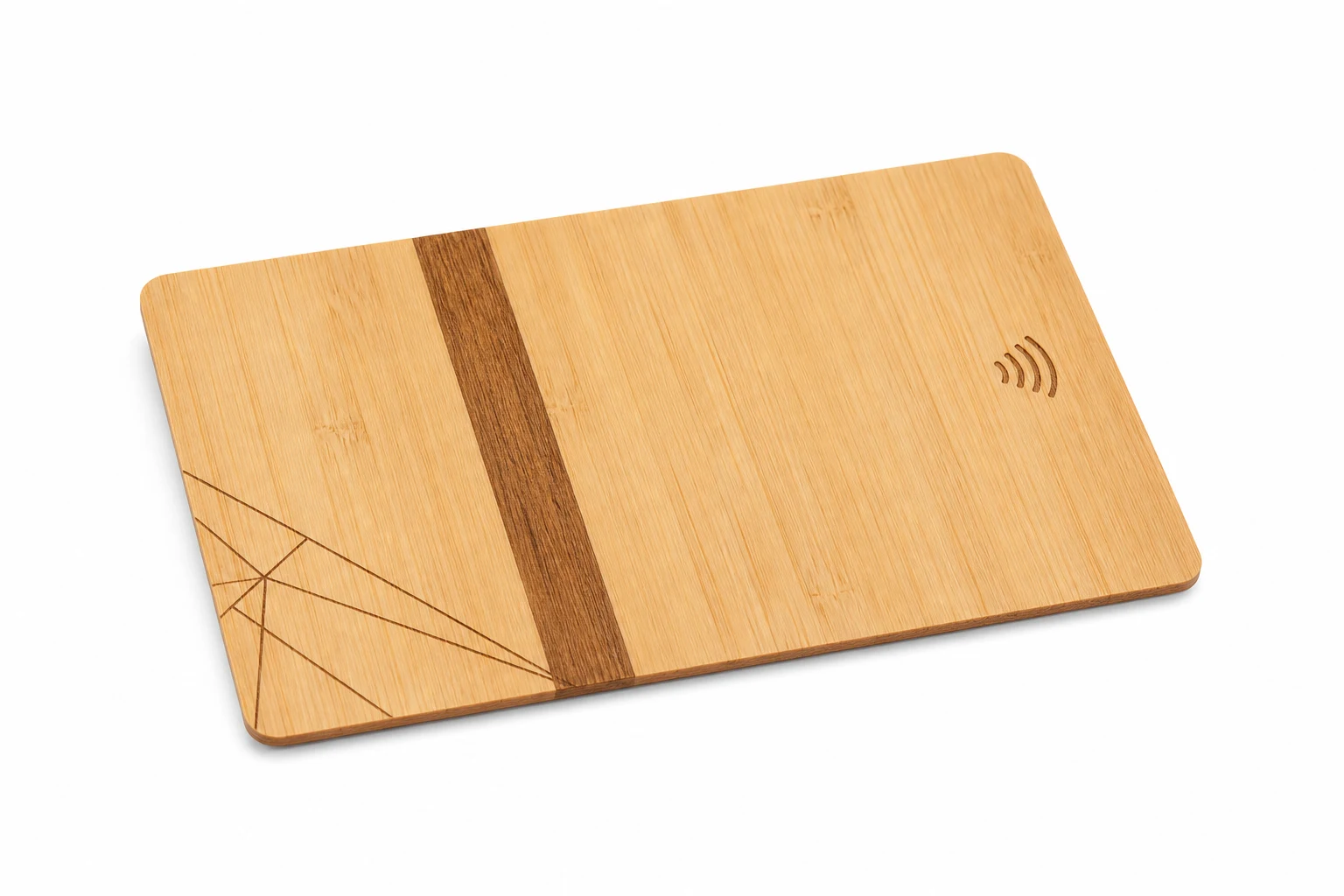
Walnut, birch, bamboo, sapele, cherry, and black wood offer distinct tonal families, but natural grain and color vary within each batch. Pair material with a written tier, icon, serial prefix, or edge mark. This gives staff and members a reliable signal even when two pieces differ. Approve a range board rather than a single perfect card, and avoid describing one species as universally more valuable unless the program's benefits genuinely establish that hierarchy.
Design one system before creating several artworks.
Keep logo placement, name field, member number, tap zone, code zone, and information hierarchy consistent across levels. Vary one or two controlled elements such as wood, laser pattern, white ink, foil line, or sleeve color. Too many changes make reorders and staff training harder. Test the longest name, highest number, and darkest acceptable grain in every layout. A coherent family should look related when the cards are placed together without relying on identical surface texture.
Model quantities, upgrades, and replacements.
Estimate the count for each level, anticipated upgrades, household additions, lost-card rate, spares, and future founder-card restrictions. Decide whether an upgrade receives a new physical card and what happens to the old encoded identifier. Founder editions may close permanently; guest credentials may expire daily. These rules affect numbering, inventory, packaging, and data exports. A no-minimum production model allows small tiers, but each still needs the same proof and reconciliation discipline.
Test technology across the full tier family.
Different species, thicknesses, dense print areas, or custom cuts can change the complete card construction. Do not approve RFID or NFC performance on one tier and assume every variant behaves identically. Test a representative finished sample from each materially different build on the target reader or phones. Keep antenna placement stable wherever possible, and document which artwork zones must remain clear so later limited editions do not introduce a technical failure while chasing visual novelty.
Best uses
- Founder, full, invitation, guest, and service levels
- Automotive, hospitality, residence, and private-club programs
- Small premium tiers with variable member data
- Programs planning upgrades, expiry, and reissue
Relevant wooden RFID card routes
- Wooden membership cards
- Wood species for RFID cards
- QR and serial wooden cards
- Wood RFID artwork specifications
Frequently asked questions
Can wood species define membership tiers?
It can support recognition, but each tier should also use a clear written name, icon, or serial rule because natural grain varies.
Should a member receive a new card after an upgrade?
Define that policy in advance. If a new card is issued, disable or remap the previous encoded identifier and preserve the history.
Can founder cards be produced in a very small quantity?
Yes. There is no minimum order, but even a small founder issue needs approved artwork, material range, data, and a working sample.
Specification
| Card body | FSC-certified wood stock; plastic-free body available |
|---|---|
| Thickness | 0.80 mm to 2.0 mm, selected with the chip and reader |
| Minimum order | None — from one working sample to production runs |
| Typical production | We normally produce in about one week after artwork and sample approval |
| RF approval | We test the final wood, inlay, chip, thickness, finish, and target device together |
| Data control | Printed data, QR, NFC or RFID encoding, and packing records reconciled |
| Tier grammar | Benefit, explicit name, material cue, serial rule, and live eligibility owner |
| Variant test | One finished RF/NFC proof for every materially different species, thickness, or cut |
Related wood RFID card pages
- Wooden RFID Membership Cards for Yacht Clubs and Marinas
- Wooden RFID Membership Cards for Private Aviation and FBO Lounges
- Wooden RFID Membership Cards for Golf and Country Clubs
- Wooden RFID Cards for Luxury Residences and Private Clubs
- Wooden RFID Membership Cards for Private Wellness Clubs
- Custom Wooden RFID Membership Cards for Car Clubs
- Wooden Membership Cards for Car Detailing Studios
- Wooden VIP Membership Cards for Luxury Car Rental
- Wooden RFID Membership Cards for Private Car Storage
- Wooden VIP Owner Cards for Premium Dealerships
- Wooden VIP Passes for Rallies, Track Days, and Car Events
- NFC, RFID, or QR for Wooden Automotive Membership Cards?
- What Can Be Personalized on a Wooden RFID Card?
- Wood vs Plastic Membership Cards for Automotive Programs
- How Wooden NFC Cards Connect Automotive Member Portals
- Seven Benefits a Wooden VIP Card Can Support