Material comparison · 9 min read
Wood vs Plastic Membership Cards for Automotive Programs
Wood and plastic membership cards serve different program priorities. Wood offers visible grain, tactile individuality, FSC-certified stock, and a plastic-free card-body option; plastic offers tighter color consistency, familiar wallet thickness, and efficient large-volume reproduction. The right choice depends on use, handling, reader system, artwork, quantity, replacement rate, and the promise made to members.
Industry program views
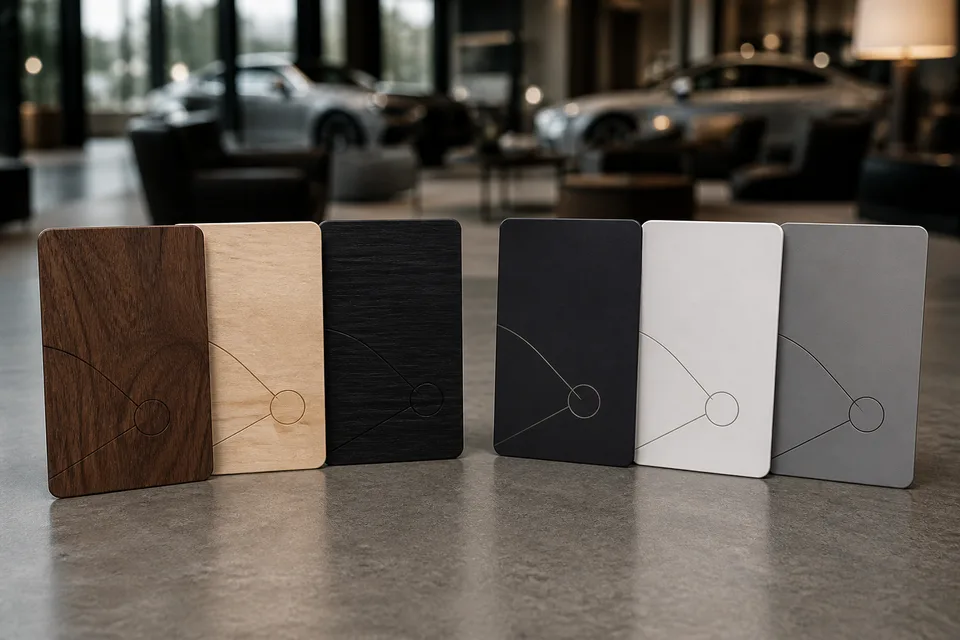
Compare materials against the program, not against a studio photograph.
Grain, print repeatability, thickness, handling, reader behavior, replacement, and presentation reveal the practical differences between wood and plastic.
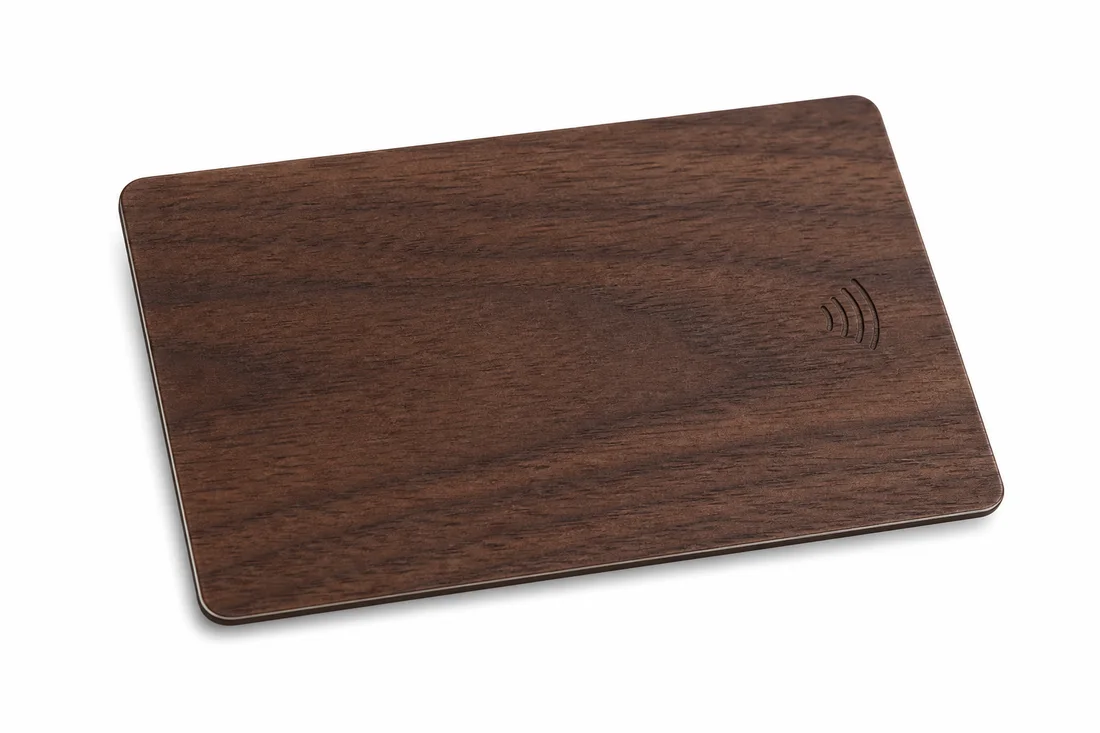
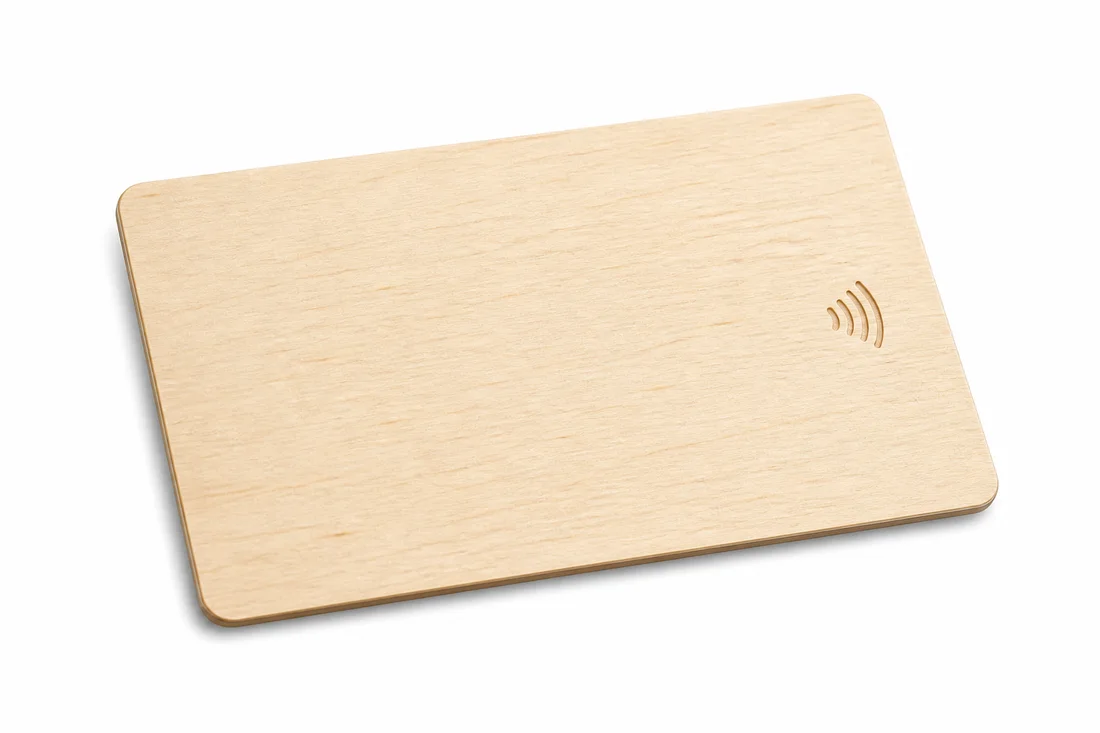
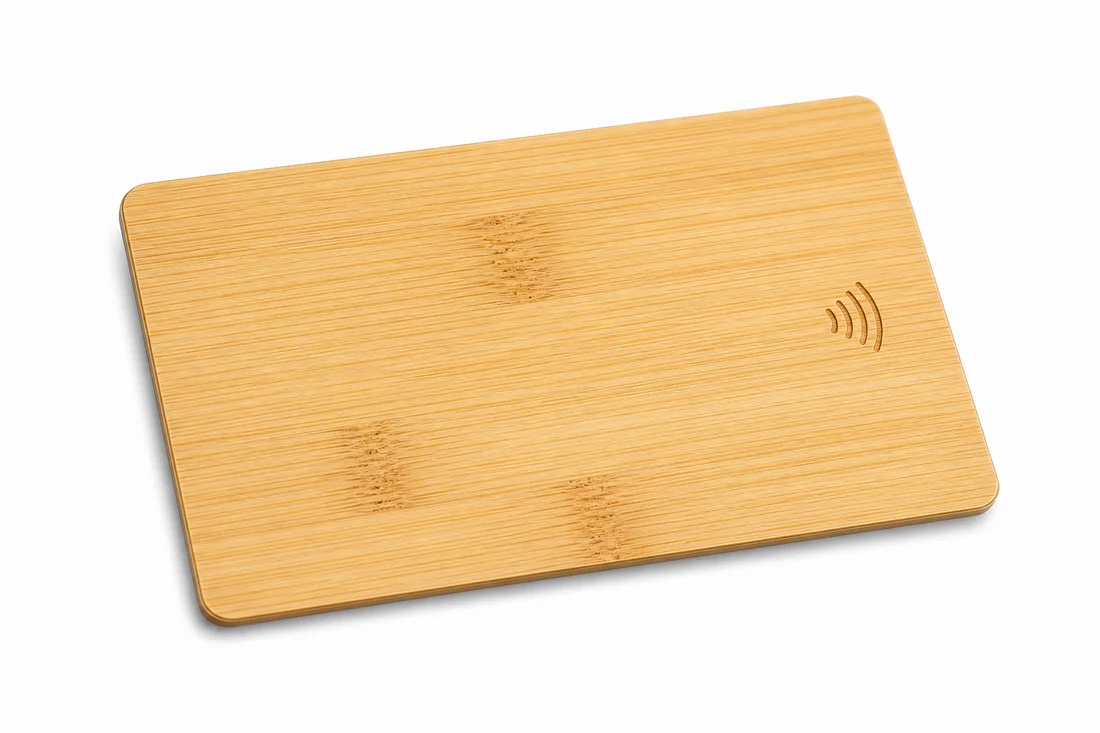
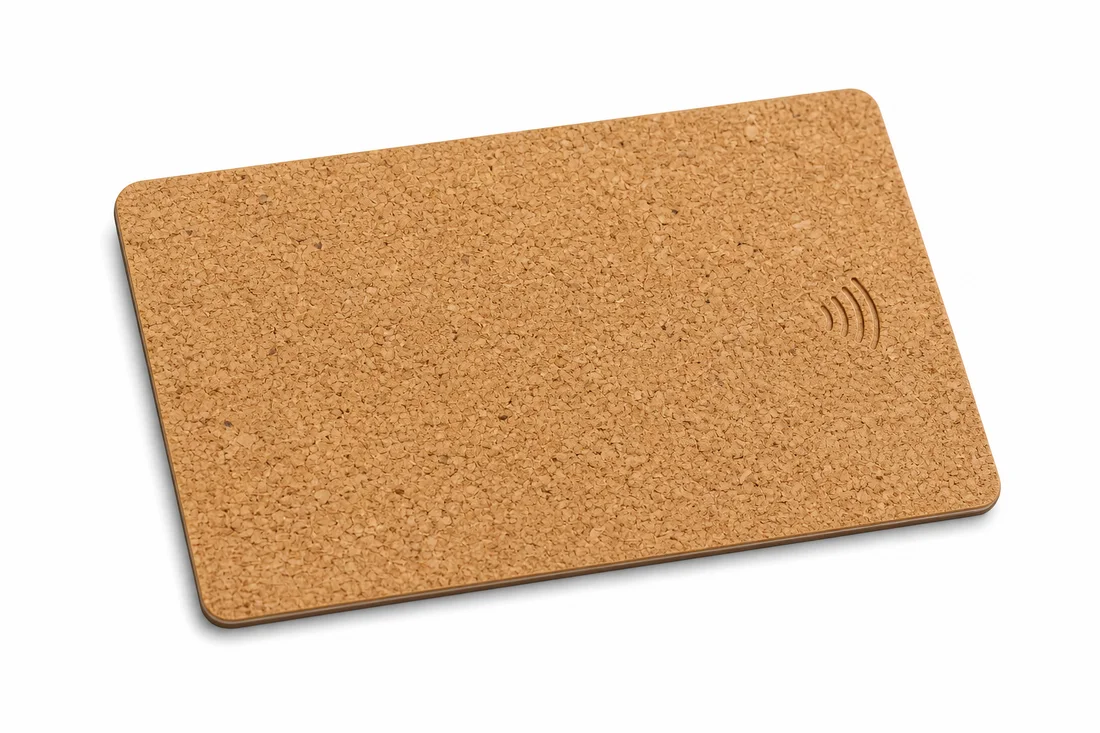
Choose wood when material individuality supports the program.
Wood is strongest when membership should feel tied to craft, place, hospitality, restoration, nature, or limited issue. Every card carries real grain, which makes the object feel individual but prevents exact surface matching. FSC-certified stock and a body without plastic laminate can support a carefully worded material policy, while the electronic package is disclosed separately. Wood also accepts laser, white ink, foil, UV, and shaped-edge treatments that can leave the material visibly central.
Choose plastic when uniformity and scale lead.
Plastic is usually the more predictable route for exact flat color, very fine graphics, familiar 0.76 mm wallet behavior, frequent reissue, and high-volume everyday credentials. That does not make it inherently less useful or less professional. If the program expects heavy replacement, complex photographic print, automated handling, or strict visual sameness, plastic may be the honest choice. A premium strategy can also use plastic for broad access and wood for a smaller founder or recognition level.
Compare wear from the real handling pattern.
Neither material should receive an absolute durability claim without a defined test. Wood can mark, absorb moisture at damaged edges, or show grain change if its seal is compromised. Plastic can scratch, bend, delaminate, or wear printed surfaces. Review wallets, pockets, lanyards, cleaning, sun, moisture, chemicals, and expected issue life. Test the finished artwork and edge rather than comparing blank raw materials. Replacement policy matters as much as the first-day appearance.
Test RFID performance in each final construction.
Wood does not shield radio like metal, but species, thickness, adhesive, finish, and the card stack can influence antenna tuning. Plastic construction also varies. Use the same target reader, encoding, and acceptance scenario to compare finished samples. Wood commonly ranges from 0.80 mm to 2.0 mm, which may change wallet fit and presentation angle. Do not assume a chip that works in one material or thickness can move unchanged into another without a device test.
Calculate the program, not only the unit object.
Include material, artwork, data, sample approval, reader testing, packaging, replacement, inventory, and staff process. Wood has no minimum order and can suit a one-card proof or a small VIP run, but natural variation still needs approval. Plastic may suit the recurring core issue. A mixed system is valid when roles are explicit and members understand why the materials differ. The best answer is the simplest material plan that delivers the promised experience reliably.
Best uses
- Material decisions for automotive and private-club programs
- Founder or limited tiers versus everyday credentials
- RFID, NFC, QR, and visual membership roles
- Teams comparing consistency, handling, scale, and replacement
Relevant wooden RFID card routes
Frequently asked questions
Is wood always more premium than plastic?
No. Wood is valuable when its material character supports the program; well-designed plastic may be the better operational choice for volume, uniformity, or frequent replacement.
Is wood always more durable?
No absolute claim is appropriate. Durability depends on the construction, seal, print, edge, handling, cleaning, and replacement cycle.
Can one program use both materials?
Yes. For example, plastic can serve a large everyday tier while wood marks a founder, recognition, or limited issue, provided roles remain clear.
Specification
| Card body | FSC-certified wood stock; plastic-free body available |
|---|---|
| Thickness | 0.80 mm to 2.0 mm, selected with the chip and reader |
| Minimum order | None — from one working sample to production runs |
| Typical production | We normally produce in about one week after artwork and sample approval |
| RF approval | We test the final wood, inlay, chip, thickness, finish, and target device together |
| Data control | Printed data, QR, NFC or RFID encoding, and packing records reconciled |
| Wood strength | Natural grain, tactile variation, small premium runs, material-led storytelling |
| Plastic strength | Uniform print, familiar thin format, repeatability, high-volume everyday issue |
Related wood RFID card pages
- Wooden RFID Membership Cards for Yacht Clubs and Marinas
- Wooden RFID Membership Cards for Private Aviation and FBO Lounges
- Wooden RFID Membership Cards for Golf and Country Clubs
- Wooden RFID Cards for Luxury Residences and Private Clubs
- Wooden RFID Membership Cards for Private Wellness Clubs
- Custom Wooden RFID Membership Cards for Car Clubs
- Wooden Membership Cards for Car Detailing Studios
- Wooden VIP Membership Cards for Luxury Car Rental
- Wooden RFID Membership Cards for Private Car Storage
- Wooden VIP Owner Cards for Premium Dealerships
- Wooden VIP Passes for Rallies, Track Days, and Car Events
- NFC, RFID, or QR for Wooden Automotive Membership Cards?
- How to Design Membership Tiers with Wooden Cards
- What Can Be Personalized on a Wooden RFID Card?
- How Wooden NFC Cards Connect Automotive Member Portals
- Seven Benefits a Wooden VIP Card Can Support