Personalization guide · 9 min read
What Can Be Personalized on a Wooden RFID Card?
Wooden RFID card personalization involves more than adding a name. Grain, species, laser tone, white ink, foil, gloss, QR contrast, serial logic, tap guidance, custom cuts, and packaging all interact with the antenna and with one another. The production file should separate permanent design from variable data and define how every record is checked.
Industry program views
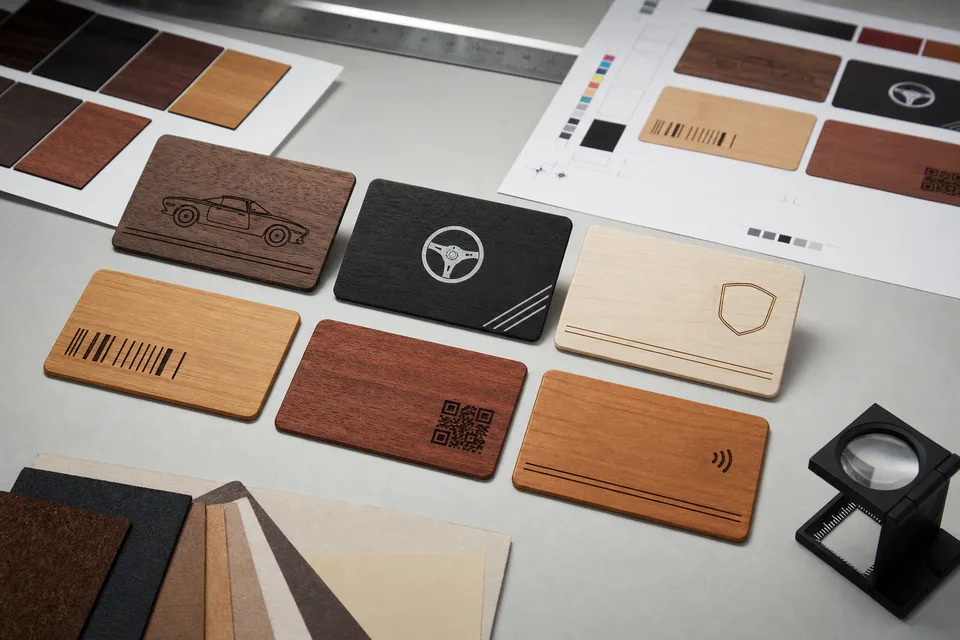
Personalize with the grain instead of fighting it.
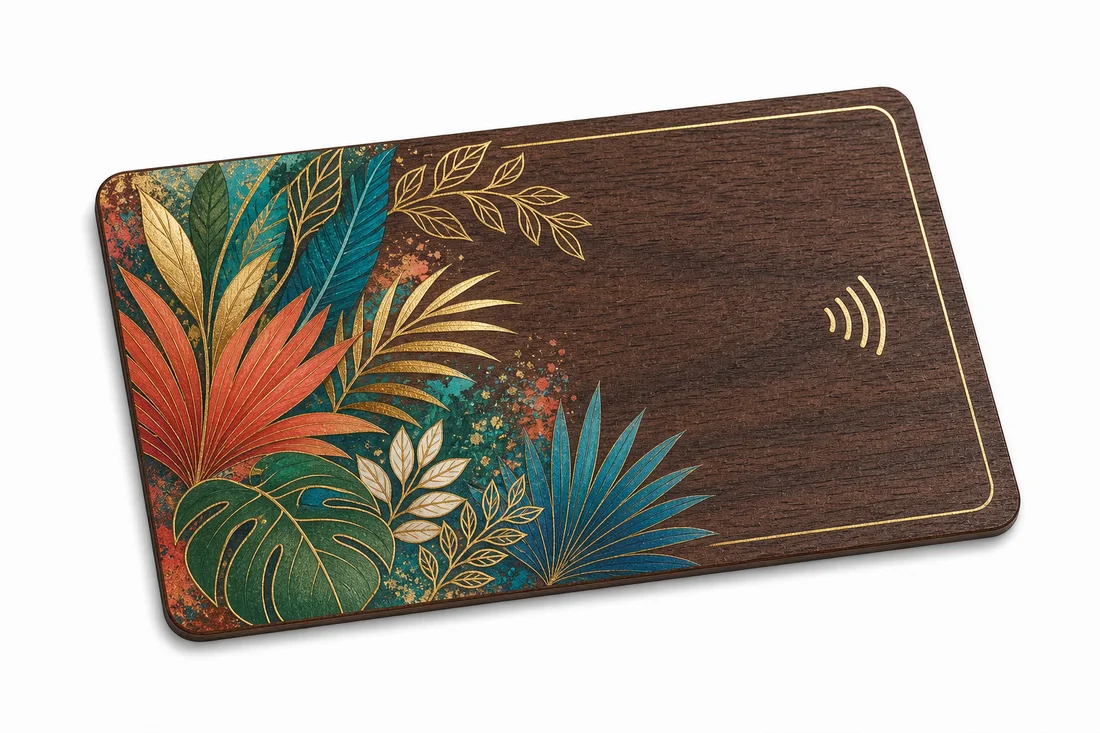
The most credible wooden cards leave material visible while giving names, numbers, codes, and functional zones enough control to remain consistent.
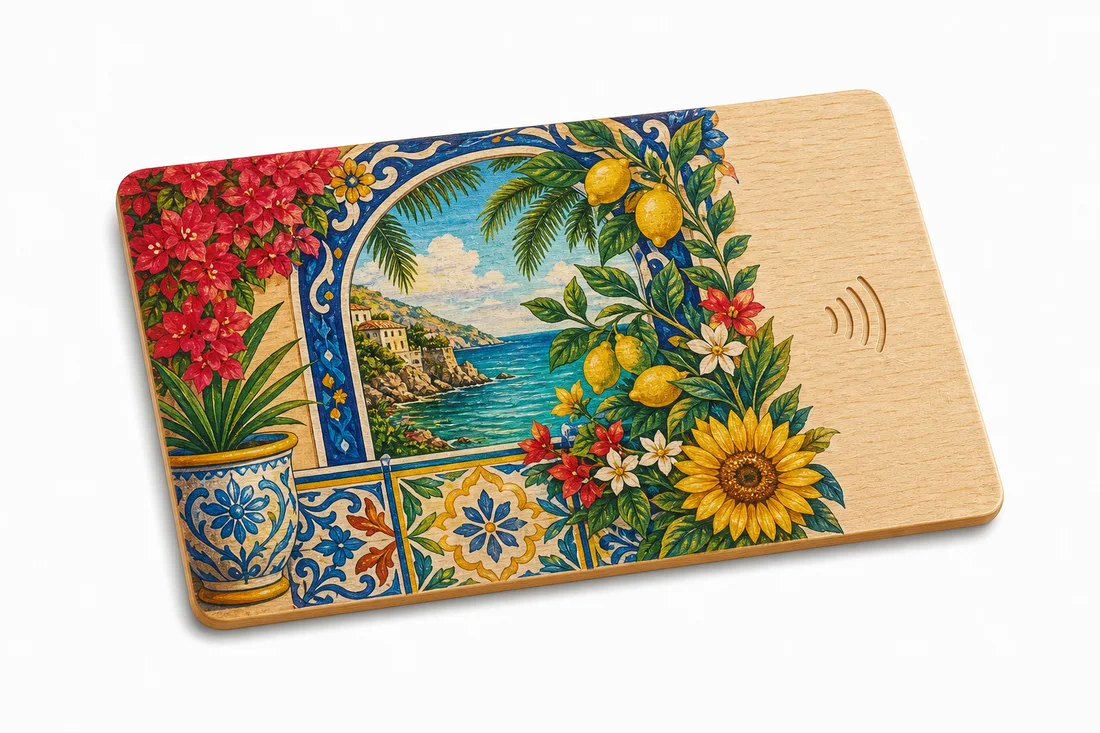
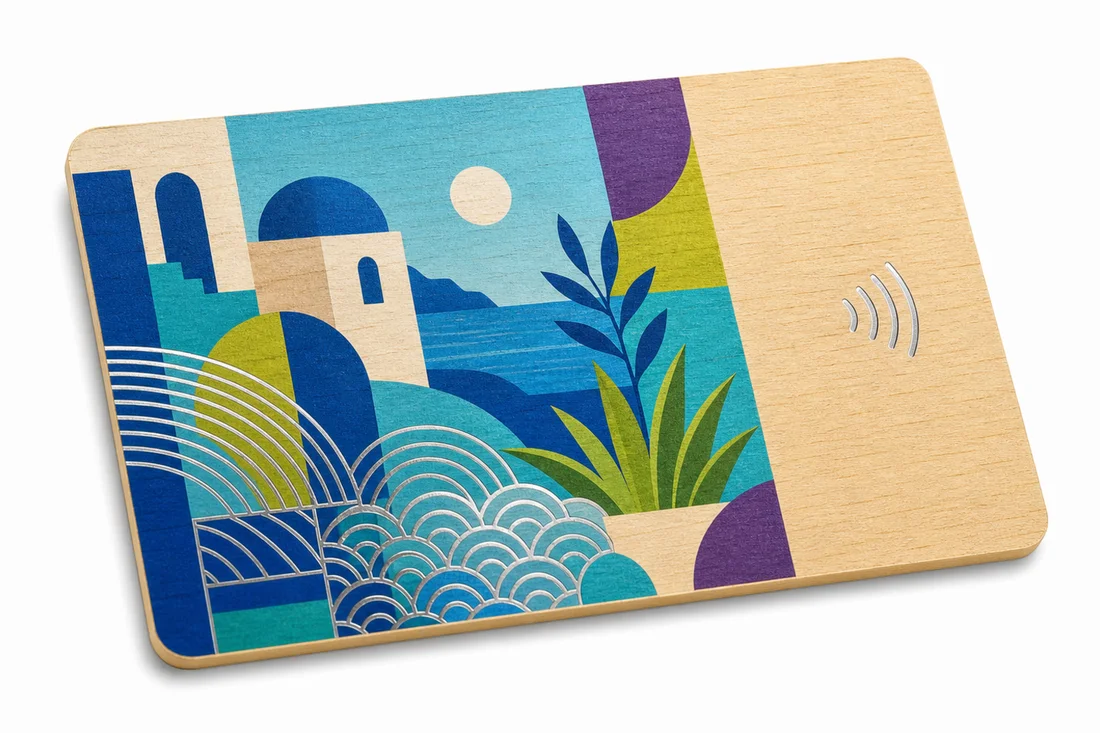
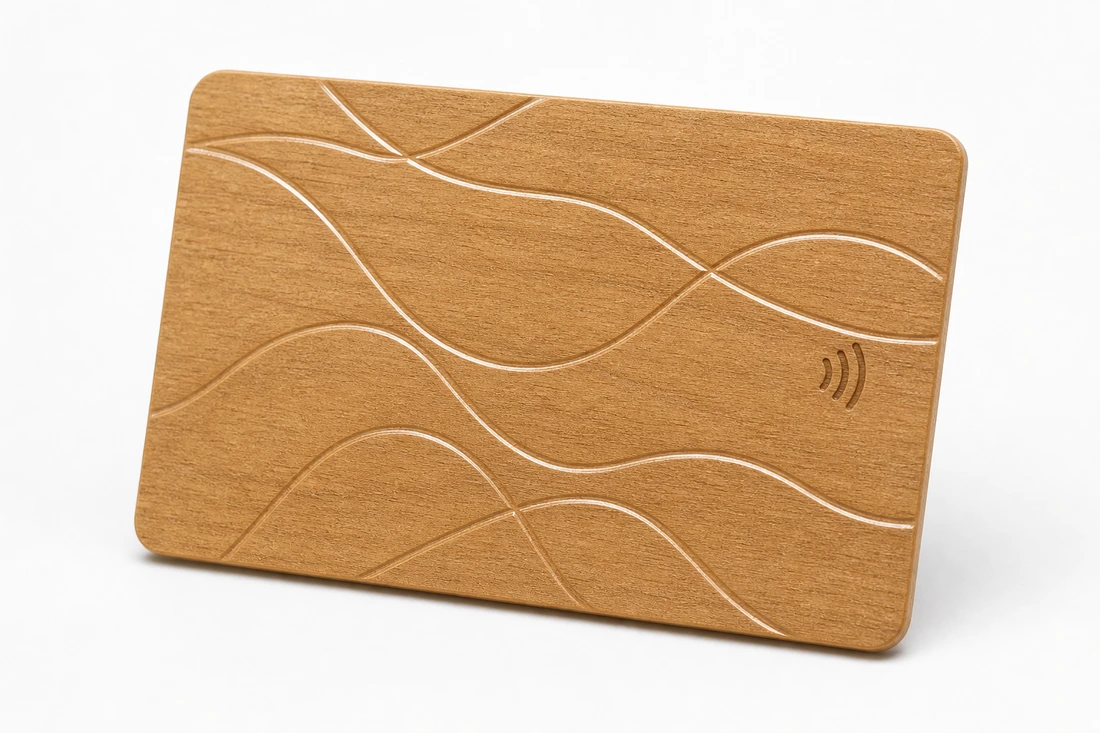
Choose the wood before finalizing contrast.
The same artwork behaves differently on birch, bamboo, walnut, cherry, sapele, cork, or black wood. Laser engraving may darken on pale species and become tone-on-tone on dark ones. White ink can restore legibility but changes the natural balance. Foil and spot gloss add selective emphasis. Approve the actual species and sealed surface first, then set text size, line weight, color, and code treatment from a representative light-to-dark material range.
Separate fixed artwork from every variable field.
Keep the logo, background linework, tap instruction, and regulatory notes distinct from member name, level, number, expiry, serial, QR payload, or issue date. Define maximum character counts, capitalization, accents, missing-value behavior, and line breaks. Proof the longest realistic records, not only a short sample name. Variable data should land in a calm surface zone and remain readable even when the grain is busier or darker than the hero photograph.
Treat QR, NFC, and RFID data as one controlled dataset.
A personalized card can carry a printed serial, encoded NFC record, RFID identifier, and QR route, but each must map to the correct member or asset. Generate them from one approved file, scan or read the sample, and reconcile batch output before packing. Decide whether NFC records remain editable or are locked and how QR tokens expire. Never place private member or vehicle data directly in a public code when an authenticated lookup will do.
Review shapes and cuts against grain and antenna paths.
Custom outlines, slots, key-tag holes, and cut-through details change both mechanical strength and available antenna area. Grain direction can weaken a narrow bridge, while a decorative opening can cross the inlay. Start with a dimensioned die line and antenna-safe zone, then make a physical sample to test flex, edge feel, wallet fit, lanyard pull, phone tap, and reader behavior. The final outline is a technical decision as much as a visual one.
Make packaging part of the data proof.
A fitted sleeve, card carrier, box label, welcome note, or event lanyard can carry the same member number or tier, but duplicated data creates another place for mismatch. Generate packaging labels from the same source file and reconcile them during packing. Keep the presentation proportional to the program; a single wooden sample may need only a protective sleeve, while a founder issue may justify a matched set. The objective is accurate handoff, not packaging volume.
Best uses
- Named member, owner, guest, or staff cards
- Laser, white ink, UV, foil, and spot gloss
- QR, NFC, RFID, serial, and UID matching
- Custom shapes, sleeves, and small premium issues
Relevant wooden RFID card routes
- Wood card printing methods
- Laser-engraved wooden RFID cards
- White ink on wooden cards
- QR and serial wooden cards
Frequently asked questions
Can every wooden card have a different name?
Yes. Names, levels, numbers, serials, QR, and encoded records can be produced from one controlled variable-data file.
Which method gives the best contrast on dark wood?
Opaque white ink or a controlled light panel usually gives stronger contrast; the exact treatment should be approved on the selected sealed wood.
Can a custom shape still contain RFID or NFC?
Yes, when the outline, cuts, antenna, thickness, and target device are engineered and tested together on a physical sample.
Specification
| Card body | FSC-certified wood stock; plastic-free body available |
|---|---|
| Thickness | 0.80 mm to 2.0 mm, selected with the chip and reader |
| Minimum order | None — from one working sample to production runs |
| Typical production | We normally produce in about one week after artwork and sample approval |
| RF approval | We test the final wood, inlay, chip, thickness, finish, and target device together |
| Data control | Printed data, QR, NFC or RFID encoding, and packing records reconciled |
| Artwork layers | Material, laser, CMYK, white, foil, gloss, variable data, cut, and antenna-safe zones |
| Data proof | Longest records, accents, missing values, QR/NFC/RFID match, and packaging label |
Related wood RFID card pages
- Wooden RFID Membership Cards for Yacht Clubs and Marinas
- Wooden RFID Membership Cards for Private Aviation and FBO Lounges
- Wooden RFID Membership Cards for Golf and Country Clubs
- Wooden RFID Cards for Luxury Residences and Private Clubs
- Wooden RFID Membership Cards for Private Wellness Clubs
- Custom Wooden RFID Membership Cards for Car Clubs
- Wooden Membership Cards for Car Detailing Studios
- Wooden VIP Membership Cards for Luxury Car Rental
- Wooden RFID Membership Cards for Private Car Storage
- Wooden VIP Owner Cards for Premium Dealerships
- Wooden VIP Passes for Rallies, Track Days, and Car Events
- NFC, RFID, or QR for Wooden Automotive Membership Cards?
- How to Design Membership Tiers with Wooden Cards
- Wood vs Plastic Membership Cards for Automotive Programs
- How Wooden NFC Cards Connect Automotive Member Portals
- Seven Benefits a Wooden VIP Card Can Support