Private storage guide · 8 min read
Wooden RFID Membership Cards for Private Car Storage
Wooden RFID membership cards for private car storage connect security, care, collection, and club hospitality. The card can support a compatible garage or lounge reader and link members to vehicle requests. Its design should reference craft and stewardship, while the system retains strict control over access and vehicle release.

Industry program views
Connect craft, access, and vehicle care without confusing them.
A collector credential can feel warm and personal while every gate, request, identity check, and replacement remains operationally controlled.
Map the boundary between access and vehicle release.
A member may enter the property, use a lounge, request preparation, or collect a vehicle, but these actions should not collapse into one uncontrolled tap. List the gate, pedestrian door, lift, key desk, lounge, wash bay, and event areas. Decide which use installed RFID, which rely on staff recognition, and which need a secure digital request. Vehicle release should retain its own identity and authorization procedure even when a wooden card begins the member journey.
Choose material that reflects stewardship.
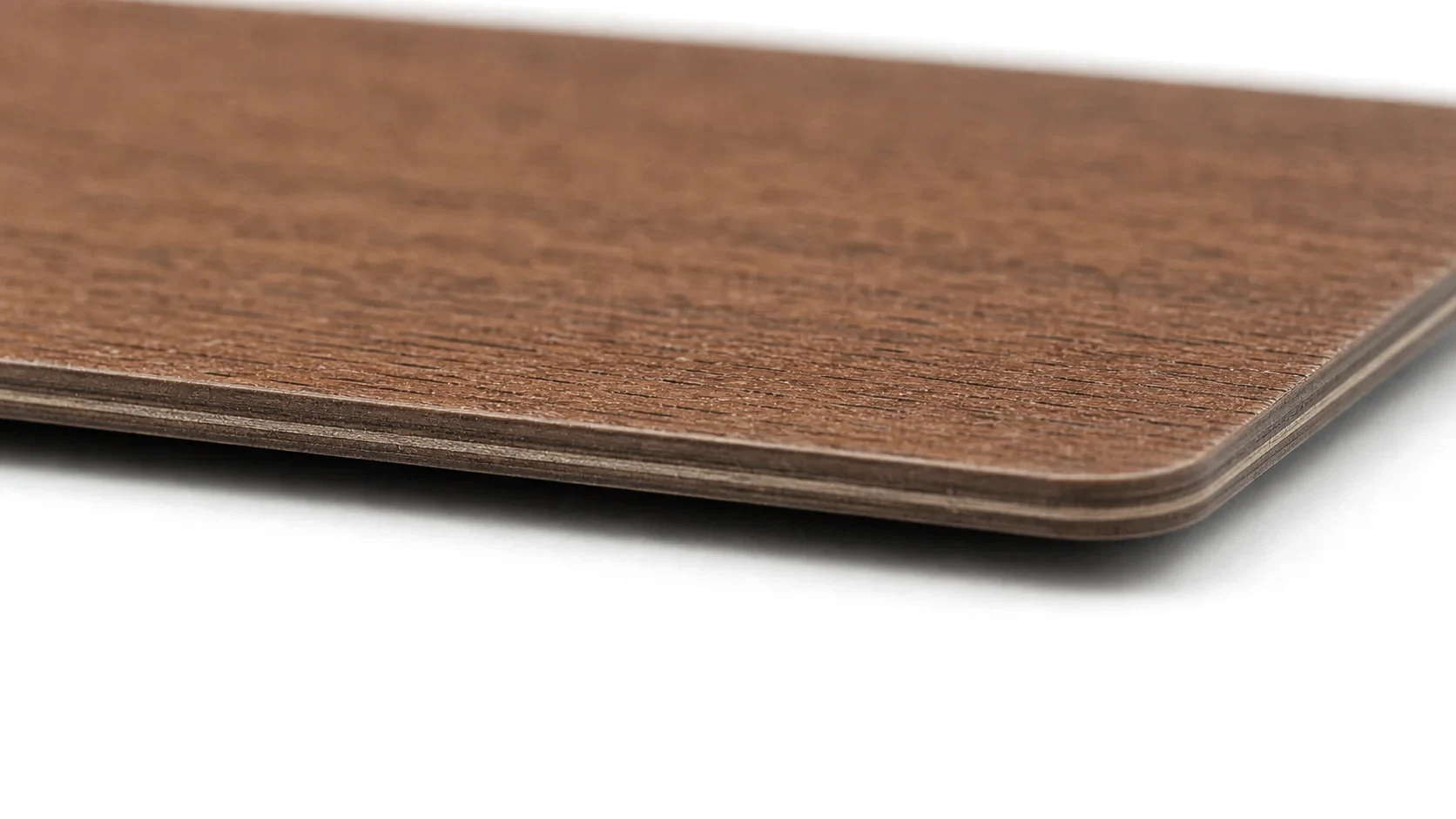
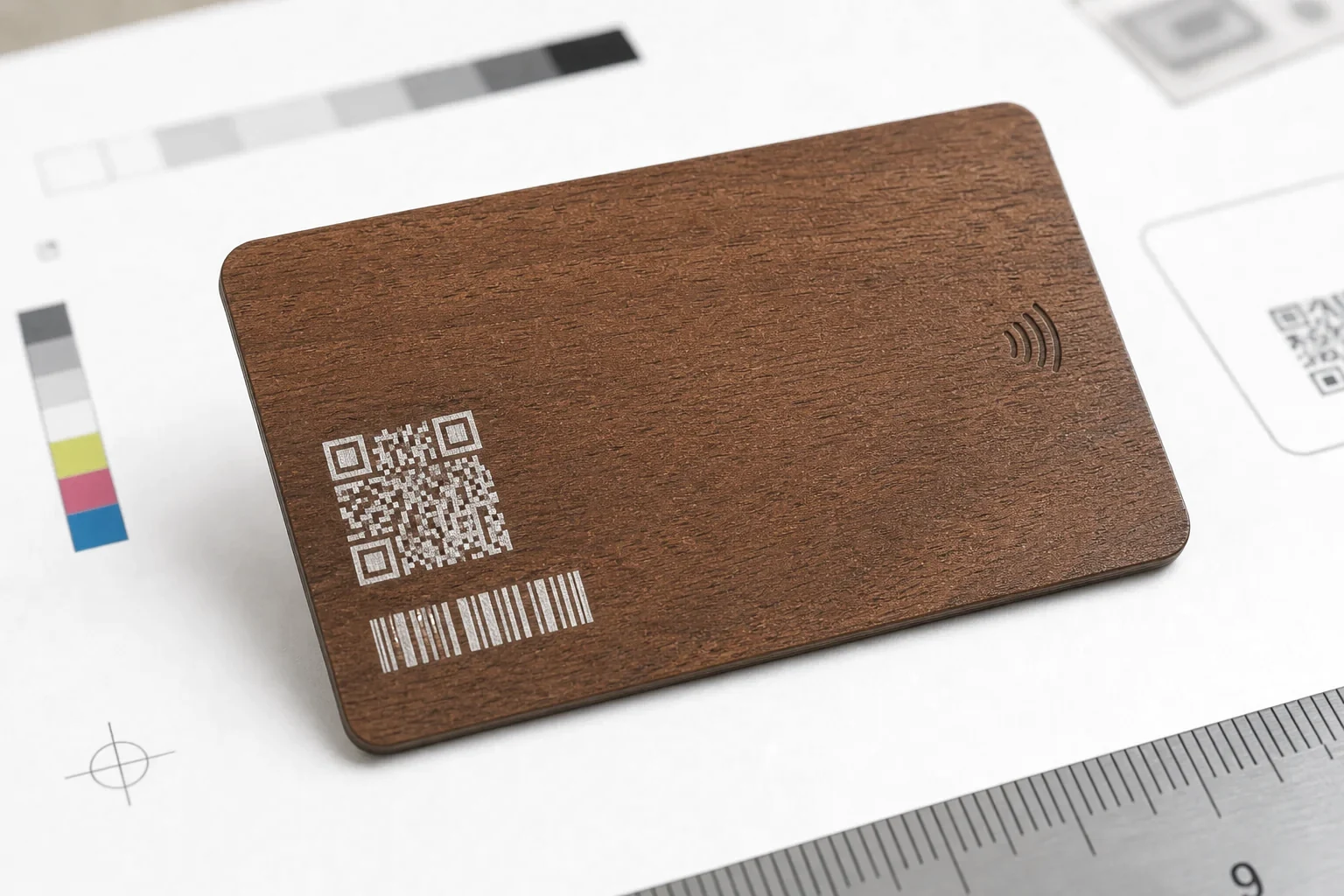
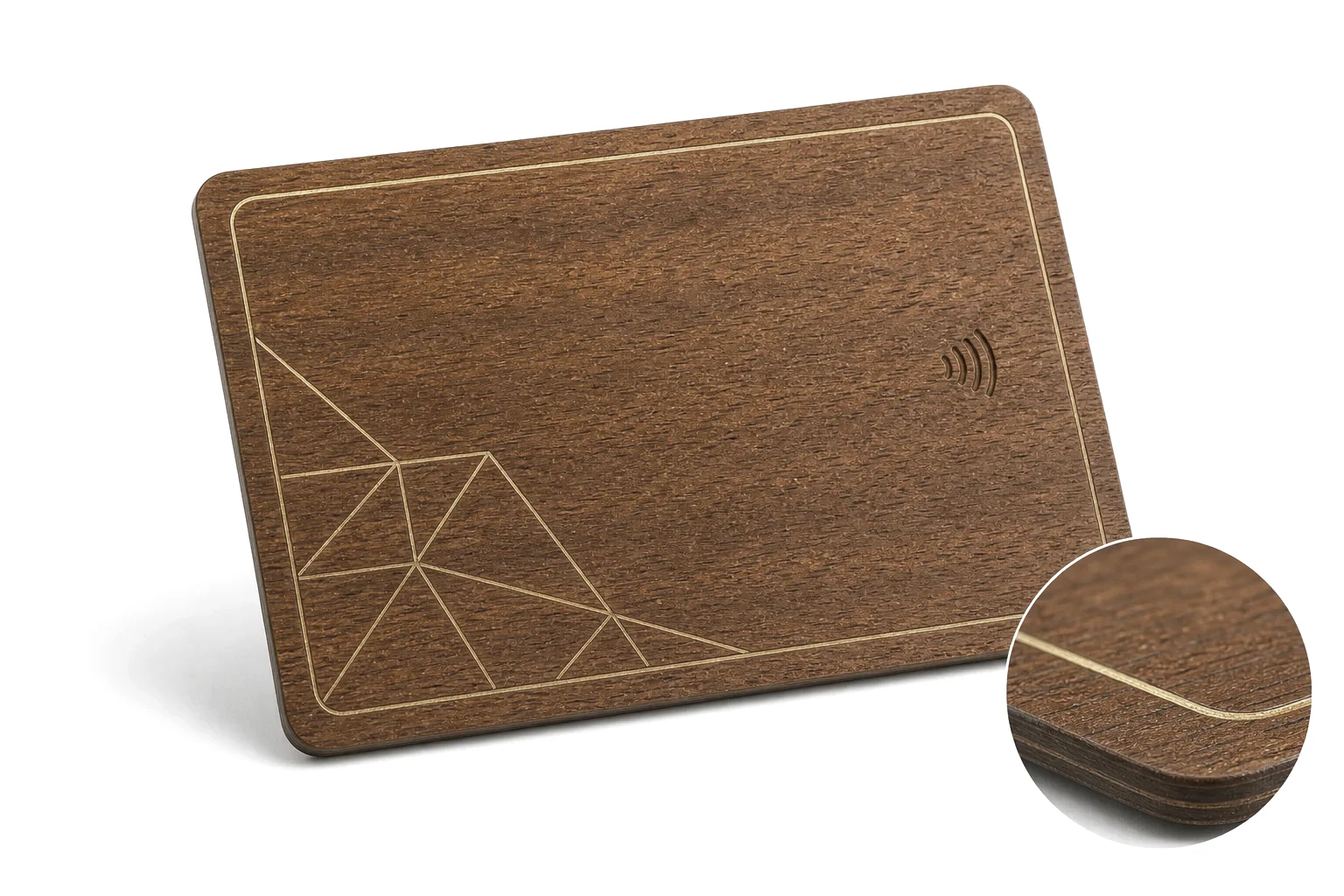
Walnut can echo classic dashboards and storage cabinetry; birch supports technical inventory graphics; sapele brings a warmer collection-room character; black wood fits modern facilities. Avoid implying that a species matches a specific vehicle unless the program can control that pairing. Use laser linework, a small foil detail, or white data fields with restraint. The grain can make each card individual, while a clear member name and serial keep it usable for staff.
Engineer the garage credential around installed equipment.
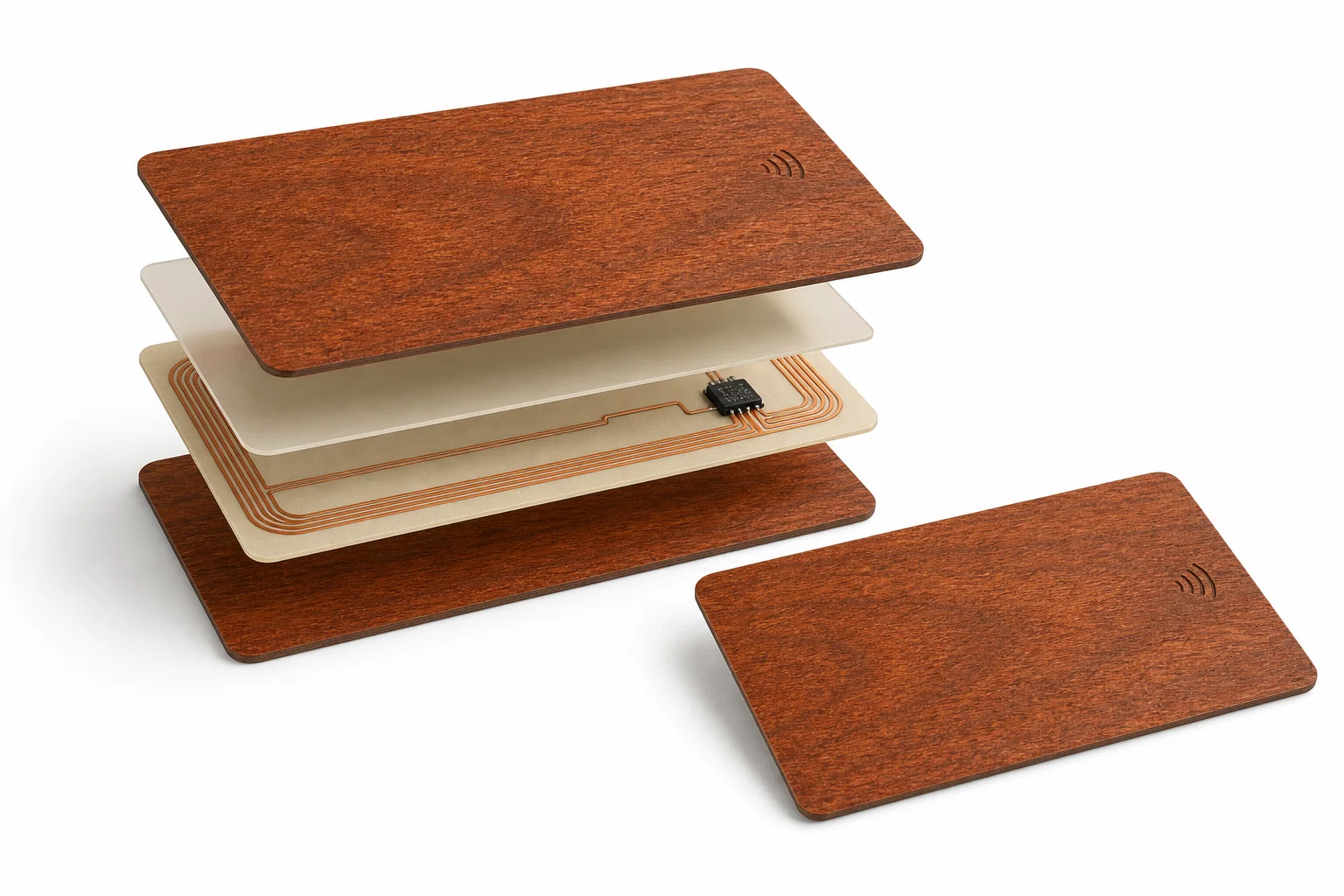
Supply the exact reader and enrollment details before production. The final wood species, thickness, inlay, chip, adhesive, finish, and presentation angle should be proven at the gate and every other required device. A phone-readable NFC card is not automatically a garage-access credential. If one body combines access and phone services, make both zones understandable and test them separately. Keep a staffed fallback for power, network, or reader failures.
Make vehicle requests private and auditable.
NFC or QR can open an authenticated request for preparation, delivery time, detailing, charging, maintenance coordination, or lounge arrival. Do not expose a vehicle list, registration, location, or release status through a public URL. The platform should record the request and require whatever secondary verification the facility uses. The card supplies a convenient route and member identity; it does not replace the facility's custody controls.
Plan inactive, lost, and collectible cards.
Collector programs often produce objects members want to keep. Decide whether an expired card becomes an inert keepsake or must be returned. In either case, disable its active identifier promptly and preserve the link between old and replacement records. Define who can issue temporary entry and how the member is reverified. For reorders, retain the approved wood sample, edge profile, print contrast, and reader result so additions remain technically consistent even when grain naturally varies.
Best uses
- Private vehicle-storage facilities
- Collector garages and automotive lounges
- Garage, pedestrian, lift, and lounge access
- Authenticated preparation and collection requests
Relevant wooden RFID card routes
Frequently asked questions
Can a wooden card open a private garage gate?
Yes, when the selected credential is compatible and the completed wooden card is tested on that exact reader and enrollment workflow.
Can members request a vehicle by tapping the card?
Yes. The tap can open an authenticated request, but the facility should preserve its own vehicle-release verification.
What happens when a collectible card expires?
Disable its active digital or access identifier. The physical card may remain as an inert keepsake if the program permits it.
Specification
| Card body | FSC-certified wood stock; plastic-free body available |
|---|---|
| Thickness | 0.80 mm to 2.0 mm, selected with the chip and reader |
| Minimum order | None — from one working sample to production runs |
| Typical production | We normally produce in about one week after artwork and sample approval |
| RF approval | We test the final wood, inlay, chip, thickness, finish, and target device together |
| Data control | Printed data, QR, NFC or RFID encoding, and packing records reconciled |
| Custody boundary | Card may initiate a request; vehicle release keeps separate identity controls |
| Reader approval | Gate, pedestrian door, lift, lounge, and enrollment station as required |
Related wood RFID card pages
- Wooden RFID Membership Cards for Yacht Clubs and Marinas
- Wooden RFID Membership Cards for Private Aviation and FBO Lounges
- Wooden RFID Membership Cards for Golf and Country Clubs
- Wooden RFID Cards for Luxury Residences and Private Clubs
- Wooden RFID Membership Cards for Private Wellness Clubs
- Custom Wooden RFID Membership Cards for Car Clubs
- Wooden Membership Cards for Car Detailing Studios
- Wooden VIP Membership Cards for Luxury Car Rental
- Wooden VIP Owner Cards for Premium Dealerships
- Wooden VIP Passes for Rallies, Track Days, and Car Events
- NFC, RFID, or QR for Wooden Automotive Membership Cards?
- How to Design Membership Tiers with Wooden Cards
- What Can Be Personalized on a Wooden RFID Card?
- Wood vs Plastic Membership Cards for Automotive Programs
- How Wooden NFC Cards Connect Automotive Member Portals
- Seven Benefits a Wooden VIP Card Can Support