Golf club guide · 9 min read
Wooden RFID Membership Cards for Golf and Country Clubs
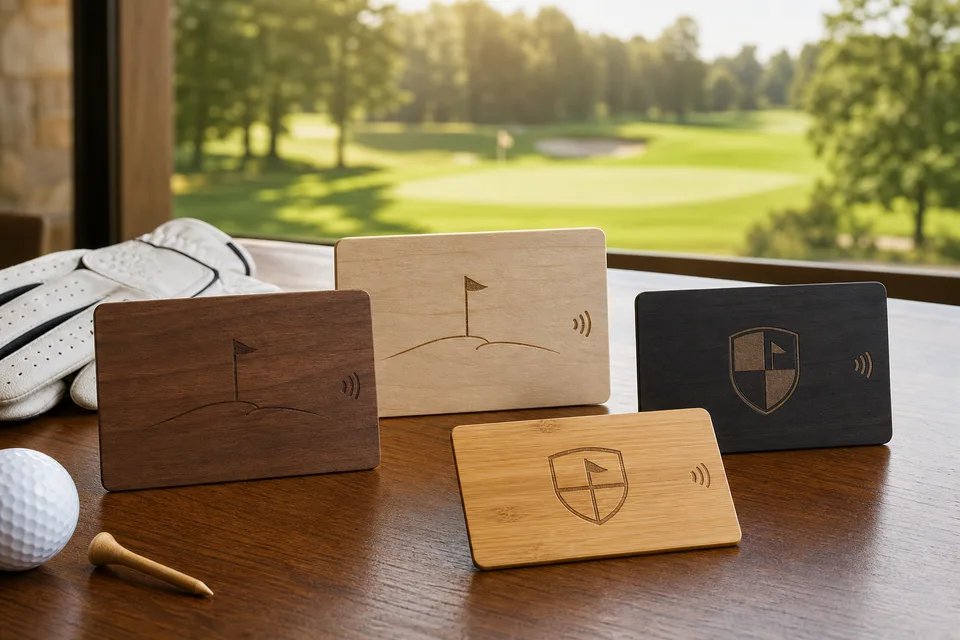
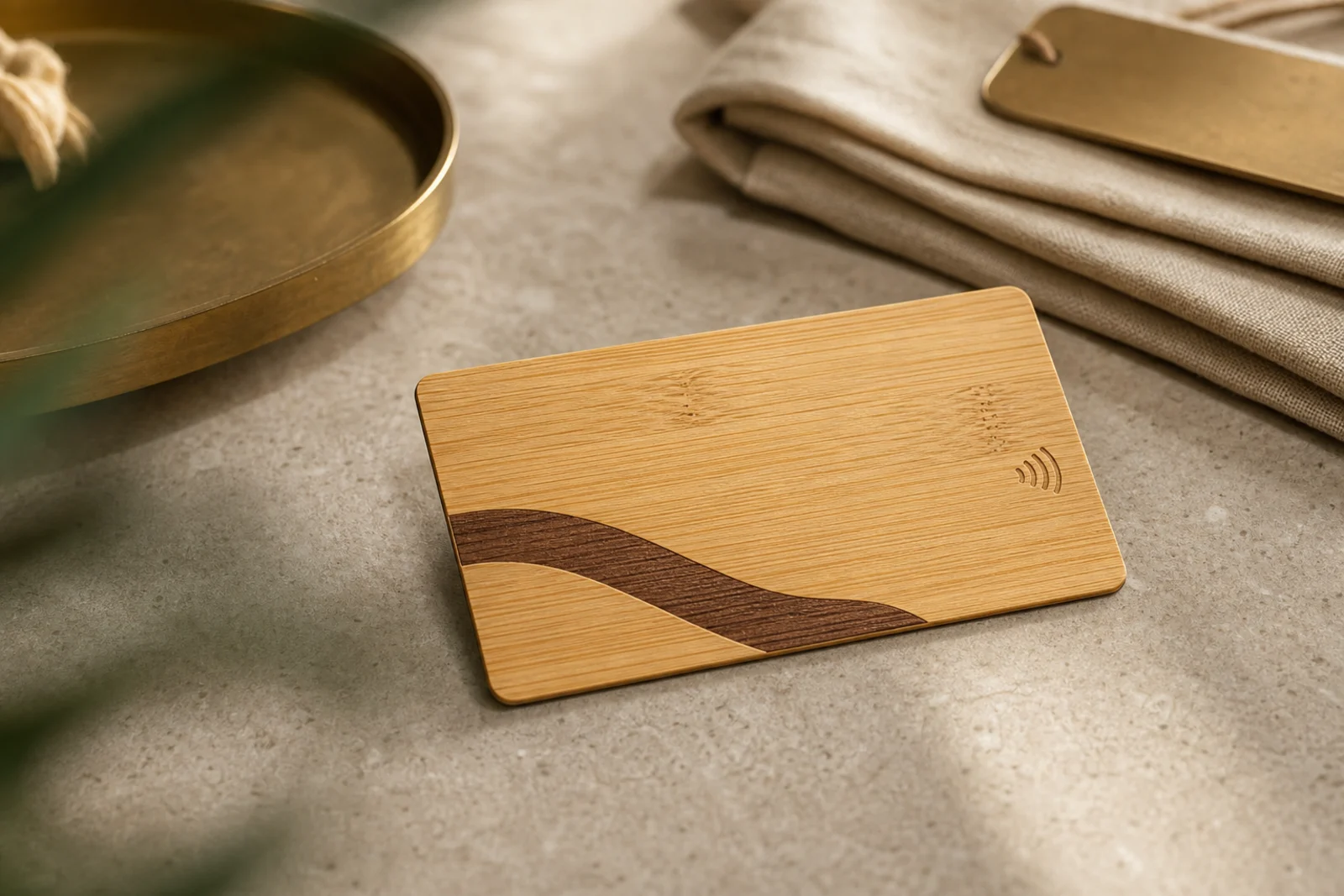
Wooden RFID membership cards fit golf and country clubs because the material belongs naturally beside timber clubhouses, leather goods, and long-standing member traditions. To work beyond presentation, the card must also survive sunscreen, damp pockets, outdoor light, locker-room handling, and every reader or phone journey assigned to it.
Industry program views
Design for a full day at the club, not only the membership desk.
Material, outdoor handling, locker access, tee-time services, guest status, and reissue rules should all be visible in the approval set.
Follow the card from arrival to the final booking.
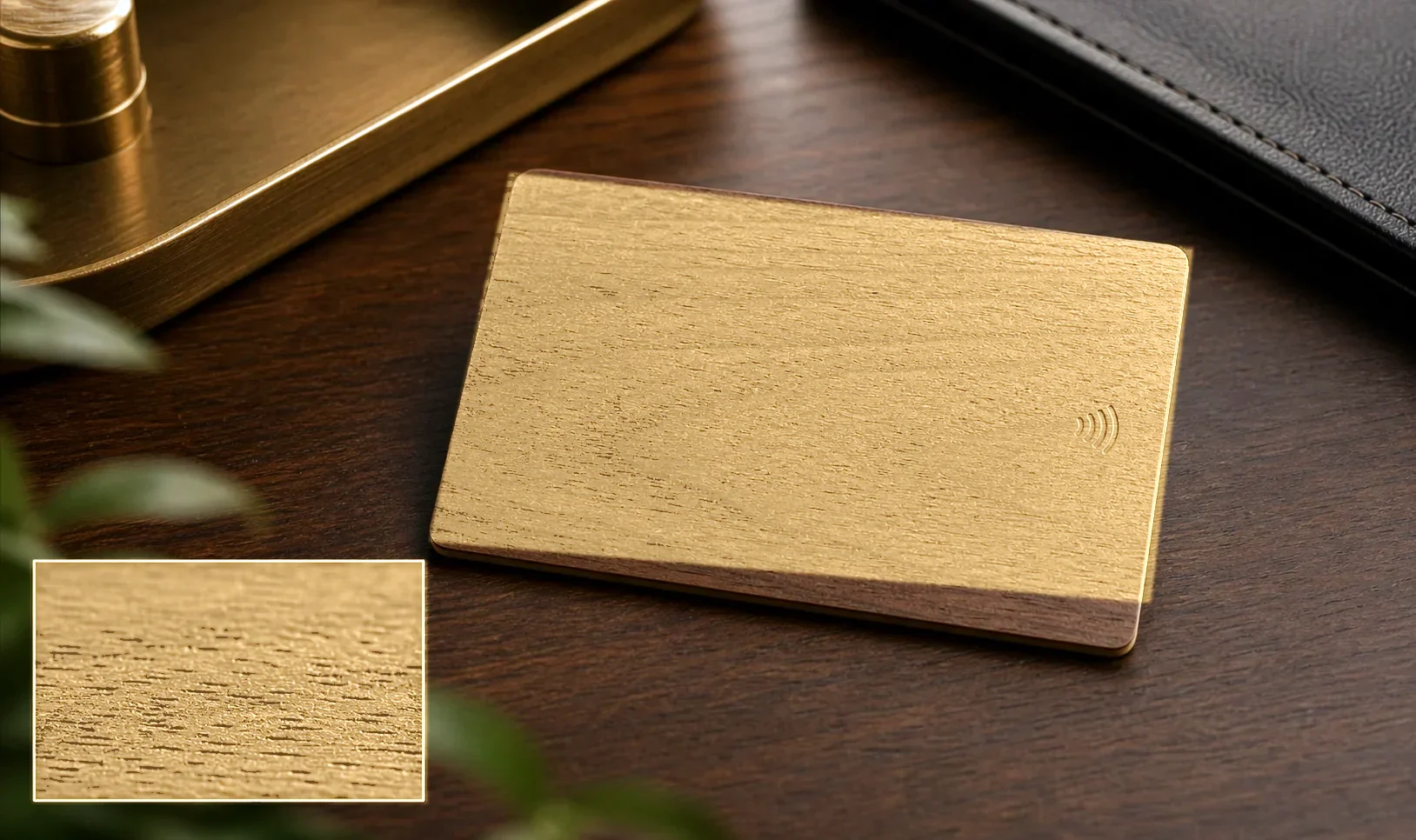
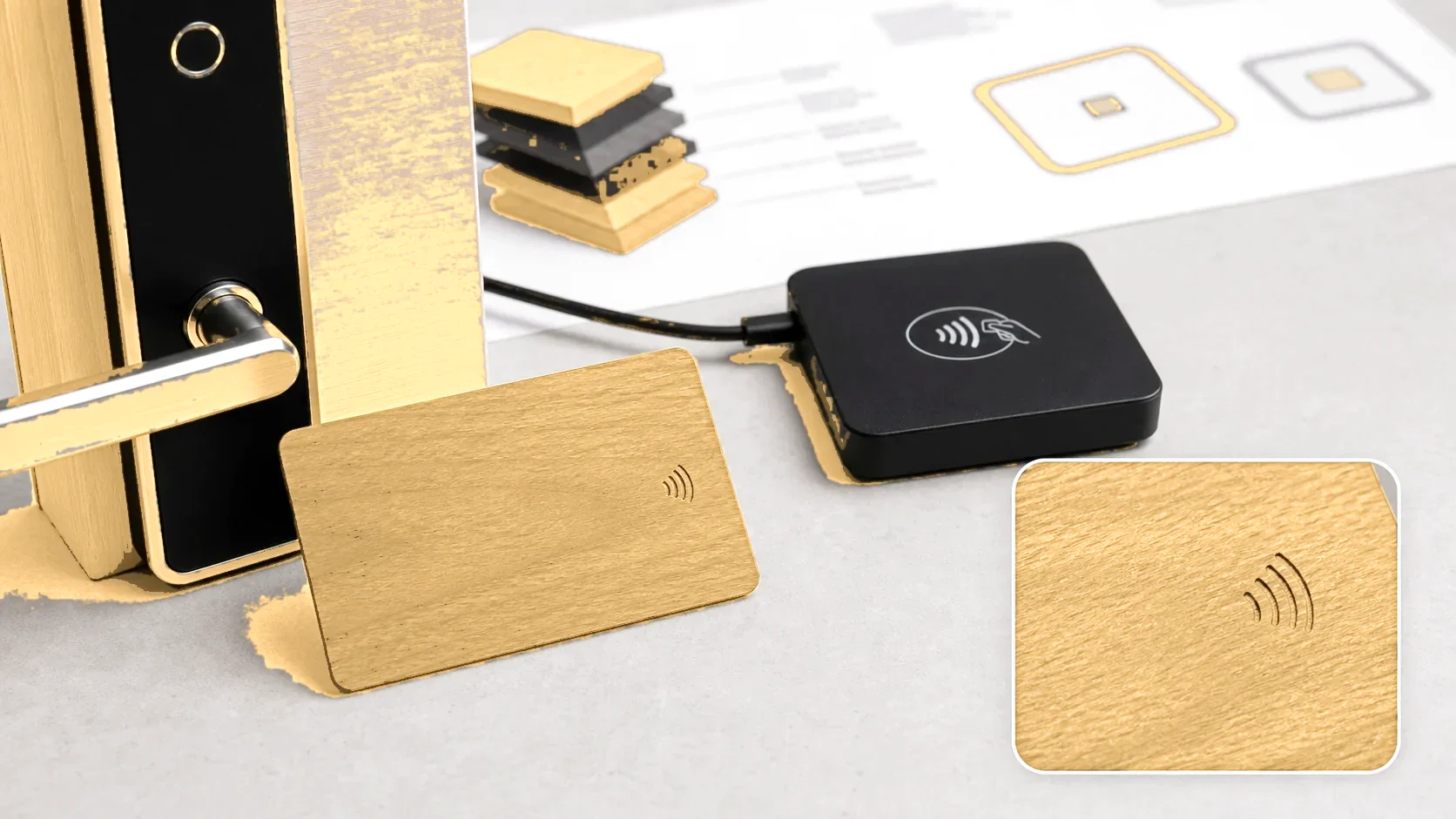
A club member may present the card at the gate, bag drop, reception, locker room, practice facility, dining desk, event check-in, or pro shop. Assign a realistic action to each place. Some need only visual identification, some may use an installed RFID reader, and others are better served by NFC or QR linking to tee times, statements, dining, or event registration. This journey prevents a card from becoming an expensive object with no agreed operational role.
Specify the surface for outdoor club life.
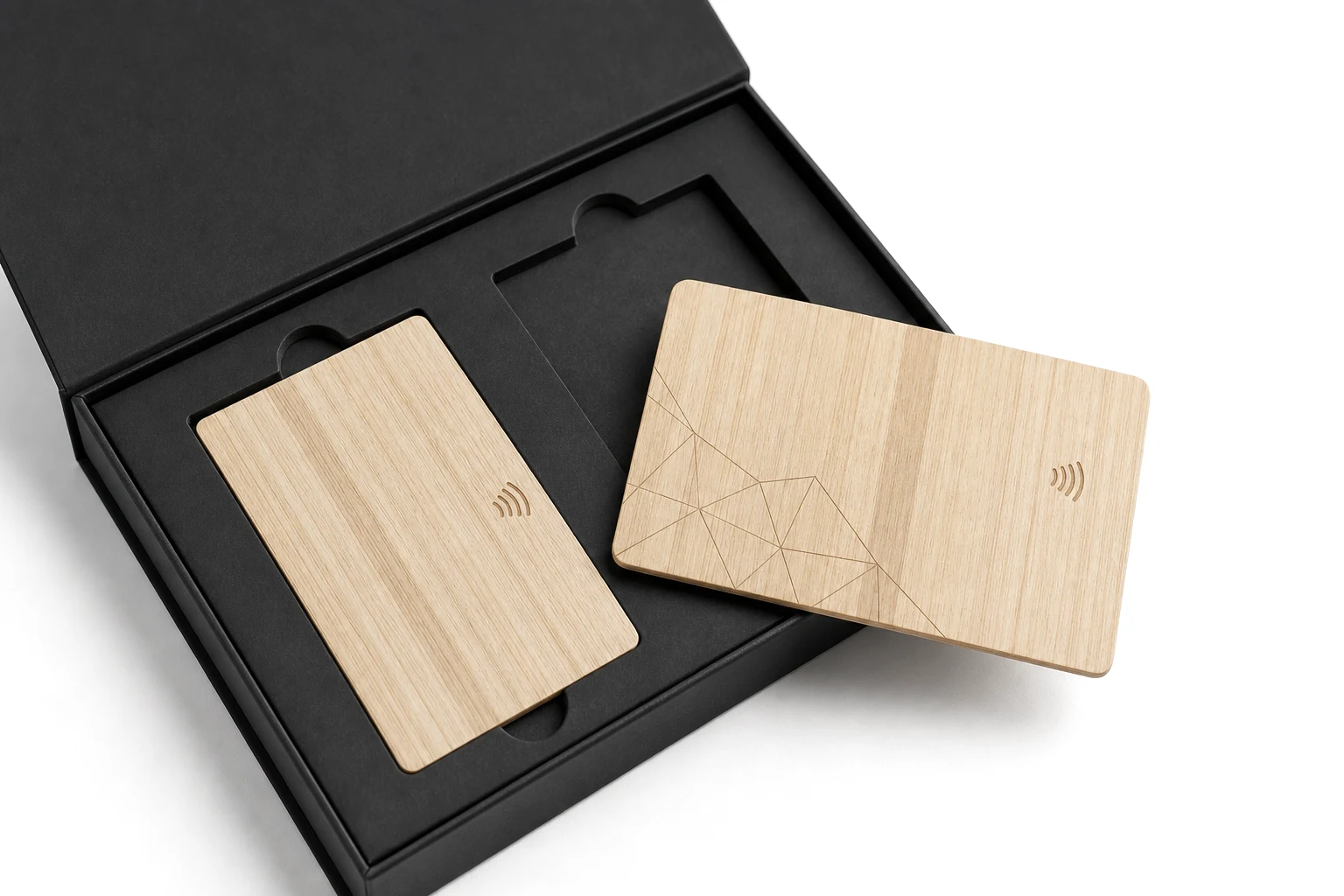
Sunscreen, moisture, soil, and repeated pocket use are more relevant than a pristine showroom test. Use a sealed surface and rounded, finished edge; keep fine white text away from the most variable grain; and test codes in sunlight as well as indoors. Walnut suits traditional clubs, birch gives the best dark-print contrast, and bamboo supports a lighter contemporary direction. The FSC-certified body may be specified without plastic laminate, while the embedded electronics should be described separately and honestly.
Make membership tiers readable across natural variation.
A darker species or foil accent can support tier recognition, but wood grain will never behave like a flat spot color. Repeat the tier in text, a symbol, or a serial prefix so staff do not have to interpret subtle tone differences. Founder, full, weekday, junior, social, and guest memberships can share a disciplined layout. Define which data is permanent, which benefits live online, and which temporary privileges should be issued as a separate event or guest credential.
Prove locker, gate, and phone behavior separately.
A card that reads at reception may fail at a locker because reader housings, presentation angles, and mounting materials differ. Test an encoded final sample at the gate, locker, lift, payment-adjacent service point, or any other location where the club expects it to work. For phone taps, test the chosen NDEF route across representative devices and cases. Provide a clear visual tap zone and a staffed lookup or QR alternative so members are not delayed by one failed interaction.
Build guest and replacement rules before issue.
Clubs need a clear difference between permanent membership, family access, day guests, contractors, and tournament credentials. The live system should decide current rights; the wooden card supplies the mapped identity. Establish who can disable a lost card, how replacements are numbered, whether the old card is returned, and how guest passes expire. Retaining an approved wood and print sample also helps future additions match the established range without pretending that every piece of timber will be visually identical.
Best uses
- Golf and country club memberships
- Gate, clubhouse, and locker access
- Tee-time, dining, and event links
- Founder, full, social, junior, and guest tiers
Relevant wooden RFID card routes
Frequently asked questions
Can one wooden card handle membership and locker access?
It can when the installed systems accept the selected credential and the final wooden sample is tested on each reader. NFC phone functions should be validated separately.
Will every card have identical grain?
No. Natural variation is part of the material. The batch is approved to a grain and tone range, while names, numbers, and tier cues stay in controlled contrast areas.
Are wooden cards suitable for tournament guests?
Yes, but temporary event or guest rights should expire in the live system and may be clearer on a separate pass when the access map differs from normal membership.
Specification
| Card body | FSC-certified wood stock; plastic-free body available |
|---|---|
| Thickness | 0.80 mm to 2.0 mm, selected with the chip and reader |
| Minimum order | None — from one working sample to production runs |
| Typical production | We normally produce in about one week after artwork and sample approval |
| RF approval | We test the final wood, inlay, chip, thickness, finish, and target device together |
| Data control | Printed data, QR, NFC or RFID encoding, and packing records reconciled |
| Handling test | Sunscreen, moisture, pockets, outdoor light, and sealed-edge wear |
| Access test | Gate, clubhouse, locker, lift, and representative NFC phones |
Related wood RFID card pages
- Wooden RFID Membership Cards for Yacht Clubs and Marinas
- Wooden RFID Membership Cards for Private Aviation and FBO Lounges
- Wooden RFID Cards for Luxury Residences and Private Clubs
- Wooden RFID Membership Cards for Private Wellness Clubs
- Custom Wooden RFID Membership Cards for Car Clubs
- Wooden Membership Cards for Car Detailing Studios
- Wooden VIP Membership Cards for Luxury Car Rental
- Wooden RFID Membership Cards for Private Car Storage
- Wooden VIP Owner Cards for Premium Dealerships
- Wooden VIP Passes for Rallies, Track Days, and Car Events
- NFC, RFID, or QR for Wooden Automotive Membership Cards?
- How to Design Membership Tiers with Wooden Cards
- What Can Be Personalized on a Wooden RFID Card?
- Wood vs Plastic Membership Cards for Automotive Programs
- How Wooden NFC Cards Connect Automotive Member Portals
- Seven Benefits a Wooden VIP Card Can Support