Detailing studio guide · 8 min read
Wooden Membership Cards for Car Detailing Studios
A wooden membership card can make a detailing plan feel considered without borrowing the appearance of a payment card. Its strongest role is to connect a known vehicle and member to care-plan recognition, priority booking, inspection records, or a controlled NFC route. Surface sealing and contrast need testing around the wet, chemical-heavy studio environment.
Industry program views
Test the card around the studio, not only at the sales desk.
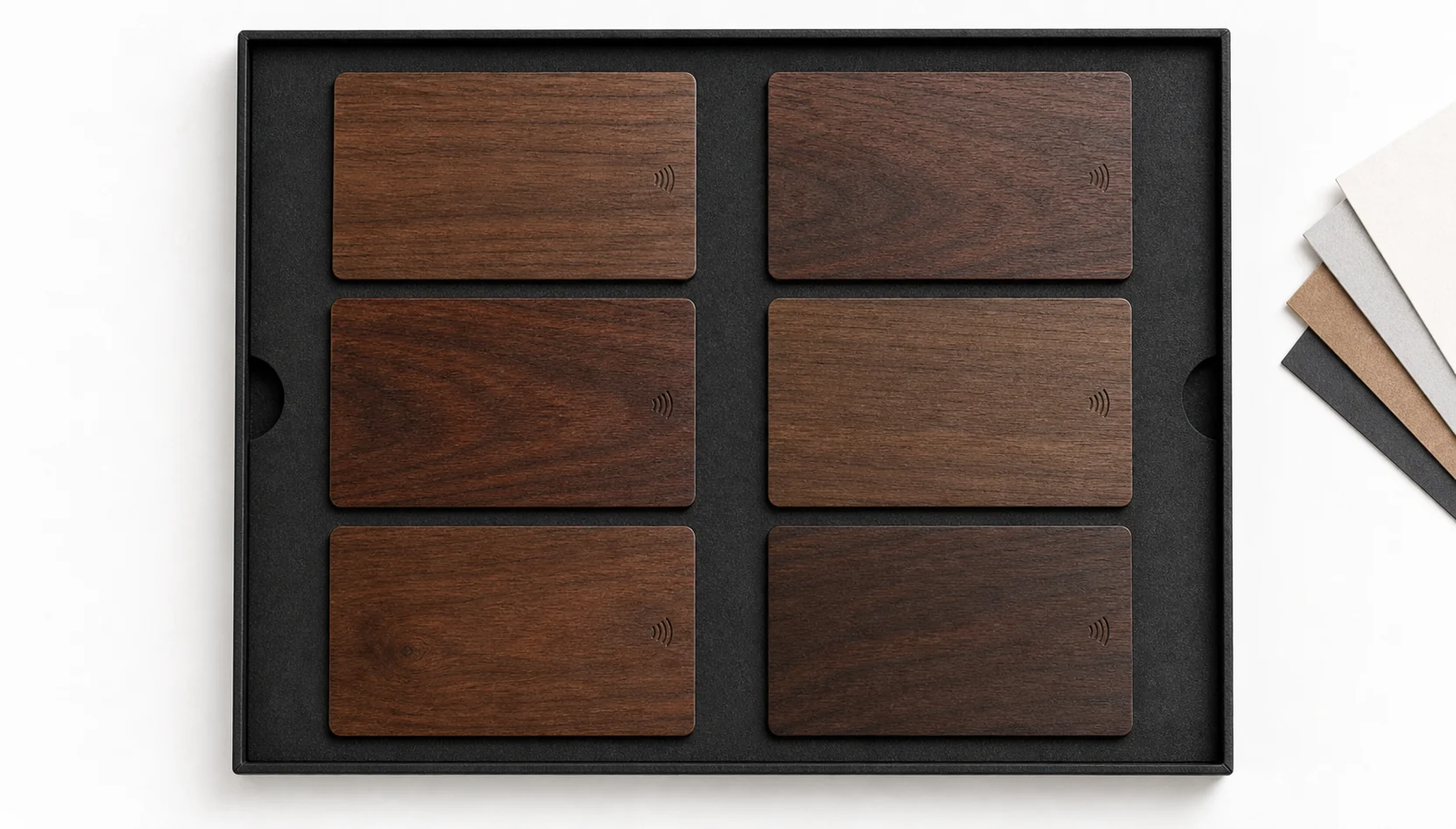
Wet hands, product residue, dark work bays, variable vehicle data, and service booking all shape a credible wooden detailing credential.
Design around the care plan, not a vague VIP label.
Define what membership changes: wash cadence, inspection depth, protected booking windows, collection radius, storage coordination, coating reviews, or seasonal checks. A card is valuable when staff can recognize the plan and reach the correct vehicle record quickly. Avoid benefits the calendar cannot sustain. A small number of clear care levels is more credible than a long discount list, and the wooden material can distinguish the program without making service promises on its own.
Choose a sealed finish for the studio environment.
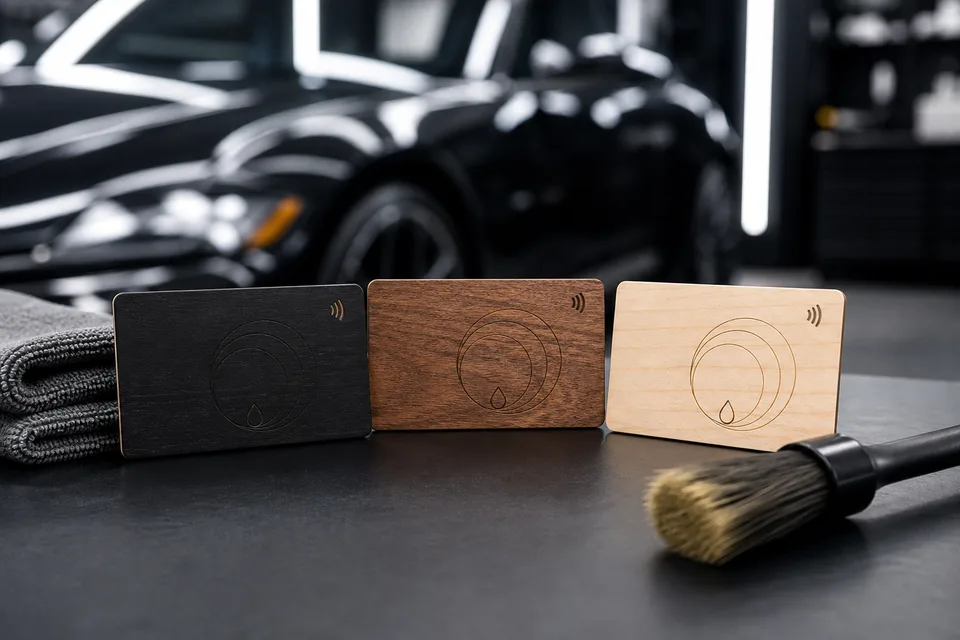
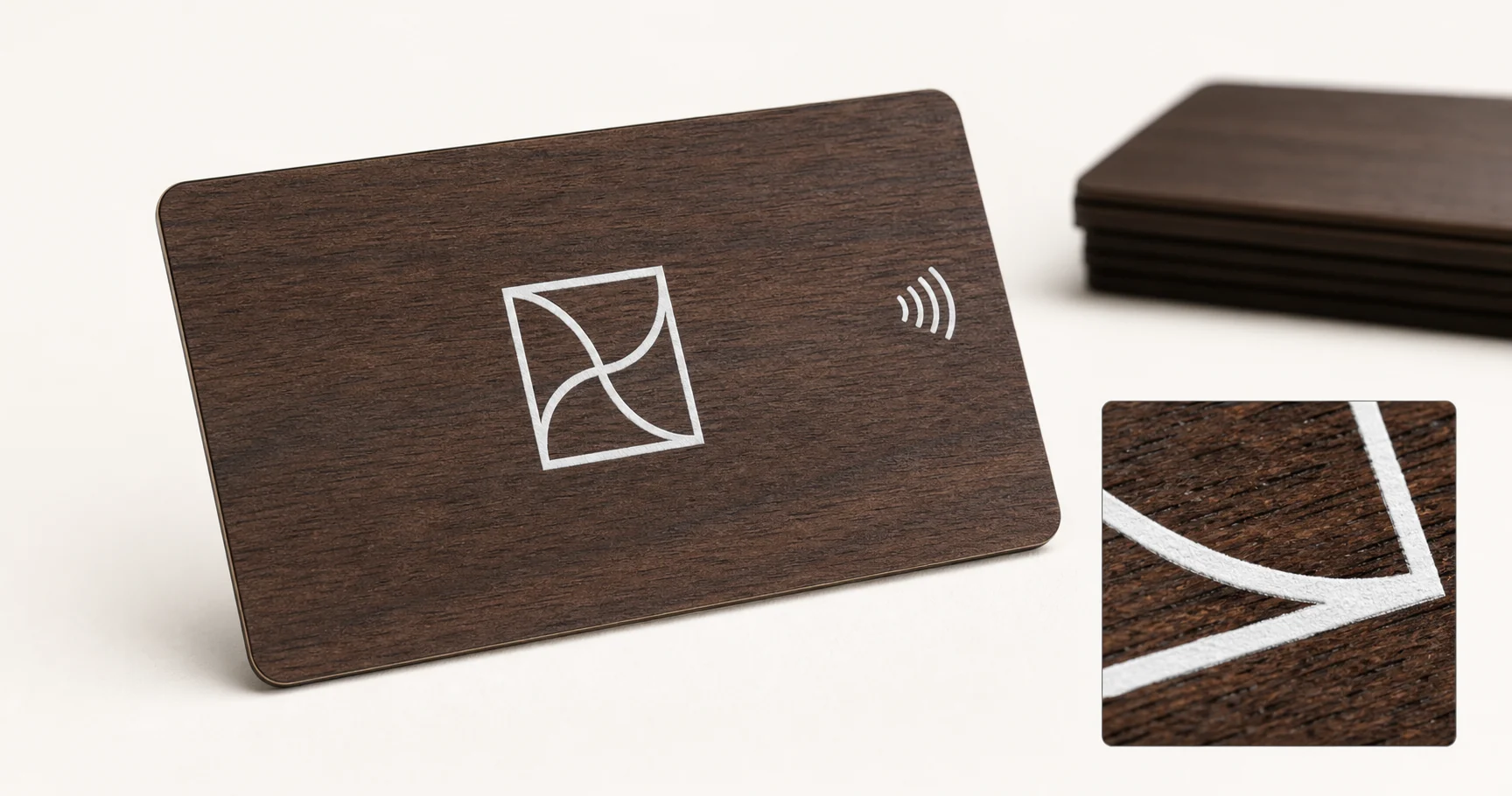
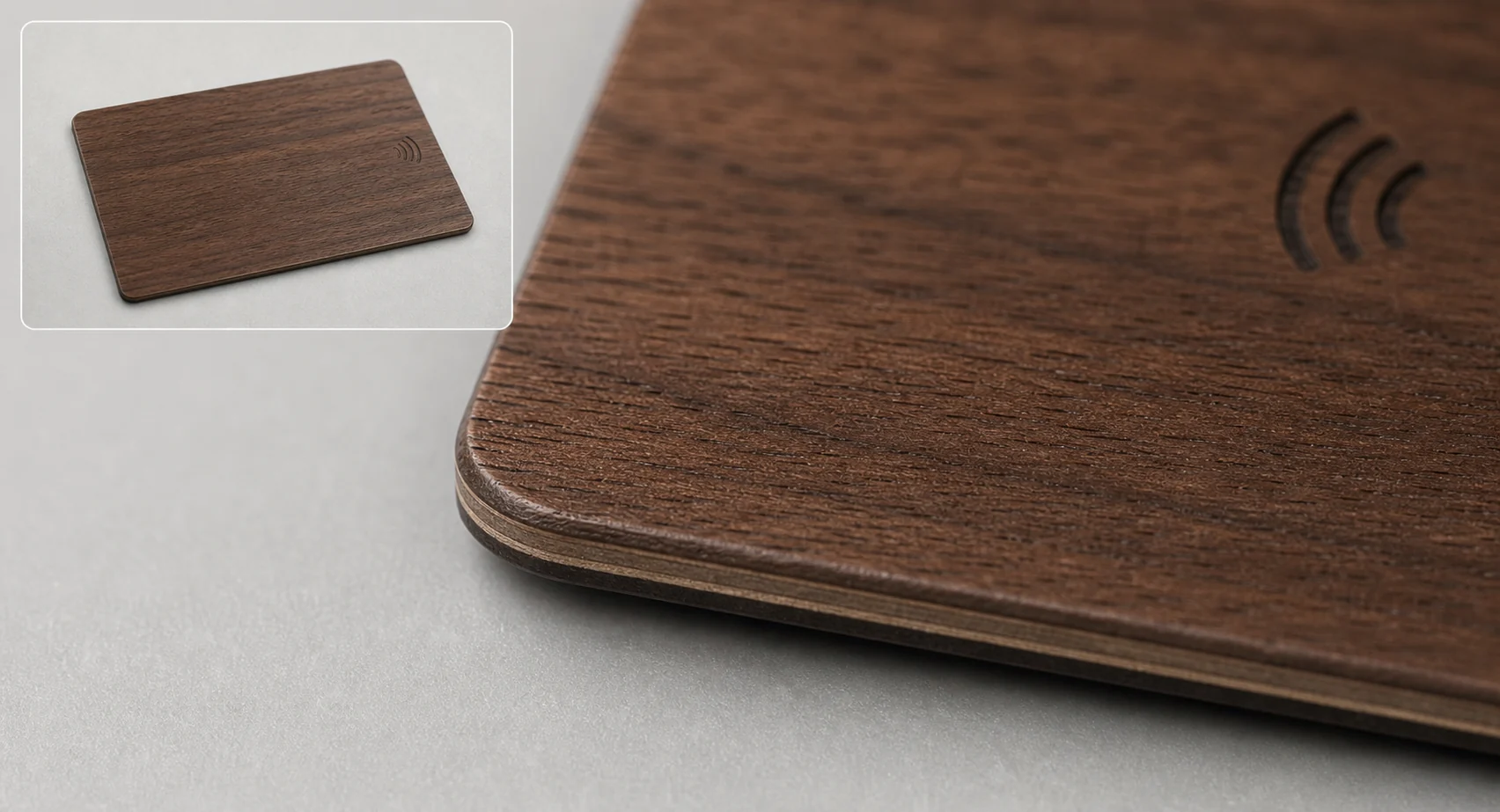
Detailing products, damp hands, microfiber contact, and dark work bays create different demands from ordinary wallet use. Test the sealed face and edge against representative cleaners and handling rather than claiming blanket chemical resistance. Black wood gives a technical look but needs strong white or light data; walnut carries warmth; birch supports inspection diagrams and QR codes. Keep low-contrast laser marks away from areas where product residue or grain can hide them.
Link the card to the vehicle record without exposing it.
NFC or QR can lead to authenticated booking, care history, approved services, or a contact route. Do not print a registration plate, VIN, address, or detailed service history unless there is a clear privacy and operating reason. A neutral member or vehicle-profile ID can retrieve the controlled record after staff or user authentication. The physical card should remain useful when the vehicle changes, so decide whether identity belongs to the member, one car, or a household fleet.
Use RFID only where the studio has a real reader need.
Most detailing programs need recognition and booking rather than secure door access. If the studio, storage bay, lounge, or wash club already uses a compatible reader, select the credential around that system and test the finished wooden sample there. Otherwise, a phone-readable NFC or QR route may be simpler. Avoid adding RFID as a decorative specification. Every technology named on the page or card should correspond to an interaction the studio can explain and support.
Control personalization and reissue from one file.
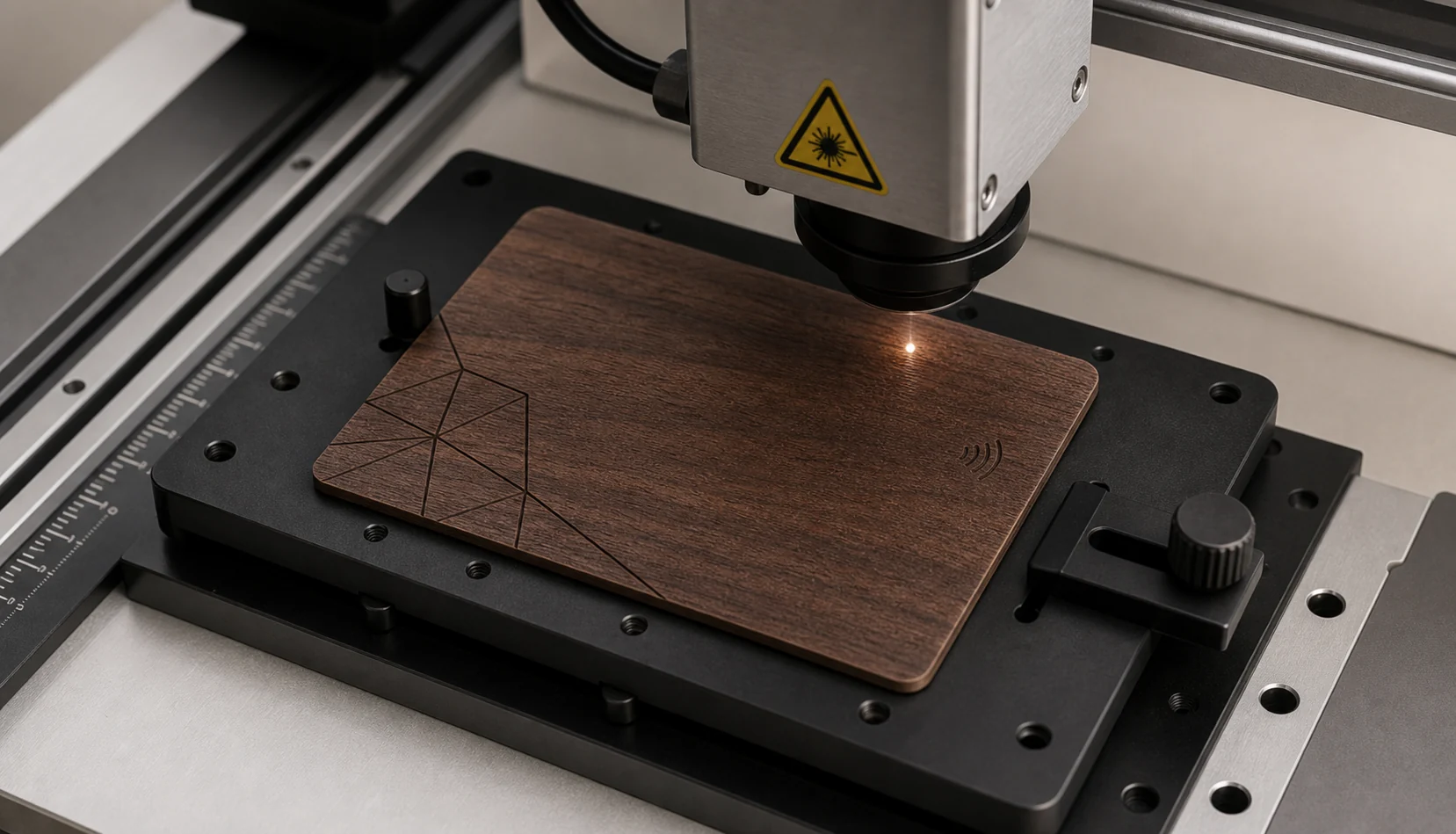
Names, vehicle profile IDs, care-plan levels, serials, QR payloads, NFC records, and packaging labels should come from the same approved data source. This prevents a premium-looking card from opening the wrong record. Proof the longest names and highest serials on the selected grain. Define how inactive plans, sold vehicles, and lost cards are handled. If the card is a keepsake after membership ends, make sure any active credential or private destination has already been disabled.
Best uses
- Premium detailing studios and wash clubs
- Recurring care and inspection plans
- Priority booking and vehicle-profile links
- Member lounges or storage readers where installed
Relevant wooden RFID card routes
Frequently asked questions
Can the card open a vehicle service history?
It can link to an authenticated record, but private vehicle and customer data should stay in the studio's controlled system.
Is black wood practical in a detailing studio?
Yes when names, codes, and tap guidance use sufficient contrast and the sealed surface is approved under actual studio handling.
Does a detailing membership need RFID?
Only if a compatible installed reader has a defined role. NFC or QR is often the simpler route for booking and member profiles.
Specification
| Card body | FSC-certified wood stock; plastic-free body available |
|---|---|
| Thickness | 0.80 mm to 2.0 mm, selected with the chip and reader |
| Minimum order | None — from one working sample to production runs |
| Typical production | We normally produce in about one week after artwork and sample approval |
| RF approval | We test the final wood, inlay, chip, thickness, finish, and target device together |
| Data control | Printed data, QR, NFC or RFID encoding, and packing records reconciled |
| Surface test | Representative cleaners, damp handling, microfiber contact, and low-light legibility |
| Identity model | Member, vehicle, or household fleet selected before personalization |
Related wood RFID card pages
- Wooden RFID Membership Cards for Yacht Clubs and Marinas
- Wooden RFID Membership Cards for Private Aviation and FBO Lounges
- Wooden RFID Membership Cards for Golf and Country Clubs
- Wooden RFID Cards for Luxury Residences and Private Clubs
- Wooden RFID Membership Cards for Private Wellness Clubs
- Custom Wooden RFID Membership Cards for Car Clubs
- Wooden VIP Membership Cards for Luxury Car Rental
- Wooden RFID Membership Cards for Private Car Storage
- Wooden VIP Owner Cards for Premium Dealerships
- Wooden VIP Passes for Rallies, Track Days, and Car Events
- NFC, RFID, or QR for Wooden Automotive Membership Cards?
- How to Design Membership Tiers with Wooden Cards
- What Can Be Personalized on a Wooden RFID Card?
- Wood vs Plastic Membership Cards for Automotive Programs
- How Wooden NFC Cards Connect Automotive Member Portals
- Seven Benefits a Wooden VIP Card Can Support