Yacht club guide · 9 min read
Wooden RFID Membership Cards for Yacht Clubs and Marinas
Wooden RFID membership cards give yacht clubs a warmer alternative to plastic while still supporting dock access, member recognition, and phone-based services. The successful version begins with the marina environment: salt air, wet hands, reader locations, seasonal use, and a wood finish that can be maintained without hiding the grain.
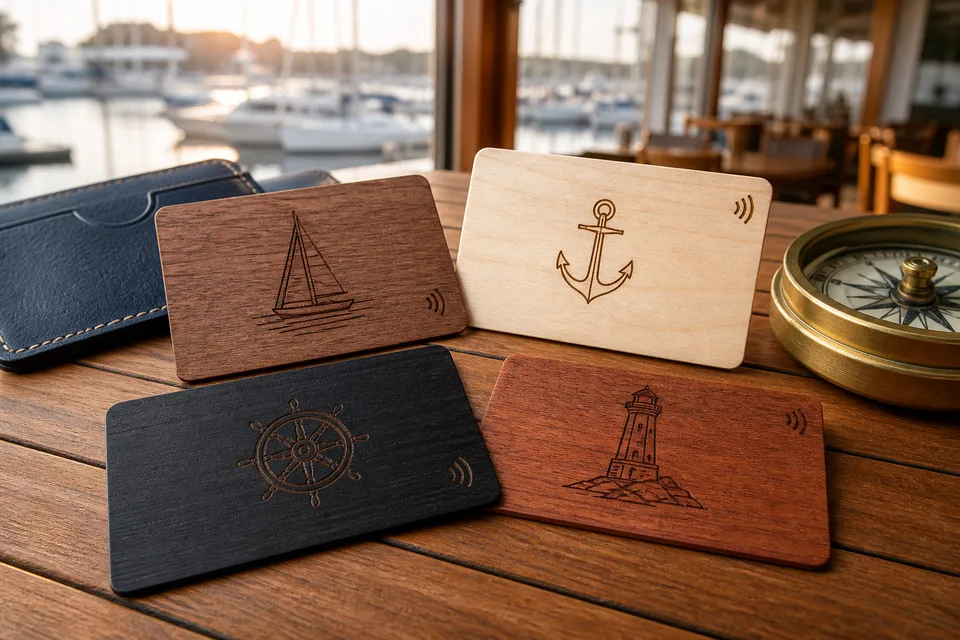
Industry program views
Approve the card where marina life will test it.
These references connect grain, sealed edges, dock access, member service, and presentation instead of treating the wooden card as a decorative souvenir.
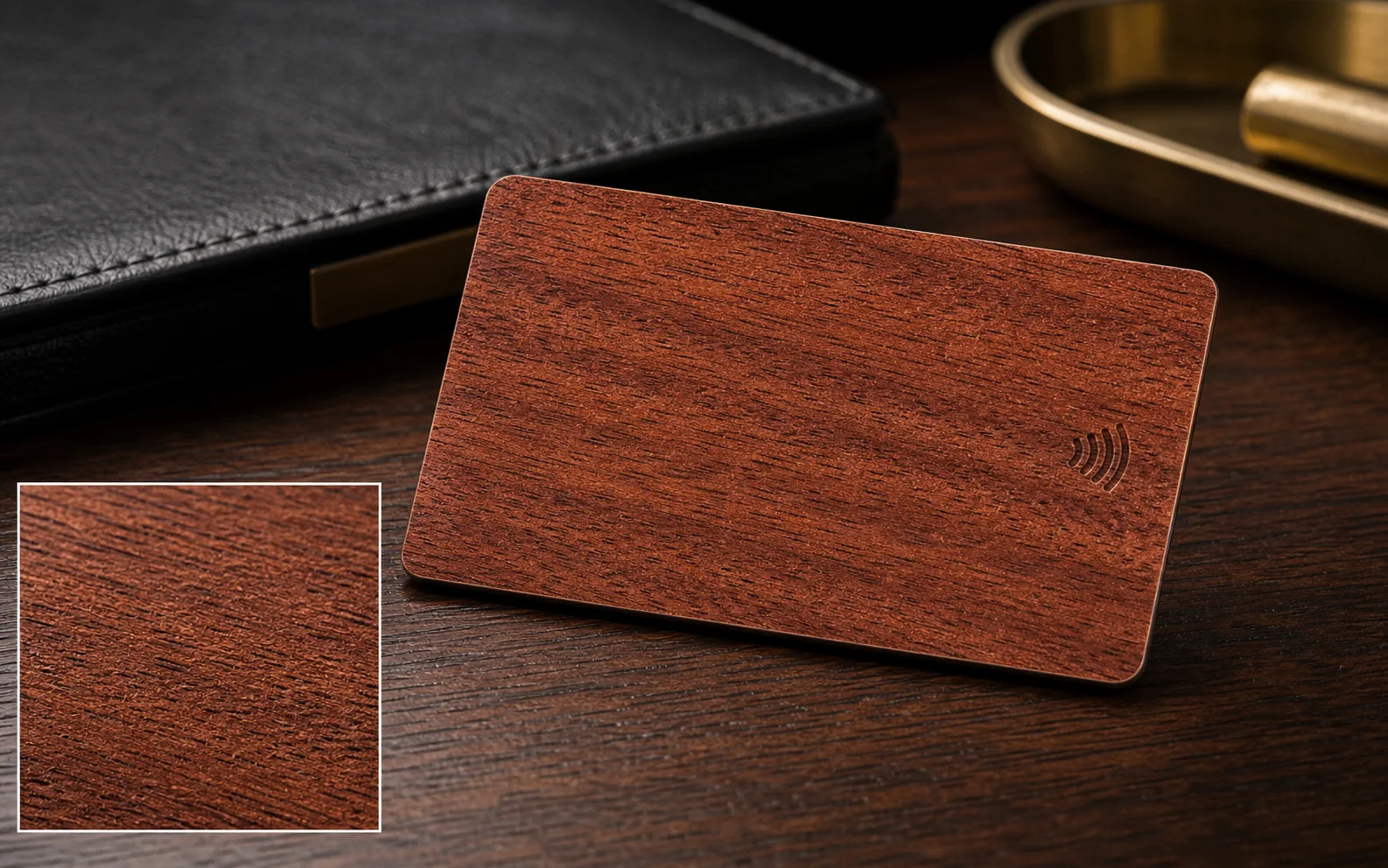
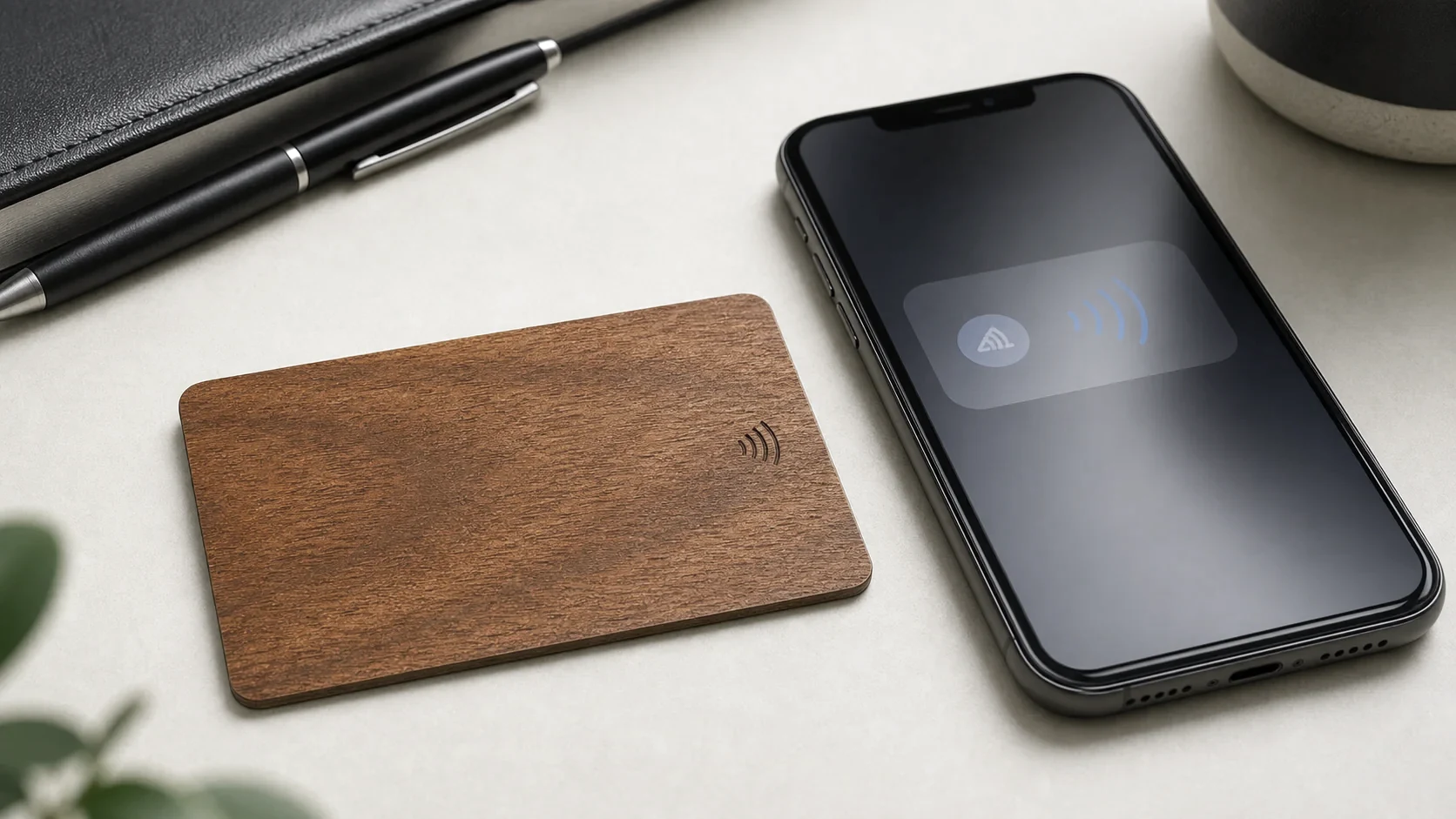
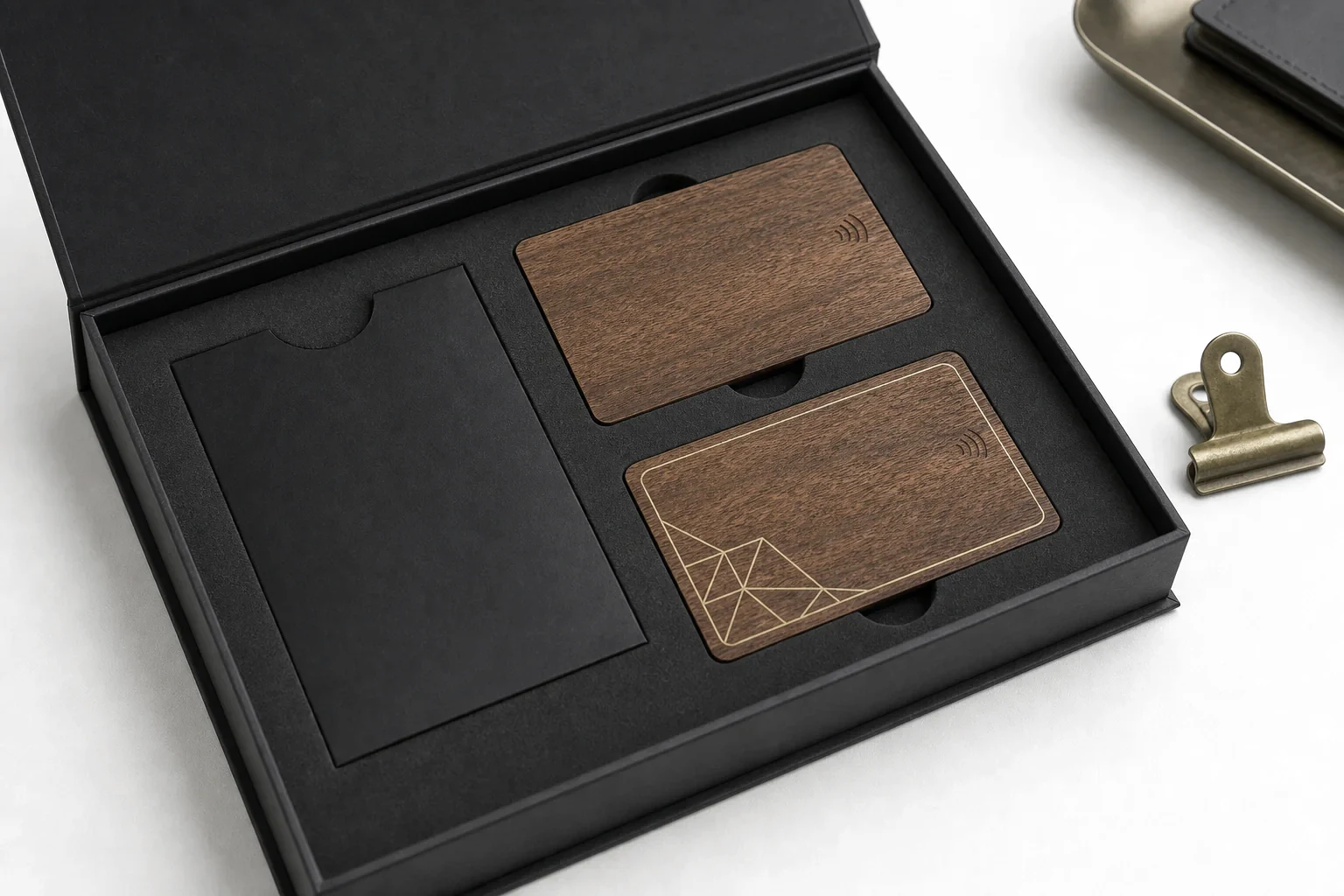
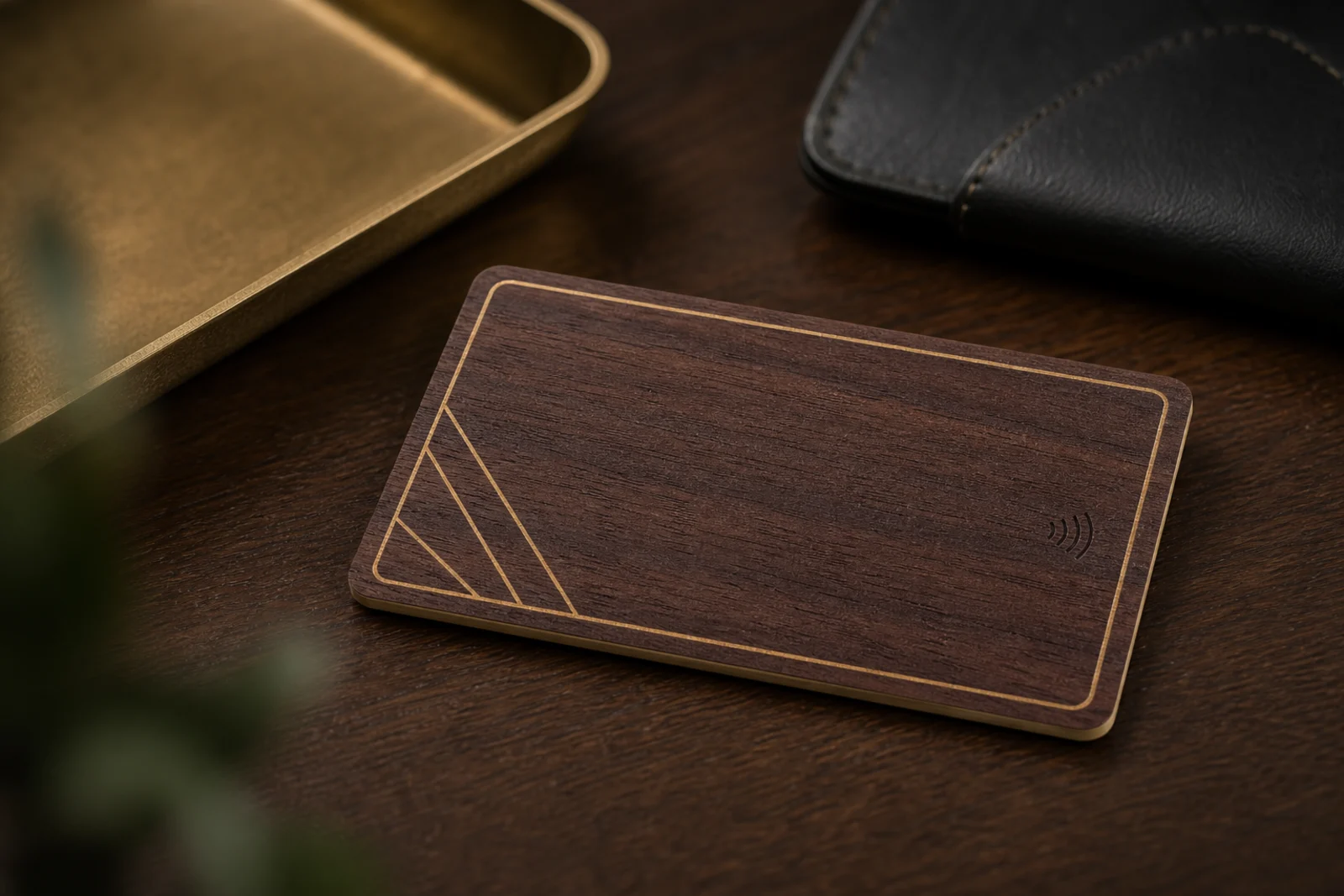
Start with salt air, wet hands, and real storage habits.
A marina card moves between wallets, boat bags, reception desks, and exposed walkways. Specify a sealed face, closed edge, readable member data, and a sleeve only if members will actually keep using it. Walnut or sapele gives a formal club character; lighter birch or bamboo makes dark print and QR zones easier to read. The approval sample should be handled with damp hands and viewed in hard daylight, because a beautiful studio sample can behave very differently at the dock.
Separate dock access from phone services.
Installed RFID readers and smartphone NFC taps solve different jobs. A dock gate may require a specific HF or LF credential, while an NFC record can open berth services, dining reservations, event details, or a member contact page. Decide which action belongs to each touchpoint before selecting the chip. If one wooden card carries both roles, confirm antenna position, tap guidance, and encoding on the finished body rather than assuming a generic inlay will perform through every thickness and finish.
Use the grain to express membership without relying on color alone.
Wood already provides variation, so a tier system should remain legible when two cards do not have identical grain. Combine the species or stain with a clear tier name, serial, icon, or restrained foil line. Founder, full, associate, and guest categories can share one layout while using controlled material cues. Avoid promising exact grain matching across a batch; instead, approve an acceptable range and keep variable names and numbers in areas where knots or dark streaks will not reduce contrast.
Test every reader in the member route.
A successful reception test does not prove performance at the dock gate, parking entry, lift, locker, or fuel-area reader. Record each device model, mounting position, expected presentation angle, and fallback process. Then test an encoded wooden sample with the final adhesive stack, thickness, seal, and artwork. The useful acceptance result is not simply ‘reads’; it is a repeatable read in the way a member naturally presents the card, including through any sleeve the club intends to issue.
Plan seasonal issue, loss, and surface care together.
Marina programs often change with berth assignments, family access, staff permissions, and seasonal guests. Keep current rights in the access or membership platform, not in printed claims that are difficult to change. Link the visible serial, encoded identifier, and member record so a lost card can be disabled and replaced without ambiguity. Provide simple care guidance for the sealed wood surface, and retain one approved reference sample so later additions match the original grain range, marking contrast, and edge finish.
Best uses
- Private yacht clubs and marinas
- Berth-holder and founder memberships
- Dock, lounge, locker, or parking access
- NFC links to member and marina services
Relevant wooden RFID card routes
Frequently asked questions
Can a wooden card open a marina gate?
Yes, when its chip, inlay, encoding, thickness, and finish are matched to the installed gate reader and proven on a finished sample.
Which wood works well for yacht club cards?
Walnut and sapele suit formal membership programs; birch and bamboo offer stronger contrast for printed data and QR codes. The final choice should also pass the club's handling and reader tests.
How should a lost marina card be replaced?
Disable the old encoded identifier, verify the member, issue a new mapped serial, and preserve the replacement record in the active membership or access system.
Specification
| Card body | FSC-certified wood stock; plastic-free body available |
|---|---|
| Thickness | 0.80 mm to 2.0 mm, selected with the chip and reader |
| Minimum order | None — from one working sample to production runs |
| Typical production | We normally produce in about one week after artwork and sample approval |
| RF approval | We test the final wood, inlay, chip, thickness, finish, and target device together |
| Data control | Printed data, QR, NFC or RFID encoding, and packing records reconciled |
| Environment check | Salt air, wet handling, strong daylight, sleeves, and sealed-edge wear |
| System test | Reception, dock, parking, lift, locker, and any other installed reader |
Related wood RFID card pages
- Wooden RFID Membership Cards for Private Aviation and FBO Lounges
- Wooden RFID Membership Cards for Golf and Country Clubs
- Wooden RFID Cards for Luxury Residences and Private Clubs
- Wooden RFID Membership Cards for Private Wellness Clubs
- Custom Wooden RFID Membership Cards for Car Clubs
- Wooden Membership Cards for Car Detailing Studios
- Wooden VIP Membership Cards for Luxury Car Rental
- Wooden RFID Membership Cards for Private Car Storage
- Wooden VIP Owner Cards for Premium Dealerships
- Wooden VIP Passes for Rallies, Track Days, and Car Events
- NFC, RFID, or QR for Wooden Automotive Membership Cards?
- How to Design Membership Tiers with Wooden Cards
- What Can Be Personalized on a Wooden RFID Card?
- Wood vs Plastic Membership Cards for Automotive Programs
- How Wooden NFC Cards Connect Automotive Member Portals
- Seven Benefits a Wooden VIP Card Can Support