Private aviation guide · 9 min read
Wooden RFID Membership Cards for Private Aviation and FBO Lounges
A wooden RFID card can support a private aviation program without imitating a boarding pass or payment card. Its role is quieter: identify a known member, connect lounge or concierge services, and operate a compatible reader where required. Wood species, data visibility, privacy, and the exact handoff experience should be resolved as one controlled credential.
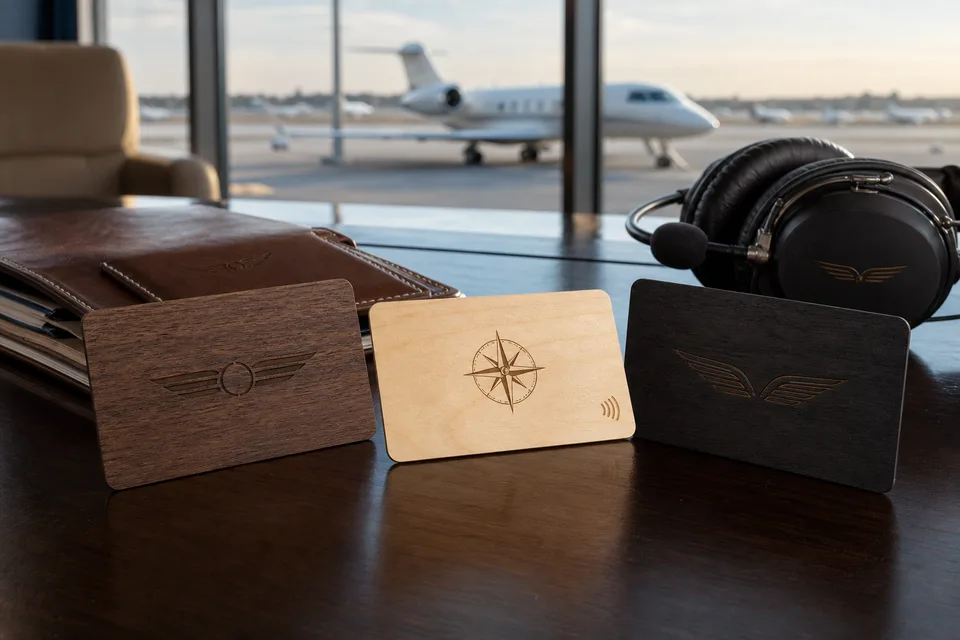
Industry program views
Keep the aviation credential discreet, legible, and operational.
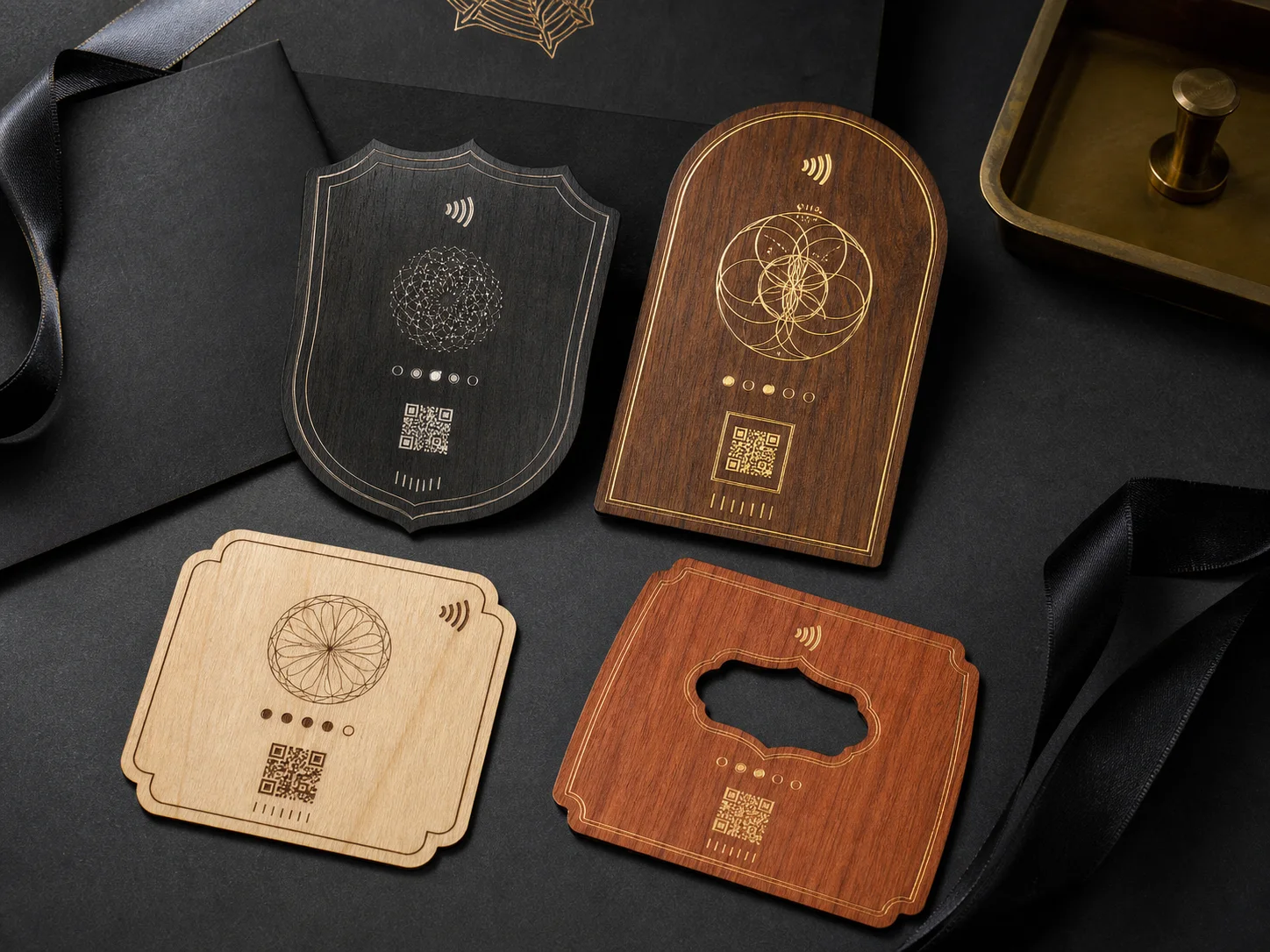
The useful details are the handoff, name hierarchy, lounge reader, service destination, and protective presentation—not decorative aviation clichés.
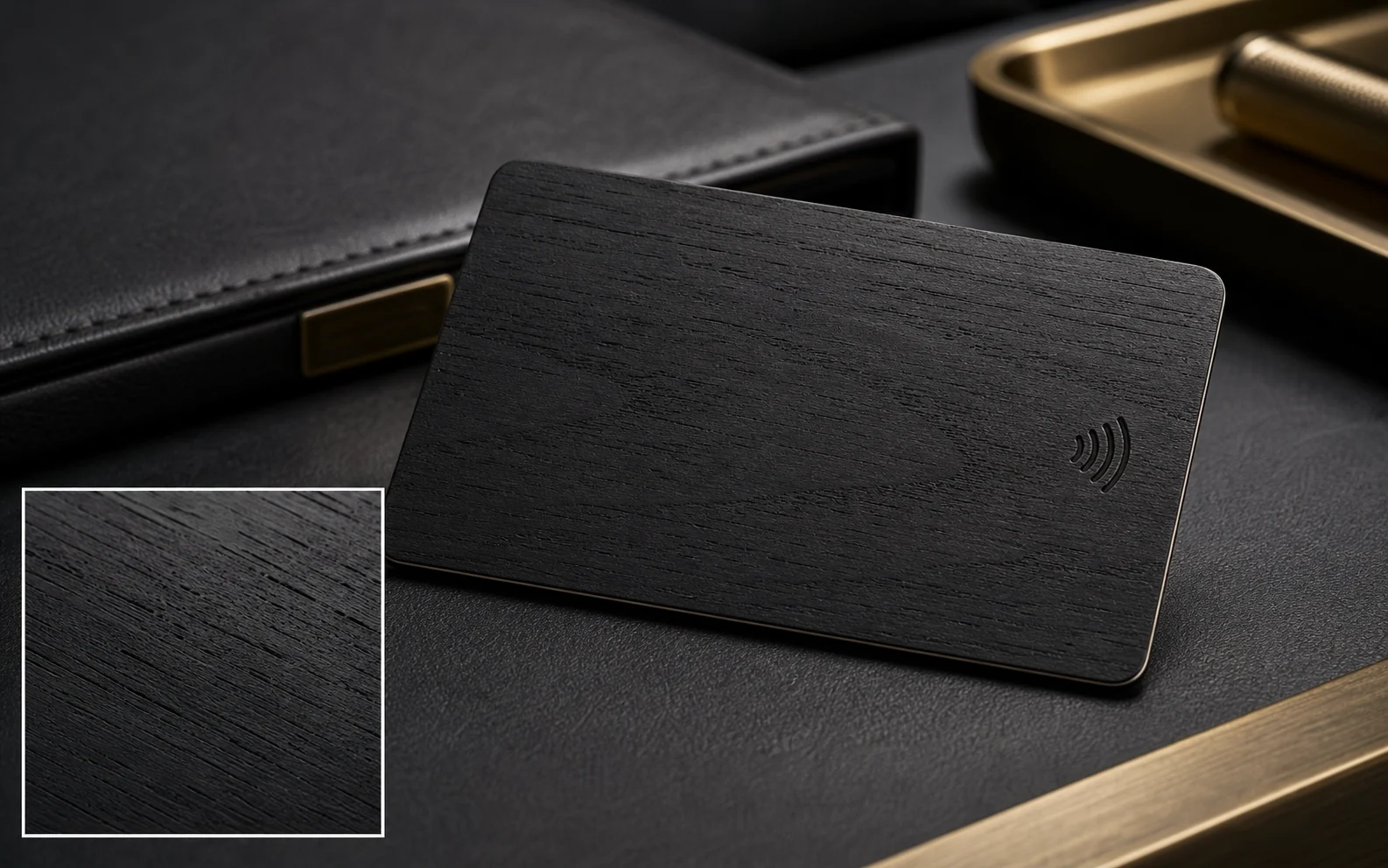
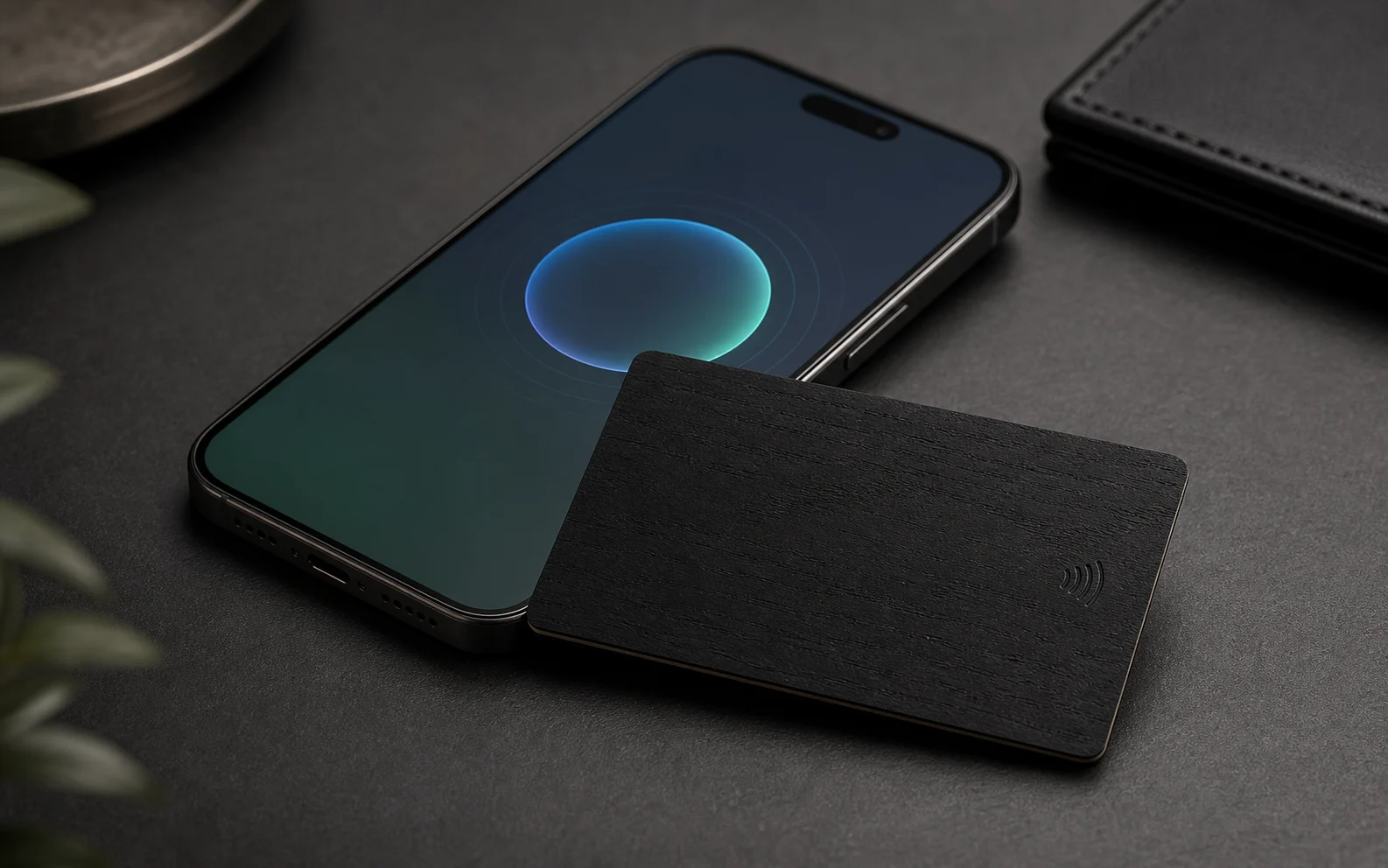
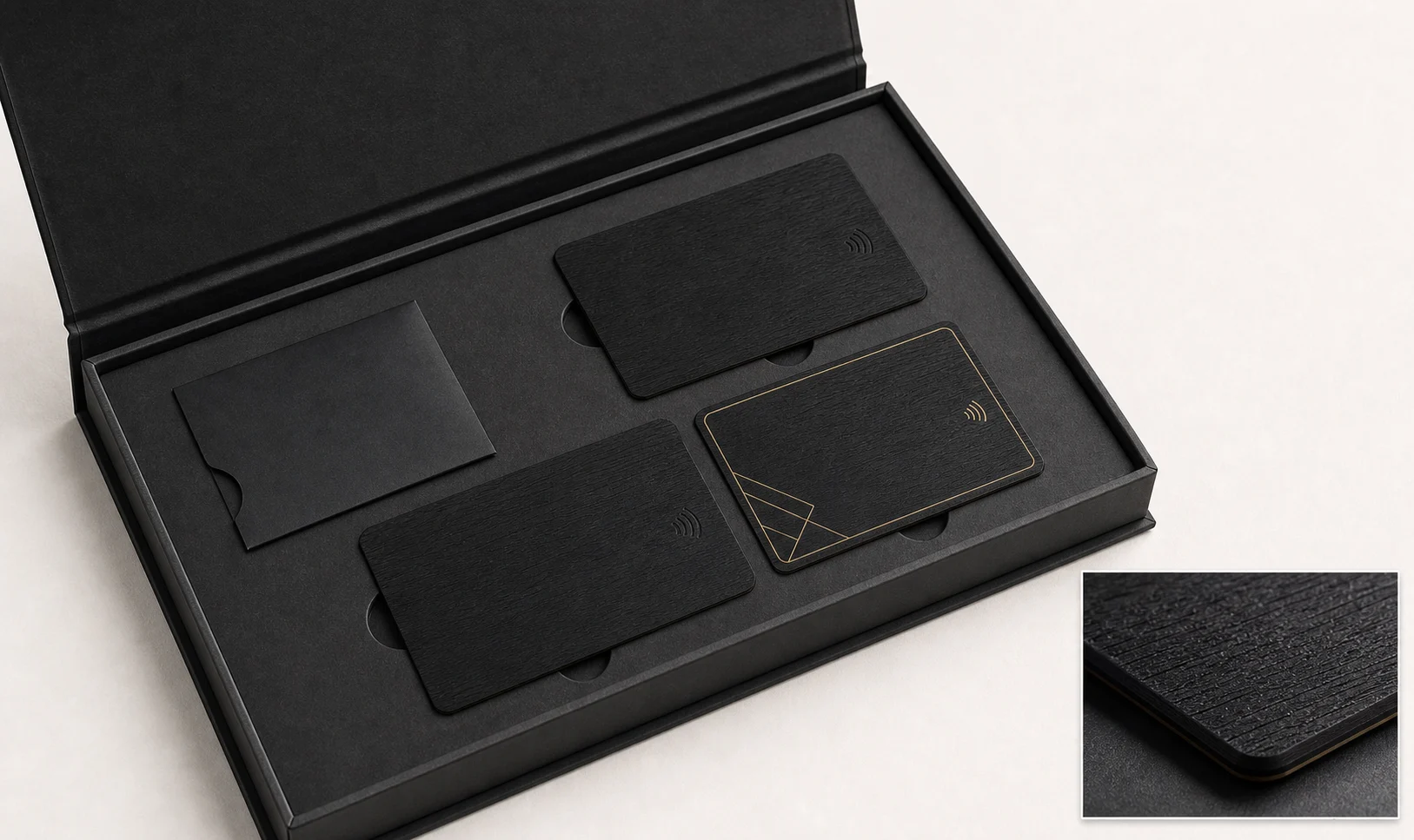
Define a membership credential, not a travel document.
The card can identify a club member, aircraft owner, managed-fleet client, or invited guest, but it should not resemble a boarding pass, security badge, or payment product unless the operating system genuinely requires that format. Keep the visible promise narrow and accurate. A member name, program tier, serial, and discreet service mark are usually enough. This clarity makes the card useful at the lounge desk while avoiding false implications about airside authority, flight identity, or unrestricted access.
Choose wood for quiet recognition.
Private aviation branding often works better with controlled material detail than loud graphics. Birch supports crisp dark type, walnut carries a formal tone, and sapele adds warmth without a glossy metallic look. Because grain varies, place names and serials on a calm area and define an acceptable tonal range during sample approval. Laser engraving can feel understated; white ink or a small foil accent can improve contrast. The card should still look composed beside passports, luggage tags, and lounge stationery.
Map the lounge journey before selecting technology.
List what happens at reception, vehicle arrival, lounge entry, meeting rooms, guest handling, and service requests. Visual recognition may be enough at one point, NFC may open a managed contact or itinerary page at another, and a specific RFID credential may be needed for an installed door. Do not force one chip route across every interaction. Keep itinerary, passenger, and aircraft data in controlled systems; the wooden card should carry or reveal only the minimum identifier required for its stated job.
Validate discreetly across representative devices.
A desk reader mounted in open space is not the same as a reader behind stone, cabinetry, or a wall plate. Supply device models or a working reference credential, then test the final wooden construction at each important location. For NFC, include the phone models and cases commonly used by members and staff, mark a clear tap area, and keep a QR or staffed lookup fallback. Record the approved read behavior so later reorders do not drift in thickness, antenna placement, or finish.
Control issuance as carefully as the design.
Prepare member data through one approved file, restrict who can see it, and avoid putting travel schedules or sensitive service notes on the card. At handoff, staff should know how to confirm identity, explain tap behavior, and handle a declined or lost credential. Rights remain in the live platform so they can change without replacing the wooden object. A matched sleeve, welcome note, and serial record can make a small issue feel deliberate without turning it into a theatrical gift box.
Best uses
- Private aviation clubs and aircraft-owner programs
- FBO lounge membership and recognition
- Managed service and concierge links
- Controlled lounge or facility access
Relevant wooden RFID card routes
- Wooden membership cards
- NFC tag wooden cards
- QR and serial wooden cards
- Wood RFID artwork specifications
Frequently asked questions
Is a wooden FBO card a boarding credential?
Not by default. It should be described as a membership, service, or compatible facility-access card unless a qualified aviation system explicitly assigns another role.
Can NFC open a private member page?
Yes. The NFC record can resolve to an authenticated service or membership route; sensitive details should remain behind the platform's access controls.
How is grain variation handled on personalized cards?
Names and numbers are placed in controlled contrast zones, and the approval sample defines the acceptable color and grain range for the batch.
Specification
| Card body | FSC-certified wood stock; plastic-free body available |
|---|---|
| Thickness | 0.80 mm to 2.0 mm, selected with the chip and reader |
| Minimum order | None — from one working sample to production runs |
| Typical production | We normally produce in about one week after artwork and sample approval |
| RF approval | We test the final wood, inlay, chip, thickness, finish, and target device together |
| Data control | Printed data, QR, NFC or RFID encoding, and packing records reconciled |
| Privacy rule | No itinerary, passenger, aircraft, or sensitive service data exposed on the card |
| Device set | Installed readers plus representative phones and common cases |
Related wood RFID card pages
- Wooden RFID Membership Cards for Yacht Clubs and Marinas
- Wooden RFID Membership Cards for Golf and Country Clubs
- Wooden RFID Cards for Luxury Residences and Private Clubs
- Wooden RFID Membership Cards for Private Wellness Clubs
- Custom Wooden RFID Membership Cards for Car Clubs
- Wooden Membership Cards for Car Detailing Studios
- Wooden VIP Membership Cards for Luxury Car Rental
- Wooden RFID Membership Cards for Private Car Storage
- Wooden VIP Owner Cards for Premium Dealerships
- Wooden VIP Passes for Rallies, Track Days, and Car Events
- NFC, RFID, or QR for Wooden Automotive Membership Cards?
- How to Design Membership Tiers with Wooden Cards
- What Can Be Personalized on a Wooden RFID Card?
- Wood vs Plastic Membership Cards for Automotive Programs
- How Wooden NFC Cards Connect Automotive Member Portals
- Seven Benefits a Wooden VIP Card Can Support