Motorsport event guide · 8 min read
Wooden VIP Passes for Rallies, Track Days, and Car Events
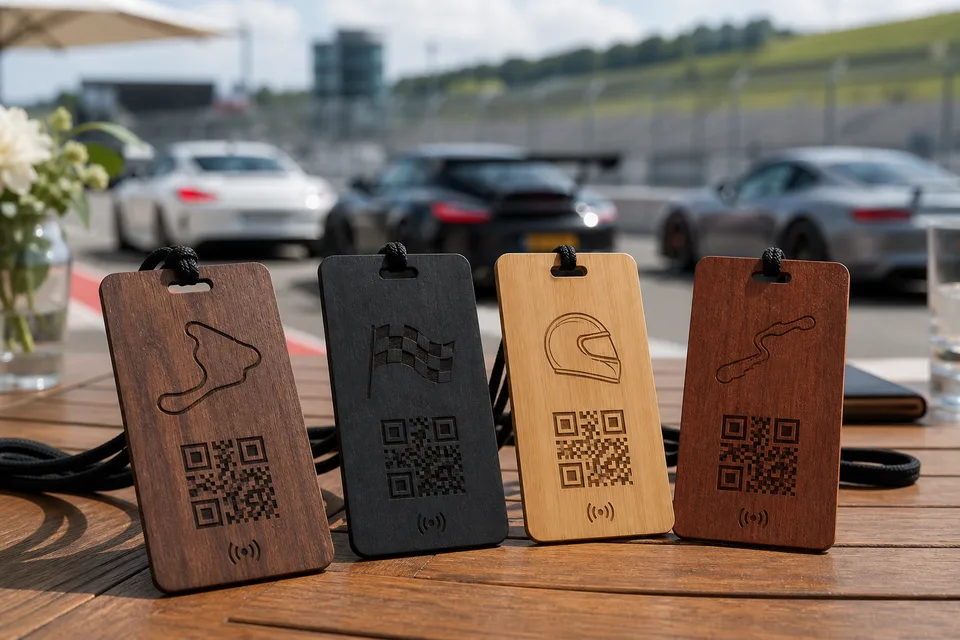
Wooden VIP passes give rallies and track days a collectible object with a warmer character than plastic credentials. Their shape, lanyard slot, grain, weather exposure, code contrast, RFID antenna route, and access hierarchy must be resolved together. Event deadlines make proofing and spare planning just as important as the design.
Industry program views
Design the wooden pass around movement, weather, and fast recognition.
The lanyard, cut direction, access mark, scanner zone, sealed surface, and event file need one approval route before the deadline closes.
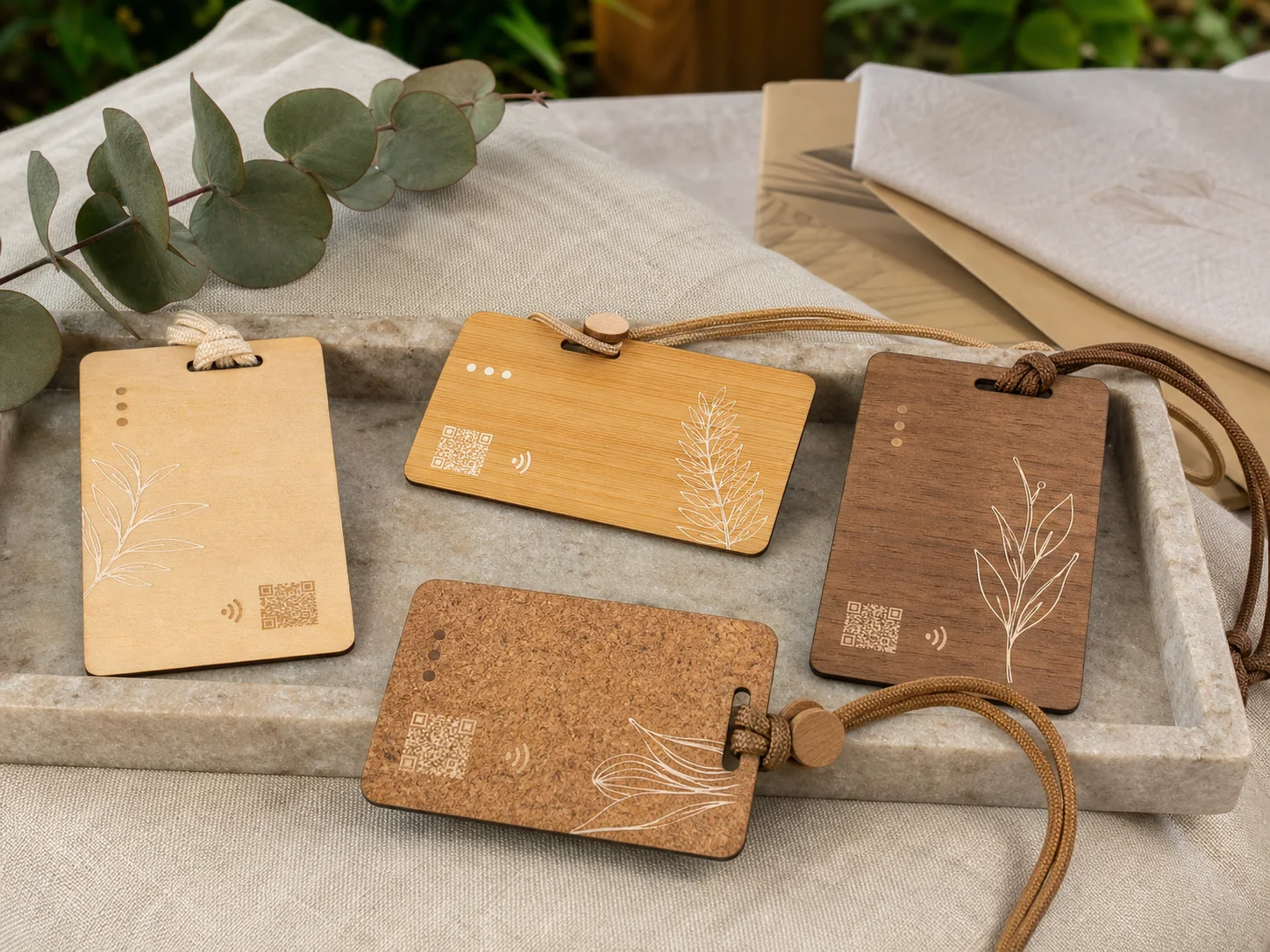
Draw the access map before the pass outline.
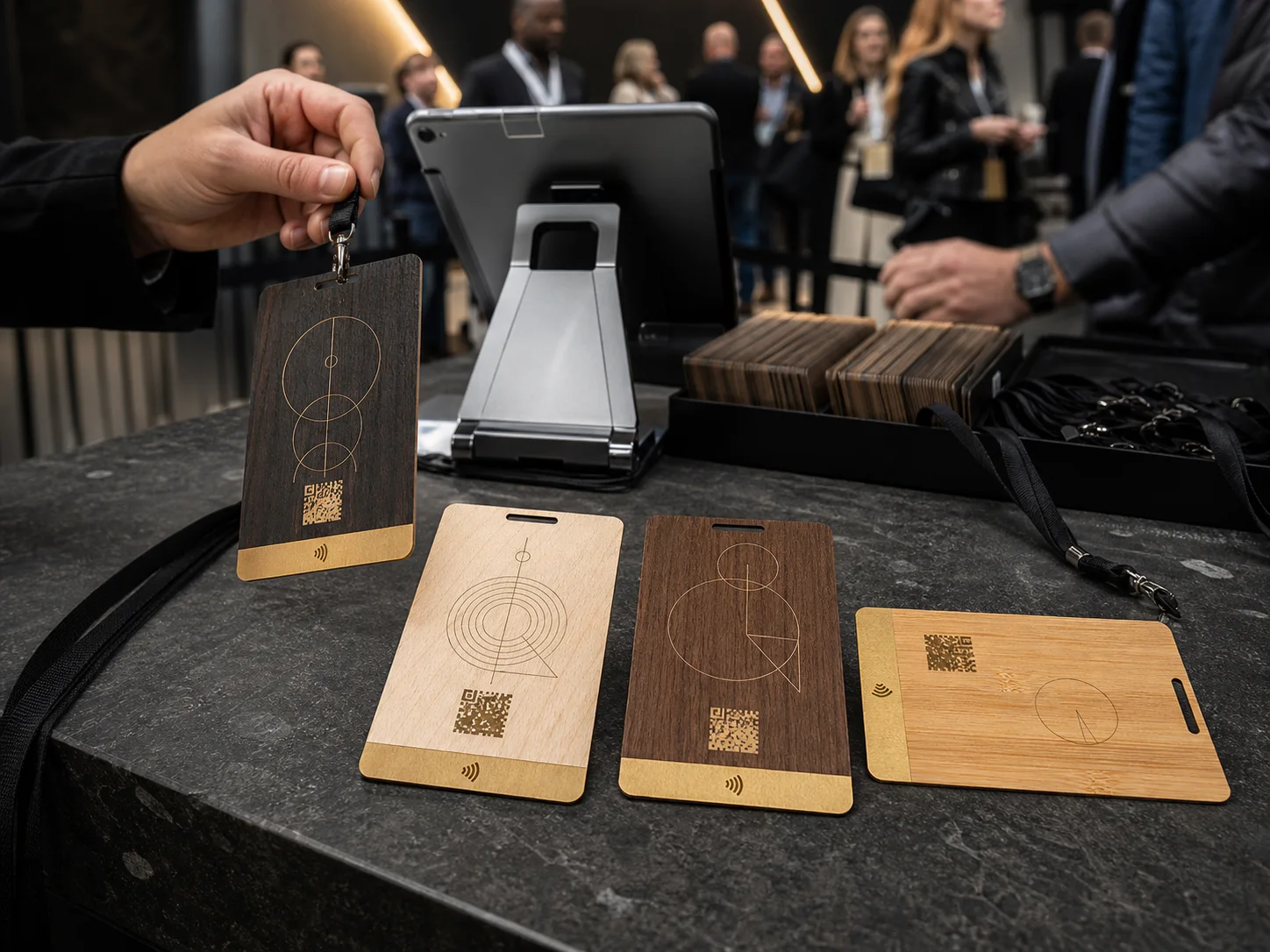
List every entrance, zone, operating hour, and role: driver, team, service, media, sponsor, guest, lounge, grid, or host. Decide what staff must recognize visually and what a scanner or reader validates. This prevents decorative cuts from consuming the space needed for a role mark or code. The live event platform remains the authority for access; the wooden pass makes status visible and carries the identifier used at each controlled point.
Engineer the lanyard slot with the wood and antenna.
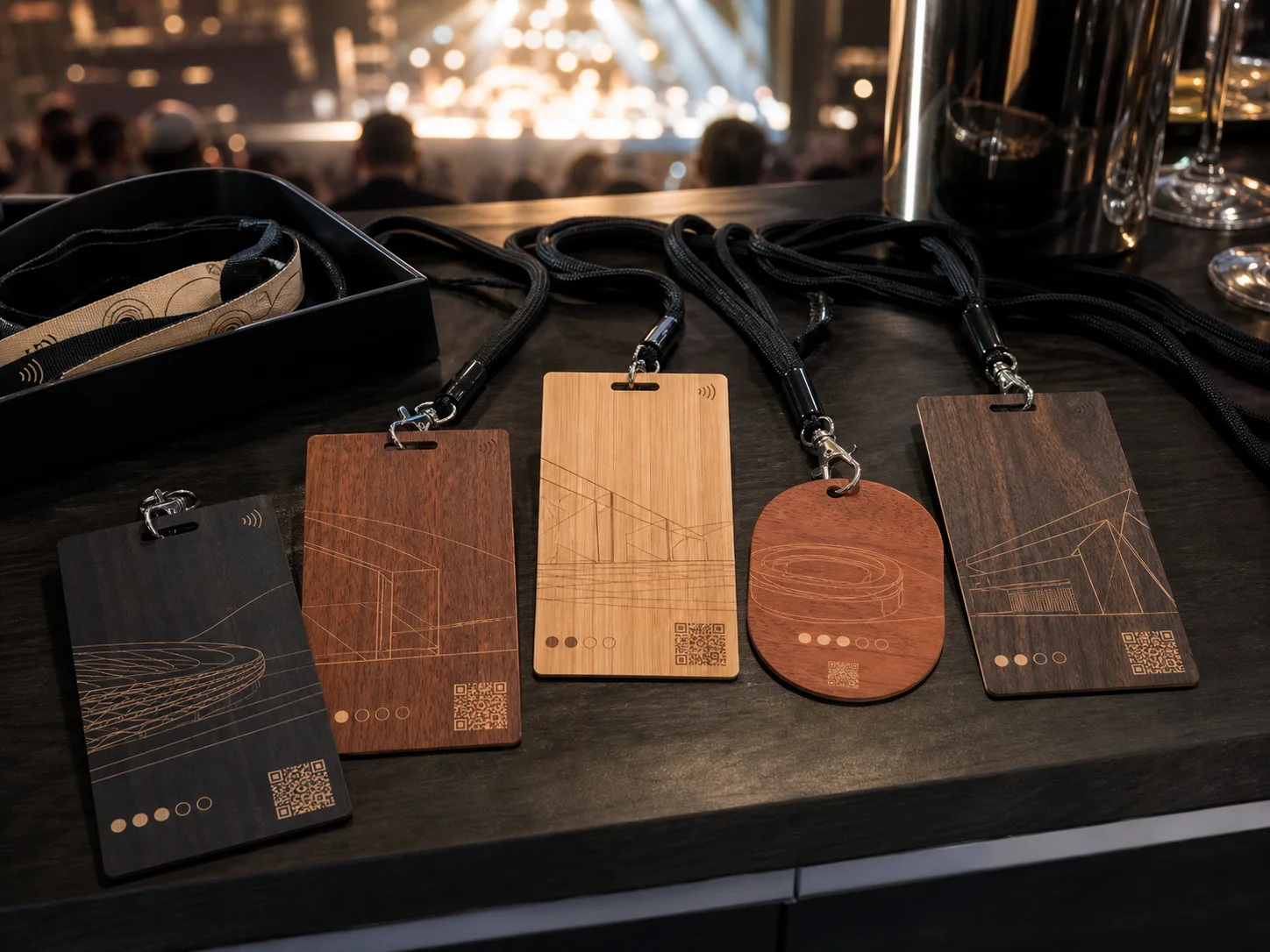
Wood grain has direction, and a narrow bridge around a slot can become the weakest part of the pass. Position holes or slots only after reviewing material thickness, grain, edge radius, lanyard hardware, pull direction, and the RFID or NFC antenna path. Produce a physical pull and wear sample, not only a die line. Where the event is demanding, a standard card in a holder may be safer than an ambitious cutout that looks distinctive but fails under repeated movement.
Make weather and contrast part of the visual system.
Rallies and track days expose passes to sun, dust, moisture, sunscreen, fuel-area handling, and dramatic shifts between paddock shade and open light. Use a sealed surface and test the selected print or laser mark in those conditions. Dark walnut or black wood needs a deliberate light code zone; pale birch or bamboo supports faster scanning. Repeat access level in words or symbols rather than depending on subtle wood tone that staff may misread at speed.
Pair fast validation with a practical fallback.
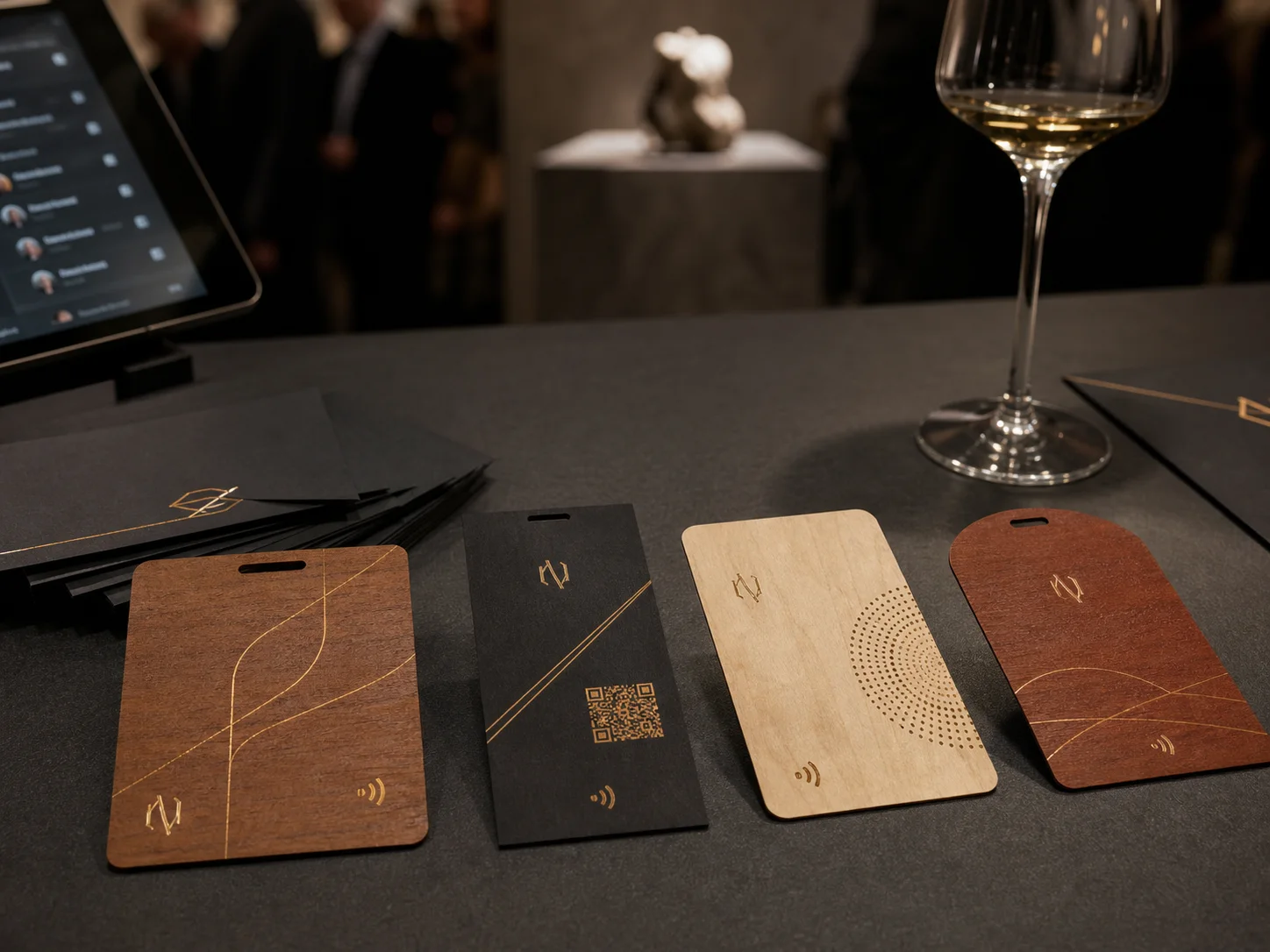
RFID may support installed checkpoints, NFC may suit staffed phone interactions, and QR is useful for camera-based check-in or recovery. They are not interchangeable. Test the finished wooden pass on the actual devices, at the expected distance and angle, with the lanyard hanging as it will during use. Keep a serial or staffed lookup route for network and device failures. Every printed and encoded identifier should reconcile with the registration and zone file.
Protect the deadline with cutoff and spare rules.
Set the guest-data cutoff, late-change process, spare percentage, tier split, proof date, and dispatch date before artwork is released. About one week of production begins only after approval, so event planning must include shipping and on-site preparation. Hold a controlled number of generic or unencoded spares for late issues, record every assignment, and disable lost passes. A collectible edition still needs batch scans and a reconciliation report before it reaches registration.
Best uses
- Rallies, track days, and owner events
- Driver, media, team, sponsor, and guest zones
- Collectible VIP and limited-edition passes
- RFID, NFC, QR, or serial event checks
Relevant wooden RFID card routes
Frequently asked questions
Can a wooden pass have a lanyard slot?
Yes, after the slot, grain direction, thickness, pull load, and antenna path are proven on a physical sample.
Which wood is easiest for QR scanning?
Pale birch and bamboo give strong natural contrast; darker woods need a controlled light code area and testing in event lighting.
How many spare passes should be produced?
Set the percentage from the event's late-registration and replacement history, then assign every spare through the same controlled data file.
Specification
| Card body | FSC-certified wood stock; plastic-free body available |
|---|---|
| Thickness | 0.80 mm to 2.0 mm, selected with the chip and reader |
| Minimum order | None — from one working sample to production runs |
| Typical production | We normally produce in about one week after artwork and sample approval |
| RF approval | We test the final wood, inlay, chip, thickness, finish, and target device together |
| Data control | Printed data, QR, NFC or RFID encoding, and packing records reconciled |
| Mechanical test | Grain direction, slot bridge, lanyard pull, edge wear, and antenna clearance |
| Event control | Data cutoff, spare percentage, late issue, lost pass, batch scan, and dispatch date |
Related wood RFID card pages
- Wooden RFID Membership Cards for Yacht Clubs and Marinas
- Wooden RFID Membership Cards for Private Aviation and FBO Lounges
- Wooden RFID Membership Cards for Golf and Country Clubs
- Wooden RFID Cards for Luxury Residences and Private Clubs
- Wooden RFID Membership Cards for Private Wellness Clubs
- Custom Wooden RFID Membership Cards for Car Clubs
- Wooden Membership Cards for Car Detailing Studios
- Wooden VIP Membership Cards for Luxury Car Rental
- Wooden RFID Membership Cards for Private Car Storage
- Wooden VIP Owner Cards for Premium Dealerships
- NFC, RFID, or QR for Wooden Automotive Membership Cards?
- How to Design Membership Tiers with Wooden Cards
- What Can Be Personalized on a Wooden RFID Card?
- Wood vs Plastic Membership Cards for Automotive Programs
- How Wooden NFC Cards Connect Automotive Member Portals
- Seven Benefits a Wooden VIP Card Can Support