Residence access guide · 9 min read
Wooden RFID Cards for Luxury Residences and Private Clubs
Wooden RFID cards can extend the interior language of a luxury residence into a member or owner credential. The result should feel architectural, not promotional, while still respecting access control, privacy, replacement, and the technical differences between a lobby reader, lift panel, garage entry, phone tap, and staffed concierge desk.
Industry program views
Connect the residence material palette to real access behavior.
A residence card earns its place when wood choice, room context, reader testing, privacy, and the welcome experience are approved together.
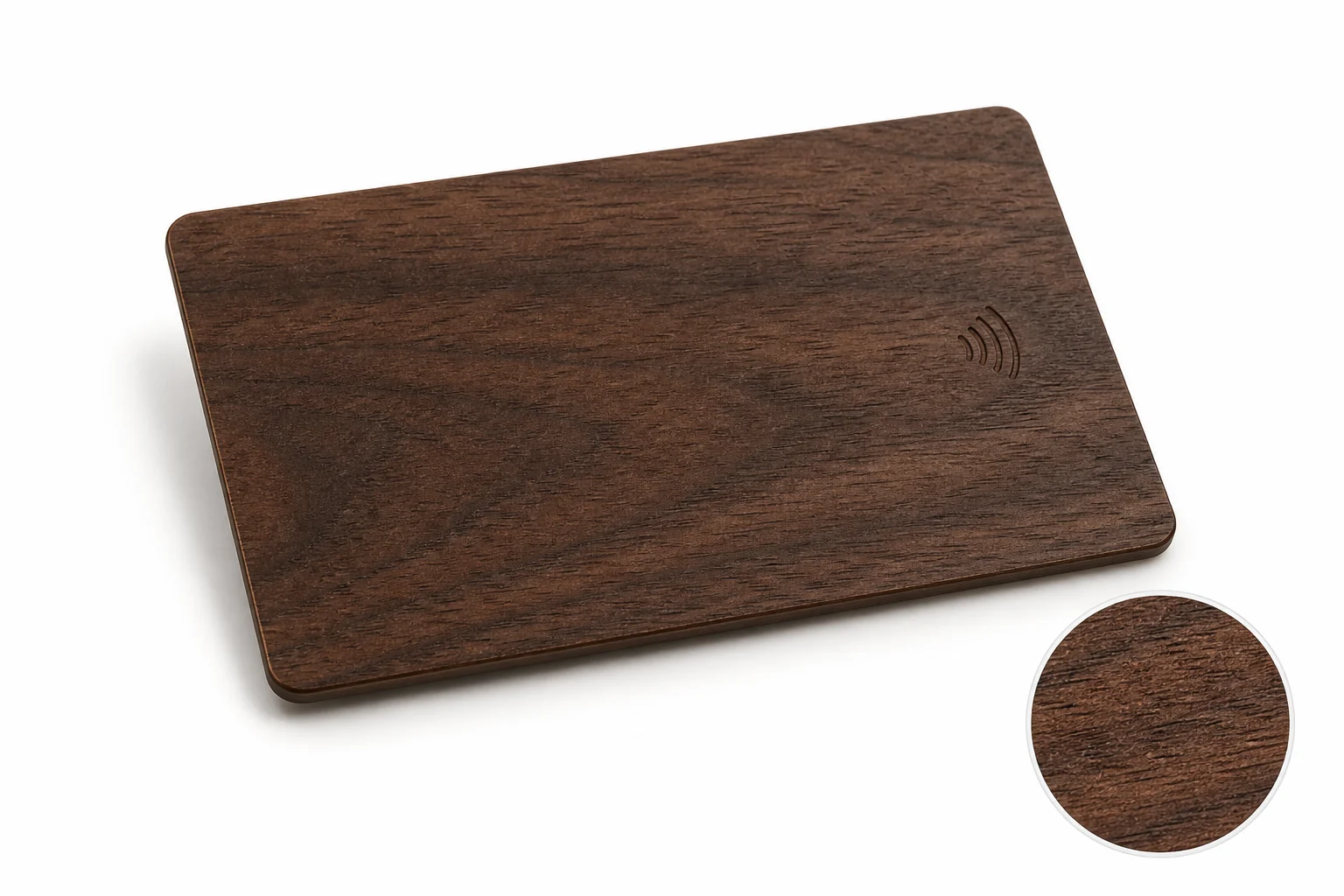
Match the residence, not a generic luxury template.
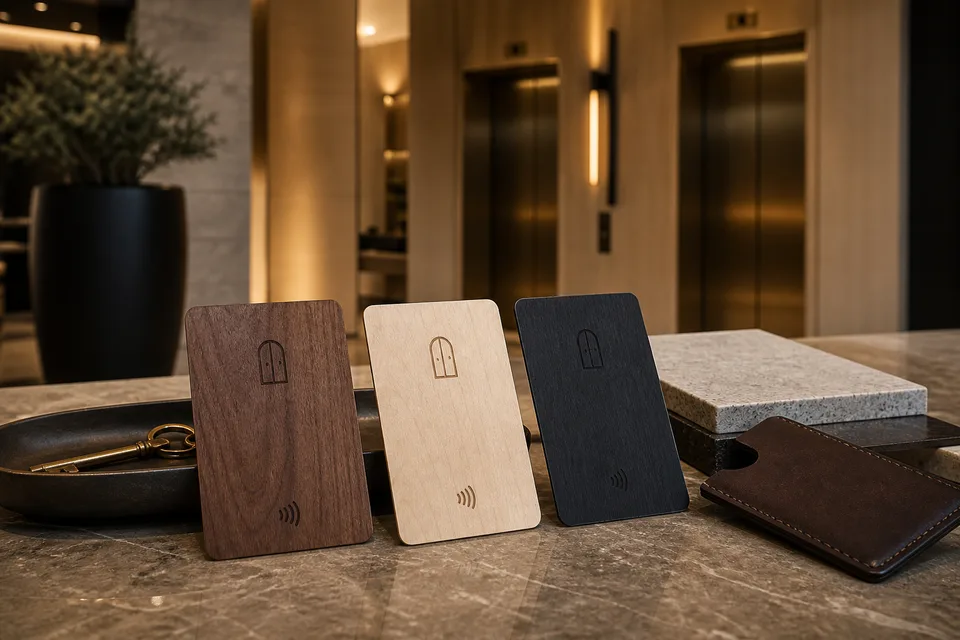
Choose the wood against the actual interior palette: walnut for dark joinery, birch or beech for pale spaces, sapele for warmer red-brown tones, or black wood for a restrained graphic scheme. Review the sample beside lobby finishes and under the building's lighting. A small logo, residence mark, and clear name hierarchy usually age better than a crowded design. Natural grain should be visible, but it must not compete with any resident number or role that staff need to read quickly.
Keep private information out of the visible design.
Do not print apartment numbers, access zones, household relationships, or other sensitive details unless a defined operating need outweighs the exposure. A neutral member or resident identifier can map to permissions in the secure platform. NFC may open an authenticated concierge or amenity page; a public tap should not reveal bookings, addresses, or resident records. The wooden card is a key to a controlled workflow, not a storage place for the residence's private data.
Treat every building reader as a separate acceptance point.
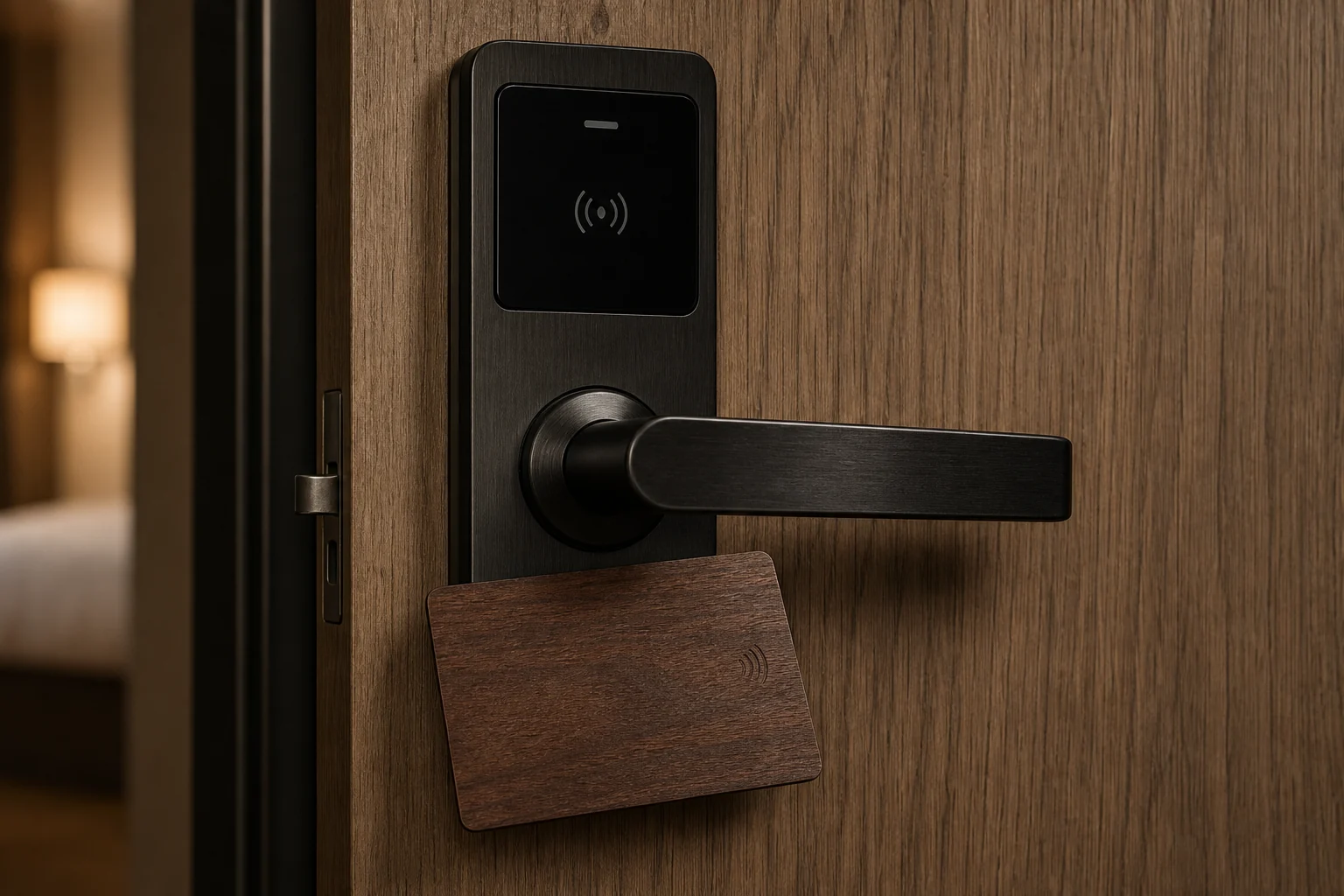
Lobby success alone is insufficient. Lift panels, garage readers, pedestrian gates, spa lockers, club floors, and back-of-house devices may have different antennas, housings, and presentation distances. Build the approved wood, inlay, chip, thickness, adhesive, and seal into a working sample, then record its behavior at each required point. If a sleeve is issued, test through that sleeve. Keep temporary guest and contractor access on their own time-limited route rather than copying resident permissions.
Design the concierge journey around changing services.
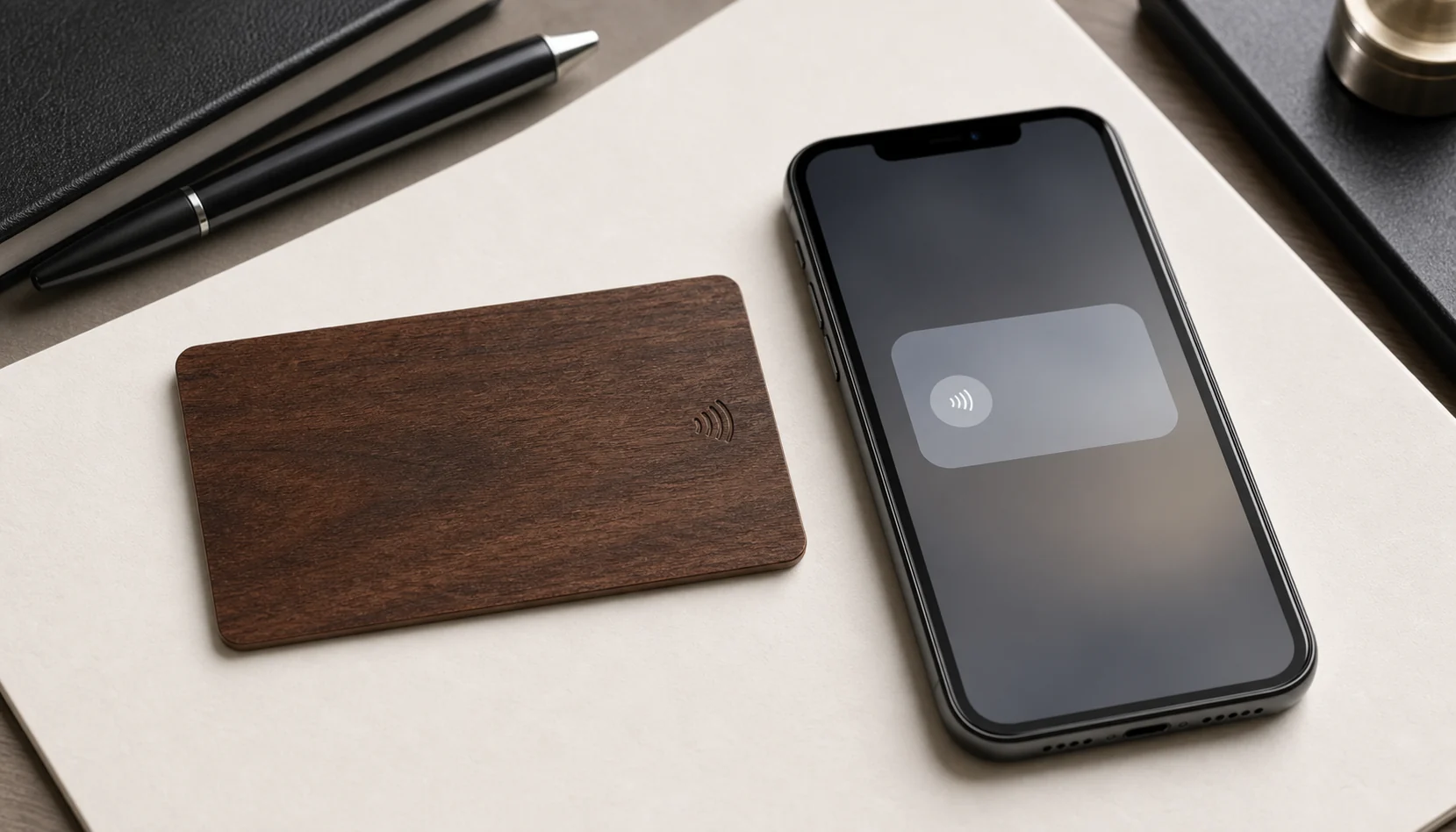
A phone-readable NFC or QR route can lead to dining reservations, spa booking, transport requests, community notices, or a concierge contact, but the destination should remain editable without re-encoding every card. Use a managed redirect and authentication where personal data appears. Place the tap marker where a phone naturally approaches the antenna. The physical design may remain stable for years while the service page changes seasonally, which is one of the strongest reasons to separate the durable object from live information.
Make replacement feel controlled, not improvised.
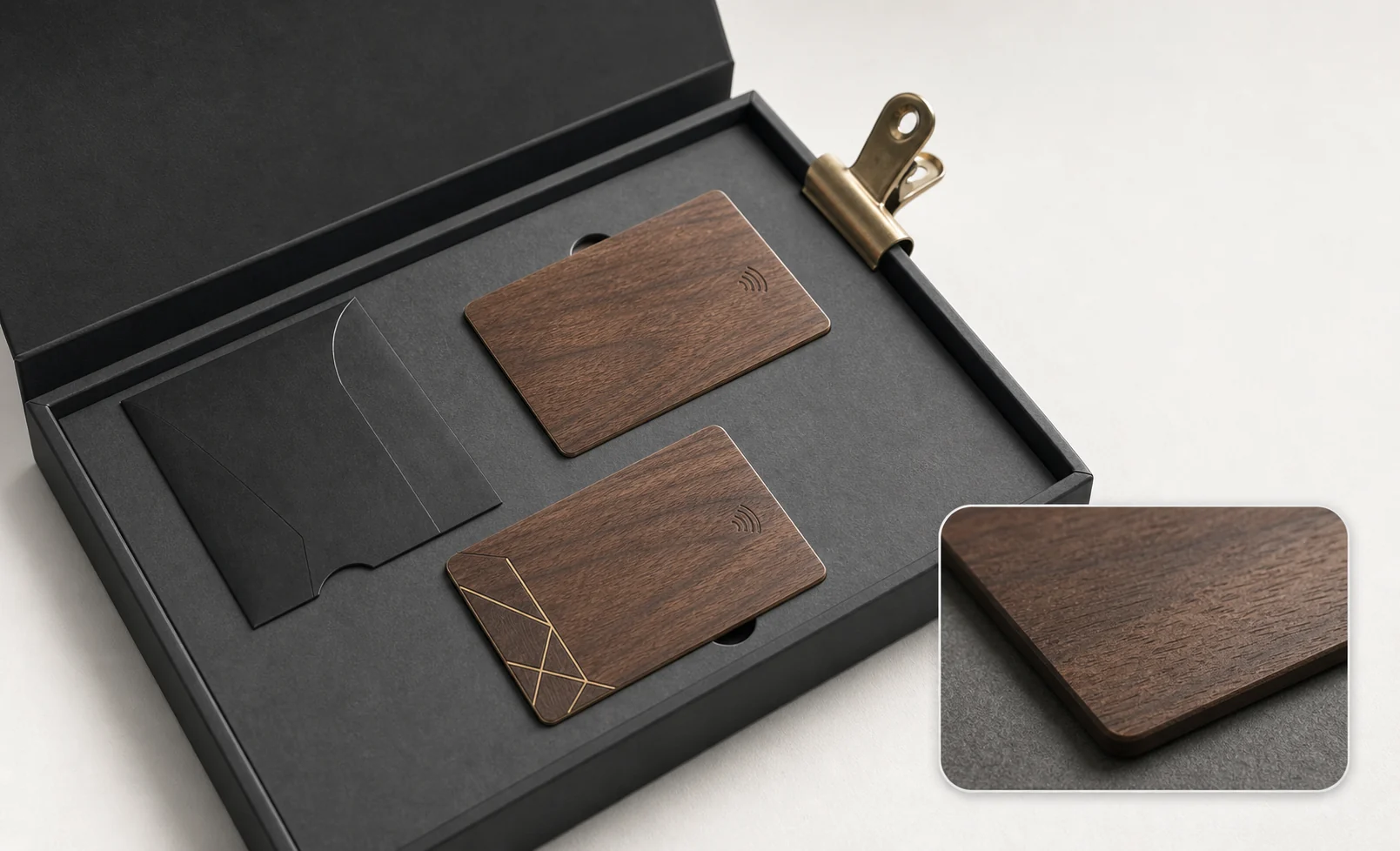
Define identity verification, immediate disabling, replacement numbering, temporary access, and audit records before the first issue. A lost card should never remain active because it looks premium or is expected to be returned. Keep the serial, encoded ID, holder, and issue status connected in one record. For later residents or household members, use the retained approval sample to match thickness, edge, seal, print contrast, and acceptable grain range while acknowledging that each piece of wood will remain individual.
Best uses
- Luxury residences and private residence clubs
- Owner, household, amenity, and club credentials
- Lobby, lift, garage, gate, and locker access
- Authenticated concierge and amenity portals
Relevant wooden RFID card routes
Frequently asked questions
Can one wooden residence card work throughout the building?
Only after the chosen credential is tested at every required reader. A successful lobby test does not guarantee lift, garage, gate, or locker performance.
Should the apartment number be printed on the card?
Usually not. A neutral identifier reduces exposure, while the secure residence platform maps the card to current permissions.
Can the NFC destination change later?
Yes. A managed redirect can keep the card's tap route stable while the authenticated resident or concierge content changes.
Specification
| Card body | FSC-certified wood stock; plastic-free body available |
|---|---|
| Thickness | 0.80 mm to 2.0 mm, selected with the chip and reader |
| Minimum order | None — from one working sample to production runs |
| Typical production | We normally produce in about one week after artwork and sample approval |
| RF approval | We test the final wood, inlay, chip, thickness, finish, and target device together |
| Data control | Printed data, QR, NFC or RFID encoding, and packing records reconciled |
| Privacy design | Neutral visible ID; apartment, access, and household data remain in controlled systems |
| Reader matrix | Lobby, lift, garage, gate, amenity, locker, and issued sleeve |
Related wood RFID card pages
- Wooden RFID Membership Cards for Yacht Clubs and Marinas
- Wooden RFID Membership Cards for Private Aviation and FBO Lounges
- Wooden RFID Membership Cards for Golf and Country Clubs
- Wooden RFID Membership Cards for Private Wellness Clubs
- Custom Wooden RFID Membership Cards for Car Clubs
- Wooden Membership Cards for Car Detailing Studios
- Wooden VIP Membership Cards for Luxury Car Rental
- Wooden RFID Membership Cards for Private Car Storage
- Wooden VIP Owner Cards for Premium Dealerships
- Wooden VIP Passes for Rallies, Track Days, and Car Events
- NFC, RFID, or QR for Wooden Automotive Membership Cards?
- How to Design Membership Tiers with Wooden Cards
- What Can Be Personalized on a Wooden RFID Card?
- Wood vs Plastic Membership Cards for Automotive Programs
- How Wooden NFC Cards Connect Automotive Member Portals
- Seven Benefits a Wooden VIP Card Can Support