Technology comparison · 9 min read
NFC, RFID, or QR for Wooden Automotive Membership Cards?
NFC, RFID, and QR are not three names for the same feature on a wooden membership card. NFC serves phone taps, installed-reader RFID serves a defined access system, and QR serves camera scanning. Wood species, thickness, finish, antenna position, code contrast, and the target device determine which route—or combination—should be approved.
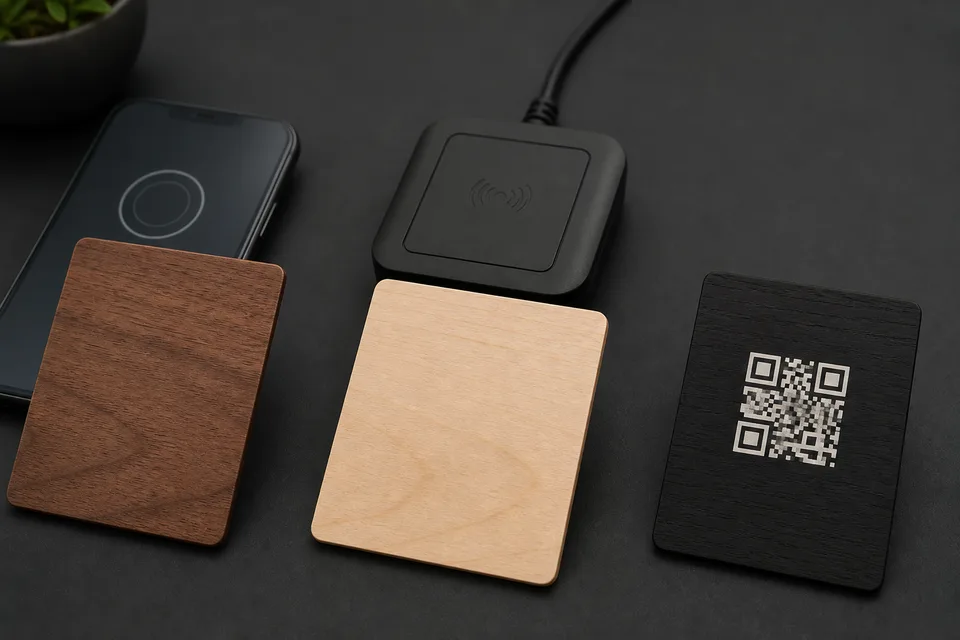
Industry program views
Choose technology from the interaction, then prove it in wood.
Phone taps, fixed readers, camera scans, and staff fallbacks each need their own test rather than one generic ‘contactless’ claim.
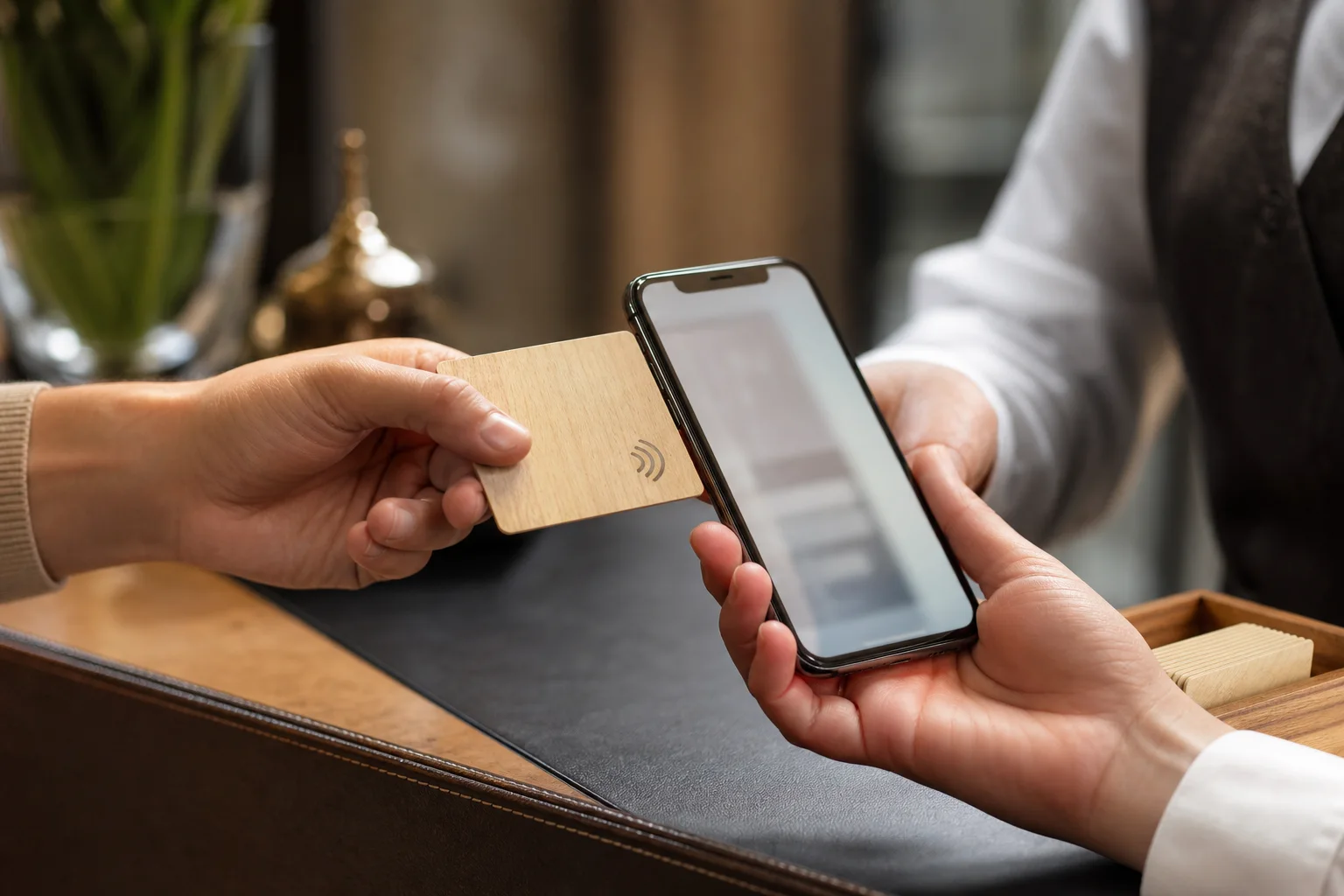
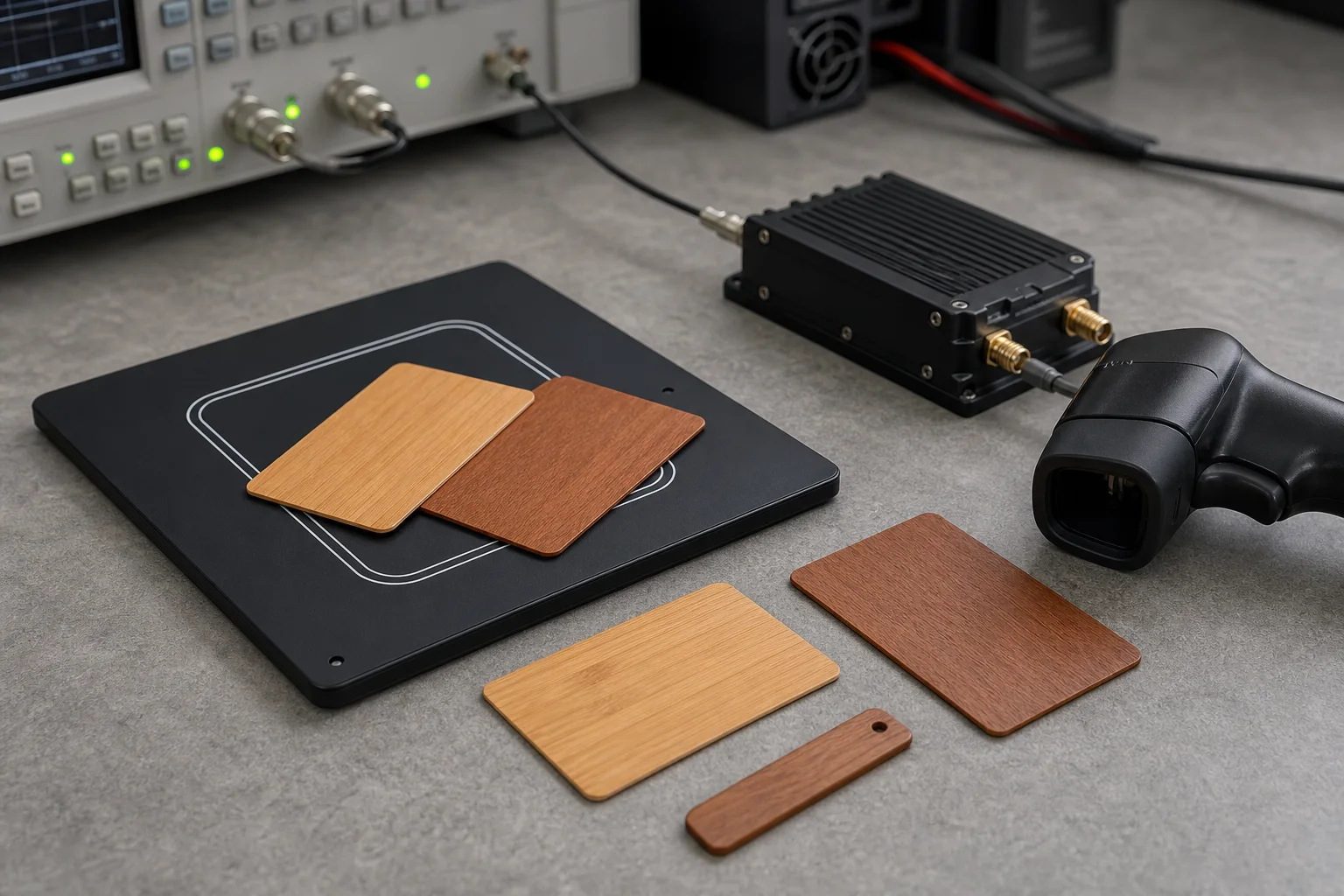
Use NFC when the member's phone is the reader.
NFC can open a managed member portal, event page, booking route, digital profile, or contact flow. Select the chip memory from the required NDEF record rather than from a fashionable product name. Mark the tap area so users do not search across the card. Test representative iPhone and Android models with common cases against the final wood species, thickness, finish, and inlay position. A redirect service keeps the destination editable without rewriting every physical card.
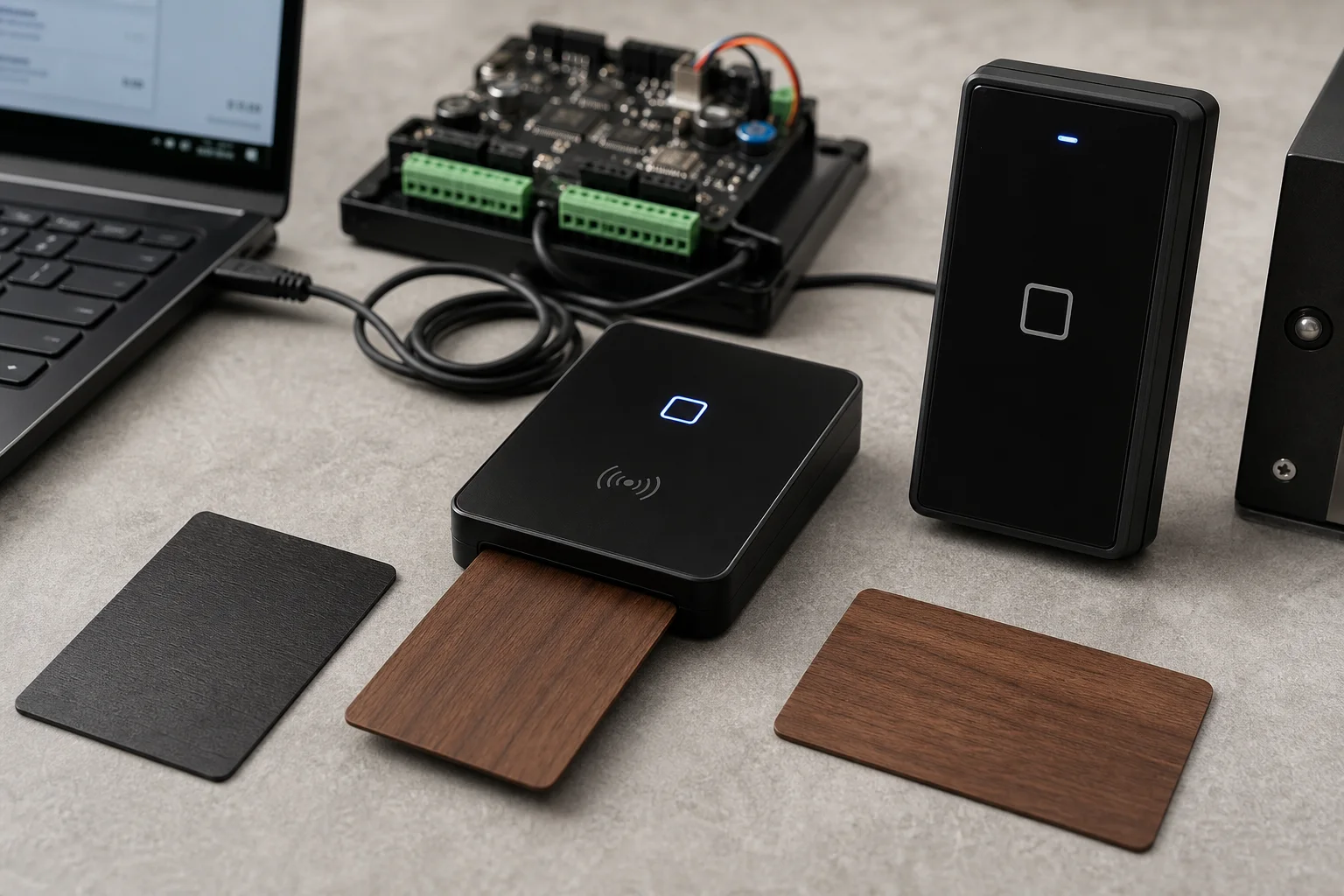
Use RFID when an installed system defines the credential.
Door, gate, locker, lift, or event readers may require LF, HF, secure HF, or UHF credentials with specific encoding. Start with the system, not the wooden surface. Supply a working reference card or precise reader and format information, confirm who owns keys and encoding, and test a finished wooden sample at the actual device. A phone-readable NFC tag is not automatically compatible with a building reader, even when both operate near 13.56 MHz.
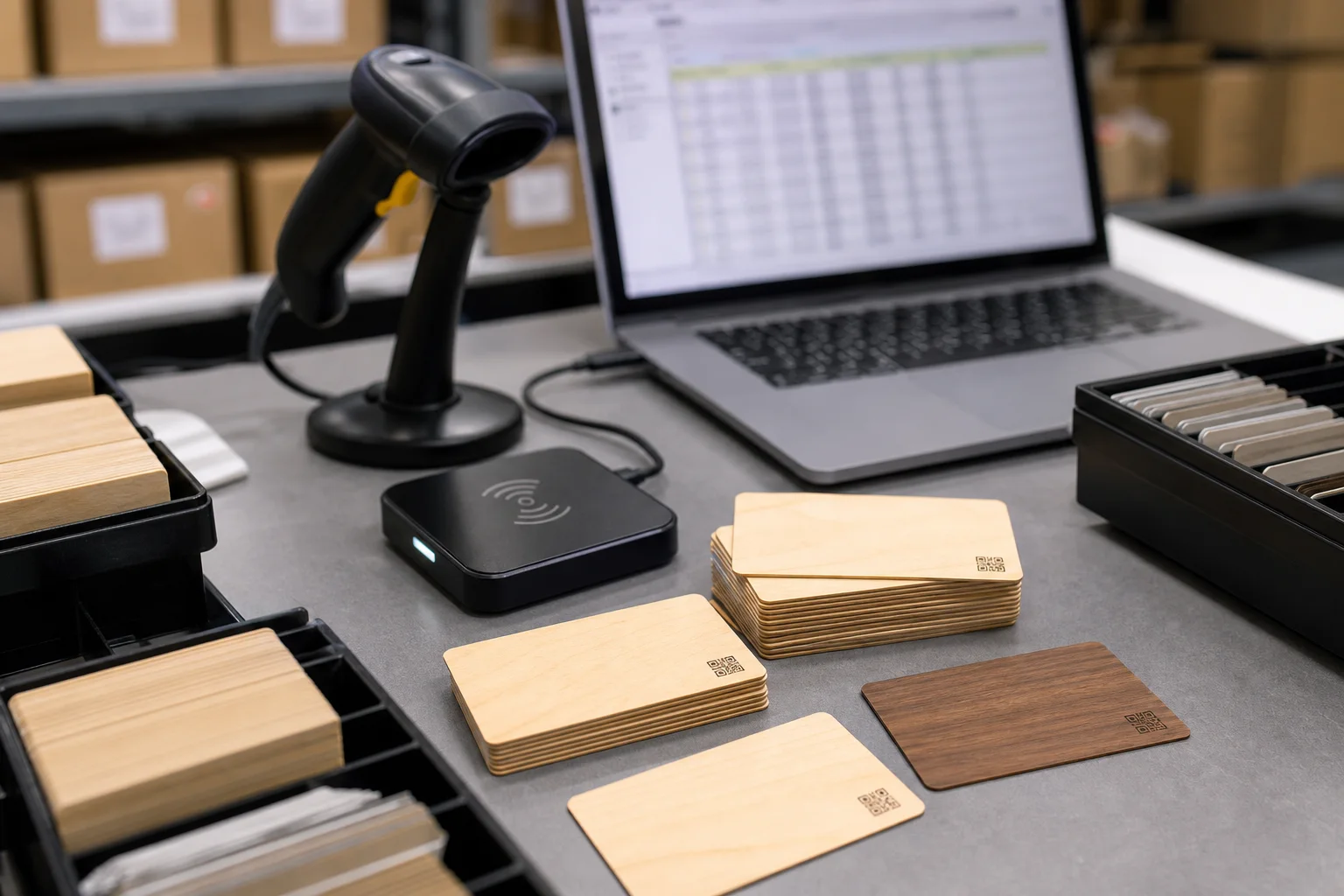
Use QR when camera access and visibility are acceptable.
QR works across ordinary phone cameras and scanning devices, requires no RFID reader, and provides a useful fallback. On wood, code size, quiet zone, grain, print method, gloss, and lighting matter. Pale species support dark codes; dark wood requires an opaque light panel or another high-contrast treatment. Test the final printed code after sealing, at expected distance and angle. Avoid placing sensitive data directly in a public payload; use a controlled token or URL.
Combine routes only when each has a reason.
A wooden card might use RFID for a clubhouse door, NFC for a member portal, and QR for event recovery, but complexity adds testing and data-control work. Draw a small matrix of interaction, user, device, connectivity, security need, and fallback. Remove any feature without a defined owner and support process. Where technologies share a body, keep the antenna clear of cuts and dense finish layers, and make the tap and scan zones understandable without covering the grain in instructions.
Reconcile every identifier before production.
The visible serial, QR payload, NFC record, RFID UID or encoded number, member ID, box label, and replacement record should come from one approved source. Scan and read the working sample first, then apply batch verification appropriate to the program. Decide whether NFC remains editable or is locked, whether QR tokens expire, and who can revoke RFID access. Technology selection is complete only when production data, device behavior, privacy, and recovery rules agree.
Best uses
- Wooden membership and VIP card programs
- Phone-based portals and bookings
- Installed access, locker, gate, or event readers
- QR scanning and practical fallbacks
Relevant wooden RFID card routes
- Wooden RFID technology guide
- HF and NFC wooden cards
- Wooden RFID card encoding
- QR and serial wooden cards
Frequently asked questions
Is NFC the same as RFID?
NFC is one HF contactless route designed for close phone or compatible-reader interaction. Installed RFID systems may use different frequencies, chips, formats, and security.
Can one wooden card contain NFC and access RFID?
Sometimes, but the exact inlays, antenna positions, thickness, and devices must be engineered and tested together.
Does wood block the signal?
Wood does not shield RF like metal, but species, thickness, adhesives, finish, and the complete construction can influence antenna tuning, so the final card is tested.
Specification
| Card body | FSC-certified wood stock; plastic-free body available |
|---|---|
| Thickness | 0.80 mm to 2.0 mm, selected with the chip and reader |
| Minimum order | None — from one working sample to production runs |
| Typical production | We normally produce in about one week after artwork and sample approval |
| RF approval | We test the final wood, inlay, chip, thickness, finish, and target device together |
| Data control | Printed data, QR, NFC or RFID encoding, and packing records reconciled |
| Selection rule | Choose from user, device, security, connectivity, and fallback—not from feature count |
| Final proof | NFC phones, installed RFID reader, QR scanner, and matched data file as applicable |
Related wood RFID card pages
- Wooden RFID Membership Cards for Yacht Clubs and Marinas
- Wooden RFID Membership Cards for Private Aviation and FBO Lounges
- Wooden RFID Membership Cards for Golf and Country Clubs
- Wooden RFID Cards for Luxury Residences and Private Clubs
- Wooden RFID Membership Cards for Private Wellness Clubs
- Custom Wooden RFID Membership Cards for Car Clubs
- Wooden Membership Cards for Car Detailing Studios
- Wooden VIP Membership Cards for Luxury Car Rental
- Wooden RFID Membership Cards for Private Car Storage
- Wooden VIP Owner Cards for Premium Dealerships
- Wooden VIP Passes for Rallies, Track Days, and Car Events
- How to Design Membership Tiers with Wooden Cards
- What Can Be Personalized on a Wooden RFID Card?
- Wood vs Plastic Membership Cards for Automotive Programs
- How Wooden NFC Cards Connect Automotive Member Portals
- Seven Benefits a Wooden VIP Card Can Support