NFC portal guide · 9 min read
How Wooden NFC Cards Connect Automotive Member Portals
A wooden NFC card becomes useful when its tap opens a member route worth returning to. Booking, event registration, vehicle-care requests, benefits, renewal, and concierge contact can share one managed portal. The wood body, inlay position, phone behavior, authentication, redirect policy, analytics, and QR fallback should be designed as one service.
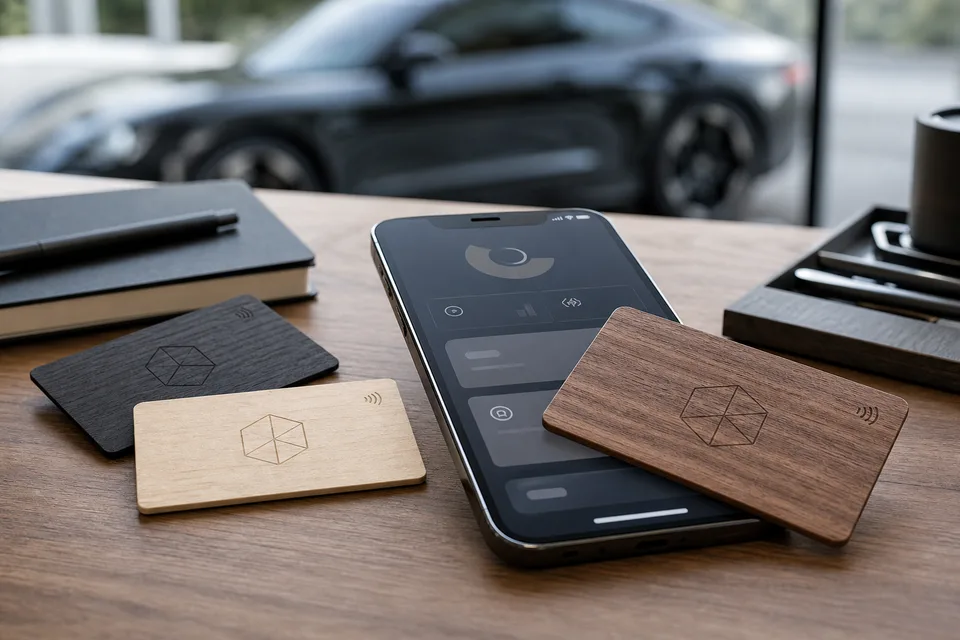
Industry program views
Design the tap, landing state, and next action together.
The physical card and digital portal are one experience: tap guidance, phone testing, login, content ownership, privacy, and recovery all matter.
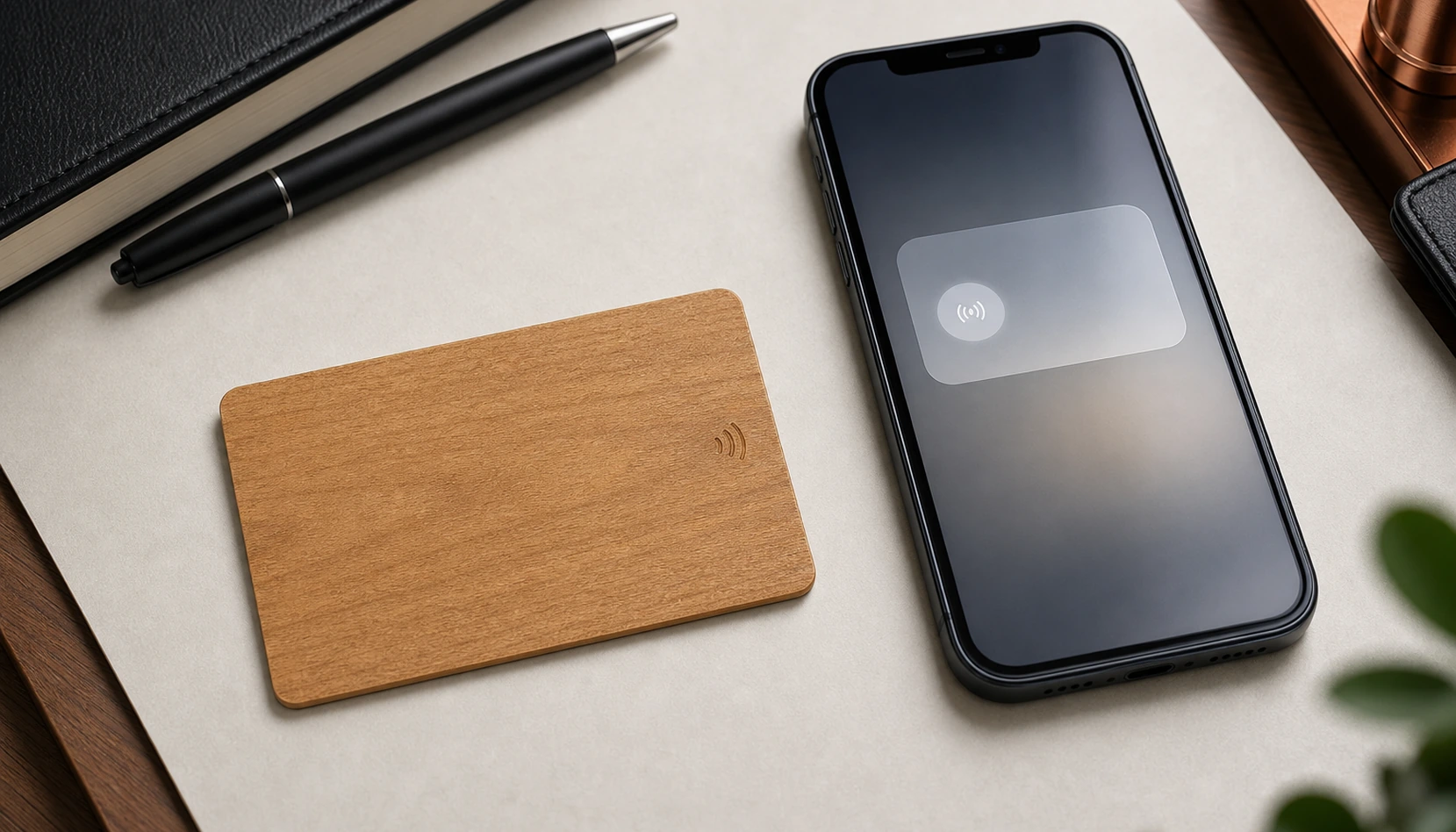
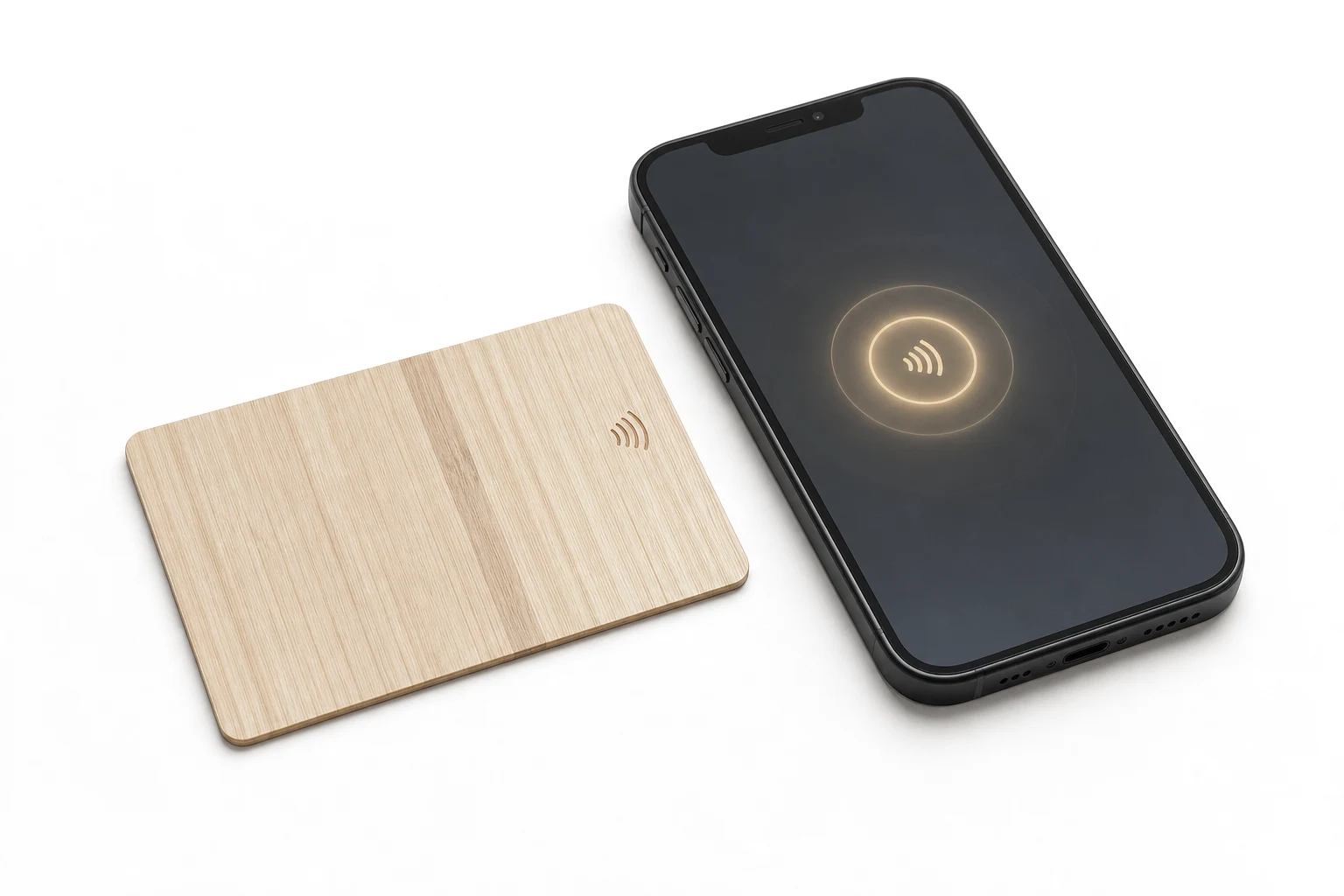
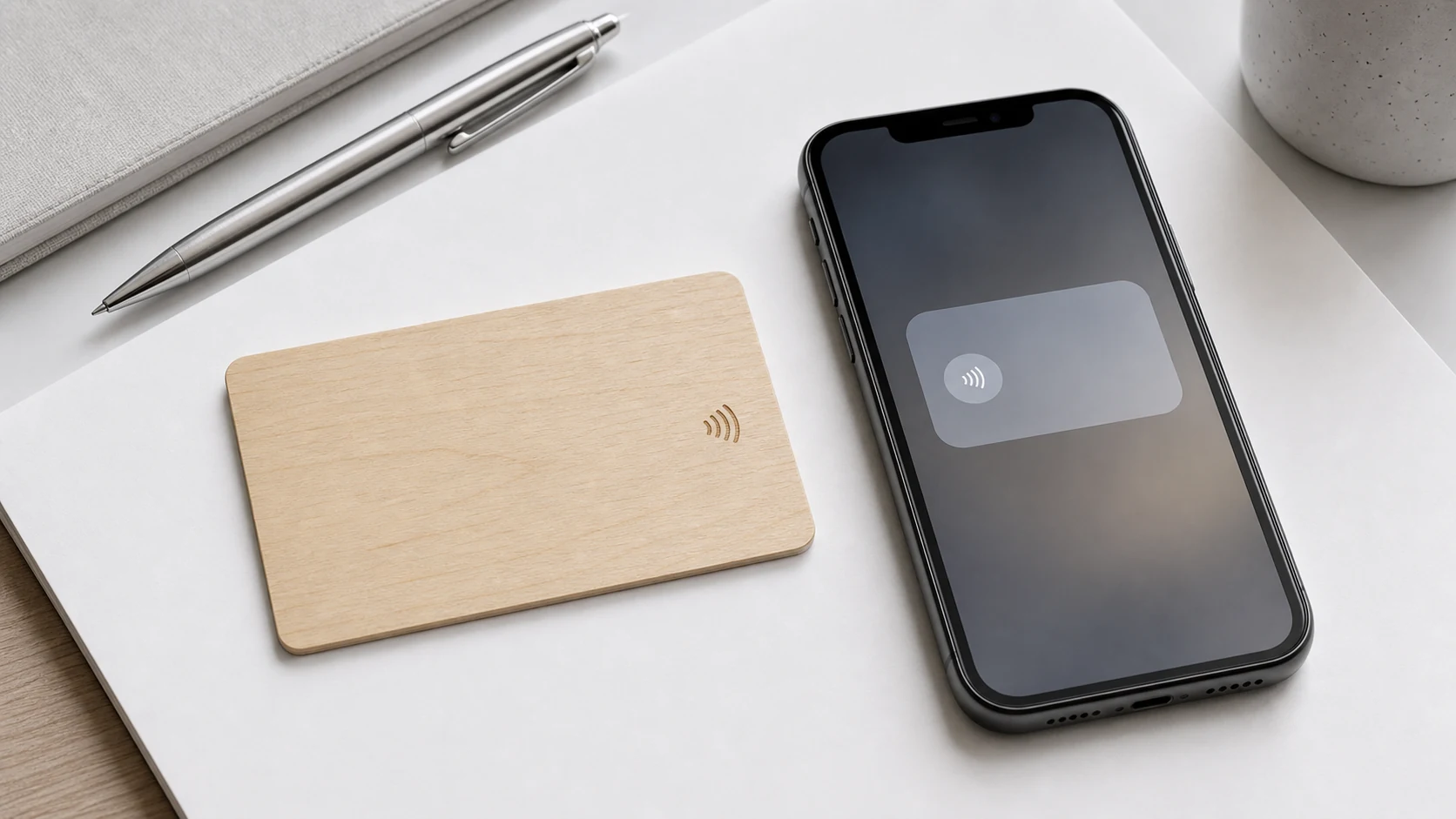
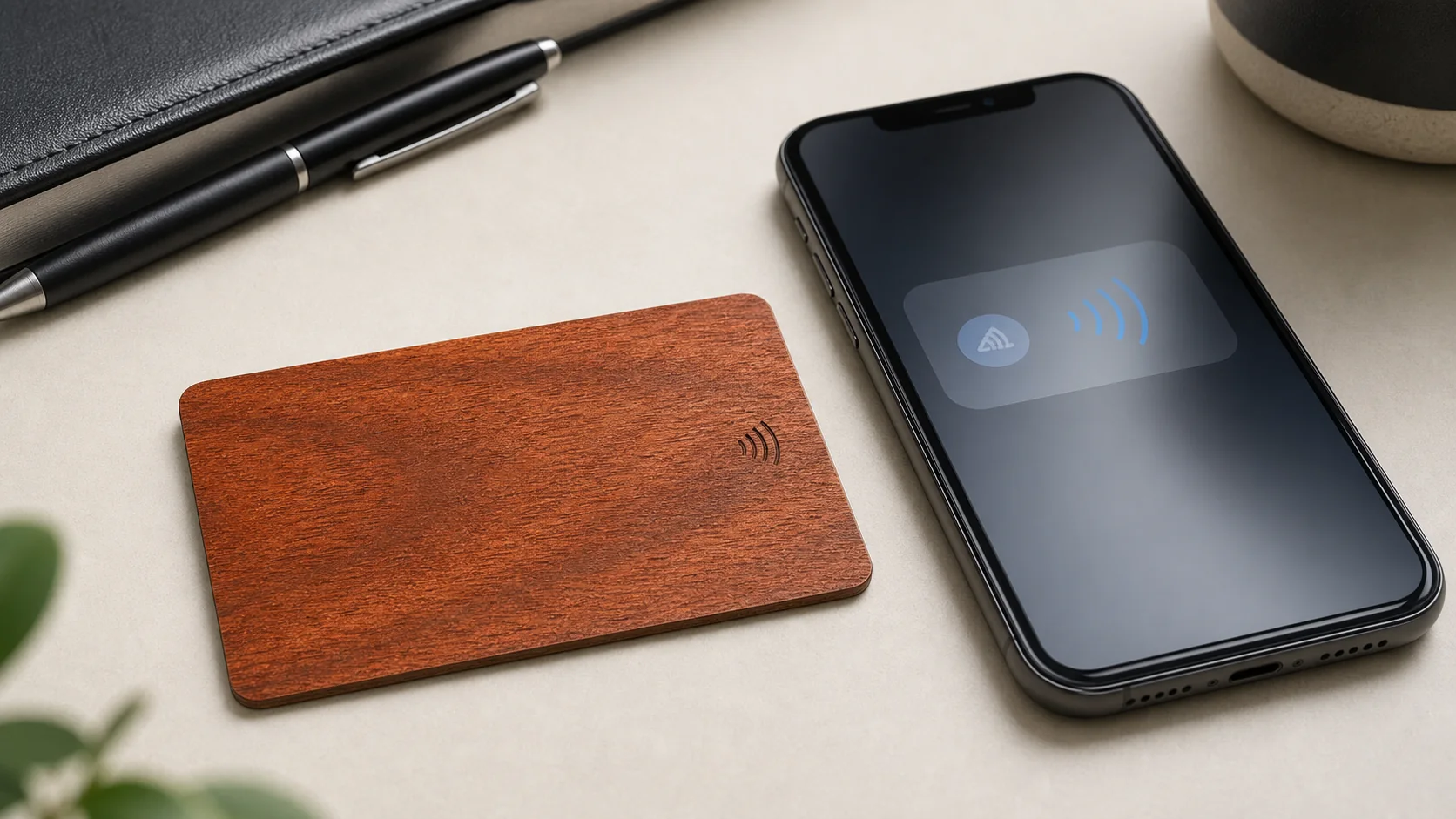
Give the first tap one obvious result.
Do not open a crowded corporate homepage. The landing state should identify the membership, confirm that the tap worked, and present the few actions members use most: booking, vehicle request, event registration, benefit view, renewal, or contact. Prioritize by actual service data, not by internal department structure. A stable managed URL allows the content to change without re-encoding cards, and a branded domain helps members recognize that the destination is legitimate.
Place the antenna and tap mark as one design decision.
The tap symbol should sit where the NFC inlay performs best, with enough clear area for a phone to approach naturally. Wood species, thickness, adhesive, seal, print layers, foil, and custom cuts can influence the final behavior. Test representative iPhone and Android models with common cases and document the presentation instruction. Avoid placing dense foil or a lanyard cut over the antenna route simply because it looks balanced in the artwork.
Use authentication according to the action.
Public event information may not require login; member benefits, bookings, vehicle details, service history, and personal data usually do. The NFC record should carry a controlled URL or token, not confidential information. Decide session length, account recovery, card loss, and whether possession of the card is merely a route or part of identity verification. A premium physical object does not reduce the need for ordinary web security and privacy controls.
Plan content ownership before launch.
Assign who updates benefits, events, service contacts, opening hours, and expired offers. Define how quickly a broken destination is corrected and how analytics are used without collecting unnecessary personal data. The portal should work without an app unless an existing member app genuinely adds value. Keep page weight low enough for arrival areas and garages with poor connectivity, and preserve a staffed contact route for members who cannot or do not want to tap.
Provide a tested QR and human fallback.
Some phones have NFC disabled, a difficult case, or an unfamiliar tap position. A high-contrast QR code can offer the same managed route, provided it is tested on the final grain and finish. A visible serial lets staff find the member when both methods fail. Generate NFC, QR, serial, and member mapping from one data file, scan the batch, and define what happens to the destination when a card is lost, replaced, or the membership ends.
Best uses
- Car clubs, dealerships, rental, storage, and detailing programs
- Booking, events, vehicle-care, and concierge routes
- Managed links that can change after issue
- Phone-first membership without a mandatory app
Relevant wooden RFID card routes
Frequently asked questions
Does a member need an app to tap the wooden card?
Usually not. A standard NDEF URL can open in the phone browser unless the program intentionally uses an existing app route.
Can the portal address change later?
Use a managed redirect so the encoded address remains stable while the destination and content change.
What if NFC does not work on a member's phone?
Provide a high-contrast QR code, visible serial, and staffed lookup route, all mapped to the same member record.
Specification
| Card body | FSC-certified wood stock; plastic-free body available |
|---|---|
| Thickness | 0.80 mm to 2.0 mm, selected with the chip and reader |
| Minimum order | None — from one working sample to production runs |
| Typical production | We normally produce in about one week after artwork and sample approval |
| RF approval | We test the final wood, inlay, chip, thickness, finish, and target device together |
| Data control | Printed data, QR, NFC or RFID encoding, and packing records reconciled |
| Portal start | Membership confirmation plus a small set of high-frequency actions |
| Phone proof | Representative iPhone and Android models, common cases, QR backup, and weak connectivity |
Related wood RFID card pages
- Wooden RFID Membership Cards for Yacht Clubs and Marinas
- Wooden RFID Membership Cards for Private Aviation and FBO Lounges
- Wooden RFID Membership Cards for Golf and Country Clubs
- Wooden RFID Cards for Luxury Residences and Private Clubs
- Wooden RFID Membership Cards for Private Wellness Clubs
- Custom Wooden RFID Membership Cards for Car Clubs
- Wooden Membership Cards for Car Detailing Studios
- Wooden VIP Membership Cards for Luxury Car Rental
- Wooden RFID Membership Cards for Private Car Storage
- Wooden VIP Owner Cards for Premium Dealerships
- Wooden VIP Passes for Rallies, Track Days, and Car Events
- NFC, RFID, or QR for Wooden Automotive Membership Cards?
- How to Design Membership Tiers with Wooden Cards
- What Can Be Personalized on a Wooden RFID Card?
- Wood vs Plastic Membership Cards for Automotive Programs
- Seven Benefits a Wooden VIP Card Can Support